Carolina Reaper vs Jalapeno: The Heat Gap Explained
A Carolina Reaper sits hundreds of times above a jalapeno. Canonical endpoints produce a 175-880x gap, with midpoint heat near 340x. Use jalapeno as an edible pepper ingredient. Treat Reaper as a measured extreme-heat seasoning, never a pod-for-pod swap.

Carolina Reaper measures 1.4M–2.2M SHU while Jalapeño registers 3K–8K SHU. That makes Carolina Reaper about 275x hotter by upper SHU range. Carolina Reaper is known for its fruity and sweet flavor (C. chinense), while Jalapeño offers Grassy, crisp, lightly sweet when red notes (C. annuum).
- Heat difference: Carolina Reaper is about 275× hotter by upper SHU range
- Species: C. chinense vs C. annuum
- Best for: Carolina Reaper excels in hot sauces and extreme dishes, Jalapeño in fresh salsas and mild recipes
Carolina Reaper
Super-HotJalapeño
MediumCarolina Reaper vs Jalapeño Comparison
Carolina Reaper vs Jalapeño Heat Levels
The Carolina Reaper and jalapeno are separated by hundreds of times, not one heat tier. The practical range for the Carolina Reaper profile is 1,400,000 to 2,200,000 Scoville heat units. The jalapeno profile sits at 2,500 to 8,000 SHU. Comparing the mildest Reaper with the hottest jalapeno gives a 175-fold gap. Comparing the hottest Reaper with the mildest jalapeno gives an 880-fold gap. The middle of both ranges produces a gap of about 340 times. That is why a useful shorthand is roughly 250 to 800 times hotter, while the full endpoint math is 175 to 880 times.
Those multipliers describe concentration, not a recipe conversion. One Reaper does not equal a fixed pile of jalapenos because pods differ in weight, placental tissue, ripeness, and capsaicin concentration. A large jalapeno also contributes far more water and green pepper flesh. Adding hundreds of jalapenos would change the entire dish long before it copied the capsaicin in one small Reaper.
The numbers also explain why ordinary tasting habits fail here. A cook can sample one jalapeno ring, wait, and decide whether a salsa needs another. A Reaper requires a measured batch and a tiny test portion. Its upper range belongs in the super-hot pepper tier, while jalapeno belongs with medium-heat peppers. The labels describe two different kitchen behaviors as much as two levels of burn.
SHU is a concentration scale. It does not predict exactly how a person will feel, and it does not erase variation between pods. The Scoville scale guide explains how heat ratings work. For this decision, the important result is simpler. Even the hottest jalapeno stays far below the mildest Reaper.
Capsaicin-rich placental tissue drives much of the difference. Removing the pale inner tissue can lower a jalapeno's heat enough to help a mixed table. It cannot turn a Reaper into a casual garnish. The capsaicin guide explains why the same compound activates heat and pain receptors even though the pepper is not physically hot.
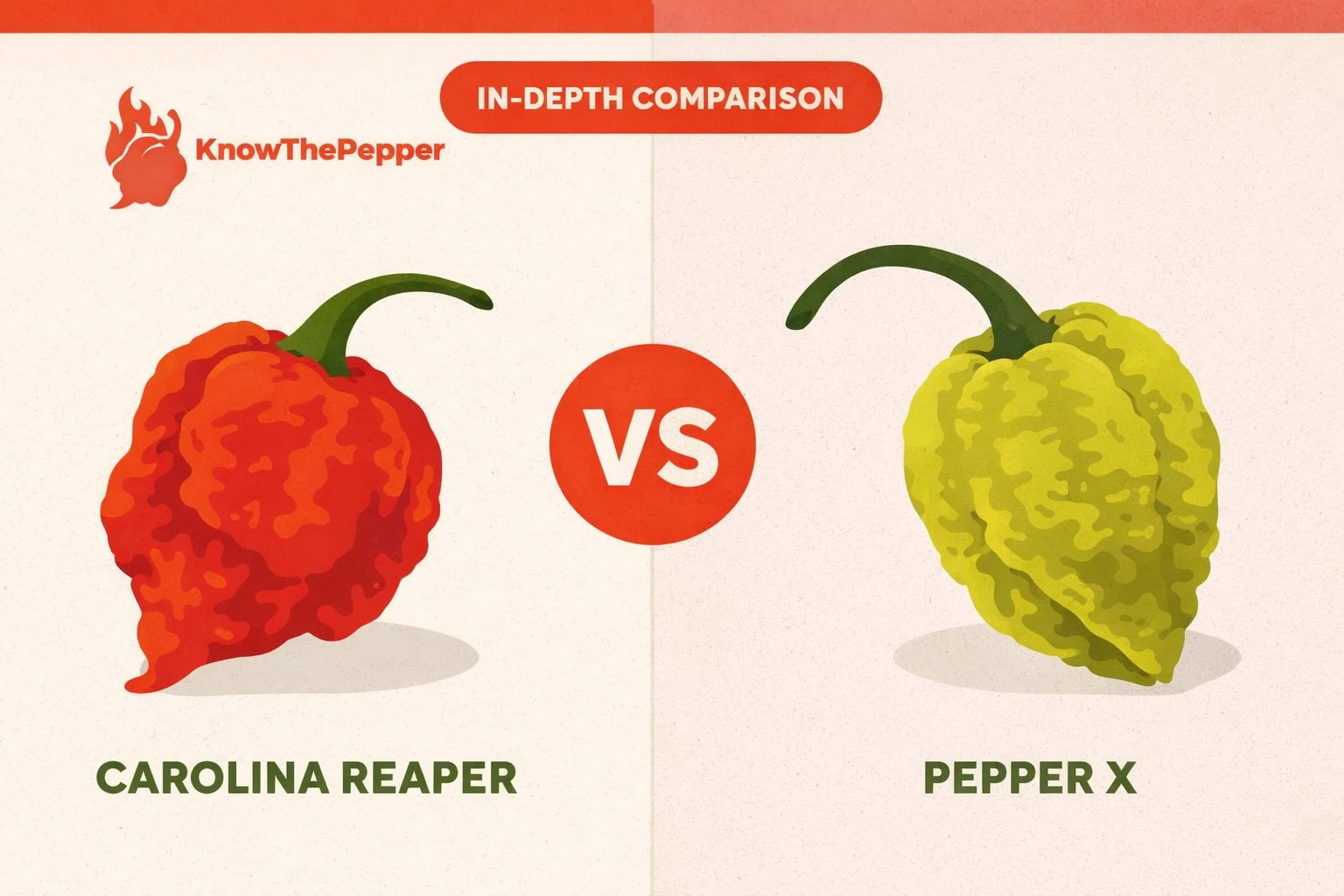
Record language needs one correction too. The Carolina Reaper was confirmed by Guinness as the hottest chilli pepper in 2013. Pepper X took the record in 2023. Calling the Reaper a former record holder is accurate. Its change in record status does not make it remotely close to jalapeno heat.
Taste & Flavor, Side by Side
The Carolina Reaper is a super-hot Capsicum chinense pepper bred by Ed Currie of PuckerButt Pepper Company in South Carolina.
Jalapeño is a thick-walled Capsicum annuum species source notes chile tied to the Mexican pepper tradition.
Heat hides the first sensory difference, but the peppers do not taste like scaled versions of one another. A green jalapeno has crisp flesh, a grassy aroma, and a clean vegetable bite. A ripe red jalapeno becomes sweeter and less green, yet it still behaves like a substantial piece of produce. Its thick wall can be chopped, roasted, pickled, or filled.
The Carolina Reaper comes from Capsicum chinense. Before the burn dominates, its aroma can suggest red fruit and a sweet, tropical edge. The jalapeno is Capsicum annuum, a species often associated with fresher green or earthy pepper notes. That species split is useful because it tells a cook that reducing the Reaper dose will not reveal jalapeno flavor underneath.
Texture makes the gap obvious on the plate. Jalapeno rings keep their shape in salsa, nachos, sandwiches, and eggs. A diced pod adds both pepper flavor and crunch. The Reaper is used in a sliver, mash, sauce, or powder. At that dose it seasons the surrounding food rather than becoming a visible vegetable component.
Ripeness changes each pepper in its own lane. A red jalapeno can move toward sweetness and is the starting material for chipotle when smoked. A ripe red Reaper may show more fruit aroma than an unripe pod, but the extreme capsaicin remains the main constraint. Waiting for red color does not make a Reaper interchangeable with a ripe jalapeno.
Preparation can emphasize different notes. Roasting a jalapeno softens its green edge and adds browned flavor. Pickling gives it acid and salt. The jalapeno cutting guide shows how the cut and retained inner tissue change the bite. A Reaper is better dispersed through a large sauce base, where fruit, tomato, carrot, or vinegar can carry its aroma without leaving one concentrated fragment.
Dried forms widen the difference. Jalapeno becomes chipotle when smoke and drying are part of the process, producing a recognizable smoky ingredient. Reaper powder stays an extreme dosing tool. A pinch can spread through a pot, but airborne dust also raises handling risk. Neither smoke nor drying creates a sensible one-for-one swap.
Choose flavor before chasing the hotter name. Jalapeno supplies fresh pepper body. Reaper supplies a small fruit-toned flash followed by extreme heat. A recipe that needs both body and severe burn often uses a normal pepper base plus a measured super-hot addition instead of asking one Reaper to perform both jobs.

Culinary Uses for Carolina Reaper and Jalapeño
Jalapeno belongs in food where the pepper is meant to be eaten as an ingredient. Pico de gallo needs its crisp edge. Cornbread and eggs can carry diced pieces. Nachos benefit from rings that spread moderate heat across individual bites. A whole wall can hold cheese or meat in jalapeno poppers. These uses depend on flesh, shape, and portion size, not only SHU.
Pickling is another jalapeno job. The pod stays large enough to slice, while acid and salt turn it into a condiment. The pickled jalapeno method gives measured brine and handling steps. Reaper can flavor a pickle brine in an expert recipe, but it cannot replace the pile of rings that people expect to eat.
Carolina Reaper belongs in recipes designed around controlled dispersion. Hot sauce, fermented mash, or a large batch of chili can distribute a tiny amount across many servings. The batch must be built for extreme heat from the start. Dropping a whole Reaper into a recipe written for one jalapeno is not an adventurous substitution. It removes the recipe's safety margin and usually buries the intended flavor.
Start with the goal, not a conversion. If the dish needs fresh chile aroma, crunch, a stuffing shell, or adjustable table heat, use jalapeno. If a clearly labeled sauce needs an extreme ceiling and the cook has the equipment to dose it safely, Reaper may fit. A normal hot sauce can also reach serious heat with easier peppers, so the Reaper is never mandatory.
Form changes control. A fresh jalapeno can be trimmed, tasted, and added in stages. Reaper powder can be weighed more consistently than a fresh fragment, but powder spreads into air and onto tools. Fresh Reaper mash disperses well in sauce, yet it can contaminate a blender lid, gasket, towel, or sponge. The choice of form must include cleanup.
Do not estimate a Reaper dose with a kitchen knife alone. Small wedges are hard to make equal, and placental tissue is not distributed like the outer wall. A scale that reads to at least 0.01 gram gives better repeatability for powder, though a tested recipe is safer than inventing a dose. Keep notes for the whole batch rather than relying on memory after tasting.
For a household with mixed heat tolerance, jalapeno can be served on the side. Reaper should not sit in an unlabeled bowl or shared condiment. Make the extreme sauce a separate, clearly marked option. That single service decision protects the base meal and lets each diner choose.

Choosing Between the Two
Choose jalapeno for almost every ordinary cooking decision in this comparison. It offers moderate heat, fresh pepper flavor, useful flesh, and control by the slice. Choose Carolina Reaper only when extreme heat is the declared purpose of a measured batch and everyone handling the food knows what it contains.
There is no responsible pod-for-pod substitution. If a jalapeno recipe seems too mild, add more jalapeno, retain more inner tissue, move to serrano or habanero, or serve a hotter sauce separately. Jumping straight to Reaper crosses several heat tiers and introduces a new handling problem. If a Reaper recipe must be made milder, use a recipe designed for a lower-heat pepper rather than trying to reverse a hundreds-fold multiplier in the bowl.
The safest comparison rule is based on the reader's next action. Need crunch, stuffing space, garnish, pickle rings, or a pepper most guests recognize? Buy jalapenos. Need one extreme ingredient for a labeled hot sauce and have gloves, ventilation, dedicated tools, and a measured formula? Consider Reaper.
Wear nitrile gloves when handling Reaper pods or powder. Keep hands away from eyes and face. Ventilate during blending or heating, and avoid creating airborne powder. Wash tools separately and warn anyone who may use the kitchen afterward. The pepper burn on skin guide covers immediate cleanup if residue transfers. Severe symptoms, breathing trouble, or eye exposure need appropriate medical help rather than another food remedy.
Jalapenos still deserve basic care. Their heat varies, and cut surfaces can transfer capsaicin. The consequence is normally manageable kitchen heat, while a Reaper mistake can affect a whole batch, utensils, and people who never chose to eat it.
The final heat math is worth keeping. Using the canonical ranges, Reaper spans 1.4 to 2.2 million SHU and jalapeno spans 2,500 to 8,000 SHU. The full endpoint gap is 175 to 880 times, with a midpoint gap near 340 times. That number is a warning against substitution, not a recipe ratio.
If the attraction is record-level heat, compare the current Pepper X record profile separately. It should not change this buying decision. Jalapeno remains the food pepper. Carolina Reaper remains a specialized extreme-heat ingredient.
Are They Interchangeable?
Do not convert these peppers by pod count or an SHU fraction. A Reaper fragment can create a concentrated hot spot, while enough jalapeno to match the heat would overwhelm the dish with water and pepper flesh.
- For jalapeno body with more heat, keep the jalapeno and add a measured, labeled hot sauce separately.
- For a milder Reaper recipe, choose a version written for habanero, serrano, or jalapeno rather than reversing a hundreds-fold multiplier.
- For mixed tables, keep the base meal moderate and serve the extreme condiment in a separate labeled container.