
How to Grow Hotter Peppers: Water, Soil & Harvest
Capsaicin production in peppers is controlled by genetics, not fertilizer brands. The techniques here close the gap between what your soil produces and what the variety is capable of.
Capsaicin production in peppers is controlled by genetics, not fertilizer brands or miracle growing tricks. The peppers you grow will never be hotter than their genetic ceiling, but most home growers never reach that ceiling. Closing the gap between what your soil produces and what the variety is capable of comes down to a few controllable factors: water stress, soil nutrition, sunlight, temperature, and harvest timing.
Overwatered hot peppers can look healthy while producing flatter heat. Moderate drying between waterings may help pods express more of the variety's heat potential, but the stress has limits: severe drought reduces fruit set, pod size, and plant recovery.
Understand the Capsaicin Ceiling
Every pepper variety has a genetic maximum for capsaicinoid production. A jalapeño pepper variety will never reach habanero heat levels no matter what you do. The Scoville range for each cultivar reflects this ceiling:
| Variety | Scoville Range (SHU) | Typical Home-Grown Result |
|---|---|---|
| Jalapeño | 2,500-8,000 | 3,000-4,000 (lower third) |
| Serrano | 10,000-23,000 | 12,000-15,000 |
| Cayenne | 30,000-50,000 | 35,000-40,000 |
| Habanero pepper profile | 100,000-350,000 | 120,000-180,000 |
| the Ghost Pepper variety | 855,000-1,041,427 | 900,000-1,100,000 |
| the Carolina Reaper profile | 1,400,000-2,200,000 | 1,500,000-1,800,000 |
Your goal is not to exceed the ceiling but to reach the upper end of it. Most home-grown peppers land in the lower third of their variety's SHU range because the plants are too comfortable. They have ample water, consistent nitrogen, and no environmental stress. In the wild, capsaicin evolved as a defense mechanism. Plants that experienced mild stress produced more of it.
Water Stress: The Single Biggest Lever
Reducing water during fruit development is the most effective way to increase capsaicin concentration in peppers. When a pepper plant experiences drought stress, it redirects energy from vegetative growth (large leaves, thick stems) toward fruit production and defense compounds, including capsaicin.
The water stress protocol:
- Vegetative stage: Water normally. Keep soil consistently moist to establish strong roots and stems.
- Flowering and fruit set: Reduce watering frequency. Allow the top 2 to 3 inches of soil to dry completely between waterings.
- Watering method: water peppers deeply rather than frequently. A single deep soak followed by a full dry-down mimics natural drought conditions.
- Pre-harvest dry-down: Stop watering 2 to 3 days before harvest. This concentrates capsaicin in the fruit walls.
In container-grown peppers, this is easier to control. A 5-gallon pot with well-draining mix dries faster than garden soil. In raised beds or in-ground gardens, mulch helps regulate moisture but should not keep the soil constantly wet. Aim for soil that is barely moist at the 3-inch depth, not saturated.
Soil Nutrition for Heat Production
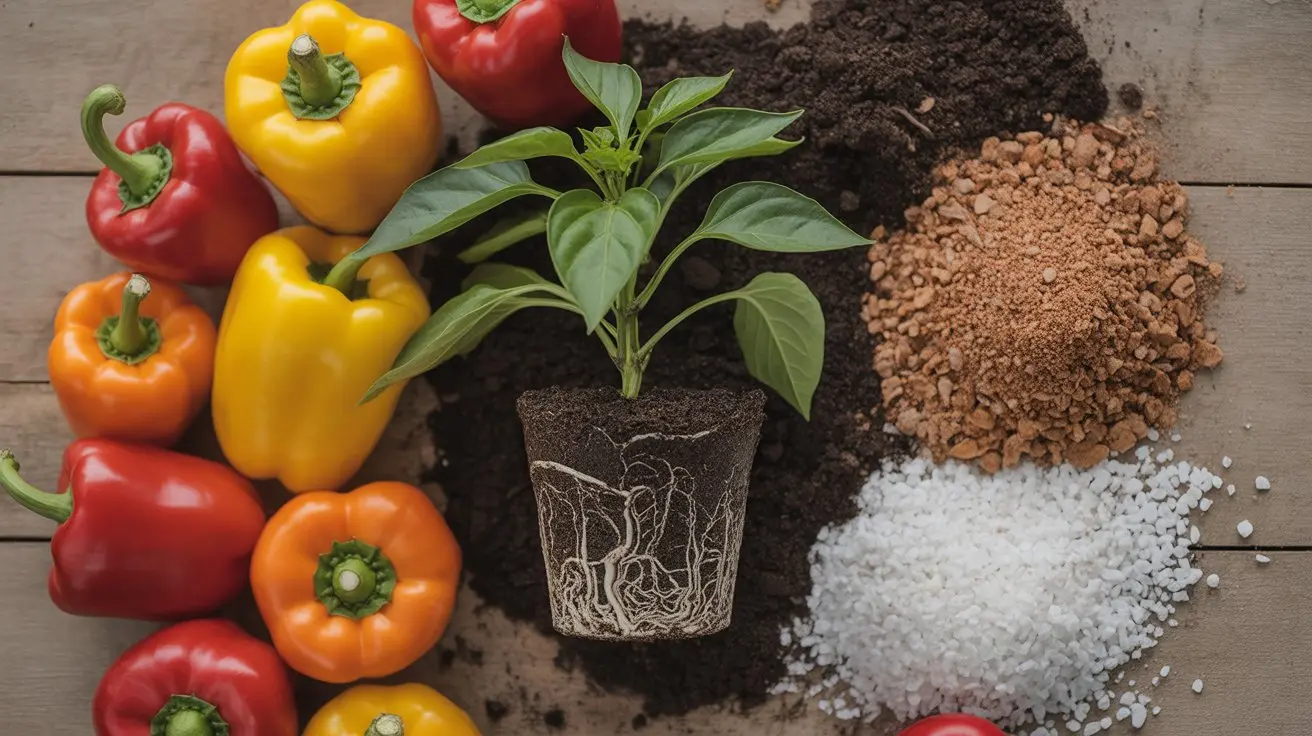
Capsaicin is synthesized from phenylalanine, an amino acid. The pathway requires adequate phosphorus and potassium but does not benefit from excess nitrogen. High-nitrogen soils produce lush, leafy plants with mild fruit. Lower-nitrogen, higher-phosphorus soils produce hardier plants with more concentrated heat.
the pepper fertilizing guide by growth stage:
| Stage | Ratio | Purpose |
|---|---|---|
| Vegetative (seedling to first flower) | 10-10-10 | Balanced growth for roots and stems |
| Flowering and fruit set | 5-10-10 or 4-8-12 | Low nitrogen, high P/K for fruit development and capsaicin synthesis |
| Final 2 weeks before harvest | Stop fertilizing | Allow plant to focus energy on ripening |
Calcium also plays a role. Pepper plants need calcium for cell wall development in the fruit. Calcium deficiency causes blossom end rot, which damages the fruit before it can reach its heat potential. Maintain consistent calcium availability through the fruiting stage, but do not overdo it. Excess calcium does not increase heat; it only prevents the structural problems that would otherwise ruin the crop.
Soil pH affects nutrient availability. Peppers perform best in soil with a pH between 6.0 and 6.8. Below 6.0, calcium and magnesium become less available. Above 7.0, iron and manganese deficiency can stunt growth. Test your soil before the season and amend accordingly.
Sunlight and Temperature
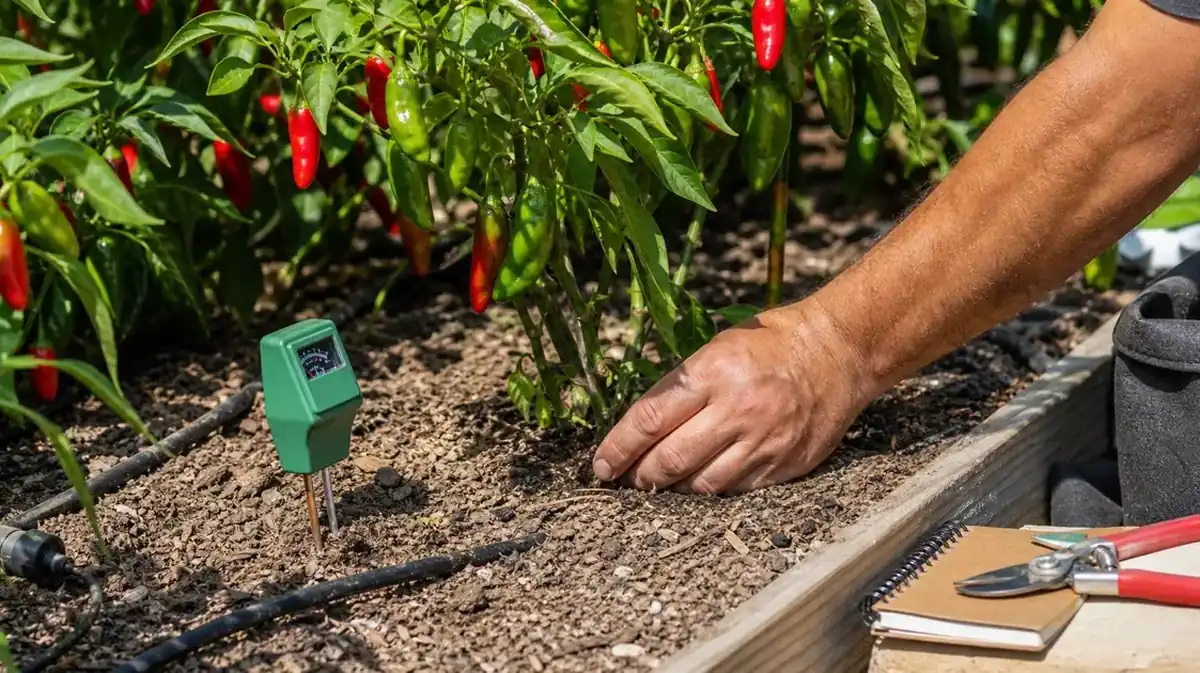
Peppers are heat-loving plants that produce more capsaicin in warmer conditions. The optimal temperature range for capsaicin synthesis is between 75°F and 90°F (24°C-32°C). Plants grown in consistently cool conditions produce less capsaicin, even if the variety is genetically capable of high heat.
| Condition | Range | Effect on Heat |
|---|---|---|
| Daytime temperature | 80-90°F (27-32°C) | Optimal capsaicin synthesis |
| Nighttime temperature | 65-75°F (18-24°C) | Diurnal swing triggers more defensive compounds |
| Consistent nighttime above 80°F | , | Capsaicin production slows |
Full sun is non-negotiable for heat production. Peppers need a minimum of 6 to 8 hours of direct sunlight per day. In northern climates with shorter growing seasons, this can be a limiting factor. A south-facing wall or fence can add radiant heat in cooler gardens, which helps peppers ripen more reliably. Treat it as a warmth and maturity aid, not a guarantee of higher capsaicin in every pod.
Capsaicin Concentration vs. Capsaicin Total
Two terms get confused in pepper-growing discussions: capsaicin concentration (SHU) and total capsaicin content (measured in milligrams). A small, hot pepper has a high concentration. A large, equally hot pepper has more total capsaicin because there is more tissue producing it.
Which goal are you optimizing for?
- Maximum Scoville rating: Use stress techniques that produce smaller, more concentrated pods. This is the right approach for growing competition peppers or peppers for hot sauce where Scoville numbers matter.
- Maximum capsaicin yield: Balance stress with enough nutrition to support fruit size. This is better for hot sauce or chili oil production where total capsaicin per plant matters more than per-pod intensity.
The techniques described in this guide primarily target concentration (SHU). To maximize total yield, maintain moderate water stress for heat while providing adequate phosphorus and potassium for fruit size. This balance is narrower than either extreme, and it varies by variety.
Harvest Timing and Post-Harvest Handling
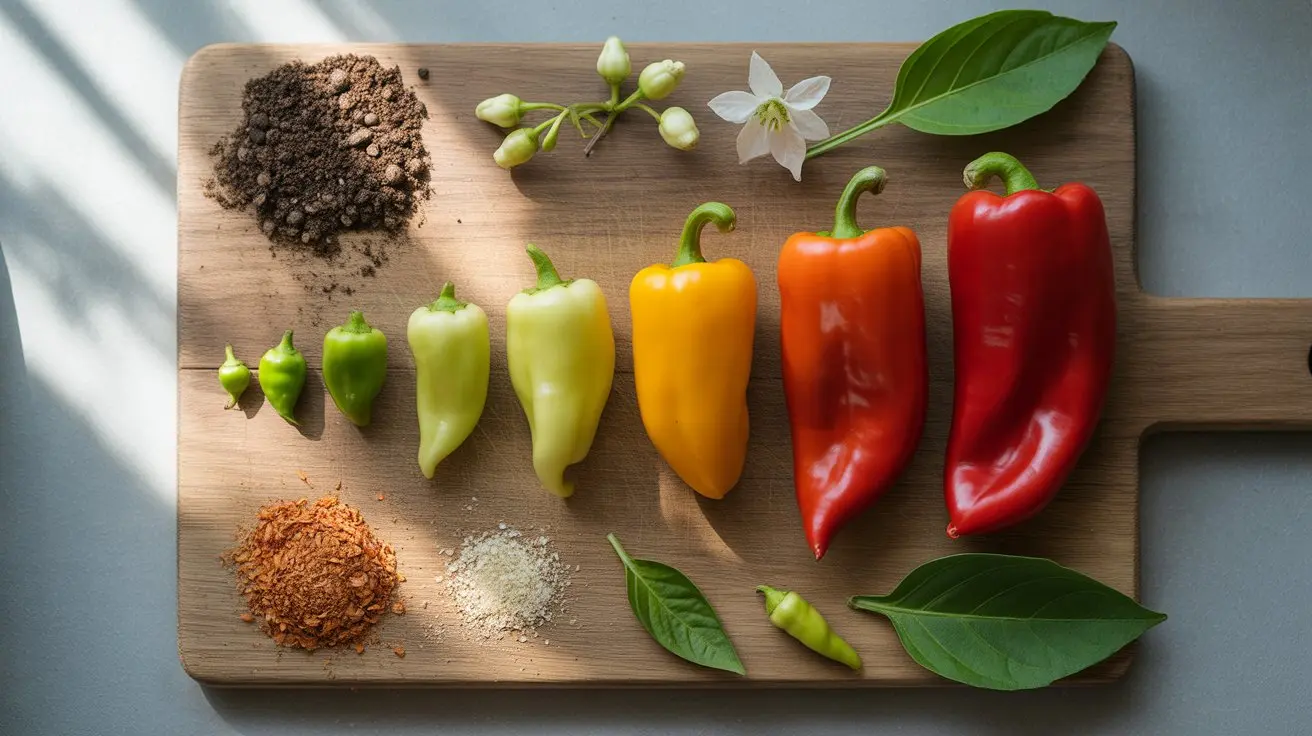
Peppers continue to develop capsaicin after they reach full size. Waiting 1 to 2 weeks past the normal harvest window increases heat, but the gains plateau and eventually reverse as the fruit over-ripens and begins to break down. For maximum heat, harvest when the pepper is fully ripe (fully colored for its variety) but before any soft spots or wrinkling appear.
Heat does not increase significantly after the pepper is picked. Unlike some fruits that continue to ripen off the vine, peppers stop accumulating capsaicin once removed from the plant. Drying peppers concentrates the remaining capsaicin by removing water weight, which is why dried peppers always measure hotter than fresh ones of the same variety.
Storage options and their effect on heat:
- Room temperature: Up to 1 week. Use within 3 days for peak heat.
- Refrigerator crisper: Up to 2 weeks. Slightly slower flavor loss than room temp.
- Freezing: Indefinite capsaicin preservation. Texture changes but heat stays.
- Drying: Concentrates capsaicin by removing water. Always hotter than fresh equivalent.
Variety Selection Matters More Than Technique
The most effective way to grow hotter peppers is to start with a hotter variety. No amount of water stress will push a the bell pepper profile into the hot category. Choose varieties at the upper end of your desired heat range and apply these techniques to reach the top of their genetic potential.
Stress responsiveness by variety:
| Variety | Stress Response | Notes |
|---|---|---|
| Habanero | High | Responds strongly to water stress. Heat can double or triple. |
| Thai Chili pepper | High | Small pods concentrate well. Excellent for competition growing. |
| Cayenne | High | Long fruiting season benefits from sustained stress protocol. |
| Jalapeño | Moderate | Less dramatic variation. Stays in the 3,000-8,000 range. |
| Ghost Pepper | Low | Already at extreme levels. Percentage gains similar, but smaller in absolute terms. |
| Carolina Reaper | Low | Genetic ceiling so high that stress techniques add marginal gains. |