Paprika vs Smoked Paprika: Smoke Is the Difference
Paprika and smoked paprika can look similar in the jar, but they do not do the same job in a recipe. Regular paprika usually gives sweet pepper flavor and red color with little smoke, while smoked paprika adds a wood-smoked note that can completely change the dish. If you swap them without thinking about the recipe, the result often tastes flatter or smokier than intended.

Paprika Pepper
Sweet and plainSmoked Paprika
Wood-smoked- Aroma: Sweet, fruity, clean red pepper vs Wood smoke, toasty, barbecue-adjacent
- Heat: Mild, usually 250 to 1,000 SHU vs Also mild unless labeled hot
- Best job: Color and sweetness vs A visible smoke note
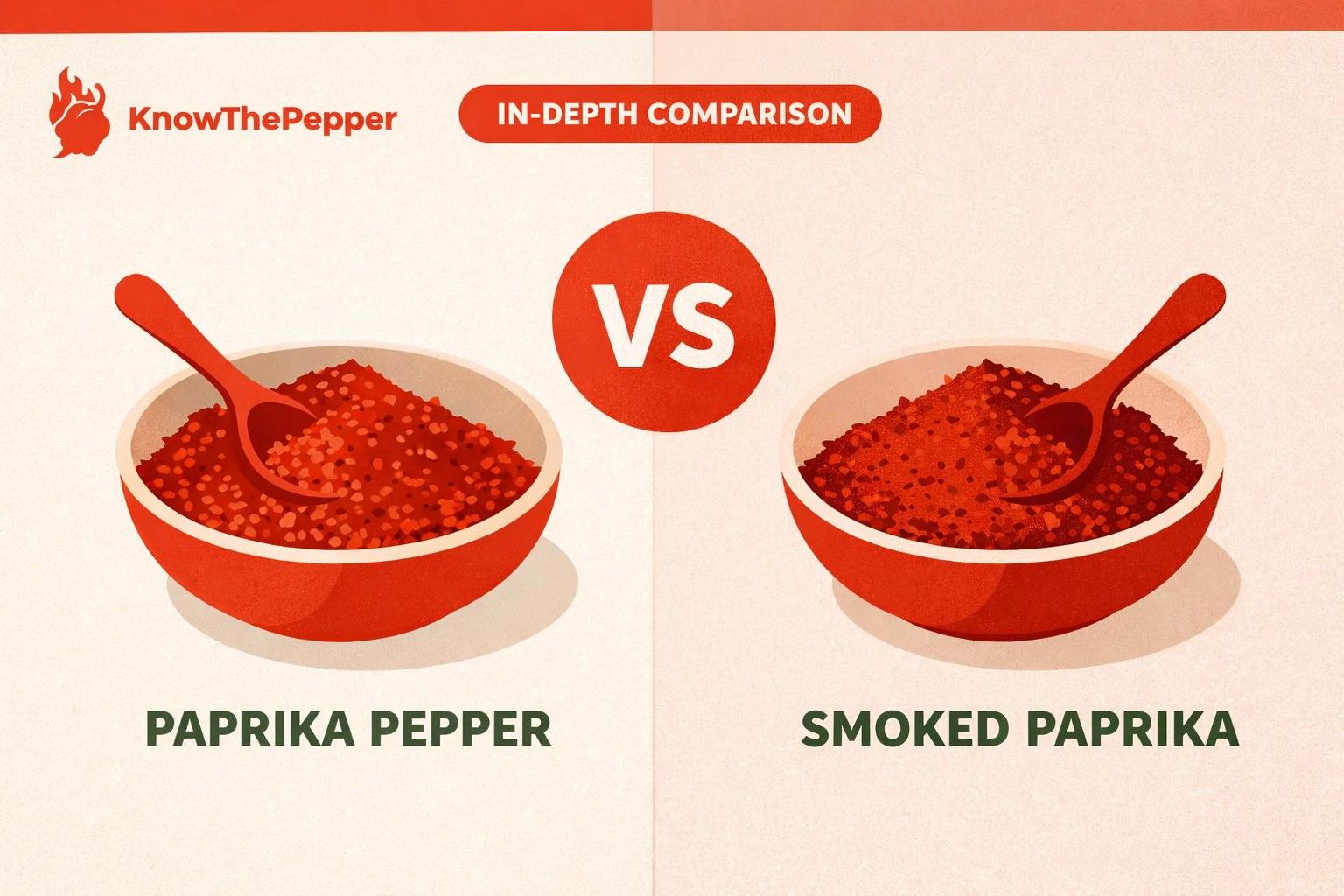
Paprika Pepper vs Smoked Paprika at a glance
Paprika Pepper and Smoked Paprika side by side
Everyday color and sweetness with no smoky note.
A visible smoke note for beans, rubs, and Spanish dishes.
Smoke Is The Switch
These two start from nearly the same pepper. Smoke is the one switch that separates them.
Regular paprika profile is the safer everyday choice for deviled eggs, chicken paprikash, stews, and any dish where color matters more than smoke. Smoked paprika flavor notes is the right move when you want the spice to announce itself in roasted potatoes, beans, grilled-meat rubs, or Spanish-style cooking.
The bigger the smoke role in the recipe, the less interchangeable the two become.
Sweet Versus Smoked
Regular paprika reads sweeter, rounder, and softer. Serious Eats' paprika guide is a useful reminder that many paprika styles are quite mild on the Scoville scale, so the spice often works as a color-and-flavor bridge rather than a heat source.
Smoked paprika starts from a similar base, but McCormick notes the peppers are smoked and dried before grinding, which changes the whole signal. Even a small amount can make a dish feel darker, toastier, and more barbecue-adjacent.
That smoke is exactly why smoked paprika can dominate a delicate sauce or an egg dish if you use it casually.
The gap is wide enough that they are not really interchangeable by feel. Swap smoked paprika into a delicate dish expecting plain paprika, and the whole plate turns barbecue-flavored. Swap plain paprika into a dish that needed smoke, and it tastes strangely empty where the smoke should be.

How Smoked Paprika Is Made
The smoke is not a flavoring sprayed on at the end. Traditional pimenton is made by drying red peppers over slow oak-wood smoke for a couple of weeks, then stone-grinding them, so the smoke soaks all the way through.
Plain paprika skips that step. The peppers are air-dried or kiln-dried and ground, which keeps the flavor sweet and clean with no smoke at all.
That single difference in processing is the whole comparison. It is why smoked paprika tastes so much deeper than a pinch of the sweet kind, and why you cannot recreate it by simply using more regular paprika.
Where Each Belongs
Use regular paprika when the recipe wants color, mild sweetness, or a warm finish without taking the spotlight. It shines in chicken paprikash, cream sauces, potato salad, deviled eggs, and rubs that already get smoke from another ingredient. It is also the easier garnish because it brightens a plate without changing the flavor.
Use smoked paprika when the dish benefits from a clear smoky note: roasted potatoes, beans, lentils, grilled chicken, sausage dishes, and Spanish-style cooking. If the dish already carries cured meat, char, or sherry-vinegar energy, smoked paprika reinforces the direction instead of fighting it. When you want smoke plus real heat, chipotle vs smoked paprika covers the chile-forward option.
The trap is treating smoked paprika as a drop-in for plain in a delicate dish. A spoonful that would vanish as sweet color in mashed potatoes can turn a cream sauce or a tray of eggs distinctly barbecue-flavored.
A quick rule: if the recipe would still make sense with no smoke anywhere, start with plain paprika.
The clearest tell is whether smoke belongs on the plate at all. Deviled eggs, cream sauces, and chicken paprikash want color and gentle sweetness, so plain paprika fits. Beans, lentils, roasted potatoes, and grilled meat can carry a wood-smoke note, so smoked paprika shines there.
The Asymmetric Swap
The swap runs one way better than the other
Regular into smoked: start at half to three-quarters of the amount and taste. The color may look right at 1:1, but the smoke usually overshoots.
Smoked into regular: use 1:1 for color, then add a small smoky element such as a pinch of chipotle powder or smoked salt if the recipe leaned on that note.
Smoked paprika replaces plain too aggressively; plain replaces smoked too weakly. That is why they sit close on the rack but not in the pan.

Sweet Bittersweet Or Hot
Smoked paprika is not one heat, either. Spanish jars are usually graded dulce (sweet), agridulce (bittersweet), and picante (hot), and the best-known ones come from the La Vera region.
Most grocery smoked paprika is the sweet grade, so it adds smoke and color with little burn. If a recipe tastes flat where you expected heat, you may have the sweet grade when it wanted the hot one.
Plain paprika runs sweet to hot as well, but without any smoke on any grade. So before swapping, check two things on the smoked jar: whether it is sweet or hot, and how strong the smoke smells, since both fade with age.
Keeping Them Alive
Store both tightly sealed, away from light and steam. Paprika fades into dusty sweetness. Smoked paprika flattens so the smoke reads dull instead of vivid, and that matters more because aroma is most of its value.
A stale jar can trick you into thinking smoked paprika is interchangeable with plain, simply because the smoke has already died. If the jar smells weak on opening, the recipe will notice. For broader timing, how long dried peppers last frames the pantry rule.
Buying small also helps here. A large jar of either spice usually outlives its best aroma, and smoked paprika loses its edge first because heat and light break down the smoke compounds faster than the pepper color.
If you want more heat than either brings, build it with a separate chile. Neither jar is the fire source. That is also why paprika vs cayenne and paprika vs chili powder solve different problems on the same shelf.
Picking a jar that still works:
- Smell first. Fresh sweet paprika smells like ripe red pepper; fresh smoked paprika smells clearly of wood smoke.
- Check the color. A brick-brown, dull tone means the aroma has already faded.
- Read the smoked label for sweet, bittersweet, or hot so you know the heat before you cook.
- Buy the small jar. Both fade within months once opened, and smoked paprika loses its smoke first.
Paprika Pepper vs Smoked Paprika
Reach for Paprika Pepper when you want Color and sweetness. Reach for Smoked Paprika when you want A visible smoke note.