Light: one or two tips
Remove the insects with water or prune one badly curled tip. Recheck the same plant within a few days before using a product.


Aphids on pepper plants cluster on tender new growth and leaf undersides. Start with scouting and a firm water spray, then use insecticidal soap only when colonies persist. Protect beneficial insects and check for ants because honeydew often keeps aphids coming back.
Aphids gather on tender pepper growth, flower stems, and leaf undersides. They are soft-bodied, usually pear-shaped, and may be green, black, yellow, or pale. White cast skins around a colony, sticky honeydew below it, and ants traveling up the stem make the diagnosis stronger.
A few insects on one tip rarely justify spraying the whole garden. Start by checking how much of the plant is occupied, whether clean new leaves are still opening, and whether flowers or growing tips are distorted. The colony size and location should determine the first control.
| Sign | Aphids | Look-alike clue | Next check |
|---|---|---|---|
| Clusters on soft growth | Several pear-shaped insects stay close together | Whiteflies rise from the leaf when disturbed | Inspect the newest leaves and flower stems |
| Sticky leaves | Honeydew coats leaves below the colony | Water or guttation dries without a sticky film | Look for ants and white shed skins |
| Curled new leaves | Aphids hide inside the curl | Mites usually leave fine stippling or webbing | Unroll one leaf and use a hand lens |
| Pale specks or scars | Feeding is concentrated near veins and tips | Thrips leave silvery scars and dark waste spots | Tap a flower or leaf over white paper |
Diagnosis matters because broad treatment can harm predators without touching the real pest. A water spray that dislodges aphids may do little for mites, while a product aimed at caterpillars may not control either problem. The pepper pest guide helps separate damage patterns before treatment begins.
Leaf curl by itself does not measure severity. One badly curled tip may hold a small colony, while a plant with many flat leaves can hide aphids along every flower stem. Count occupied growing tips and check whether honeydew or ants appear on more than one part of the plant.
Remove the insects with water or prune one badly curled tip. Recheck the same plant within a few days before using a product.
Use repeated physical removal, inspect nearby peppers, and consider a labeled insecticidal soap when colonies return.
Isolate container plants, remove the worst growth, address ants, and follow a labeled treatment plan with close follow-up.
A mature plant can tolerate some feeding while predators arrive, but seedlings and newly transplanted peppers have less spare growth. Check young plants more often because a colony can occupy most of their usable leaf area quickly. Flowering plants also deserve attention when aphids cover buds or cause new stems to twist.
Ant activity changes the picture. Ants collect honeydew and may interfere with lady beetles, lacewings, and other aphid predators. Reducing ant access and removing honeydew can help natural enemies reach the colony, but avoid applying sticky material directly to a tender pepper stem.
Warm conditions allow several aphid generations to overlap. Many aphids reproduce without waiting for mating and give birth to live young during the growing season. That is why a cluster can expand between weekly garden visits even when the original insects never moved far.
Most feeding concentrates on tender tissue because new leaves and flower stems are easier to pierce. As those tissues distort, the plant loses useful growing area rather than simply losing one old leaf. Seedlings can stall when nearly every new tip is occupied, while a large established plant may continue growing around a light colony.
Honeydew creates a second set of clues. The sugary residue collects on leaves and surfaces below the feeding site, supports dark sooty growth, and attracts ants. Cleaning it does not control the aphids, but it makes new residue easier to spot and restores light to leaves that have become heavily coated.
Winged aphids may appear when a colony becomes crowded or conditions change. Their presence means nearby plants deserve inspection, not that every plant needs treatment. Start with the closest tender growth and any transplants that recently entered the area.
A firm stream of water is the first useful control for many garden peppers. Support the branch with one hand, direct water at the leaf underside, and use enough pressure to dislodge aphids without tearing foliage. Treat one plant at a time so insects are not simply washed onto a neighboring pepper.
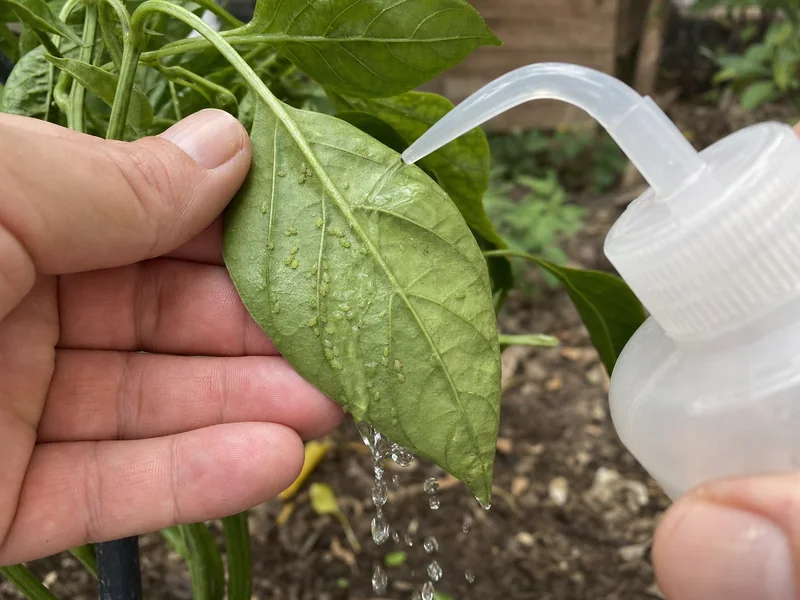
Pruning is useful when one curled tip contains most of the colony. Cut back to clean tissue with sanitized snips and place the removed growth in a bag or covered waste container. Do not remove so much foliage that the fruit loses shade during hot weather.
Repeat inspection rather than assuming one wash ended the outbreak. Aphids hide inside folded leaves and along stem joints, and newly born insects may appear after the first treatment. Look at the exact tips that were cleaned, then compare them with untreated growth on the other side of the plant.
Container plants can be moved away from clean plants during this period. Check the neighboring pots, stakes, and indoor seedlings as well. Aphids can arrive on nursery stock and spread before the first colony becomes obvious.
An indoor pepper has no rain, fewer predators, and steady temperatures, so a small colony can persist unnoticed. Move the plant away from other houseplants, cover the potting mix, and rinse the foliage in a sink or shower where runoff can be contained. Inspect windowsills and adjacent plants before returning it to the group.
Outdoor plants receive more predator activity and weather disturbance. A light colony can sometimes be monitored after one water spray when lady beetle larvae, lacewings, or aphid mummies are present. Keep checking because ants or repeated arrivals can prevent those natural controls from catching up.
Greenhouses and enclosed patios sit between those situations. They protect aphids from rain but may also support released beneficial insects. Use sticky cards only as a monitoring aid for winged insects; the cards do not remove the colonies feeding on pepper leaves.
Whichever setting applies, avoid moving an infested plant through clean foliage. Work on it last, wash hands and tools, and remove pruned material before handling seedlings or newly opened flowers.
When physical removal does not hold the population down, choose a product labeled for aphids on edible vegetables. The label owns mixing, application frequency, protective equipment, and the interval before harvest. A homemade dish-soap recipe is not interchangeable with a registered insecticidal soap.
Neem and other botanical products still require label discipline. ?Natural? does not mean harmless to foliage, pollinators, aquatic life, or the person applying it. Use only a product labeled for the crop and pest, and keep it away from open flowers when the label directs.
Diatomaceous earth is a poor default for aphids on leafy growth. Dust is difficult to place only on the colony, loses performance when wet, can affect other insects, and should not be inhaled. Water, pruning, predator support, and a targeted labeled soap usually provide a clearer escalation path.
Lady beetles, lacewing larvae, hoverfly larvae, and small parasitoid wasps all attack aphids. Their presence often becomes visible after a colony has formed. Aphid skins with a round exit hole or swollen tan aphid mummies show that parasitoids are already working.
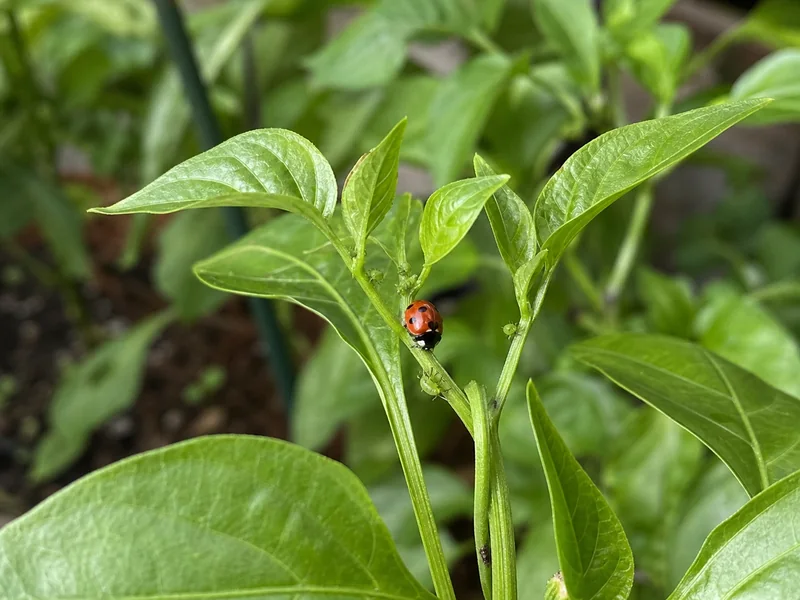
Protect those insects by avoiding blanket sprays and by keeping flowering plants nearby. Small flowers on alyssum, dill, yarrow, and similar plants can supply nectar and pollen to adult beneficial insects. The pepper companion planting guide covers plant placement without treating one companion as a guaranteed pesticide.
Purchased lady beetles often disperse after release, so buying adults does not replace diagnosis and follow-up. Building habitat and leaving unsprayed refuge produces slower but more durable support. If a supplier offers beneficial insects, follow its storage and release instructions and confirm the species suits the growing environment.
Ant management belongs beside predator protection. Trace the ant path before treating it. For containers, clean honeydew from nearby surfaces and interrupt access using a method labeled for that location. In beds, manage the nest or trail without placing unapproved substances on edible foliage.
A successful treatment produces clean new growth. Old curled leaves may remain misshapen even after the aphids are gone, so they are poor evidence of current failure. Mark one new tip mentally or with a loose plant tag and compare it during each inspection.
If growth remains distorted after aphids disappear, reopen the diagnosis. Herbicide drift, mites, thrips, nutrient stress, and some diseases can affect the same tender leaves. Compare yellow pepper leaf patterns across the whole plant before treating again. The curled pepper leaf guide separates twisting and puckering from those broader patterns.
Widespread leaf drop after the colony clears deserves a separate check because root stress, cold, and disease can continue after insects disappear. Pepper plant leaf drop separates a short recovery lag from a new whole-plant problem.
Isolation is usually more useful than discarding the plant. Move a potted pepper when colonies keep reaching nearby seedlings or houseplants, then continue treatment where inspection is easier. In a garden bed, mark the affected plant and work outward through the nearest neighbors.
Remove the entire plant only when it is already failing from several problems, treatment cannot be applied safely in that location, or a confirmed disease requires disposal. Aphids alone are commonly manageable when clean growth remains and the treatment can reach the colony.
Aphids on the plant do not automatically make intact peppers unusable. Rinse harvested fruit under clean running water and remove visible insects or honeydew. Fruit with severe physical damage, decay, or contamination should be discarded for those conditions rather than because an aphid once fed on a nearby leaf.
Any pesticide changes the harvest decision. Follow the exact pre-harvest interval and washing direction on its label. Do not assume that insecticidal soap, neem, or another low-toxicity product permits immediate harvest; different formulations can carry different instructions.
Avoid the common response of applying several controls at once. Mixing unlisted products, treating in strong sun, spraying open flowers, and repeating earlier than directed can injure the plant and beneficial insects while making it impossible to know which step worked.
For future plants, inspect transplants before they enter the garden, clear heavily infested debris at the end of the crop, and monitor tender tips from the start. Healthy growth, early detection, and a measured response protect yield more reliably than waiting for a large colony and then treating every plant.