
Pepper Plant Leaves Curling: What the Shape Means
Pepper plant leaves curling are a symptom, not a diagnosis. Upward curl often points to heat or water stress, tight twisted new growth points to pests or herbicide drift, and cupped leaves need an underside check.
Pepper plant leaves curling tell you the plant is under stress, but the curl shape decides the next move. Check whether leaves curl upward, cup downward, twist tightly, or only distort on new growth.
Do not spray first and ask later. A curled leaf can point to heat, water, aphids, mites, herbicide drift, virus trouble, or root stress, and each one needs a different fix.
Read the curl before you treat the plant
Upward curling often means the leaf is trying to reduce heat and water loss. It usually shows during hot afternoons, dry wind, or bright reflected heat from patios and walls.
Downward cupping can point to root-zone stress, overwatering guide, or sap-feeding insects guide. Tight twisting on new growth deserves a closer pest and drift check.
Look at old leaves and new leaves separately. If only new tips are distorted, the problem is active at the growing point. If older leaves curl during the hottest part of the day and relax by evening, heat is more likely.
| Curl pattern | Likely role | First check |
|---|---|---|
| Edges roll up during hot afternoons | Heat or dry roots | Soil moisture and reflected sun |
| New leaves twist and stay small | Pests or drift | Leaf undersides and nearby spraying |
| Leaves cup down with wet soil | Root stress | Drainage, pot weight, watering timing |
| Leaf curl plus yellowing guide | Water or nutrient stress | Lower leaves, soil moisture, feeding history |
Check leaf undersides for aphids and mites
Aphids love tender pepper growth. UC IPM describes aphids as soft-bodied insects that feed in clusters and produce sticky honeydew, and that feeding can distort new leaves.
Turn over the curled leaves before you treat. Look for green, black, or tan clusters, white shed skins, sticky shine, or ants moving through the plant.
Mites are harder to see. They leave tiny speckling, fine webbing, or a dusty look on leaf undersides, especially in hot, dry weather.
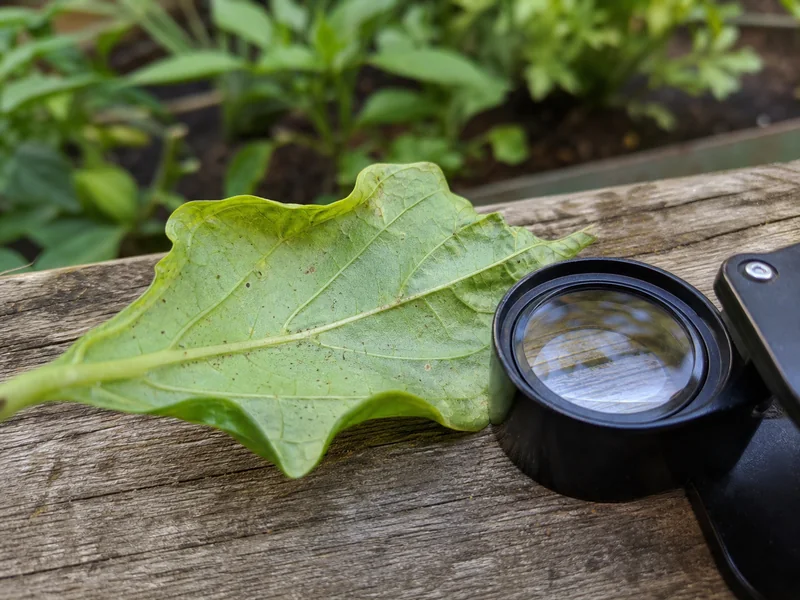
- Use a hand lens on the newest curled leaves.
- Spray aphids off with water when the plant can dry quickly.
- Prune only the worst pest-covered tips.
- Repeat inspections every few days until new growth looks normal.
Heat and water curl leaves without pests
A pepper can curl leaves on a clean plant when the root zone cannot keep up with the canopy. Hot wind, black containers, small pots, and dry soil all make that worse.
University of Maryland Extension’s pepper guidance stresses warm conditions, steady watering, and good garden care. Curling leaves often show when one of those basics slips.
Do not overcorrect with a flood. If the soil is dry, water slowly and deeply. If the soil is wet, improve drainage and airflow instead.
We use the evening test. If curled leaves relax after the day cools, heat load was the main pressure. If they stay twisted overnight, keep looking.
Herbicide drift looks different from ordinary stress
Drift damage often hits new growth first. Leaves may become narrow, strap-like, cupped, or twisted in a way that does not match simple heat curl.
Ask what happened nearby. Lawn weed killers, roadside spraying, or a neighbor treating a fence line can reach pepper plants through vapor or tiny droplets.
There is no home-garden product that reverses drift injury. Keep the plant watered, do not feed hard, and wait to see whether clean new growth returns.
If several unrelated plants show twisted new leaves on the same side of the garden, drift becomes more likely than a pepper-only pest problem.
How do you help the next leaves grow normally?
Use new growth as the scoreboard. Old curled leaves may never flatten, so do not keep changing care because one damaged leaf remains bent.
For pests, keep inspections tight and remove only the worst growth. For heat, add afternoon shade, mulch, or move containers away from reflected surfaces.
For root stress, connect this page with the checks in overwatered pepper plants and wilting pepper plants. Leaf curl often travels with those water-flow problems.
The repair is working when the newest leaves open wider, the stem keeps extending, and flower buds form without the same distorted tips.
Which leaves curled first?
The first curled leaves tell you where the stress started. New-tip curl points to active growing-point stress, often pests, drift, or severe heat.
Older lower leaves curling after dry soil points more toward water movement. Lower leaves live farther from the growing tip, so they often show stress after the root zone falls behind.
If the whole plant curls at once on a hot afternoon, treat the canopy like it is protecting itself. If only one branch twists, inspect that branch for insects or physical damage.
Take one photo in the morning and one late afternoon. A temporary heat curl changes through the day, while pest or drift distortion usually stays misshapen overnight.
When does curl point to disease?
Disease is more likely when curl arrives with mottled color, rings, severe stunting, or distorted new growth across the plant. A simple rolled edge by itself is not enough proof.
Viruses can cause curling and distortion, but home gardeners cannot identify them cleanly from one symptom. The safer first move is to check insects, isolate the plant if symptoms look severe, and avoid brushing it against healthy peppers.
Do not compost suspicious infected leaves. Bag badly affected material if the plant declines and pests are present.
If several peppers in one row show the same twisted new growth, widen the search beyond one plant. Shared pests, drift, or a recent weather event may explain the pattern.
What should you not do after seeing curled leaves?
Do not apply every spray in the shed. Soap, oil, fertilizer, and fungicide layered together can burn leaves that are already stressed.
Do not feed hard on the same day you correct water stress. Roots need to recover before extra salts in the mix make sense.
Do not remove all curled leaves. The plant still uses green leaf tissue, and stripping it can slow recovery.
Do not declare recovery from one good afternoon. Watch the next flush of leaves. Clean new growth is the clearest sign that the cause is fading.
A simple inspection routine
Start at the newest leaves because pests and drift often show there first. Then check the underside of the worst curled leaf with a hand lens.
Move down the plant and compare older leaves. If older leaves are flat while new leaves twist, do not blame ordinary watering first.
Check the soil last. Lift the pot or dig a finger into the bed near the drip line, not right at the stem.
After that, pick one role: pests, heat and water, roots, or drift. A clear role prevents the random treatment spiral that usually makes curled leaves worse.
How do container peppers change the diagnosis?
Container peppers curl faster because the root zone changes faster. A pot can be dry at the edge and wet in the center, which makes the canopy send mixed signals.
Lift the pot before watering. If it feels light, water slowly until the root ball takes moisture. If it feels heavy, give the roots air and shade the pot instead.
Black nursery pots add heat. Moving the same plant onto mulch or a lighter surface can reduce afternoon curl without changing fertilizer or sprays.
In fabric bags, wind can dry the sides hard. A curled canopy on a windy balcony may need a wind break more than another watering.
How long should you wait before judging recovery?
Heat curl can improve the same evening. Pest damage takes longer because the distorted leaf has already formed.
Judge recovery by leaves that were not open when you made the fix. If those new leaves are flatter, wider, and greener, the plant is moving in the right direction.
If new leaves curl again, the cause is still present. Recheck undersides, pot moisture, reflected heat, and nearby spraying rather than changing all care at once.
Keep notes for one week. Curling leaves are easy to misread when you rely on memory from the hottest part of the day.
When should you remove the whole plant?
Removal is rare for ordinary curl guide. Keep the plant if it has firm stems, clean new growth, and no spreading discoloration.
Remove or isolate it when the newest growth is severely distorted, mottled, and declining while nearby plants remain healthy. That pattern may point to virus or severe pest pressure.
Bag suspect material instead of shaking it through the garden. Then wash tools before touching other pepper plants.
If the problem was heat or water, removal is wasted effort. Fix the condition and let the next leaves prove it.
The fastest safe fix is careful observation. Curling leaves look urgent, but the wrong spray or fertilizer can add stress before you know whether the cause is heat, pests, roots, or drift.
When in doubt, protect the next leaves. Shade heat-stressed pots, wash off pests gently, and give roots steady moisture so the plant can prove recovery with fresh growth.
Use the next clean leaf as the finish line. If the newest leaf opens flat while older curled leaves stay bent, the fix is working. Leave the old leaves alone unless they block airflow or carry pests.