
Overwatering Pepper Plants: Signs, Fixes, and Root Rot
Overwatering pepper plants usually shows up as wilting, yellow lower leaves, slow growth, and soil that stays wet. The key test is not the leaf alone. Check soil moisture, drainage, pot weight, and roots before watering again. Mild cases recover after drying and better drainage, while sour roots or dark crown lesions may mean root rot.
Overwatering pepper plants means the roots are sitting in wet soil long enough to lose oxygen. The leaves may wilt like a thirsty plant, but the fix is the opposite: stop watering, check drainage, and let the root zone breathe.
Do not diagnose from droop alone. A pepper can wilt from drought, heat, transplant shock, root rot, or too much water, and the soil tells you which path to take.
Wet soil changes everything
The first clue is the root zone. If the top inch is damp, the pot feels heavy, or the bed stays muddy a day after watering, treat wilting as a wet-soil problem until proven otherwise.
University of Maryland Extension says container watering fails both ways, but too much water combined with poor drainage is a leading cause of overwatering and root disease. In a pepper pot, the saucer can be the problem even when the top looks normal.
The confusing part is that the leaves report water movement, not soil moisture. A root system damaged by wet soil can fail to move water even while surrounded by it.
Wet roots wilt because they cannot breathe. A leaf can lose water in the sun while roots sit in mud, so adding more water only deepens the oxygen problem.
The fastest field check is simple. If your finger comes out with cool soil stuck to it, pause watering and check again the next day before making any other change.
Push a finger two inches down, then lift the pot if it is in a container. Wet and heavy beats any guess from the leaf shape.That is the page boundary here. For normal timing and dry-weather irrigation, use the soil moisture routine. Use this guide when water is already too much.
Signs to trust
Overwatered peppers often look tired before they look rotten. The early pattern is soft droop, yellow lower leaves, slow new growth, and soil that refuses to dry.
Leaf symptoms carry more weight when they match the soil. A yellow leaf on a dry plant points somewhere else, while a yellow leaf on a wet, heavy pot points toward oxygen-starved roots.
- Leaves droop even though the soil is damp.
- Lower leaves yellow first, sometimes before the top changes.
- New leaves stay small or pale.
- Potting mix smells sour or swampy.
- Water sits in a saucer after rain or irrigation.
- The plant perks up poorly after watering.
Check the stem base too. A plant can lose lower leaves from wet roots and still recover, but a soft collar at the soil line means the damage has moved into the crown.
A firm green stem with wet soil gives you a recovery problem, while a dark, soft crown gives you a disease and sanitation problem.Look at the newest growth before you decide how severe the case is. A plant with yellow lower leaves but firm new tips has a better recovery path than one with a soft crown and stalled top growth.
If yellowing is the main symptom and the soil is not wet, compare the pattern with yellowing leaf patterns before blaming water.
Overwatered or thirsty
Overwatering and underwatering can both make leaves sag. The difference is how the soil behaves and how fast the plant responds after conditions change.
| Check | Overwatering points to | Underwatering points to |
|---|---|---|
| Soil feel | Damp, cool, or sticky below the surface | Dry two inches down or pulling from pot edges |
| Pot weight | Heavy for its size | Light and easy to lift |
| Leaf feel | Soft, limp, sometimes yellowing | Thin, dry, curled, or crisp at edges |
| Recovery | No quick perk-up after more water | Perks up after a slow, deep soak |
| Root clue | Brown, mushy, sour roots | Pale roots in a dry root ball |
Heat stress often appears in the afternoon and eases at night. Overwatering tends to look worse after a watering or rain because the root zone has even less air.
Timing helps too. Underwatered peppers usually respond within hours after a slow soak, while overwatered plants often stay limp because roots still cannot move water well.
For a plant that keeps wilting after the soil has dried back, widen the diagnosis. The broader wilting diagnosis guide separates heat stress, bacterial wilt, nematodes, and root damage.
Check roots
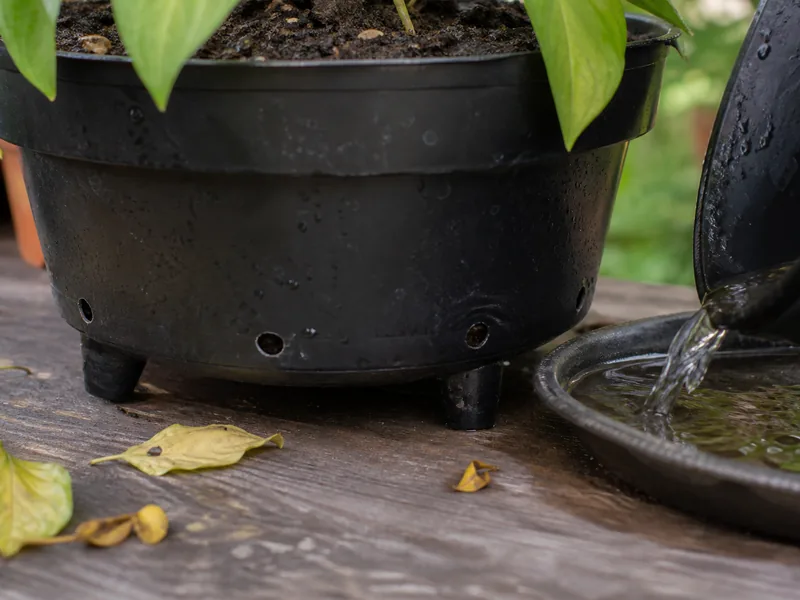
The root check should be gentle. You are not doing surgery; you are looking for the reason the plant cannot use the water already there.
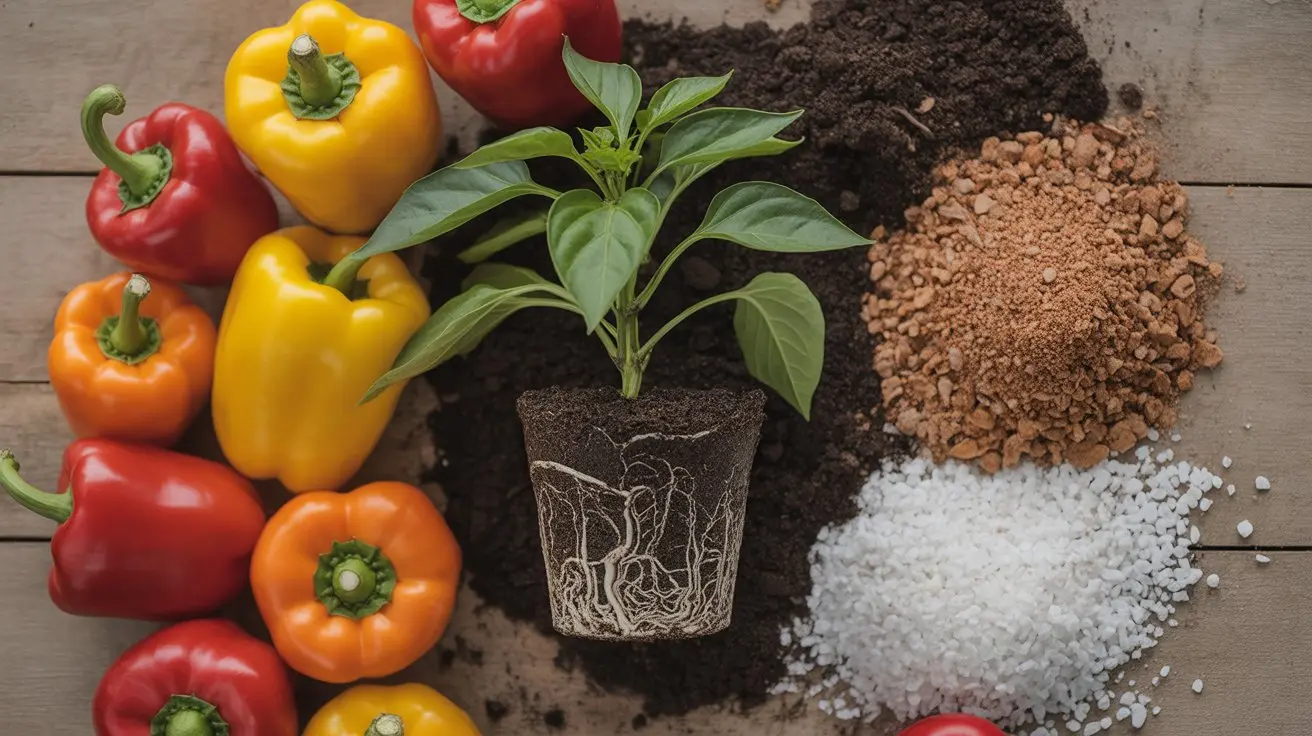
In a pot, tilt the container and look through the drain holes first. If water pours out or the saucer is still full, empty the saucer and raise the pot on feet, bricks, or a rack.
- Wait until the top layer is less wet so soil holds together.
- Slide the root ball out only if the plant is small enough to handle safely.
- Look for white or tan roots on the outside.
- Smell the mix near the bottom of the pot.
- Check whether drain holes are blocked by roots, plastic, or compacted mix.
For raised beds, compare the sick plant with one at the bed edge. If only the low middle plants show yellowing and droop, the problem is site drainage, not a pepper variety that suddenly became fussy.
Edge plants often dry faster, while low middle spots can stay wet long after the surface looks normal.In a garden bed, check the planting area instead of pulling the whole plant first. A low spot, clay pocket, or buried drip line leak can keep one plant wet while its neighbors look normal.
Healthy roots smell earthy. Sour smell, black mush, and a collapsing crown move the case from simple overwatering toward disease.
Fix a mild case
A mild case needs restraint first. Stop watering, move containers out of standing rain if possible, and let the top several inches dry before you water again.
Do not put a stressed pepper in full shade for days. Give bright light with less afternoon punishment if the plant is badly wilted, because it still needs energy to grow new roots.
Scratchy fixes can make the damage worse. Avoid tearing through the root ball, adding fertilizer to wet soil, or pruning healthy leaves just because they look limp.
Give a mild case several days of better air before judging it. Pulling, feeding, pruning, and repotting all at once makes it impossible to know which change helped or hurt.
Expect the recovery to look uneven. The plant may drop the worst lower leaves, pause for a few days, then restart from the growing tip once the root zone has air again.
When the plant restarts, new growth is the proof. Old yellow leaves may not turn green again, but a firm stem and fresh leaf tips show the root zone is improving.
Root rot threshold
Root rot is the point where wet soil has already damaged the roots. The plant may wilt harder on a hot afternoon because it has fewer working roots, even though the soil is still wet.
NC State Extension describes Phytophthora blight of peppers as a soilborne disease that often begins around roots and crowns, with wilting under wet conditions and dark crown lesions as it advances. It favors saturated soils and warm temperatures from 75 to 90 F.
After repotting, water once to settle the mix, then pause. The fresh mix should be damp around the roots, not reset to the same saturated condition that caused the damage.
Do not trim every brown root on a weak plant. Remove only mushy, dead material, because the remaining pale roots need to stay attached if the plant is going to recover.
If only a few roots are brown but the crown is firm, repotting into a fresh, draining mix can save a small container plant. In a garden bed, the better fix is usually drainage, raised planting, and rotation away from peppers, tomatoes, and eggplants.
Containers fail faster
Containers swing faster than beds because the root zone is small. A small plastic pot can dry hard in heat, then stay saturated after one heavy watering if the mix collapses.
Maryland Extension recommends watering containers until water drains out, but also emptying saucers afterward. That second step is where many pepper pots fail.
A compact jalapeno plant in a pot may recover quickly after drainage improves. A larger thick-walled bell pepper plant in the same pot size may stay stressed because the root volume is too small.
The potting mix ages too. Old peat-heavy mix can shrink away from the pot wall, then take water unevenly, with some pockets soaked and other roots dry.
If this keeps happening, move up in pot size before changing your whole watering plan. The container size rule matters most once roots fill the pot.
Water after checks
The next watering should be earned. UMN Extension's vegetable watering advice says to check soil conditions and water when soil is dry two inches below the surface.
In beds, replace the pot-weight check with a trowel check. Open a small slit beside the plant and look at the soil two to four inches down before adding water.
Morning is the safest restart time. If you water late in the evening, the plant sits through a cool, wet night with slower root activity.
For peppers recovering from overwatering, use that as a minimum check, then add pot weight and leaf recovery. A plant that is wet two inches down does not need sympathy water.
- Water only when the top two inches are dry or nearly dry.
- Water at soil level, not over the leaves.
- Use one deep watering instead of several shallow passes.
- Empty saucers after water drains through.
- Skip fertilizer until fresh growth appears.
Leaf curl can linger after the root zone improves. If the new growth curls while the soil is normal, compare it with leaf curl patterns before you keep drying the plant.
Prevent repeat trouble
Prevention starts before the next watering. Use a loose mix, open drain holes, mulch in beds, and enough root space that the plant does not swing from dry to swampy every two days.
For in-ground peppers, drainage beats schedule. Utah State University Extension says peppers do poorly in heavy, wet soils and recommends raised beds where drainage is weak.
For new plants, get the planting depth and soil line right from the start. The transplant depth and drainage rules apply to jalapenos, but the same root logic holds for most peppers.
For containers, the equivalent fix is physical. Raise the pot, remove decorative sleeves that trap water, and make sure the drain holes are not sealed against a flat saucer. Then change the watering interval only after the container can drain by design.
If the site always stays wet after rain, change the site before changing the watering app reminder. Raised rows, wider spacing, and drip irrigation solve more than another schedule guess.
Mulch helps only after drainage works. Mulch over a wet bed can slow evaporation and hide the problem, while mulch over a draining bed keeps the next dry-wet swing smaller.
The final rule is plain: water the soil you have, not the schedule you planned. Clay, mulch, pot size, heat, wind, and fruit load all change the interval.
Overwatering Pepper Plants: Signs, Fixes, and Root Rot FAQ
- University of Maryland Extension - Maintaining container grown vegetables
- NC State Extension - Phytophthora blight of peppers
- University of Minnesota Extension - Watering the vegetable garden
- University of Minnesota Extension - Managing phytophthora on farms
- Utah State University Extension - How to grow peppers in your garden