
Jalapeno Planting Timing and Spacing
Plant jalapenos after frost danger has passed and nights stay above 50 to 55 F. Space most transplants 18 inches apart in rows 30 to 36 inches apart, or use one strong plant per 5-gallon container. The best planting day is cloudy or late afternoon, with watered roots, warm soil, and no buried peat rim pulling moisture away.
Jalapeno planting works best after the soil has warmed and nighttime lows stay above 50 to 55 F. Plant too early and the transplant may sit still, yellow, or drop flowers before it ever starts growing.
The planting job is narrower than a full grow guide. Here we are choosing the right day, spacing, hole depth, pot size, and first-week care so the plant starts moving instead of stalling.
Warm nights first
Night temperature is the planting gate. University of Minnesota Extension says peppers can move outdoors after nighttime lows are above 50 F, while Illinois Extension warns that nights below 50 to 55 F slow growth and can drop flowers.
A protected patio can trick you here. If the bed is still cold two inches down, plant a container first and wait on the in-ground row, because potting mix warms faster than heavy spring soil.
The air near a south wall may feel warm, while the bed two inches down is still cold and wet from spring rain.Soil temperature matters because roots, not leaves, start the plant after transplant. A warm sunny day over cold soil can make a transplant look fine above ground while roots barely move.
That is why we wait longer for jalapenos than for cool-season greens. A plant can survive a chilly night and still lose two weeks of momentum.
If you need a date, use the planting date calculator as the planning tool, then check the forecast in the week before you dig. The last frost date starts the conversation, and warm nights finish it.
Pick the window
Most home gardeners plant jalapenos as transplants, not direct seed. The plant has a long warm-season path, and indoor starts give it a head start before outdoor weather is ready.
If a nursery plant already has flowers, pinch only the weakest early bloom if the plant is small or root-bound. A stout plant in a large cell can keep a flower, but a stressed one needs roots before fruit.
University of Minnesota Extension recommends starting pepper seed about 8 weeks before outdoor planting. If you are buying nursery plants, choose short, sturdy transplants with closely spaced leaves instead of tall, soft plants already stretched for light.
- Plant after frost danger has passed.
- Wait for a run of nights above 50 to 55 F.
- Choose late afternoon or a cloudy, calm day.
- Delay if the bed is muddy, cold, or crusted from recent rain.
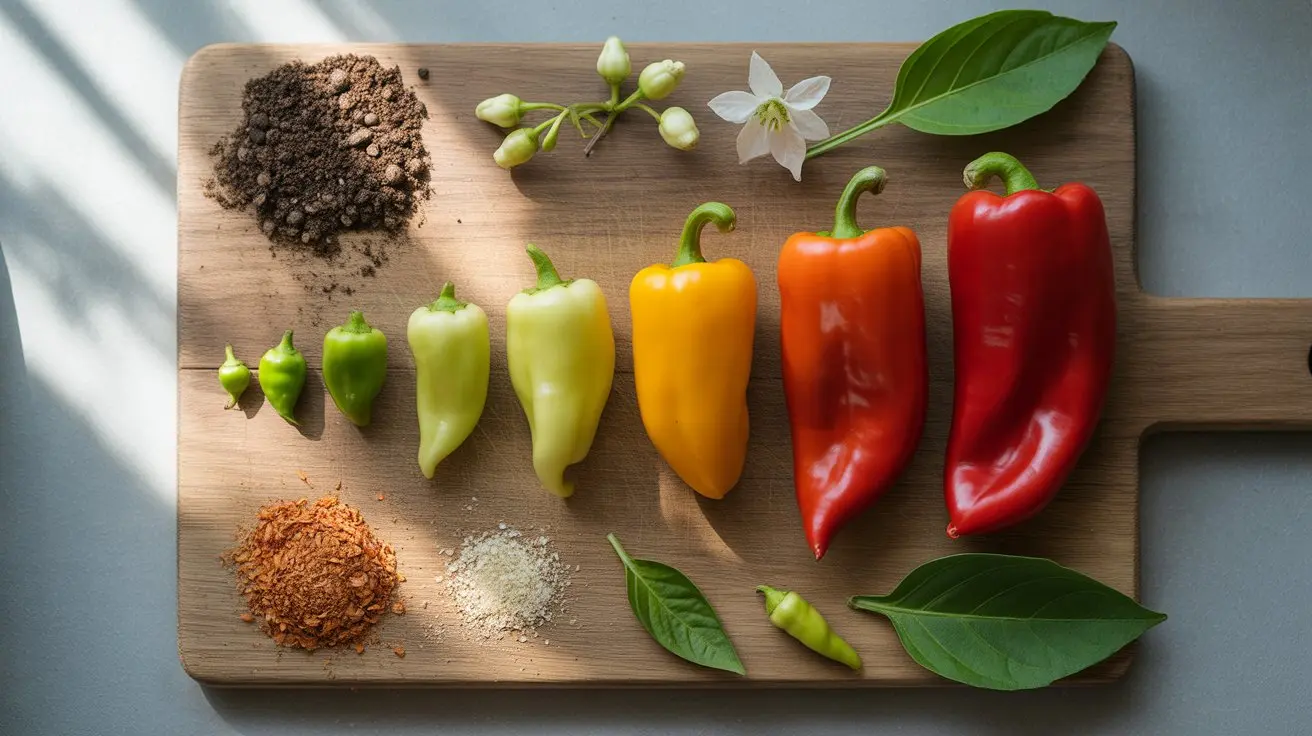
This window overlaps the early part of the jalapeno stage timeline, but the decision here is the outdoor move, not the whole life cycle.
Harden before planting
This is also the moment to cull weak starts. A short backup transplant often beats a tall stressed one, especially when the tall plant has already flowered in a cramped cell.
A plant with a cracked stem, yellow center growth, or roots wrapped hard around the pot will not catch up just because the weather is ready.Hardening off belongs before the hole is dug. A seedling raised under lights has thin outdoor skills, even when it looks green and healthy indoors.
Give the plant a short outdoor visit first, then longer visits over the next week or two. Wind and sun toughen the leaves, while cool nights tell you whether the plant is ready to stay outside.
Skip this step and the plant may look overwatered, sunburned, or cold-stalled within 24 hours. That is not a planting-depth issue. It is a training issue.
Spacing choices
Jalapenos stay smaller than many bells, but the harvest hand still needs space. If branches overlap before fruiting, they will be hard to inspect once pods hide under the canopy.
Start spacing from your maintenance path, not only from the seed packet. If you cannot reach the center of a bed without brushing wet leaves, disease pressure and broken branches both rise.
Spacing decides airflow, root competition, and how easy it is to harvest. Crowding can work in cooler gardens, but it becomes risky in humid beds where leaves stay wet.
University of Minnesota Extension gives a clear home-garden spacing of 18 inches between pepper plants and 30 to 36 inches between rows. University of Maryland Extension gives a wider range, 12 to 24 inches in-row and 30 to 36 inches between rows, which fits different bed systems and plant sizes.
| Planting setup | Good starting spacing | Why it works |
|---|---|---|
| In-ground row | 18 inches apart, rows 30 to 36 inches | Easy airflow, room to pick, less leaf crowding |
| Wide raised bed | 12 to 18 inches in a staggered pattern | Uses bed space while keeping leaves separated |
| Container | One plant in a 5-gallon minimum pot | Enough root room for a compact jalapeno |
| Small patio pot | Only for compact varieties | Useful when yield matters less than space |
If you want to compare pot sizes beyond this planting day, use the pepper container size reference before buying containers.
Prepare the root zone
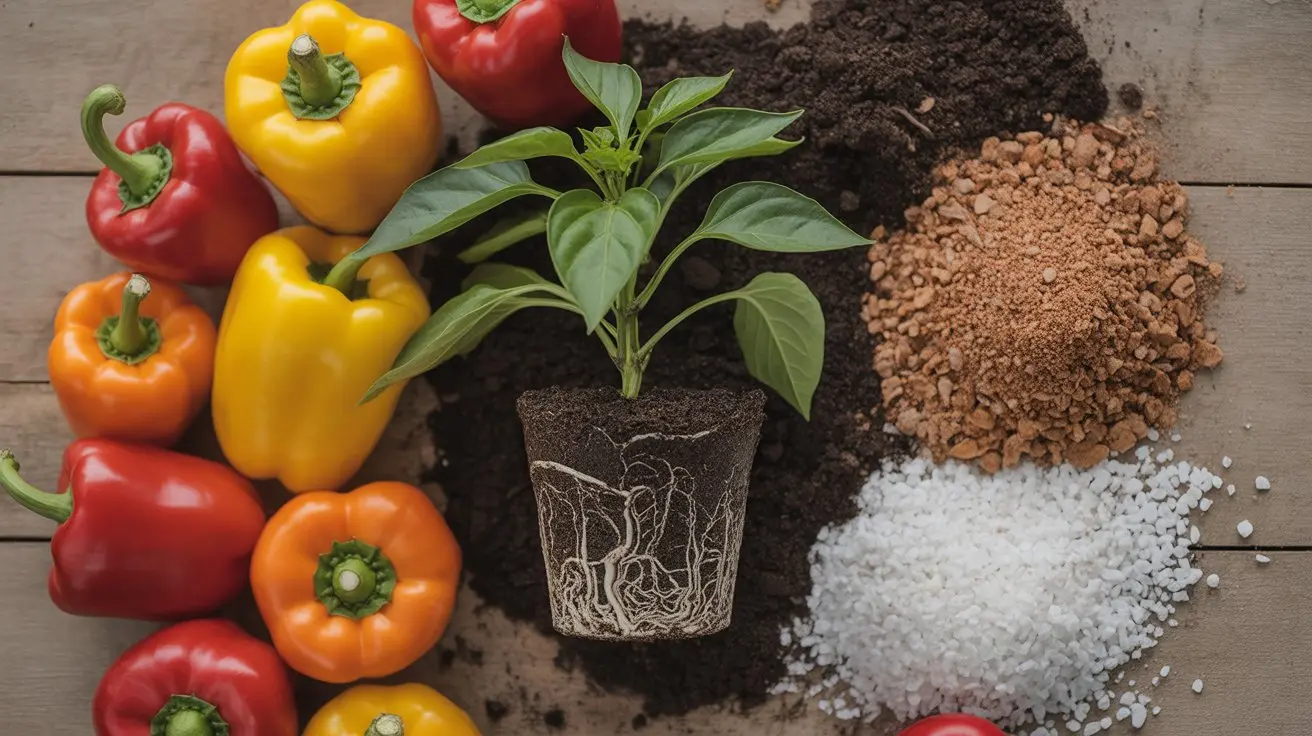
Drainage is more important than a perfect-looking bed. Utah State University Extension notes that peppers need well-drained soil and do poorly in heavy, wet soils.
Work compost into poor soil before planting, but do not turn the hole into a rich pocket that stays wetter than the surrounding bed. Roots should move out into the bed, not sit in a soggy bowl.
University of Minnesota Extension lists a soil pH of 6.5 to 7 as a good range for peppers. A soil test is better than guessing, especially if past pepper plants grew leaves but set few pods.
If your soil test shows low fertility, correct the bed before planting rather than dumping amendments into one hole. A slow, even correction also makes watering easier, because water moves through the whole bed instead of stopping at a rich, spongy planting pocket.
A uniform root zone is easier for a young pepper to read.Do not add fresh manure in the planting hole. It can burn roots, push soft growth, and make moisture harder to read right where the young roots need stability.
Raised rows help when spring soil stays wet. In containers, the same idea becomes a loose potting mix plus drain holes that actually stay open.
Set the transplant
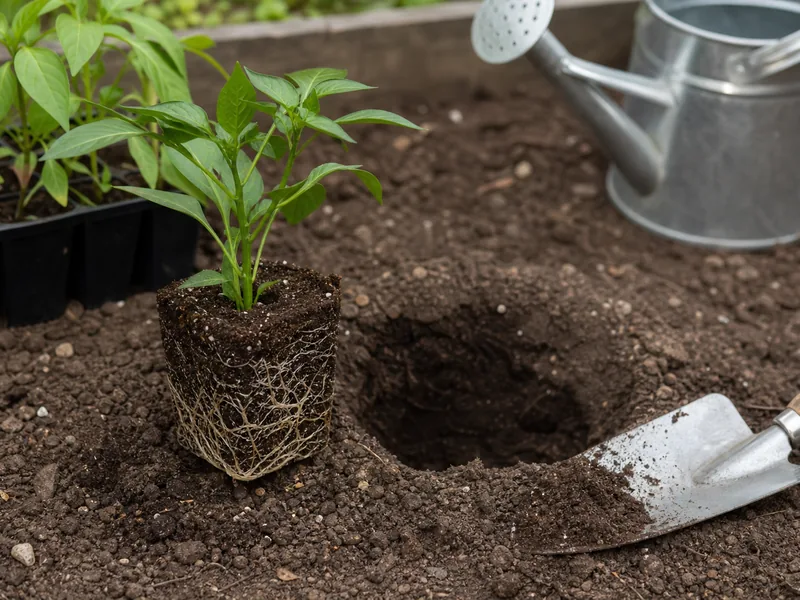
The actual planting move should be boring and gentle. Water the plant before it leaves the pot, handle the root ball instead of the stem, and set it at the same soil line it had in the container.
Minnesota's pepper guidance warns that peat pot rims can wick water away if they sit above the soil. Tear or bury the rim fully so the pot does not dry the root ball from the edge.
- Dig a hole just wide enough for the root ball.
- Slide the plant out with the roots intact.
- Set the original soil line level with the bed or pot mix.
- Firm soil around the root ball without packing it hard.
- Water slowly at the base until the planting zone settles.
If the transplant is root-bound, loosen only the outside roots that circle the pot. Ripping the root ball open creates another stall, especially when nights are still borderline.
A compact medium-heat jalapeno plant does not need deep burial like a tomato. If the stem is weak, fix the light and support problem instead of hiding it under soil.
Bed or pot
Ground planting gives roots more room and buffers moisture swings. Container planting gives control, but the pot can heat, dry, and waterlog faster than a bed.
A container also needs a watering plan before the plant goes in. If water does not drain cleanly from an empty pot, the jalapeno will inherit that problem on day one.
Container color and placement change the planting decision. A black pot on concrete heats faster than a tan pot on mulch, so the same 5-gallon volume can behave like two different gardens.
For most jalapenos, a 5-gallon container is the working minimum. Bigger pots are easier in hot weather because the root zone changes temperature and moisture more slowly.
Use one plant per normal container. If you want to push close spacing, do it in a wide raised bed with airflow, not by forcing two full jalapenos into one small pot.
The potted jalapeno setup page goes deeper on container mix, weight checks, and patio heat. This planting page only needs the starting rule.
First-week care
The first week after planting is a recovery week. Do not judge success by instant top growth, because roots usually restart before leaves show much change.
Keep the soil evenly moist, not soaked. University of Minnesota Extension recommends soil-level watering and warns that wet leaves are more disease prone, so avoid overhead sprinklers when a hose wand or drip line can reach the base.
- Check soil moisture with a finger before adding water.
- Shade only if the plant wilts hard in direct sun after transplant.
- Wait on heavy fertilizer until you see fresh growth.
- Keep mulch away from the stem for the first few days.
Do not chase every early droop with a hose. A new transplant can sag at midday and recover by evening while roots are still adapting.
If the plant droops while the soil is already wet, use the overwatering check before adding another round.
Mulch and support
Mulch is not just a summer comfort move. A thin mulch layer after the soil warms keeps moisture swings smaller and keeps mud from splashing onto lower leaves.
Support depends on fruit load, not just plant height. A small stake at planting is easier than trying to push one through the root zone after the plant carries pods.
If you plant several peppers, leave yourself a walking path wide enough to pick without snapping branches. The best spacing plan still fails if every harvest turns into a wrestling match.
Common misses
Most planting misses are small choices made on the right day for the wrong reason. The plant looks ready, so it goes out before the nights are ready.
| Mistake | What happens next | Cleaner fix |
|---|---|---|
| Planting before warm nights | Slow growth, pale leaves, flower drop | Wait for stable 50 to 55 F nights |
| Leaving peat rim exposed | Root ball dries from the edge | Bury or remove the rim |
| Crowding in humid beds | Wet leaves and harder harvest | Use 18-inch spacing as the default |
| Using a tiny pot | Fast drying, fast overheating, lower yield | Use a 5-gallon minimum |
| Watering every day by habit | Low oxygen around roots | Use soil-level watering and moisture checks |
Where planting stops
Planting sets the start, not the whole crop. Flower timing, pod count, heat, and harvest rhythm still depend on weather and care after roots settle.
Use the pepper transplant basics page for the full crop path after planting. If you are planning how many plants to set, the yield expectation guide guide helps translate spacing into kitchen supply.
For beds with basil, onions, or flowers nearby, leave enough air around the pepper first. A companion plant is useful only if it does not shade the jalapeno, trap wet leaves, or block your hand from checking the stem base.
Companion planting should never make the jalapeno harder to water, inspect, or harvest.If you planted several varieties together, tag them at planting time. Jalapeno leaves will not reliably separate the plant from other Capsicum annuum types until pods form.
Once the plant starts pushing new leaves, shift your attention from the hole to the plant. The next useful question is not whether you planted perfectly; it is which stage the jalapeno has reached and what that stage needs.