
Jalapeno Plant Stages and Care Timeline
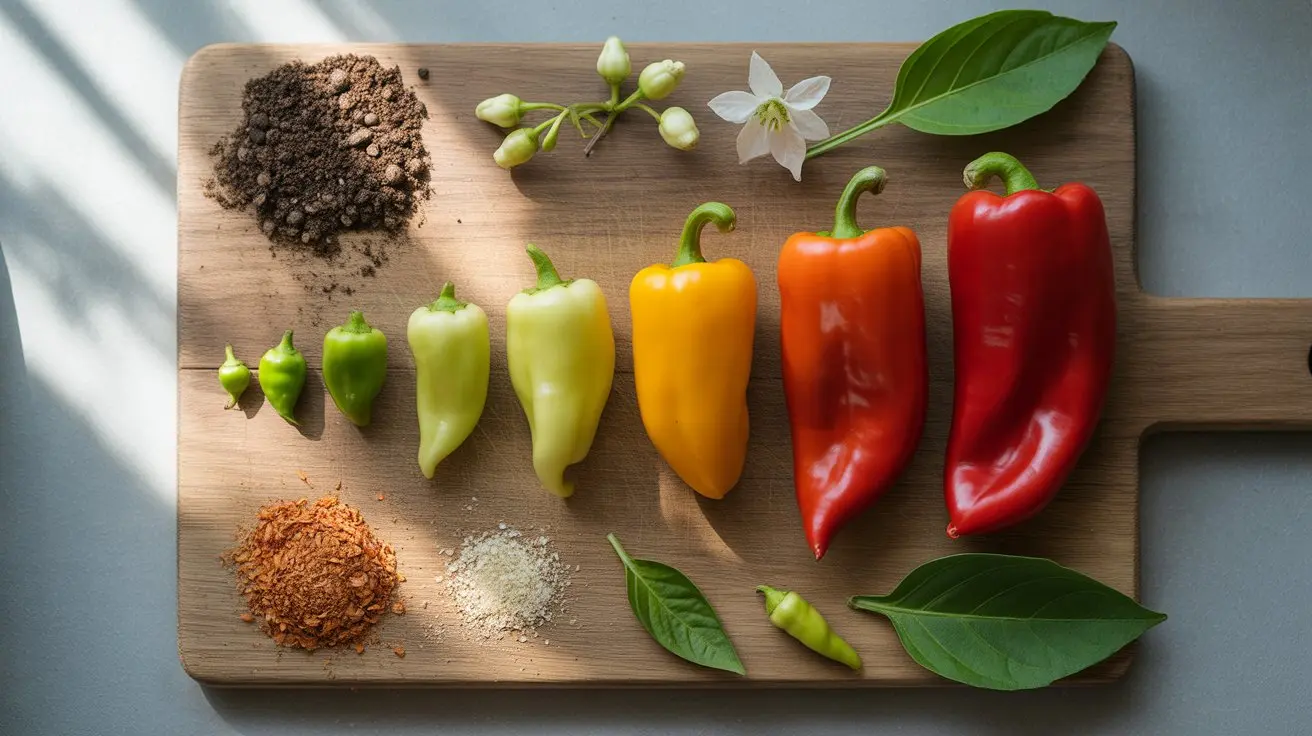
Jalapeno plant stages move from germination to seedling growth, outdoor hardening, flowering, fruit set, green harvest, and red ripening. Most plants need about eight indoor weeks before planting outside, then roughly 70 to 85 days from transplant to mature peppers. The care changes at each stage, so match water, feeding, and pruning to the plant in front of you.
Jalapeno plant stages run from seed to harvest in a clear order: germination, seedling growth, hardening off, transplant growth, flowering, fruit set, green harvest, and red ripening. The exact week count shifts with light, soil temperature, pot size, and weather.
Use the stage to decide what the plant needs now. A tiny seedling needs warmth and light, a flowering plant needs steady moisture, and a red-ripening plant needs time more than fertilizer.
Timeline at a glance
The useful jalapeno timeline starts indoors. University of Minnesota Extension recommends starting pepper seed about 8 weeks before outdoor planting, then transplanting only after nights stay above 50 F.
After transplanting, University of Maryland Extension gives most sweet and hot peppers a 70 to 85 day window from transplant to maturity. Jalapenos often give usable green pods before full red color, which is why the harvest stage can start before the whole plant is done.
| Stage | Usual timing | What to watch | Main job |
|---|---|---|---|
| Germination | 7 to 21 days | Warm, evenly moist mix | Keep seed warm, not soaked |
| Seedling | Weeks 2 to 6 | True leaves and stocky stems | Add light and avoid crowding |
| Hardening off | 1 to 2 weeks | Outdoor tolerance | Build wind and sun strength |
| Transplant growth | Weeks 1 to 4 outdoors | New leaves after the move | Protect roots and keep moisture even |
| Flowering | Often weeks 4 to 7 outdoors | Open white flowers | Prevent cold, heat, and drought stress |
| Fruit set | After pollination | Tiny pods behind flowers | Keep watering steady |
| Green harvest | At full pod size | Firm green pods | Pick for more rounds |
| Red ripening | 1 to 3 extra weeks | Color change and softer aroma | Save selected pods for red flavor or seed |
Stage confidence increases as the plant makes more visible parts. A seedling only tells you it is alive, but flowers, pods, corking, and color change all give stronger evidence about where care should shift.
The ranges are planning ranges, not promises. A warm seed tray, a strong light, and a sheltered transplant week can tighten the schedule, while a cold May or a root-bound nursery plant can stretch it.
Use the table as a stage check, then use the plant as the final evidence. If the plant is making new leaves, holding flowers, or sizing pods, it has already answered the stage question better than a calendar can.
New leaf growth means the plant moved forward, even if the calendar says it should be farther along.This page tracks the stage changes. The full bed setup belongs to jalapeno planting timing, and the whole-season view belongs to the jalapeno growing plan.
Seed and sprout
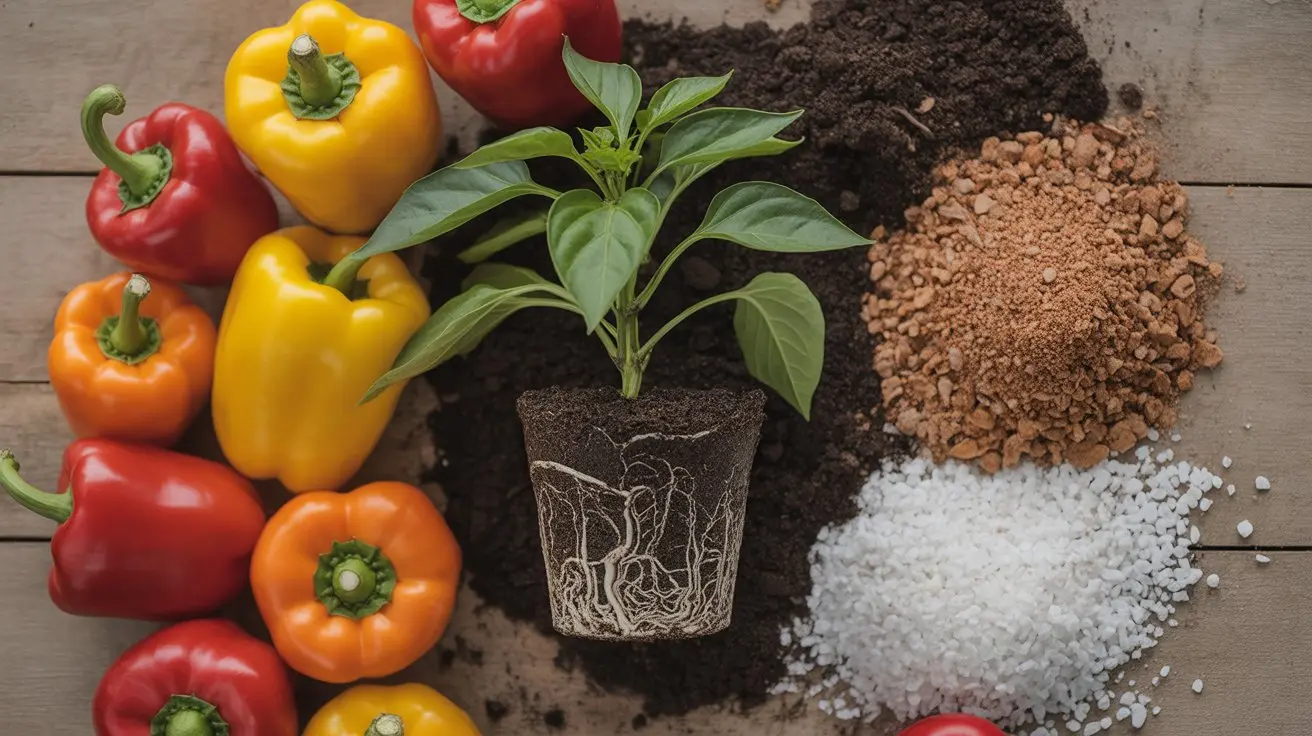
Germination is the hidden stage. The seed has one job: take up water, wake the embryo, and push a root into a warm, airy mix.
Utah State University Extension tells seed starters to keep media evenly moist but not waterlogged. That matters with jalapenos because wet seed mix can block oxygen before the sprout reaches light.
- Use a light seed-starting mix, not garden soil.
- Plant seed about one-fourth inch deep.
- Keep the tray warm, then move it under strong light as soon as sprouts appear.
- Water from the bottom or with a gentle stream so seed does not float or bury itself deeper.
Moisture is the easiest mistake in this stage because the surface dries faster than the cell bottom. We usually water seed trays by weight first and surface color second, because a dry-looking top can hide a wet lower cell.
Lift the tray before watering; a heavy cell can still be wet around the seed.Do not feed before true leaves. Seed-starting mix has enough structure for the sprout, and fertilizer in a cold, wet tray can create salt stress before the roots are ready.
If one tray stalls while another sprouts, check temperature first. In our indoor starts, the cool corner of a shelf is often the difference between a quick green hook and a pot that sits bare for another week.
True leaves matter
The seed leaves only prove that the seed sprouted. The first true leaves prove that the plant has started making jalapeno foliage and can begin feeding itself through real leaf area.
Pot up when roots hold the plug together, not when the top looks big. A tall top with a tiny root ball collapses faster during hardening off than a shorter seedling with roots through the cell.
This is the stage where weak light shows fast. Long, pale stems lean toward the window, while stocky seedlings under close overhead light stay short enough to handle transplant stress later.
Do not judge the final plant from this stage. A small medium-heat jalapeno plant and a young narrow serrano plant can look similar before the stem thickens and leaf spacing separates them.
Hardening off
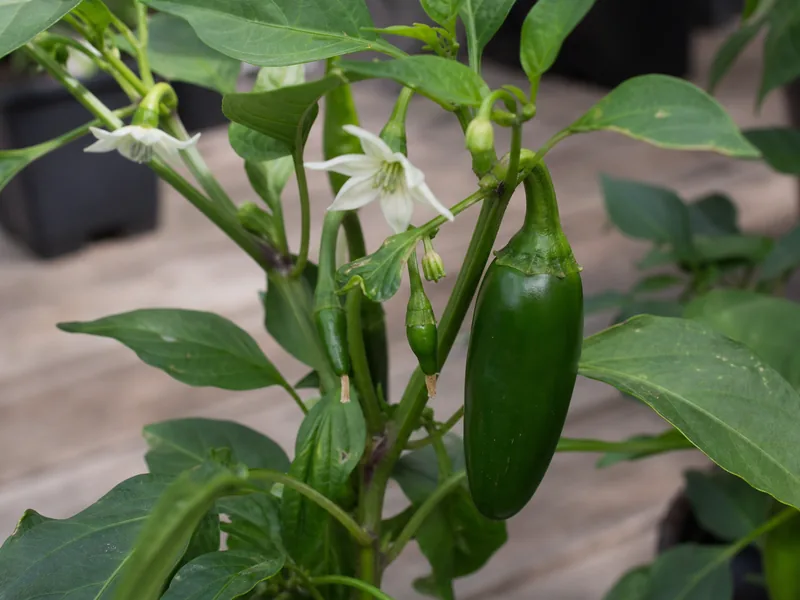
Hardening off is a training stage, not a date on the calendar. The plant has to learn sun, wind, and cooler nights before it can live outside all day.
University of Minnesota Extension suggests gradually exposing pepper seedlings to more outdoor light over 1 to 2 weeks and bringing them in if nights drop below 55 F. That slow shift prevents a healthy seedling from turning pale, limp, or sunburned after one harsh afternoon.
Use the planting date calculator to set the rough week, then watch your actual nights. A calendar can be early, and a cold wind on a tender seedling is more honest.
Transplant recovery
The first outdoor stage is recovery. A jalapeno that pauses for a week after planting is not failing if the newest leaves stay green and the stem stays firm.
Transplant shock gets worse when roots dry out, peat pot rims wick water away, or cold soil slows root growth. Minnesota's pepper guidance says to water before transplanting, avoid disturbing the roots, and set seedlings at the same soil line they had in the pot.
Success looks quiet here. The old leaves may not change much, but the growing tip should stay firm and the newest leaves should point upward by the end of the first warm week.
During this stage, use a simple soil-moisture check guide instead of watering by habit. Roots need damp soil with air in it, not a daily soak.
Flowering stage
Flowers mean the plant has enough stored energy to try reproduction. They do not guarantee fruit.
Illinois Extension notes that nights below 50 to 55 F can slow pepper growth, yellow leaves, and drop flowers. Minnesota adds that dry soil, days above 90 F, and nights outside the 60 to 70 F comfort band can weaken growth.
Flowering also changes how you read nitrogen. Dark, lush leaves with few flowers point toward too much vegetative push, while pale leaves with tiny flowers can point toward a hungry plant or weak roots.
Hand pollination is usually unnecessary outdoors, but a light shake of the plant can help in still greenhouse air. The bigger fix is still temperature and moisture, because pollen quality drops when the plant is already stressed.
At this stage, do less with fertilizer and more with stress control. Keep moisture steady, avoid pruning off healthy leaves, and do not panic if the first flower or two drops before the plant settles.
Green pod stage
Fruit set begins when a tiny pod stays behind the flower. The calyx thickens, the pod lengthens, and the plant starts spending more water and minerals on fruit than on new leaves.
Green jalapenos are already a real harvest stage once they reach full size and feel firm. Minnesota Extension notes that peppers do not need to turn red before picking, and repeated harvest keeps plants setting more flowers.
Fruit set is also when support starts to matter. A short stake or soft tie belongs here if the plant leans under pod weight, because waiting until branches bend can snap the junction you were trying to save.
A jalapeno may not look tall, but a cluster of pods on one side can twist a young branch after rain or wind.Pod size beats day count at this stage. A jalapeno from a compact plant may finish shorter than one from a vigorous bed plant, so compare each pod with the plant's own mature fruit, not a supermarket package.
That tradeoff matters. Pick green for crunch, yield, and pickling, or let selected pods hang if you want the sweeter red stage. For exact picking cues, use the green-pod harvest timing page.
Red ripening stage
Red ripening is a waiting stage. The plant is not making a new pepper; it is changing the chemistry and color of one that already reached size.
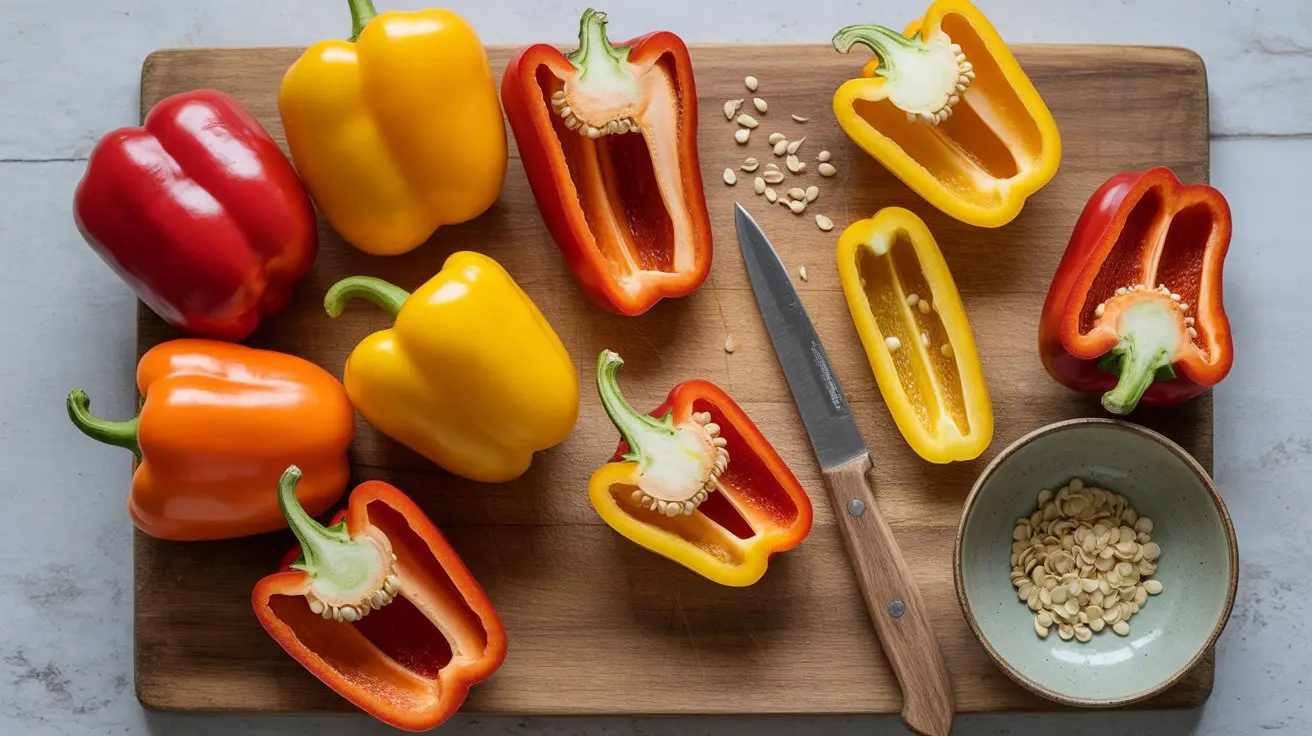
University of Maryland Extension says peppers can ripen into red, orange, yellow, brown, green, or purple depending on variety, and that ripe peppers generally increase vitamin A and C. For jalapenos, red usually means softer texture, fuller aroma, and a better seed-saving stage.
Leave only the pods you really want red. A plant loaded with finished red pods may slow its next set, while a picked green plant often keeps trying.
Stage problems
Most jalapeno stage problems come from matching the wrong fix to the wrong stage. More fertilizer will not warm cold roots, and more water will not cure waterlogged roots.
| What you see | Likely stage issue | Better next move |
|---|---|---|
| Seedlings stretch and lean | Light is too weak or one-sided | Lower the light and rotate trays |
| Seedlings collapse at soil line | Damping-off risk in wet, crowded trays | Improve airflow and use cleaner, drier media next round |
| Plant sits still after transplant | Cold nights or root disturbance | Wait for new growth and protect the root zone |
| Flowers drop with no pods | Temperature or water stress | Stabilize moisture and wait for better weather |
| Leaves droop in wet soil | Roots may lack oxygen | Use a wet-root diagnosis guide before watering again |
If the plant is healthy but short, compare it with normal pepper plant height before you assume a problem. Compact does not mean weak.
Care by stage
Care gets simpler when the stage shapes the decision. Seedlings need light, transplants need root recovery, flowers need steady moisture, and fruiting plants need support from a healthy leaf canopy.
- Seedling: warm mix, close light, gentle watering, and room between leaves.
- Before outdoor planting: one to two weeks of hardening off and a night-temperature check.
- After transplant: deep settling water, no root disturbance, and patience before feeding hard.
- Flowering: even moisture and less nitrogen pressure.
- Fruiting: pick mature green pods if you want more rounds, or reserve a few pods for red flavor.
Keep quick notes when the first flower opens, first pod sets, and first full-size green pod appears. Those notes also reveal stress patterns: late flowering points to slow early growth, while flowers without pods point more toward weather, moisture, or pollination conditions.
Those three dates are more useful next season than a generic seed packet timeline because they reflect your light, containers, and weather.That rule keeps care from lagging behind the plant. A flowering seedling in a tiny pot is not ready for fruiting care; a rooted outdoor plant with full-size pods is.
If two stages seem to happen at once, trust the more demanding one. A plant with flowers and small pods has entered fruiting care, even if it is still adding height.
For a broader crop calendar, the pepper growing calendar helps you place these stages against your frost dates. The stage names stay the same; your local weather decides when each one starts.