
Pepper Plants Not Growing: Why They Stalled
Pepper plants not growing are usually stalled by cold soil, cramped roots, transplant shock, uneven water, or weak light. Fertilizer helps only after the roots, temperature, and pot size can support growth.
Pepper plants not growing are usually stalled by the root zone, not by laziness or a missing secret feed. Check soil warmth, pot size, transplant shock, water pattern, and light before adding fertilizer.
A stalled pepper can stay green for weeks. The question is whether it is pausing after stress or sitting in conditions that keep roots from working.
Cold soil is the first stall to rule out
Peppers are warm-season plants, and cold roots method slow the whole plant. University of Maryland Extension recommends moving peppers outdoors only after warm conditions settle because cold soil delays growth and recovery.
This is why an early transplant can look frozen in place. The stem stays upright, the leaves stay green, but no new nodes form.
Use a soil thermometer instead of guessing from air temperature. Raised beds warm sooner than heavy ground, while black pots can swing from cold mornings to hot afternoons.
If the soil is still cool, the best move is patience and protection. Add a light mulch only after the soil warms, use row cover on cold nights, and avoid heavy watering that keeps the root zone chilled.
Transplant shock pauses new growth
A pepper seedling has to rebuild root contact after planting. During that time, the top may stop growing while the plant repairs the below-ground system.
Utah State University Extension emphasizes hardening off transplants before outdoor planting. That hardening period matters because a soft indoor plant can stall badly when sun, wind, and cooler nights hit at once.
Mild transplant shock should improve within a couple of weeks. New leaf color, firmer stems, and small side shoots are better signs than sudden height.
If the plant wilts every day after transplanting guide, treat that as a water-flow problem, not a normal pause. The checks in transplanting pepper seedlings fit that situation better.
| Stall clue | Likely cause | Best first move |
|---|---|---|
| No new leaves after cold nights | Cold soil | Warm the bed and wait |
| Plant stalls after planting out | Transplant shock | Steady water and wind protection |
| Leaves pale from the bottom | Nutrient or root issue | Check moisture before feeding |
| Pot dries out daily | Cramped roots | Repot or water more evenly |
Cramped roots keep small plants small
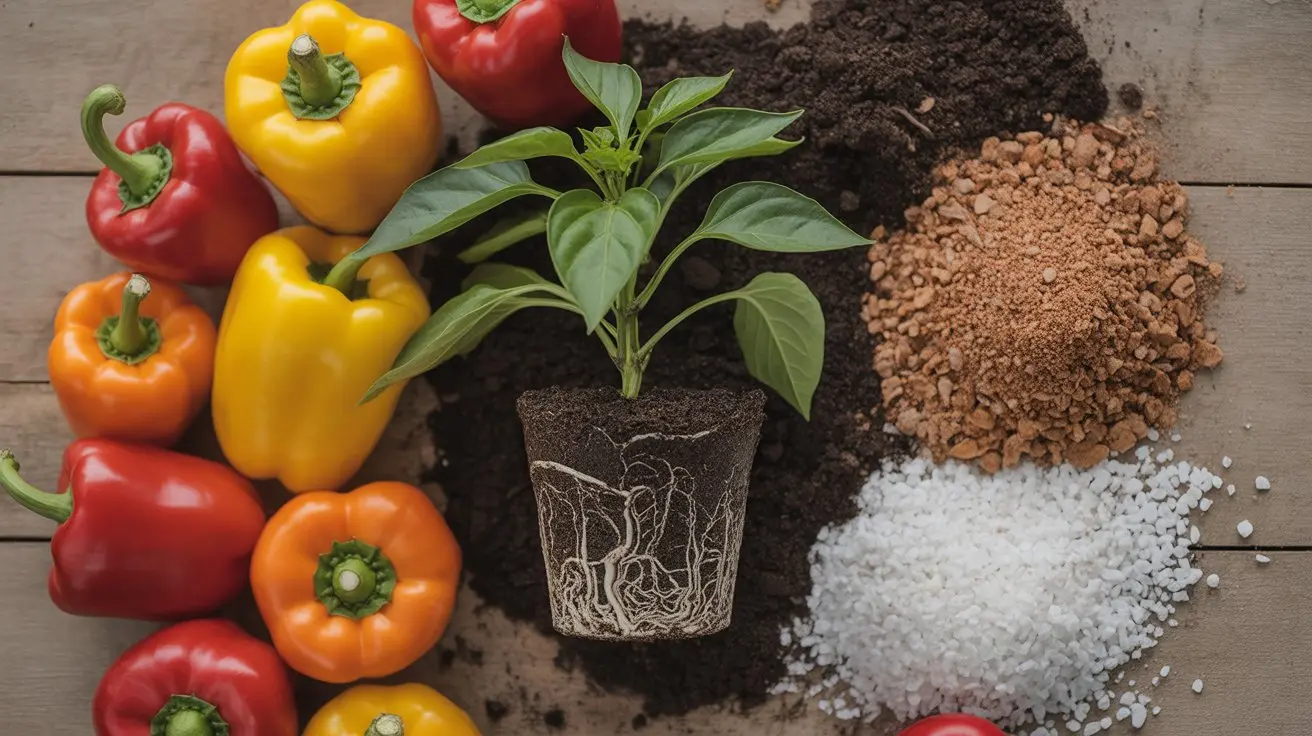
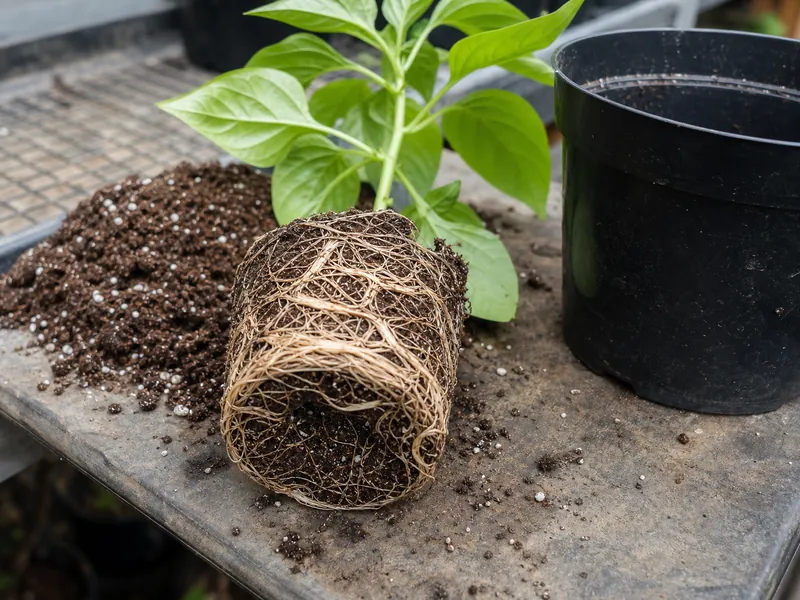
A root-bound pepper guide can look tidy above the soil while the roots circle the pot. The plant survives, but it cannot expand enough to support fast new leaves or flowers.
Slide the root ball out only when the plant is not wilted. If white roots wrap around the outside and the mix dries within a day, the pot is now the limiter.
Repot one size up rather than jumping into a huge wet container. Fresh mix around a small root ball can stay soggy if the plant cannot use the water yet.
After repotting, wait for new growth before feeding hard. Roots need oxygen and contact first.
Water and nutrients need to be read together
Many stalled peppers get fertilizer when they needed better watering. A dry root ball cannot take up nutrients well, and a soggy one cannot breathe.
University of Maryland Extension’s nutrient-deficiency guidance is useful because leaf position matters. Older yellowing leaves may point toward nitrogen, while distorted new growth can point somewhere else.
Even then, the soil condition comes first. A nutrient answer is weak if the roots are cold, circling, or sitting wet.
- Water when the top inch dries, not on a fixed calendar.
- Empty saucers under containers after watering.
- Use diluted balanced fertilizer only on actively growing plants.
- Pause feeding if the plant is wilted, cold, or waterlogged.
Weak light creates slow, stretched peppers
A pepper in weak light method may grow taller but not stronger. The spaces between leaves stretch, stems lean, and the plant delays the branching that leads to flowers.
Move containers into stronger sun gradually if they were shaded. A sudden full-sun jump can scorch tender leaves, especially after indoor growing.
For seedlings, lower the grow light and keep it close enough to prevent stretching. For outdoor plants, remove nearby shade before assuming the pepper needs feed.
The goal is compact new growth, not just more height. A shorter plant with thicker stems is often healthier than a tall plant that gained inches in dim light.
How do you restart growth without overcorrecting?
Fix one limiting factor, then watch the next set of leaves. If the soil was cold, warm it. If the roots were crowded, repot. If the plant was dry every afternoon, change watering.
Do not combine repotting, heavy fertilizer, pruning, and full sun on the same day. That gives the plant new stress before you know which fix helped.
New growth should show within one to two warm weeks when the root zone improves. If the plant also turns yellow, use the separate checks for yellow pepper leaves because the leaf pattern can narrow the cause.
A stalled pepper recovers slowly at first, then speeds up. The first sign is usually one clean new node, not a sudden harvest.
Seedlings and mature plants stall for different reasons
A seedling stall usually starts with light, pot size, or cold media. The plant has not built enough roots and leaves to push through stress quickly.
A mature pepper that stops after flowering may be carrying too many fruit, sitting too dry between waterings, or recovering from a hot spell. The same word, stalled, covers different plant jobs.
That is why we separate the plant stage before diagnosing. A tray seedling, a new transplant, and a loaded container pepper should not get the same fix.
For seedlings, check light distance and root room first. For transplants, check hardening off and soil temperature. For fruiting plants, check water reserve and plant load.
What does healthy recovery look like?
Healthy recovery starts small. The first sign may be a brighter growing tip, a new side shoot, or a leaf that expands without puckering.
Height can be misleading. A weak-light pepper may get taller while staying thin and unproductive, so judge recovery by leaf size, stem firmness, and new nodes.
Color helps, but it is not the whole answer. A plant can stay green while stalled if it has enough nitrogen but weak roots.
Take a photo every five days from the same angle. Slow progress becomes easier to see, and you stop making new changes before the old one had time to work.
When should you replace the plant?
Replacement makes sense when the plant has no clean new growth after two warm weeks, the roots are brown and soft, or the main stem is damaged near the soil line.
It also makes sense when the season is short. A tiny stalled plant in midsummer may not have enough time to catch up, especially if you need a full pepper harvest before frost.
If the roots are white and the stem is firm, give the plant one good reset before replacing it. Warm soil, correct pot size, steady water, and better light are a fair test.
Keep one backup seedling or nursery plant if space allows. That backup keeps the decision practical instead of emotional.
Why fertilizer is the last step, not the first
Fertilizer works when roots are active. Cold, soggy, or crowded roots cannot use nutrients well, so more feed may leave salts in the mix while growth stays stuck.
Use a diluted balanced feed only after the plant shows new growth. That tells you the root system is moving water and can likely handle nutrients.
If old leaves are pale but the soil is wet, dry the root zone first. If the pot is cramped, repot first. If nights are cold, wait first.
The order matters because fertilizer is not a growth switch. It is support for a plant that is already able to grow.
What if only one pepper is stalled?
One stalled plant in a healthy row points to a local issue. Look for a cold pocket, damaged roots, a buried stem injury, or a dry spot in the irrigation pattern.
Compare soil moisture beside the weak plant and a strong neighbor. Beds do not dry evenly, especially near boards, stones, and container edges.
If one plant came from a different tray or nursery pack, treat it as its own case. It may have been root-bound, underlit, or stressed before it reached your garden.
What if the whole row is stalled?
A whole row points upstream. Weather, soil temperature, watering schedule, compost strength, or light exposure is affecting every plant at once.
Do not repot or replace one plant when the row pattern says the bed is the issue. Warm the soil, adjust watering, or remove shade first.
Once the row starts moving, keep the routine steady for another week. Stalled peppers can restart and then pause again if care swings too hard.
The best practice is to solve the bottleneck before feeding. A pepper that has warm roots guide, enough room, steady water, and strong light usually starts moving before it needs anything stronger.
Once growth restarts, resist the urge to push harder. Keep the same water rhythm, wait for two or three clean new leaves, and then resume light feeding. A steady restart beats a fast surge followed by another stall.