
Peppers That Grow Upwards: Upright Pod Varieties
Peppers that grow upwards are usually normal upright-fruiting varieties, not stressed plants. Ornamental types, Tabasco, Santaka, Facing Heaven, Thai chiles, and several bird-style peppers can hold pods above the leaves, while bell peppers, poblanos, jalapeños, and most large pods hang down as they gain weight.
Peppers that grow upwards are usually varieties bred or selected to hold small pods above the leaves. Upright fruit is common in ornamental peppers, Tabasco peppers profile, Santaka, Facing Heaven, Thai-type chiles, and many small hot peppers.
This is not the same problem as curled leaves or weak stems. Pod direction comes from variety, pod weight, and stem angle. A healthy upright chile can point straight at the sky while the plant keeps growing normally.
Which peppers naturally point upward?
Small-fruited chiles are the most common upward growers. Their pods stay light enough that the fruit stem can hold them above the canopy, especially before the pods fully color.
Ornamental peppers show this trait the most because breeders often select them for display. A plant with red, purple, orange, or cream pods held above the leaves looks brighter in a patio pot than a plant with hidden hanging fruit.
Food peppers can do it too. Facing Heaven peppers are named for their upward habit, and Santaka peppers profile often carry slim pods that point up or out.
| Variety or type | Pod direction | Why it grows that way |
|---|---|---|
| Medusa | Mostly upright | Small ornamental pods stay light |
| NuMex Twilight | Upright clusters | Compact display habit and many color stages |
| Tabasco | Often upright | Small thin pods and strong fruit stems |
| Facing Heaven | Upward or angled up | Variety trait named for pod direction |
| Bell and poblano | Usually hanging | Large pods pull stems downward |
Why pod direction is not a health test by itself
An upward pepper is not automatically healthier or weaker than a hanging pepper. The fruit only tells you how that variety carries weight.
Look at the leaves and stems instead. If the leaves are flat, green, and growing, upright pods are normal. If leaves curl, yellow, or wilt, use those symptoms to diagnose the plant, not the pod angle.
This matters because small upward chiles can look strange beside a jalapeño plant profile or poblano pepper. Those bigger pods often hang because gravity wins as the wall thickens.
- Normal sign: upright pods with firm stems and new leaf growth.
- Check further: upward pods plus curled new leaves or sticky residue.
- Not a pod issue: yellow lower leaves, wet soil, or drooping stems.
- Likely variety trait: many pods point up in the same direction from early fruit set.
Upright peppers for pots and small beds
Upright-fruiting peppers fit containers well because the fruit stays visible and the plants often stay compact. That makes them useful on patios where a hidden crop is easy to miss.
Medusa peppers profile are a good example. They carry many narrow pods over a small plant, and the fruit color changes make harvest timing easier to see.
NuMex Twilight is more of a color display plant. The pods are edible, but the main value is the bright upright cluster. Keep that difference clear when choosing between kitchen yield and patio looks.
If you want a cooking pepper, pick Tabasco, Thai-type chiles, Santaka, or Facing Heaven before a purely ornamental plant. If you want a pot that looks full, ornamental types win.
How to plant upward-growing peppers
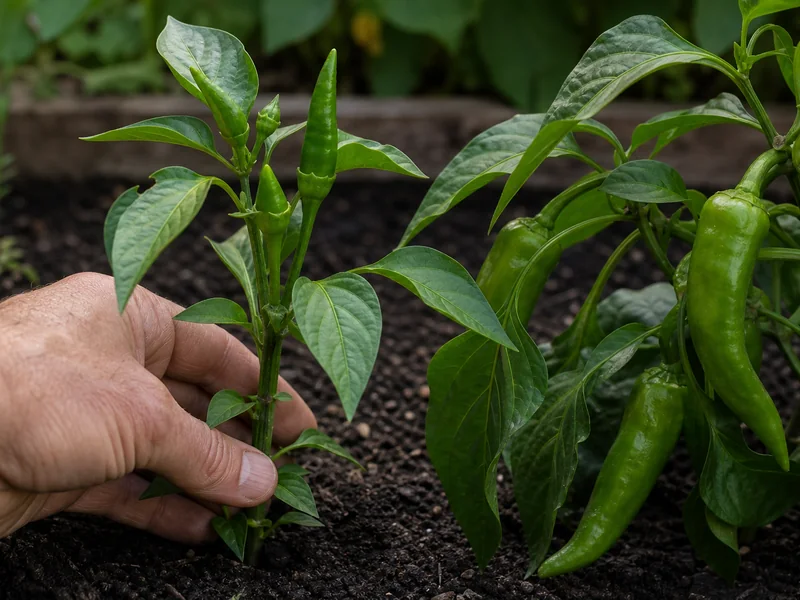
Plant upright peppers the same way you plant other small chiles. Use warm soil, full sun, and enough spacing that the pods stay dry after rain.
Most compact types can sit closer than large bells, but do not crowd them until leaves touch. Airflow matters because upright clusters can trap moisture where pods meet the stem.
Use the same transplant rules we use for other peppers. Harden plants off first, then follow a careful pepper transplant routine so the small root ball does not dry out in the first week.
| Plant type | Good spacing | Support need |
|---|---|---|
| Compact ornamental | 12-18 inches | Usually none in a pot |
| Tabasco or Thai type | 18-24 inches | Small stake in windy sites |
| Facing Heaven or Santaka | 18 inches | Stake if branches lean late |
| Mixed bed with larger peppers | Keep small chiles on the south edge | Prevent shade from tall plants |
When upward pods can signal a mix-up
Pod direction can help catch a label mistake. If a seed packet promised bell peppers and the plant grows many narrow upright pods, you probably do not have a bell pepper.
That happens most often with mixed seed trays, saved seed, or nursery tags that moved. Wait until the first pods size up before deciding. Early pod angle plus leaf size gives a better clue than seedling leaves alone.
Our pepper plant identification guide uses pod shape, flower habit, leaf size, and growth pattern together. No single clue is enough when plants are young.
- Check the plant tag and seed packet first.
- Compare pod size, not only pod direction.
- Look at whether pods grow in clusters or single fruit.
- Match the heat level after harvest before saving seed.
Care tips for upright-fruiting plants
Do not overfeed compact upward peppers just to push more pods. Too much nitrogen can make the plant leafy and hide the display you wanted.
Water at the base and avoid wetting clusters late in the day. Small pods dry faster than bells, but dense clusters still need airflow.
If aphids gather on new tips, treat the plant as a pest problem, not a pod-direction problem. UC IPM notes that aphids often cluster on tender growth and leaf undersides, so inspect the top shoots where upright pods form.
For a mixed edible bed, keep upright chiles near other small hot peppers like bird's eye chili or Thai chili. That makes harvest easier because the small hot pods stay in one zone.
Best upward peppers by use
The best upward pepper depends on whether you want food, display, or both. A bright patio plant and a cooking chile can look similar in a photo, but they do not serve the same job.
For sauce and vinegar, Tabasco is the most familiar upward grower. The pods are small, hot, and easy to harvest by the handful once they color.
For a decorative pot, Medusa and NuMex Twilight make more sense. They hold many small pods above compact leaves, so the plant looks full even before you pick anything.
For stir-fries, drying, or chile oil, Santaka, Facing Heaven, and Thai-type chiles give you a better kitchen payoff. They stay small enough to dry well, but they are not just patio color.
| Reader goal | Better choice | Skip if |
|---|---|---|
| Patio color | Medusa or NuMex Twilight | You need a mild cooking pepper |
| Vinegar sauce | Tabasco | You want thick slices for pickling |
| Drying whole pods | Santaka or Thai-type chiles | You dislike sharp heat |
| Sichuan-style cooking | Facing Heaven | You need a sweet pepper |
How to harvest peppers that point upward
Upright pods are easy to see, but they can be easy to snap the wrong way. Hold the branch with one hand and cut the stem with scissors or pruners.
Do not pull upward just because the fruit points upward. That can peel the branch or snap a tender side shoot, especially on compact ornamental plants with many pods packed close together.
Color timing depends on the variety. Some upward peppers pass through cream, yellow, orange, purple, and red stages. Others move from green to red with less show.
If you plan to cook with them, taste one ripe pod before stripping the plant. Several ornamental peppers are edible but hotter, thinner, or more bitter than they look, and one test pod saves the rest of the harvest for the right use.
- Cut pods instead of pulling clusters.
- Harvest dry plants so fruit stores better.
- Keep ornamental and cooking peppers in separate bowls.
- Save seed only after you confirm the variety and heat.
Why upward pods often look hotter than they are
Many upward peppers are small, pointed, and bright, so they look hotter than the plant tag may claim. Size and direction are not a Scoville test.
Heat depends on the cultivar. Tabasco and Thai-type peppers can be sharp. Some ornamental peppers are hot but thin and bitter. Other display peppers are grown more for color than balanced flavor.
Use a small taste test after the first ripe pod if the plant is edible and correctly identified. Start with a tiny piece from the wall, not the seeds and ribs, then decide whether the plant belongs in sauce, drying, pickling, or display.
For cooking, compare upward chiles with known hot peppers in your garden. If a pod tastes closer to cayenne, dry it or use it in sauce. If it tastes flat or bitter, keep it as a patio plant and grow a kitchen pepper beside it next season.
Seed saving from upward-fruiting peppers
Save seed only from plants you can identify with confidence. Ornamental peppers, Thai-type chiles, and small hot peppers can cross if bees move pollen between nearby flowers.
Pick a fully ripe pod from a healthy plant, dry the seed on a plate, and label it with the variety name and year. If the parent grew beside other peppers, expect the next generation to surprise you.
That surprise can be fun for a patio pot, but it is risky if you need a reliable sauce pepper. Buy fresh seed when pod direction, color, and heat must match the variety.
One last check helps at seed-buying time. If the catalog photo shows pods standing above the leaves, expect a compact plant that wants frequent picking and visible fruit. If the photo shows long heavy pods hanging low, plan for more branch support and wider paths.