
Spots on Pepper Leaves: Read the Pattern Before You Spray
Spots on pepper leaves are a symptom, not a diagnosis. Round brown lesions on lower leaves point toward bacterial spot, while water-soaked patches, one-sided wilt, mottling, or fine pale stippling lead to different causes. Check the newest damage, leaf undersides, stems, and fruit before choosing a treatment.
Spots on pepper leaves are best identified by four clues: shape, location, speed, and what else changed on the plant. A spray chosen from color alone can waste time or injure leaves that were already stressed.
Begin with the youngest affected leaf and one older leaf. Then check stems, fruit, leaf undersides, and nearby nightshade plants. The pattern across the whole plant matters more than one damaged leaf.
Read the whole pattern
Do not diagnose from one spot. Mark the affected leaves with a loose tie or take a dated photo, then look again after 48 hours. New lesions show whether the problem is active.
Location narrows the list quickly. Disease spread often begins on lower or inner leaves where moisture lasts longer, while sun or fertilizer injury follows exposed areas, edges, or recent handling.
| Pattern | Extra clue | First suspect |
|---|---|---|
| Small round brown spots | Lower leaves, humid weather | Bacterial spot |
| Water-soaked tan patches | Stem lesion or rapid wilt | Phytophthora blight |
| Yellow wedge with brown center | One side wilts first | Verticillium wilt |
| Yellow-green mosaic or rings | Distorted new growth | Virus |
| Fine pale dots | Insects, webbing, or black specks below | Mites or thrips |
| Dry edge or bleached patch | Recent sun, feed, or cold exposure | Environmental injury |
This visual key separates the first action. It does not replace a local plant clinic when several diseases share the same early symptoms.
Choose the sample before removing damaged leaves. Keep one leaf with a fresh lesion edge, one older lesion, and one apparently healthy leaf from the same branch. Photograph their positions first. A lab can read the transition from living to dead tissue more reliably than a bag of fully brown leaves.
Also note the pace on the plant. Spots appearing on several lower leaves after each rain suggest splash movement. One fixed bleached patch after a hot afternoon suggests an event. New lesions on leaves that never existed during the original event mean the cause is still active.
Round brown spots
University of Minnesota Extension describes bacterial spot on pepper leaves as small, round, brown lesions, often starting on lower foliage. Pepper lesions may lack the strong yellow halo commonly seen on tomato leaves.
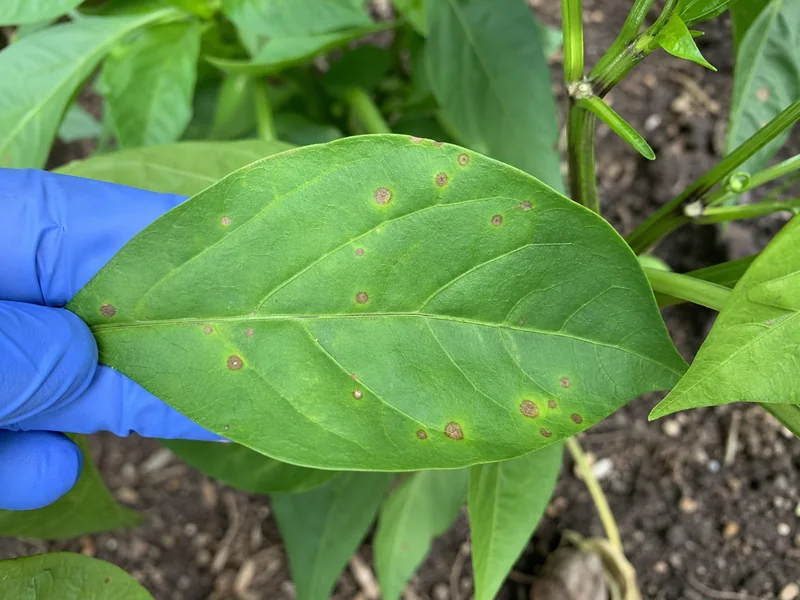
Round does not automatically mean bacterial. Cercospora and other fungal leaf spots can form pale centers, darker margins, or target-like rings. Bacterial lesions often look more angular as they meet leaf veins, while fungal spots may develop tiny dark fruiting bodies in the dead center. A hand lens can reveal that detail, but wet leaves and old damage can blur the distinction.
Check several plants before choosing a label. Bacterial splash patterns often repeat on neighboring lower leaves after rain or overhead irrigation. A fungal problem may track long leaf-wetness periods and dense canopy. When those clues overlap, send fresh leaves in a dry paper envelope to a local diagnostic lab rather than guessing from an online photo.
Warm, humid weather and splashing water favor the Xanthomonas bacteria that cause this disease. Spots may also appear on stems, calyxes, and fruit, where they become raised brown scabs near the stem end.
Remove a few heavily affected leaves when the plant still has plenty of healthy canopy. Bag them instead of composting them, and wash hands and tools before touching another pepper.
Keep leaves dry by watering at the soil line in the morning. The broader pepper pest and disease overview can help when spots appear with chewing damage or fruit symptoms that do not fit bacterial spot.
Water-soaked patches
A patch that looks wet even after the leaf dries deserves a stem and soil check. Phytophthora capsici can make water-soaked to tan leaf lesions, soft fruit spots, dark sunken stem lesions, and a fast whole-plant wilt.
Speed is the warning. If a healthy plant collapses after saturated soil or heavy rain, treat drainage and root-zone water as part of the diagnosis, not as a separate care issue.
Do not move wet soil from the affected bed on shoes, shovels, or pots. Remove badly collapsed plants with the nearby root soil, then keep runoff from flowing toward healthy peppers.
Trace the water path before the next irrigation. A low bed, blocked drain, leaking emitter, or downspout can keep one root zone saturated while the rest of the garden looks normal. In a container, slide the root ball out only when it can stay intact. Brown, soft roots and a dark crown support a root-zone problem. White or tan firm roots move the diagnosis back toward foliage or temporary drought.
Do not reuse runoff from a suspect pot. Set the container on a clean surface, empty its saucer, and keep tools used in that mix away from healthy beds. This containment step matters more than a leaf spray when the same plant has a crown lesion or rapid wilt.
A plant that droops without these lesions may have a different root or water problem. Compare the stem and soil clues with the pepper plant wilting diagnosis before removing a plant that can recover.
Wedges and one-sided wilt
A yellow wedge that turns brown inside the leaf, followed by wilt on one side, fits a vascular problem better than a surface leaf spot. University of Minnesota lists Verticillium wilt among pepper conditions that begin on lower leaves and may leave tan veins inside a cut stem.
Surface sprays cannot reach a pathogen inside the plant's water-conducting tissue. Pull a severely affected plant, keep its roots out of the compost pile, and avoid moving that soil to clean beds.
Crop rotation helps only when the rotation excludes other susceptible hosts. Tomatoes, eggplants, potatoes, and peppers share several soilborne problems, so replacing one nightshade with another does not reset the bed.
Mottling and distorted growth
Viruses tend to change the leaf pattern and the plant's shape at the same time. Look for yellow and light-green mosaic patches, rings, narrow or curled leaves, stunting, and fruit with blotches or brown rings.
There is no spray that cures a virus inside a pepper plant. Isolate the plant while checking, clean cutting tools, and compare it with healthy plants of the same variety before deciding whether to remove it.
Herbicide drift and nutrient stress can also distort leaves. Virus becomes more likely when the new growth stays malformed and neighboring plants of the same age remain normal.
Do not compost a strongly suspected virus plant. Remove it with as little contact as possible and control sap-feeding insects that can move some viruses between plants.
Stippling under the leaf
Fine pale dots are often feeding marks rather than dead leaf tissue. Tap a leaf over white paper, then inspect the underside with a hand lens for moving specks, webbing, cast skins, or tiny black droppings.
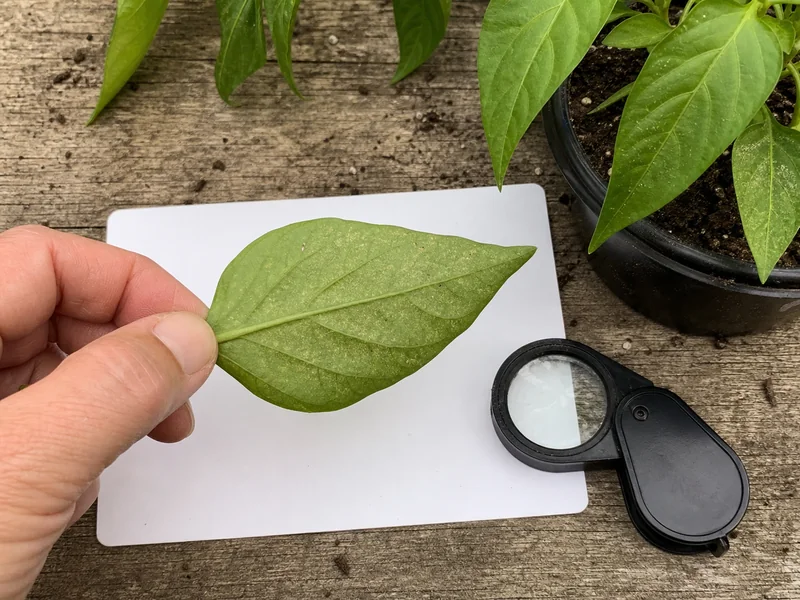
Spider mites favor hot, dry conditions and can make a dusty bronze look with fine webbing. Thrips leave silvery scars and black specks, especially around new leaves and flowers.
The thrips control method for pepper plants explains how to confirm the insect before treating. Rinsing leaf undersides and removing the worst damaged tips can reduce pressure without coating every plant in oil.
- Webbing plus bronze stippling suggests spider mites.
- Silver streaks plus black specks suggest thrips.
- Round dead lesions with firm borders suggest disease.
- Holes with missing tissue suggest chewing insects after the spot formed.
Old stippling will not disappear. Judge success by clean new growth and fewer insects, not by waiting for scarred leaves to turn green.
Damage from weather and care
Environmental injury usually follows an event. A sudden move into intense sun can bleach exposed leaves, a strong fertilizer mix can burn tips and margins, and cold can leave dark limp areas that later dry brown.
These injuries do not spread from one plant to another. New spots stop appearing after the light, salt, or temperature problem is corrected, although damaged tissue remains visible.
Brown edges across many leaves belong in the broader pepper leaf browning guide. This page stays focused on separate lesions and blotches that need pattern matching.
Flush a container only when excess fertilizer is likely and drainage is good. Do not keep saturated roots wet for days in an attempt to wash away a problem that came from cold or sun.
Act before the answer is final
You can slow many leaf problems while the exact diagnosis is still open. Stop overhead watering, separate crowded pots, remove fallen leaves, and avoid working among wet plants.
- Photograph both sides of an affected leaf.
- Check the stem at soil level and along each branch.
- Inspect fruit for scabs, soft spots, rings, or holes.
- Compare one affected plant with a healthy neighbor.
- Recheck in 48 hours for fresh damage.
Use clean scissors for selective leaf removal. If more than roughly one-third of the canopy is affected, taking many leaves at once may weaken the plant more than the spots do.
A soil test or plant clinic is worth the delay when the plant is valuable, the whole bed is involved, or a pesticide choice depends on the diagnosis. Send clear photos of the whole plant, close lesions, leaf undersides, and the bed.
Spray only for a match
Fungicides, bactericides, soaps, and oils solve different problems. None is a general medicine for a spotted leaf, and several can burn peppers in heat or bright sun.
Use a pesticide only when the label lists the crop and target problem. Follow the interval, coverage, weather, and harvest directions on that label.
| Confirmed problem | Useful action | What will not work |
|---|---|---|
| Bacterial spot | Dry foliage, sanitation, labeled protectant | Expecting old spots to heal |
| Soilborne wilt | Remove plant, contain soil, rotate hosts | Leaf spray alone |
| Virus | Remove confirmed plant, clean tools, manage vectors | Fungicide or fertilizer cure |
| Mites or thrips | Confirm insect, target undersides, monitor new growth | Copper for feeding scars |
| Weather or salt injury | Correct exposure or root-zone conditions | Repeated pesticide treatment |
If a treatment is working, the evidence appears in new tissue. Existing lesions remain as a record of damage.
Set a stop rule before a second application. If fresh lesions keep appearing after the label interval, revisit the diagnosis, coverage, and weather rather than shortening the interval. Oil on a hot leaf, copper mixed with an incompatible product, or repeated wetting can add new spots that look like treatment failure.
Break the next cycle
Sanitize the decisions as well as the tools. If only one branch carries confirmed lesions, the pepper pruning guide helps you remove it without stripping healthy canopy. Clean blades between plants, bag suspect tissue, and do not compost material tied to a persistent pathogen.
Next season's cultivar choice can lower risk when the same disease has been confirmed more than once. The disease-resistant pepper variety guide explains what a resistance label can and cannot promise. Container growers can also separate a suspect pot and change its splash pattern without moving every plant. The container pepper guide covers drainage and spacing that make that isolation useful.
Start with clean seed or healthy transplants, space plants for airflow, and water at the base. Rotate away from all nightshade crops for three to four years when a soilborne or bacterial disease is confirmed.
End-of-season cleanup removes infected leaves and volunteer nightshades that can carry a problem forward. Clean stakes, cages, trays, and cutting tools before they return to the next crop.
Resistant cultivars can reduce bacterial spot pressure, but resistance is not the same as immunity. Keep splash and leaf-wetness control in place during warm, rainy periods.
The lasting habit is simple: inspect new growth weekly. A few spots with a clear pattern are easier to manage than a defoliated plant with several secondary problems.