
Saving Pepper Seeds: How to Harvest, Dry, and Store Them
Saving pepper seeds works best from fully ripe, open-pollinated peppers that were not likely crossed with a nearby variety. Scoop clean seed, dry it hard, label it, and store it cool and dry.
Saving pepper seeds starts with choosing the right pod, not with drying technique. Seeds from fully ripe, open-pollinated peppers give you the best chance of plants that resemble the parent next season.
Hybrid peppers and peppers grown close to other varieties can still sprout. The surprise is that the next plant may not match what you saved.
Decide whether you need true seed or just viable seed
Viable seed means it can germinate. True seed means the new plant grows like the pepper you saved it from.
That distinction matters. A seed from a ripe grocery-store pepper may grow, but if the parent was a hybrid, the next plant can split traits in odd ways.
Open-pollinated varieties are the better choice when you want repeatable plants. Hybrids are fine for eating, but less reliable for seed saving.
| Seed source | Will it sprout? | Will it grow true? |
|---|---|---|
| Open-pollinated ripe garden pod | Likely, if dried well | Best chance |
| Hybrid nursery variety | Often yes | Not reliably |
| Store pepper | Sometimes | Unknown |
| Green immature pepper | Less reliable | Poor choice |
If the goal is a fun experiment, save what you have. If the goal is a reliable crop, start with a named open-pollinated variety and label it from the beginning.
This is why the seed-saving job differs from storing pepper seeds. Storage protects seed after harvest. This page decides whether the seed is worth saving in the first place.
Pick pods at full ripe color
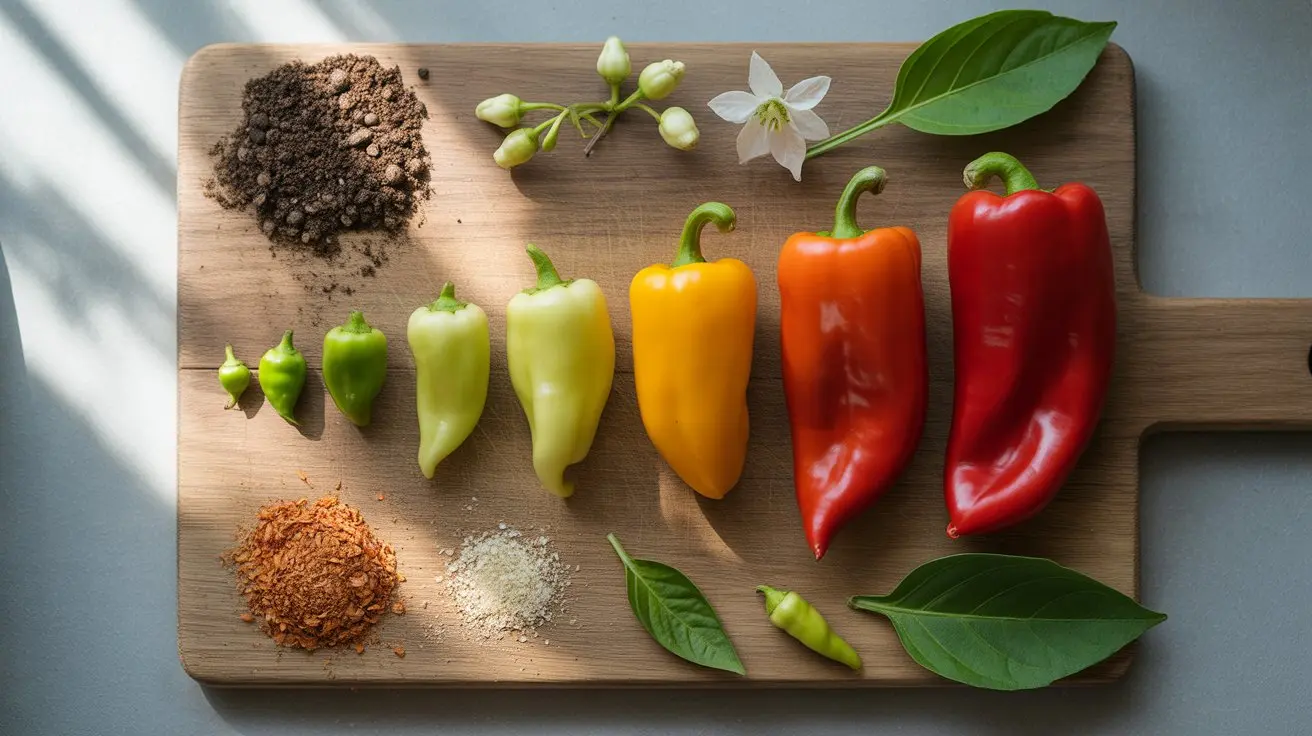
Pepper seed matures late. A pod picked green for cooking may have pale, soft seeds that dry poorly or germinate weakly.
Let the pepper reach its full ripe color on the plant when possible. For many Capsicum annuum peppers, that means red, orange, yellow, brown, or another mature color depending on variety.
Choose a healthy pod from a healthy plant. Avoid fruit with rot, insect tunneling, sunken disease spots, or fermented smell.
For seed saving, bigger is not the only goal. Pick a pod that represents what you want: shape, size, color, wall thickness, heat, and timing.
If you are saving from a thick-walled type, let the pepper go past the normal green-eating stage. A green poblano can be perfect for dinner and still be too early for reliable seed.
Know when crossing matters
Peppers can self-pollinate, but insects can move pollen between nearby flowers. The risk rises when several varieties bloom in the same garden.
If you saved seed from a plant grown beside another pepper, the seed may carry a cross. You will not see that cross in the pod you harvested. You see it in the next generation.
Isolation distance, blossom bagging, or hand-pollination lowers that risk. Most casual gardeners do not need perfect isolation unless they plan to share seed under a variety name.
- Save from one open-pollinated variety if you want predictable results.
- Bag flowers before they open when purity matters.
- Mark the protected branch with string.
- Remove the bag only after fruit starts forming.
- Label the saved seed as isolated or open-pollinated honestly.
Do not overstate the risk for home use. A crossed seed can still grow a good pepper. It just may not be the pepper you meant to repeat.
Clean the seeds without soaking them too long
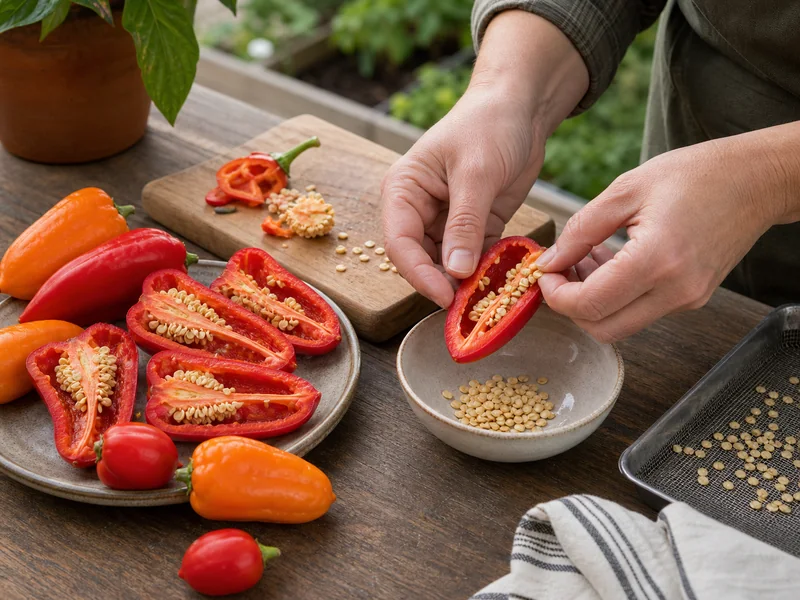
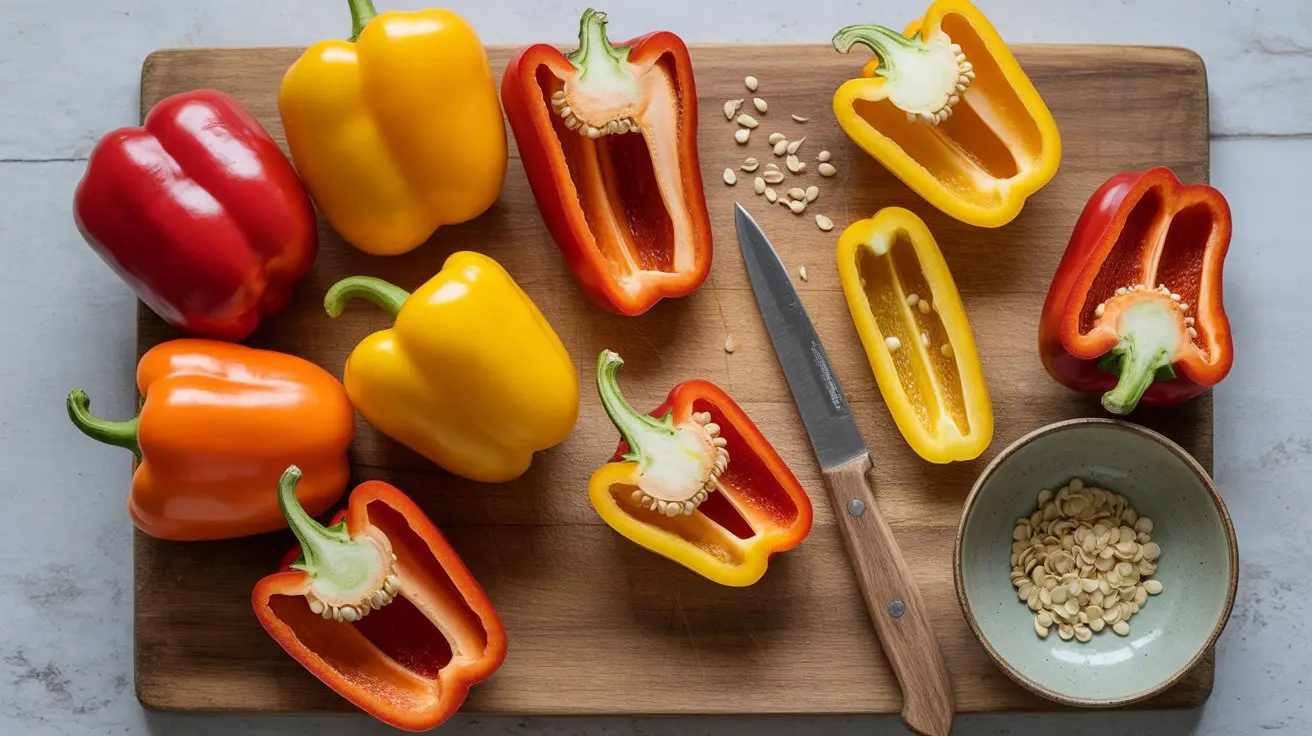
Cut the ripe pepper open on a clean board and scrape seeds from the central placenta. Wear gloves if the pepper is hot enough to bother your skin.
Separate seeds from wet pulp with your fingers or a spoon. A quick rinse is fine when pulp sticks, but long soaking is not needed for normal pepper seeds.
Spread the seeds in a single layer on a coffee filter, paper towel, plate, or fine screen. If you use paper towel, expect some seeds to stick. That is annoying, not fatal.
Label the drying surface before you walk away. Pepper seeds look alike once they dry, and a bowl of mixed seed is not a seed collection.
Keep the drying spot warm, shaded, and airy. Direct sun can overheat small seeds, while a damp kitchen corner can slow drying and invite mold.
Dry hard before storage
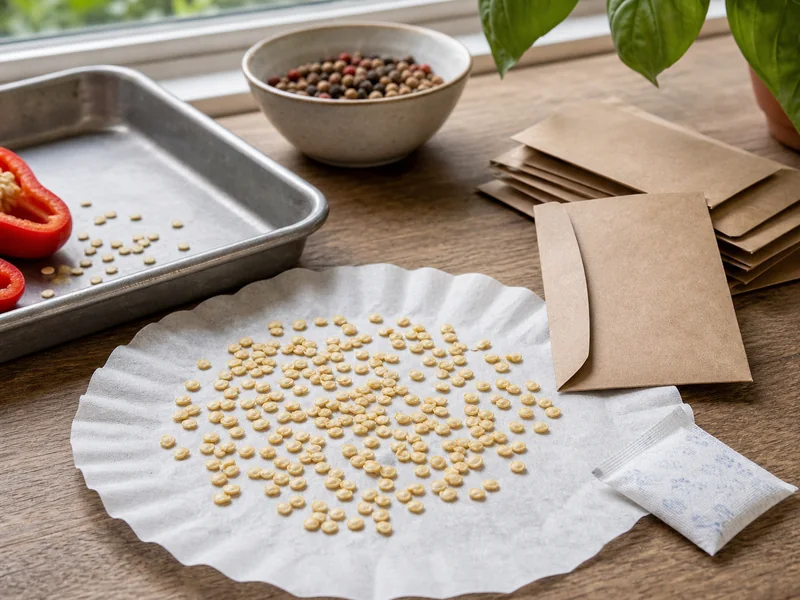
Most small batches need about one to two weeks in room-temperature airflow, depending on humidity. Seeds should feel dry, separate cleanly, and resist bending under light pressure.
Do not rush into a sealed jar. If seeds are still damp, the jar traps moisture where mold can start.
| Drying check | Good sign | Risk sign |
|---|---|---|
| Touch | Seeds feel papery and separate | Seeds feel leathery or tacky |
| Surface | No pulp clinging | Dark wet bits remain |
| Container test | No fog or odor after a day | Condensation or sour smell |
A desiccant packet can help after drying, but it does not replace drying. Think of it as insurance, not a shortcut.
Store labels with the seed
Store dry pepper seed in a labeled paper envelope, coin envelope, or small airtight container after drying is complete. Keep it cool, dark, and dry.
The label should include variety, year, plant notes, and whether the seed was isolated. A label that says only hot pepper will not help in February.
If your house is humid, seal the envelope inside a jar with desiccant after the seeds are fully dry. Open the jar only when you need seed so the whole batch does not breathe humid air repeatedly.
Cool storage extends usefulness. The broader indoor seed-starting schedule works better when you know which saved seeds are older and may need extra sowing.
For next season, test a small sample before relying on old seed. Place ten seeds on a damp paper towel, keep them warm, and count how many sprout.
When saved pepper seeds are not worth keeping
Skip seed from diseased plants, rotten pods, badly immature fruit, and mystery hybrids when you need predictable production. Saving poor seed costs more space later.
Also skip seed from a plant that performed badly unless the problem was clearly weather or your care. Seed saving is selection, so choose the plant that had the traits you want again.
For thick-walled mild peppers such as large Mexican stuffing peppers, choose pods from plants that set well and ripened fully. For smaller hot types, choose plants that produced steadily rather than one impressive pod.
If you want to maintain several varieties, use a simple notebook or spreadsheet. Record sow date, plant vigor, fruit shape, flavor, and whether the saved pod came from an isolated flower.
Best practice: save fewer batches with better labels. Ten unlabeled envelopes feel productive in summer and become useless clutter by planting season.
A clean one-pod workflow
For a small home batch, work one variety at a time. Put the pepper, knife, drying surface, and label in front of you before the pod is opened.
Cut around the shoulder, pull out the seed core, and scrape seeds onto the drying surface. Keep flesh and juice out of the seed pile as much as you can.
Write the label immediately. Include variety, color at harvest, date, plant notes, and whether the flower was isolated or open in the garden.
Move the drying tray where air can pass over it. Stir or rub the seeds apart after a day so they do not dry in clumps.
If you saved several varieties, finish one and clear the table before opening the next. Crossed labels are a more common home seed-saving failure than bad drying technique.
How to use a germination test before planting season
A germination test tells you how much seed to sow. Put ten seeds on a damp paper towel, seal them loosely in a bag, and keep them warm.
Count sprouts after the expected pepper germination window. If eight of ten sprout, sow normally. If three or four sprout, sow extra or replace the batch.
Low germination does not always mean the variety is bad. It can mean the seed was immature, dried too hot, stored damp, or kept too warm for too long.
Write the result on the envelope. Future you will know whether to trust the packet or sow heavily.
This test also keeps seed saving honest. A pretty envelope is not useful if the seeds inside cannot start strong plants.
How many seeds should you keep?
One ripe pepper can give more seed than most home gardeners need. Keep the best-looking seeds, then discard damaged, flat, dark, or stuck-together ones.
For a home packet, 20 to 40 good seeds is often plenty. That gives room for a germination test, extra sowing, and a few failed seedlings without filling drawers with old seed.
If the pepper is rare or important to you, save from more than one healthy plant. That gives a broader sample and lowers the chance that one weak plant defines next year's batch.
Do not save seed from every pod just because it is there. Seed storage becomes useful only when the labels, parent choice, and germination rate are clear.
Keep the strongest packet and share or discard the rest. Better seed discipline makes spring planting faster and less confusing.
If the seed batch matters, keep a small backup in a second envelope. That protects you from one spilled packet, one damp jar, or one label mistake.