
Serrano Pepper Planting: Timing for a Long, Heavy Harvest
Serrano pepper planting should aim for a long warm harvest window. Plant after mild nights settle, space plants for airflow, and keep roots steady so the plants can set narrow pods for weeks.
Serrano pepper planting is about giving a heavy-setting plant enough warm weeks to keep producing. Serranos are smaller than poblanos, but they can set many narrow pods over a long run.
That means timing matters. A late or chilled start shortens the harvest window before the plant ever shows what it can do.
Plant for the length of the harvest, not just survival
A serrano transplant can survive mild spring weather and still lose momentum in cold soil. Wait until frost danger has passed and nights are reliably above about 50 to 55 F.
University of Minnesota Extension recommends transplanting peppers only after nights are warm enough. Illinois Extension also notes that cold nights can slow peppers and contribute to flower drop.
For serranos, the reason is practical. You want the first flowers to form on a plant that is already growing, not on a plant still recovering from cold roots.
If your season is short, start with strong transplants rather than direct seed. The broader indoor pepper start gives serranos the head start they need.
Use the forecast, not just the last frost date. A frost-free week with cold rain can still stall a pepper bed.
Space serranos close enough for yield but open enough for airflow
Serranos usually fit tighter than large stuffing peppers, but they still need airflow around the lower canopy. Crowding makes picking harder and keeps leaves wet longer.
Use about 18 inches between plants as a reliable starting point. Give rows 30 to 36 inches if you need room to walk, weed, and pick repeatedly.
| Setup | Starting spacing | Why it works |
|---|---|---|
| Raised bed row | 18 inches apart | Good yield without leaf crowding |
| Wide bed | 18 to 20 inches staggered | Lets plants fill space evenly |
| Traditional rows | 18 inches in row, 30 to 36 inches between rows | Room for repeat harvests |
| Container | One plant per 5-gallon pot | Enough root volume for steady pods |
The spacing is tighter than wide poblano planting because serrano plants are narrower. It is still not a hedge.
If humidity is high in your garden, choose the wider end. Airflow is cheaper than disease cleanup.
Prepare the planting spot for fast root growth
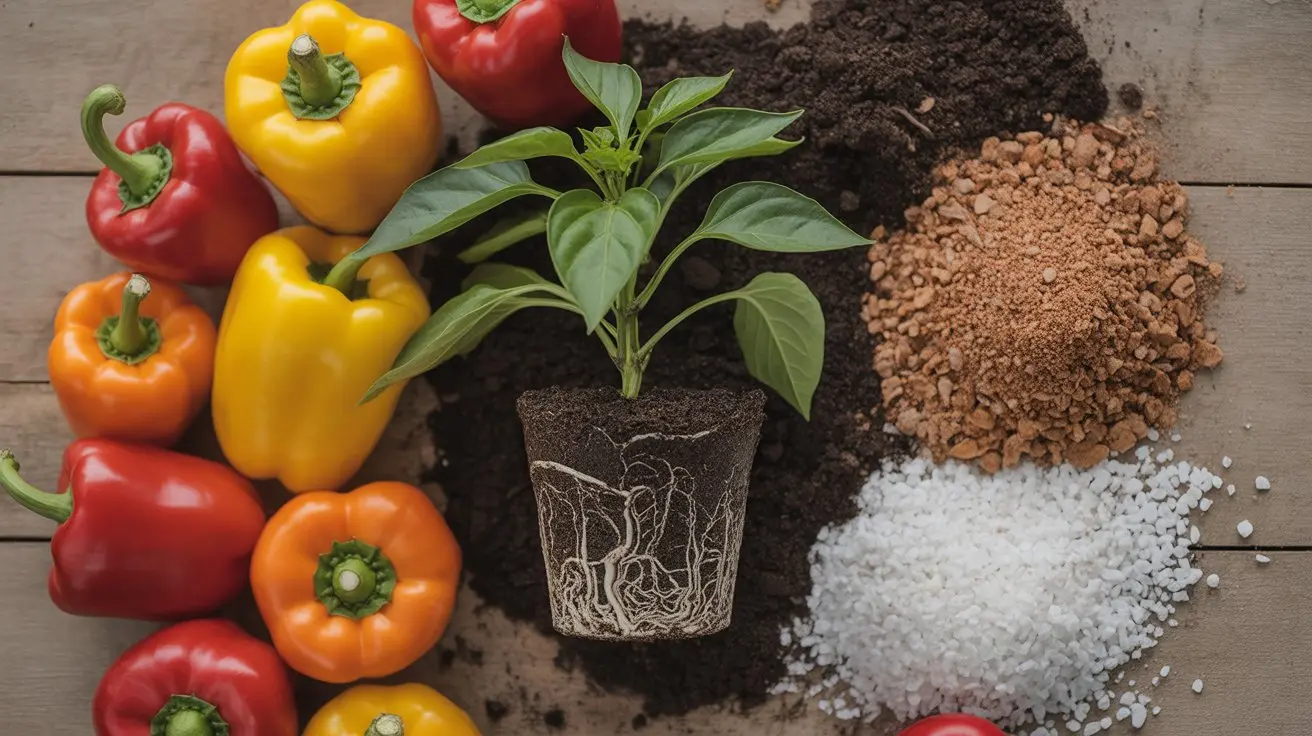
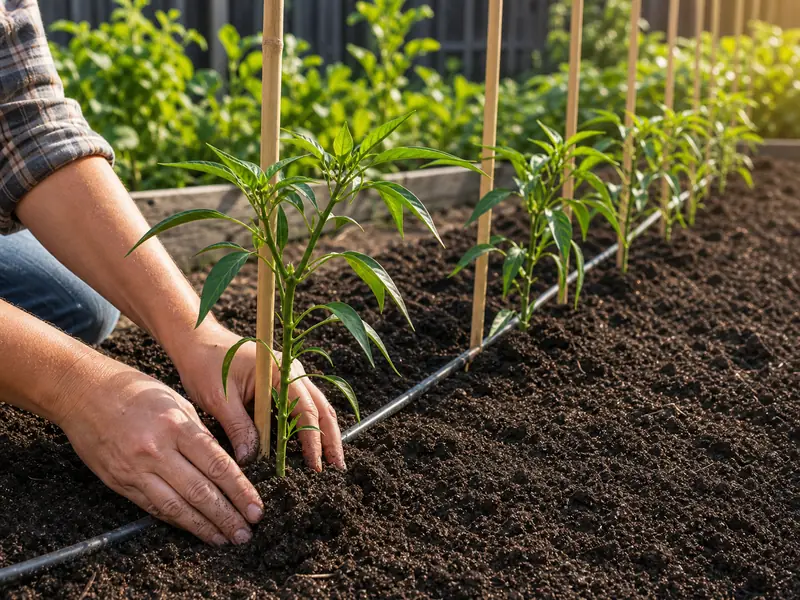
Serranos like full sun, warm soil, and a loose root zone. The planting hole should match the root ball and let water drain, not turn into a cold pocket.
Work compost into the bed before planting if the soil needs structure, but avoid burying fresh fertilizer against roots. Salt stress at planting can slow a young plant.
Set the transplant at the same soil level it had in the cell. Firm around the root ball, then water once to settle soil contact.
- Harden off transplants before full outdoor exposure.
- Plant on a cloudy day or late afternoon.
- Keep the crown at the original soil line.
- Water at the base after planting.
- Wait to mulch until soil is warm.
If you are moving seedlings from trays, the transplanting pepper seedlings routine covers the hardening step. Serranos forgive a lot, but sudden sun and wind can still cause a stall.
Containers work well if the pot does not dry every afternoon
Serranos are good container peppers because the plants are productive without needing huge fruit. The weak point is water consistency.
Use a five-gallon pot per plant as the floor. A smaller pot can work for a while, then start wilting daily once roots fill the mix.
Place containers where they get strong sun and easy watering access. A serrano on a hot patio may need daily checks during fruit set.
Drip irrigation or a deep saucer used briefly during watering can help, but do not leave roots sitting in water. The symptoms in wilting pepper plants often start with container swings.
Container plants also need steady feeding because nutrients leave the pot with drainage. Feed lightly and consistently rather than waiting until leaves pale.
Support is optional, but early support makes picking easier
Serrano branches can hold many small pods at once. The plant may not need a cage, but a simple stake keeps the main stem upright and makes repeat picking easier.
Place the stake early, before roots spread. Tie the stem loosely so it can thicken.
In windy sites, use two small stakes or a narrow cage. The goal is not to lock the plant in place. It is to keep loaded branches from bending into wet soil.
Support matters more when you plan to pick green pods for weeks. A plant that stays upright is faster to inspect and harvest.
This is also why we avoid crowding. Serranos reward repeat attention, and a cramped bed makes each harvest more annoying than it needs to be.
Water and feed for flower set
Even moisture keeps serranos setting pods. Hard dry-downs can drop flowers, while wet roots slow growth and yellow leaves.
University of Maryland Extension emphasizes consistent moisture for peppers. For serranos, consistency is what keeps new flowers and developing pods moving together.
Feed with a balanced plan, then ease off high nitrogen when the plant is lush but slow to flower. Too much leaf growth can delay the harvest you planted for.
If flowers fall during a heat spike, connect that to pepper flower drop before changing everything. Heat over about 90 F can make fruit set unreliable even on a healthy plant.
Mulch after the soil warms to buffer moisture. Early heavy mulch on cold soil can hold the chill you were trying to avoid.
Harvest early enough to keep the plant working
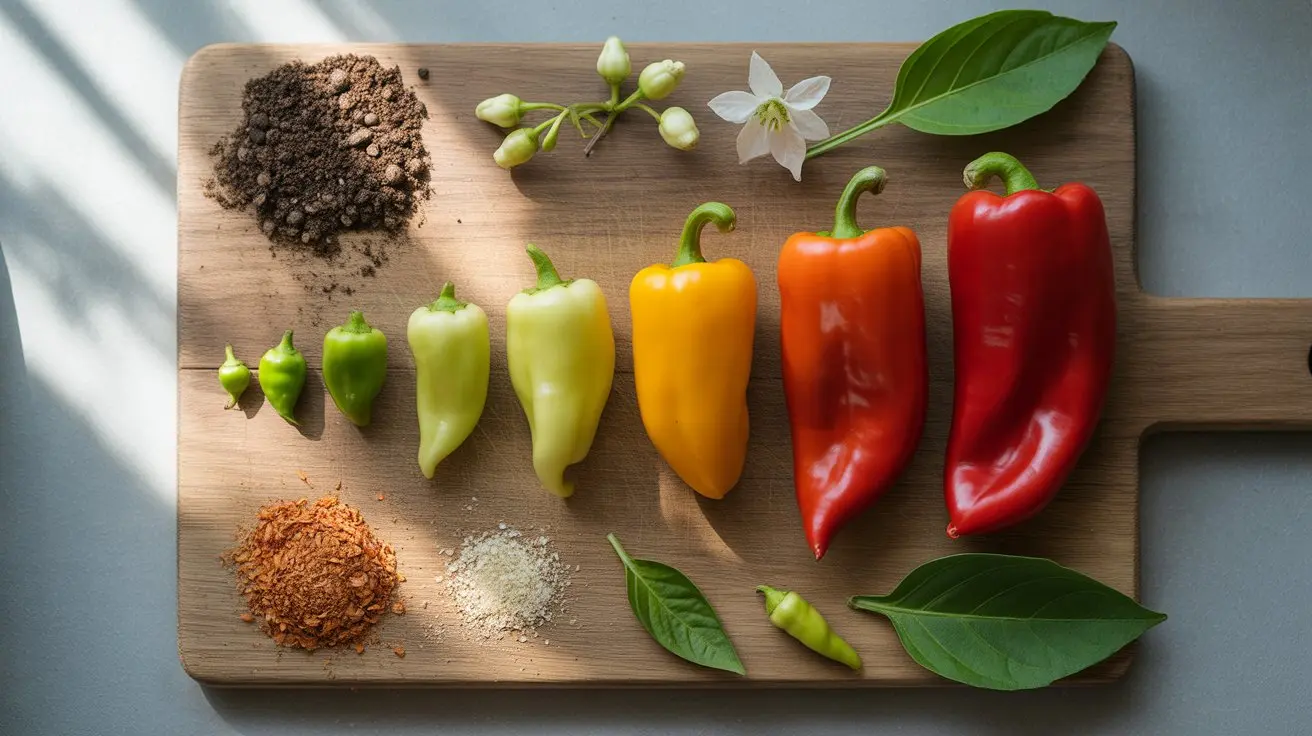
Serranos are usually picked green when firm and full sized, though they can ripen red with more sweetness. Picking green pods encourages the plant to keep setting.
If you wait for every pod to turn red, you may reduce the number of total harvests in a short season. Leave a few to ripen for sauce or seed, but keep picking the rest.
The bright, hotter-than-jalapeno profile matters in the kitchen because serranos bring clean heat in small pods. That is why a productive plant can cover salsa, pickles, and quick sauces with fewer fruits than mild peppers.
Track the first flower date and first harvest date in your notes. The next season, you will know whether you planted early enough or need larger transplants.
Best practice: plant serranos early in warm conditions, not early into cold soil. The crop rewards a long season, but only after the roots are warm enough to use it.
A planting timeline for a long serrano season
Count backward from the outdoor planting window. Serranos need enough indoor time to become sturdy transplants, but not so much time that they sit root-bound before the weather is ready.
In many home gardens, that means starting seed about 8 to 10 weeks before the expected transplant date, then hardening the plants for 7 to 10 days before planting.
Set the transplant outside only when the night forecast has settled. One cold wet week after planting can erase the advantage of starting early.
If you buy nursery plants, choose short sturdy plants over tall flowering ones. A small plant with strong roots usually beats a stretched plant that already wants support.
Planting for repeated picking
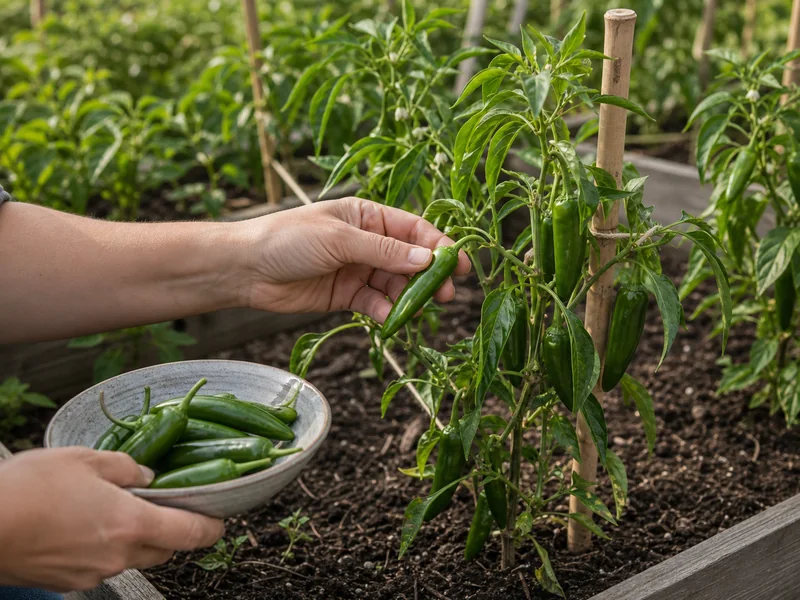
Serrano harvest is not a one-day event. Plant where you can reach the row every few days without stepping over other crops.
Keep the front of the bed open if you use serranos for salsa or quick cooking. The easier the plant is to pick, the more likely you are to harvest green pods before they slow the next flush.
Use labels at planting if you grow several narrow hot peppers. Serranos, cayennes, and other slim green pods can look similar before fruit thickens or turns color.
Leave one or two strong pods to ripen red if you want deeper flavor or seed, then keep harvesting the rest green. That balances kitchen use with continued production.
The planting decision is really a harvest decision. Warm roots, reachable rows, and steady moisture all support the same goal: a plant that keeps setting usable pods.
How serrano planting differs from jalapeno planting
Serranos and jalapenos share warm-season needs, but the harvest style is different. Serranos usually give many slimmer pods, so access and repeat picking matter more.
A jalapeno plant can feel finished after a few heavy pickings. A serrano plant is more useful when it keeps feeding small harvests into salsa, pickles, and quick sauces.
That changes the planting spot. Put serranos where you can see the pods and pick often, not behind a taller crop that hides the plant.
It also changes support. A small stake may be enough, but the stem should stay upright through repeated harvests and summer wind.
If you grow both, give serranos the slightly easier-to-reach edge and put larger peppers deeper in the bed. The row will be easier to manage once fruit starts coming fast.
What to watch in the first week after planting
The first week tells you whether the planting window was right. New serrano leaves should hold color, stems should stay firm, and the plant should not wilt every morning.
If the plant pauses but stays green, wait and keep moisture steady. If it yellows, droops in wet soil, or drops early flowers, the roots are probably fighting cold, water stress, or transplant shock.
Do not chase the first flower if the plant is still small. A stronger root system gives more total pods than one early fruit on a weak transplant.