

What's Eating Your Peppers at Night? Catch the Culprit
Night damage leaves a signature. A stem clipped at the soil line points to cutworms. Slime beside ragged holes points to slugs. Missing leaves with large dark droppings suggests a hornworm, while irregular holes without slime can come from earwigs. Inspect after dark before choosing a control.
Something eating peppers at night is usually hiding within a few feet of the fresh damage. The cleanest diagnosis comes from the plant part that disappeared, the edge of the bite, and what the feeder left behind.
Check at dawn before wind, watering, and sun erase slime, droppings, and fresh soil marks. Then return after dark with a flashlight and a cup for anything you collect.
Use the morning evidence
Fresh damage is easier to read. Circle a new hole with a washable marker on a nearby leaf or take a photo. Damage that does not grow overnight may be old and no longer needs treatment.
Search from the injury outward. Look under leaf folds, along stems, beneath the pot rim, under mulch, and in the top inch of soil. Many night feeders spend daylight close to the meal.
| Damage | Evidence nearby | Likely feeder |
|---|---|---|
| Seedling clipped near soil | Curled caterpillar in loose soil | Cutworm |
| Ragged leaf or fruit holes | Shiny slime trail | Slug |
| Whole leaves missing | Large dark droppings | Hornworm |
| Small irregular holes | No slime, damp hiding places | Earwig |
| Clean angled bites | Tracks or droppings outside bed | Rabbit or deer |
| Pecked ripe fruit | Open top exposure | Bird or rodent |
This evidence prevents a common mistake: treating every hole as an insect problem. A fence fixes rabbit feeding better than a leaf spray ever could.
Clipped stems mean cutworms
Cutworms feed in the evening or at night and hide in soil or plant debris during the day. University of Minnesota Extension notes that young transplants are most vulnerable because their stems are tender.
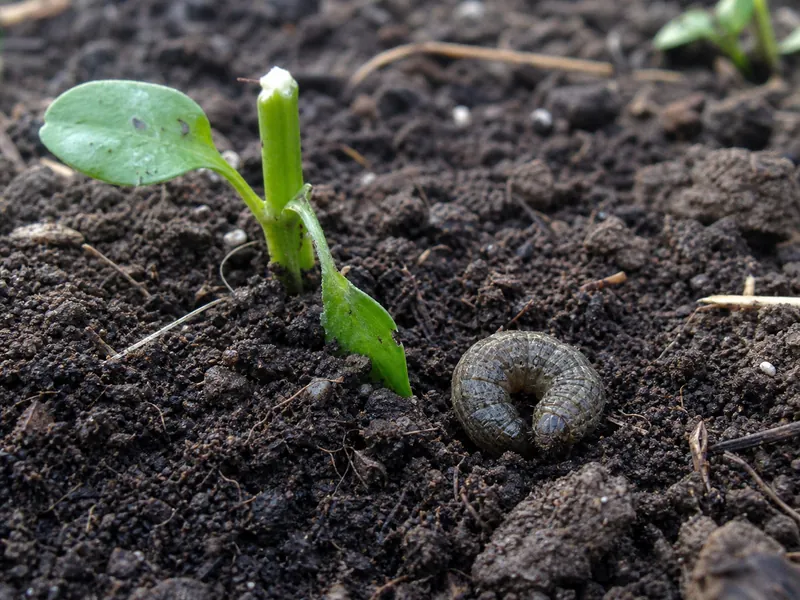
A black cutworm can sever a pepper just above the soil line. Other species climb and chew leaves, buds, or fruit, so a standing plant does not rule them out.
Search the top inch of soil within one foot of the damaged plant. The caterpillar often curls into a C when disturbed and may match the color of dry soil.
- Hand-pick the caterpillar when found.
- Clear weeds and plant debris that shelter larvae.
- Place a firm collar around vulnerable new transplants.
- Check the next two mornings for another clipped stem.
A collar should extend slightly into the soil and stand above it without squeezing the stem. Protect seedlings first. Mature woody pepper stems are much harder to cut.
One clipped transplant can be a single larva. Two or three fresh cuts along the same bed suggest that more larvae are moving through the row. Protect every remaining seedling at once, then search each damaged station instead of concentrating bait around the first plant.
A stem that is pinched, dark, or collapsed without missing tissue may be damping-off or mechanical injury. Cutworm damage leaves a chewed edge or a separated top. That distinction prevents collars from hiding a moisture problem at the crown.
Slime points to slugs
Slugs rasp irregular holes in leaves and can chew ripening fruit. They favor cool, damp nights and shaded soil, and a dried silver trail is the strongest clue after they hide.
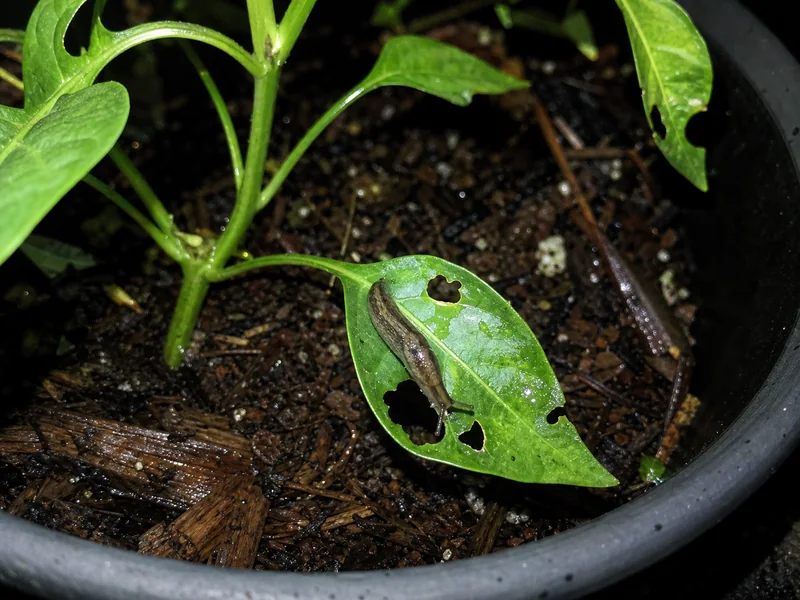
Look under boards, dense mulch, pots, and leaves that touch the soil. Water early in the day so the surface is less inviting after dark, while keeping the root zone adequately moist.
Hand-picking during a damp evening can reduce a small population quickly. Iron phosphate bait is another option when its label permits use around edible crops. Keep every bait away from children and pets according to the package.
Use a simple shelter trap. Lay a board on damp soil overnight, then lift it in the morning and remove slugs gathered beneath it.
Do not assume every ragged hole belongs to slugs. Earwigs can make a similar edge, but they leave no slime.
Missing leaves suggest hornworms
Hornworms can remove several pepper leaves and bite fruit while remaining hard to see. Their green bodies line up with stems, and older larvae can grow to several inches long.
Large dark droppings often reveal the feeding branch. Look directly above the droppings and along the underside of stems, especially from midsummer into early fall.
Pick hornworms by hand and drop them into soapy water. Leave a hornworm carrying many small white parasitoid cocoons in place if the plant can tolerate it, because the beneficial wasps are already controlling that caterpillar and may find others.
Young larvae are easier to manage than a full-grown caterpillar. The general pepper pest and disease reference helps when chewing appears beside aphids, mites, or disease lesions.
Do not blame a hornworm when leaves remain attached but look pale, stippled, or distorted. That pattern points toward a much smaller feeder. Compare the underside evidence with the thrips control guide before removing a large caterpillar that is not there.
Hornworms also leave coarse dark droppings below their feeding site. Place white paper under the plant and tap branches once. Falling pellets give you a smaller search area, while clean paper after several nights weakens the hornworm diagnosis. Check stems from several angles because the caterpillar's body line can disappear against a petiole.
Earwigs mimic slug damage
Earwigs hide in dark, damp spaces during the day and feed at night. Their irregular holes can resemble slug feeding, but the missing slime trail changes the search.
Inspect folded leaves, flowers, mulch, boards, and the space under containers. A flat reddish-brown insect with pincers at the rear is easy to confirm under a flashlight.
University of Minnesota recommends rolled newspaper or shallow oil traps for monitoring. Set traps in the evening, empty them in the morning, and reduce excessive surface moisture and debris where large numbers shelter.
A few earwigs may also eat decaying matter and small insects. Treat only when fresh pepper damage and repeated night checks show they are the feeder.
Fruit holes narrow the list
Holes in pepper fruit can come from hornworms, slugs, or climbing cutworms. UMN's pepper diagnostic separates them by timing and surrounding evidence, not by the hole alone.
Slugs leave rasped edges and slime. Hornworms usually damage leaves nearby and leave large droppings. Cutworms may hide in soil by day and can injure fruit during summer.
Remove fruit with open wounds before rot enters. Do not leave damaged ripe peppers on the plant, where leaking juice can attract more feeders.
Small round punctures without missing leaf tissue may come from a piercing insect rather than a chewing pest. Compare those marks with the broader pepper plant problem guide before using caterpillar controls.
A hole with wilt is a different problem from a hole alone. Check the stem at soil level and the root zone before assuming an insect inside the fruit caused the whole plant to collapse. The pepper plant wilting guide separates severed stems, dry roots, and vascular symptoms that can appear beside old chewing.
Record which fruit face is damaged. A low fruit touching mulch is accessible to slugs and ground feeders. A high fruit with chewing near an exposed shoulder moves the search toward climbing larvae or larger animals. That height clue changes where traps, barriers, or a camera should go.
When tracks point beyond the plant
Clean diagonal bites, an entire branch missing, or several plants browsed to the same height point beyond a small insect. Rabbits usually reach low stems and leaves. Deer can strip the upper canopy and leave torn ends because they pull rather than clip. Rodents may carry fruit away or open one side to reach seeds.
Read the area outside the pot or bed. Look for paired hoof prints, round pellets, gnaw marks, a narrow travel path, or fruit pieces under cover. A light layer of plain flour on a board beside the bed can capture tracks for one dry night. Keep flour off foliage and remove it the next morning.
Exclusion works only when it matches the animal. A short open fence may stop a rabbit but not a deer. Loose netting can trap wildlife, so use a taut barrier with visible edges and check it daily. Repellent scent fades after rain and should support a physical barrier rather than replace one.
Bird feeding often appears after sunrise rather than in the night window. Pecked shoulders on ripe fruit with no overnight track should be checked during the first hours of daylight. That timing keeps a bird problem from being misread as a nocturnal rodent.
Run a ten-minute night check
Go out 60 to 90 minutes after dark with a flashlight, gloves, a white tray, and a container. Begin at the damaged plant and work downward from leaves to stem, fruit, soil, mulch, and pot rim.
- Scan leaf edges for moving slugs and earwigs.
- Follow droppings upward for hornworms.
- Roll loose soil beside clipped plants for cutworms.
- Check the underside of low leaves touching mulch.
- Look beyond the bed for larger animal tracks.
Repeat the check on two nights if the first visit is empty. Weather changes activity, and one feeder may have moved before you arrived.
Change one condition on the second visit. Check earlier after a damp evening for slugs, or return later on a warm night for caterpillars. Place the flashlight low across leaves so slime, webbing, and fresh bite edges cast a shadow. A top-down beam can flatten those clues.
Do not spray before this check. Broad treatment can miss a caterpillar underground, do nothing to a slug, and kill insects that were helping in the bed.
Match control to the culprit
Physical removal and habitat correction solve many small home-garden outbreaks. Pesticides become a later choice when the feeder is confirmed, damage is continuing, and the product label lists both peppers and that pest.
| Culprit | First control | Escalation |
|---|---|---|
| Cutworm | Hand-pick and collar seedlings | Labeled caterpillar control for active larvae |
| Slug | Dry surface, traps, hand-pick | Labeled iron phosphate bait |
| Hornworm | Hand-pick and inspect droppings | Bt for small confirmed larvae |
| Earwig | Remove shelters and use traps | Labeled bait or targeted treatment |
| Rabbit or deer | Fence or barrier | Stronger exclusion |
Bacillus thuringiensis works only after a caterpillar eats treated tissue, and it performs best on small larvae. It will not control slugs, earwigs, rabbits, or a hornworm that has already finished feeding.
Match the response to the loss you can still prevent. One old hole on a mature plant may need monitoring only. A feeder clipping new transplants, opening fruit, or removing fresh growth each night deserves immediate control because the next bite has a larger cost.
If a cutworm destroys a new transplant, protect the replacement before planting it in the same opening. The pepper seedling transplant guide covers planting depth and root handling. Add the cutworm collar as a separate surface barrier rather than burying the young stem deeper to compensate.
Recheck after control instead of assuming one quiet night proves success. Mark two intact leaves and one fruit, then compare them at dawn for three mornings. New damage means the culprit or a second feeder remains. No new damage lets you stop escalating treatment and preserve beneficial insects.
Protect the next night
New transplants need the fastest protection because one clipped stem can end the plant. Use collars, clear weeds near the stem, and check daily until stems toughen.
Lift low branches from wet mulch, harvest ripe fruit, and remove split or chewed pods. These changes reduce shelter and food without making the root zone dry.
For containers, move the pot away from dense groundcover and inspect the drainage holes and rim. Slugs and earwigs can hide under a container even when the balcony looks clean.
Continue until two or three mornings pass without fresh injury. Old holes remain, so the finish line is undamaged new growth and intact fruit.