
Will Frost Kill Pepper Plants? Cover, Harvest, or Let Go
Frost can kill pepper plants. Tender pepper tissue may be badly damaged at or near 32°F, and plants can stall well above freezing. When frost is forecast, decide before sunset whether to cover the canopy, move containers, or harvest mature fruit.
Frost can kill pepper plants because ice damages tender cells. A brief dip near 32°F may injure leaves, flowers, and growing tips, while a colder or longer freeze can collapse the whole canopy.
The forecast is only a starting point. Measure near the leaves, account for low spots and wind, then choose between protection and harvest before the ground loses its stored heat.
Use 32°F as the line
At or near 32°F, expect real risk. Utah State University Extension groups tender plants as crops that may be significantly damaged or killed around freezing. Peppers can also be stunted between 50°F and 32°F.
A plant does not gain useful cold tolerance because it survived one cool night. Acclimation, cultivar, plant age, soil warmth, wind, and exposure change the outcome, but none turns a pepper into a frost-hardy crop.
| Forecast near plants | Main risk | Best preparation |
|---|---|---|
| 40°F and above | Slow growth for warm-season peppers | Monitor exposed containers |
| 35-39°F | Cold stress in low or windy sites | Move pots and stage covers |
| 32-34°F | Frost may form at leaf level | Cover or harvest valuable fruit |
| 28-31°F | Widespread tender-tissue damage | Use layered protection or harvest |
| Below 28°F | Severe canopy loss likely | Harvest and end the outdoor crop |
These bands are planning guides, not promises. Duration and plant-level temperature can matter as much as the number on a weather app.
Measure where leaves are
Weather stations measure in standardized locations that may not match a pepper bed. Cold air drains into low ground, and leaf surfaces can cool below the reported air temperature on clear, calm nights.
Place a minimum thermometer near canopy height, out of direct contact with soil, walls, or a warm house. Check the coldest part of the bed rather than the easiest place to reach.
Record both the lowest reading and how long it stayed there. Thirty minutes at 31?F after a warm day is a different exposure from six hours below freezing. A thermometer that stores the minimum gives the missing evidence when the coldest point occurs before dawn.
Clear, calm nights favor radiational frost because leaves lose heat to the sky and cold air settles. Windy freezes mix the air and can pull stored heat out of a cover faster. A fabric cover often buys useful protection in the first case. During a long windy freeze, harvest or moving containers is more dependable.
Containers cool faster because their root balls are exposed on several sides. A pepper on a deck edge can face colder roots and more wind than the same plant beside a south-facing wall.
Choose harvest or cover
The decision depends on fruit maturity, forecast duration, plant size, and whether the weather will warm again. One light frost before two warm weeks may justify careful covering. A hard freeze at the end of the season usually makes harvest the better use of time.
Count the nights, not only the coldest number. A cover that protects one brief dip may leave the canopy cold and wet through a second or third night. When the forecast repeats freezing temperatures, harvest the peppers that already have value and reserve protection for a small plant worth overwintering.
Prioritize by consequence. Fruit close to full size can be saved tonight. Flowers and tiny pods need weeks of warm weather that may no longer exist. Do not risk a mature harvest to protect late growth with little chance to finish.
Pick fully colored fruit first. Also collect mature green peppers that have reached full size and feel firm, especially when the plant carries more fruit than the cover can protect.
| Situation | Recommended move | Reason |
|---|---|---|
| One calm frost, warm days returning | Cover and keep roots in place | The plant may resume growth |
| Several freezing nights | Harvest mature fruit | Repeated thawing increases damage |
| Small container plant | Move into shelter | Whole root ball can be protected |
| Large bed at season end | Harvest, then clear plants | Covering buys little extra ripening |
| Valuable perennial candidate | Prune and move before frost | Overwintering starts with living tissue |
The pepper storage method helps sort what to refrigerate, freeze, dry, or use first after a large harvest. Damaged fruit should not go into long storage.
Cover before the ground cools
Put covers in place before sunset so they trap heat rising from the soil. Drape fabric to the ground on all sides and weigh down the edges without crushing stems.
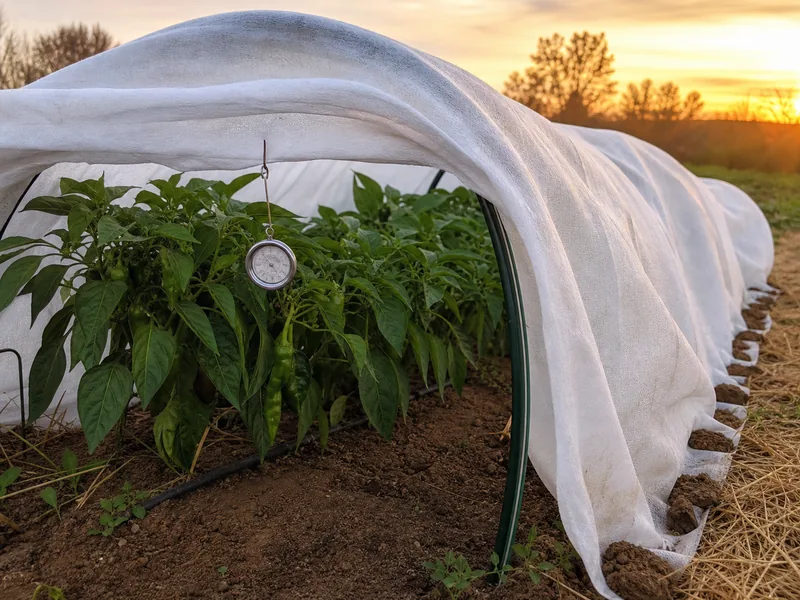
Cover the soil footprint as well as the leaves. Warm soil is the heat source under an unheated cover, so a narrow wrap around the stems traps less energy than a tent extending beyond the root zone. A second fabric layer adds an air gap when it is supported and dry.
Put a thermometer under the cover at canopy height. If the protected air approaches freezing early in the night, add a safe second layer or switch to harvest while fruit is still firm. The cover should be a measured protection, not a promise left unchecked until morning.
Use hoops or stakes to keep plastic from touching foliage. Oregon State Extension recommends suspending row cover or greenhouse plastic over peppers, then monitoring temperature and venting when the protected space warms.
- Use frost cloth, sheets, or blankets as the insulation layer.
- Extend the cover to soil level instead of wrapping only the canopy.
- Keep plastic above leaves and use it as a weather shell.
- Anchor edges against wind.
- Remove or vent covers after morning temperatures rise.
Small holiday lights rated for outdoor use can add gentle warmth under a large cover, but keep bulbs away from fabric and water. Do not use an unattended heater or open flame.
A cold frame or mini-greenhouse can protect peppers in early season. It still needs a thermometer because sunny mornings can overheat a sealed space rapidly.
Move container plants wisely
A garage, shed, enclosed porch, or house can protect a pot for one night. Inspect leaves and soil for insects before moving a pepper into living space.
Water the root ball earlier in the day if it is dry, then let excess drain. Moist soil holds heat better than powder-dry mix, but a soaked pot becomes heavy and leaves roots without air.
Keep the plant away from furnace vents and dark corners for a long stay. One sheltered night requires little light, while several indoor days begin to look like the separate pepper overwintering process.
Very large containers can be grouped against a wall and wrapped around the pot. Protect roots as well as leaves because the root ball lacks the insulating mass of garden soil.
Move a pot before its root ball chills, not after frost has formed on the leaves. A cold wet container is heavier, harder to handle, and slower to warm. Clear the route to shelter in daylight so branches do not break against a doorway during a rushed move.
When indoor shelter is much warmer, return the plant outside only after temperatures rise and the leaves have thawed. Sudden sun on frozen tissue adds water loss before damaged cells can recover. Use bright shade for the first part of the morning, then restore normal exposure.
Harvest fruit without damage
Cut peppers with scissors or pruners instead of pulling cold, brittle branches. Keep the stem cap attached when possible and sort fruit as it comes inside.
Fully colored, firm peppers go to fresh storage. Mature green fruit may change color indoors, but it will not gain the same flavor as fruit that ripens through warm days on a healthy plant.
Freeze sound peppers when the harvest is larger than the refrigerator can hold. The freezing method for peppers keeps the work manageable without pretending softened frozen fruit will stay crisp.
- Use first: split, bruised, or slightly frosted fruit with intact flesh.
- Store short term: firm, clean, fully colored peppers.
- Ripen separately: full-size green fruit beginning to color.
- Discard: watery, translucent, moldy, or deeply blackened fruit.
Wait before pruning damage
Frosted leaves often look dark, limp, or water-soaked after sunrise. Wait until the tissue fully thaws and dries before deciding how much is dead.
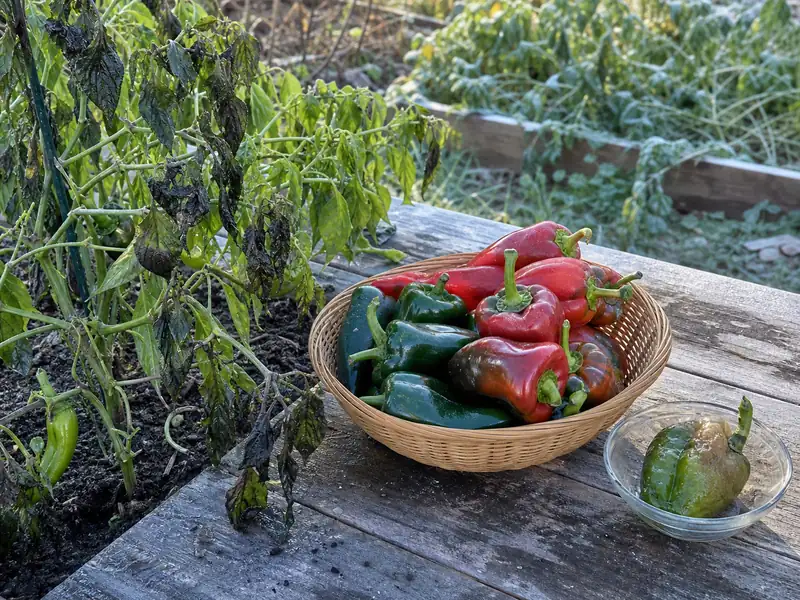
Pruning immediately can remove tissue that would recover and expose lower branches to another cold night. After a day or two, dead areas become dry or black and the boundary is easier to see.
Scratch a small section of stem bark with a clean blade. Green, firm tissue below the surface is alive. Brown, soft, or hollow tissue is dead and can be cut back to a healthy junction after the weather stabilizes.
Do not eat watery frost-damaged fruit. Tissue breakdown creates entry points for decay. Use only firm fruit with intact skin and clean flesh.
Judge recovery by new growth
A plant with a living main stem and green branch tissue can push new shoots after a light frost. Recovery makes sense only when warm weather remains long enough for that growth to matter.
Do not fertilize a freshly injured plant. Damaged roots and leaves cannot use a heavy feed, and salts add another stress. Keep soil lightly moist and wait for new growth.
Flowers and tiny fruit are less likely to recover than woody stems. Even when the plant survives, the current crop may be over, which changes the choice from growing more fruit to preserving the plant.
Recovery should produce a visible sequence. Living buds swell first, then small leaves unfold, then the shoot begins to extend. A stem that stays green but produces no bud movement through several warm days is alive tissue without a useful season left. That is enough reason to stop waiting in a fall bed.
Compare persistent collapse with the pepper wilting diagnostic when temperatures did not actually reach freezing. Root rot and stem disease can look like cold injury without the weather event.
Do not use leaf color alone as the verdict. Scratch a tiny patch of bark on a lower branch with a clean fingernail. Green, moist tissue supports waiting. Brown, dry tissue on several branches suggests the injury reached deeper. Check again after two warm days because a cold plant can look worse before living buds become visible.
Roots decide whether patience pays. A pepper in cold, saturated soil may survive the frost and still decline because damaged roots cannot replace water lost from leaves. Let the upper soil begin to dry, then water normally. Extra fertilizer does not repair frozen cells and can stress weak roots.
Set a decision date before you wait. If no buds swell and no green shoots appear after several warm days, remove the plant and protect the remaining harvest. Open-ended waiting costs bed space and can delay cleanup. If growth resumes, keep the first watering light and judge recovery from the new leaves rather than the damaged canopy.
Spring and fall differ
Spring frost threatens small plants but leaves a full season ahead. Move transplants back indoors, use covers, and delay planting rather than forcing tender roots into cold soil.
For spring plants, the pepper seedling transplant guide gives the safer handoff from indoor conditions to the bed. A calendar date is not enough. Use a run of warm nights, warmed soil, and a hardened plant before removing backup protection.
Fall frost arrives when plants are large and full of fruit. Harvest value usually outweighs saving every leaf, especially when the next forecast contains repeated freezing nights.
The full-season pepper plan sets safe transplant timing, while this frost decision begins only when cold is already in the forecast.
At season end, choose one clear outcome. Harvest and clear the bed, move a selected container plant, or cover for a short warm window. Half-protecting a large crop often leaves both damaged plants and lost fruit.