
Bell Pepper Plant Growing Stages: Seedling to Colored Fruit
Bell pepper plants move through six practical stages: germination, seedling growth, transplant establishment, vegetative growth, flowering and fruit set, then fruit sizing and ripening. Expect about 90-120 days from seed to colored fruit, depending on variety, soil temperature, and weather.
Bell pepper stages are slower than the tidy seed-packet timeline
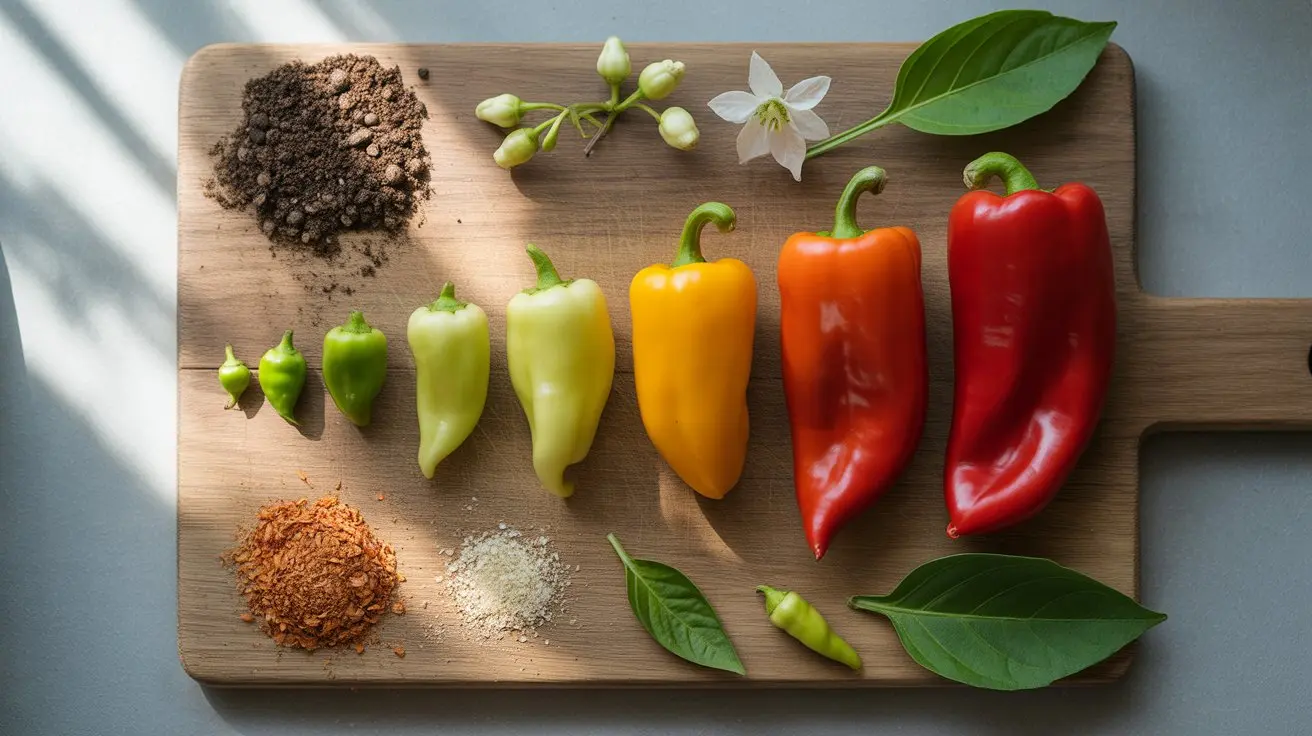
A bell pepper plant usually moves through six practical stages: germination, seedling growth, transplant establishment, vegetative growth, flowering and fruit set, then fruit sizing and ripening. The full seed-to-colored-fruit window often runs 90-120 days, and cool nights can stretch it longer.
The key is that each stage asks for different care. Early seedlings need warmth and light. Transplants need root recovery. Flowering plants need steady water. Fruiting plants need enough leaf canopy to feed thick-walled fruit.
This guide is not a broad bell pepper growing guide. It is a stage-by-stage check so you know whether your plant is on schedule or whether the slow part is actually a care problem.
The six stages run on their own clock. Use this overview, then read each stage below for the detail.
| Stage | What happens | Typical timing | Key action |
|---|---|---|---|
| 1. Germination | Seed sprouts, cotyledons then first true leaves | 7–14 days | Warm mix; bright light the moment seedlings appear |
| 2. Seedling growth | Builds roots and leaf area, no fruit yet | 4–6 weeks | Steady moisture; do not rush a weak seedling outside |
| 3. Transplant establishment | Top growth pauses while roots reconnect | 7–14 day pause | Set out after frost, soil near 65°F, space 18–24 in |
| 4. Vegetative growth | New leaves, thicker stems, side branches | A few weeks | Deep, even watering over heavy feeding |
| 5. Flowers and fruit set | Small white flowers; some flower drop is normal | Varies with heat | Keep water steady; wait for the next flush |
| 6. Fruit sizing and color | Green matures first; colored fruit takes longer | Days to weeks | Keep leaf cover against sunscald; cut, do not pull |
Stage 1: germination and first leaves
Bell pepper seed usually germinates in 7-14 days when the seed-starting mix stays warm. Cooler trays can take longer, especially if the mix swings between wet and cold.
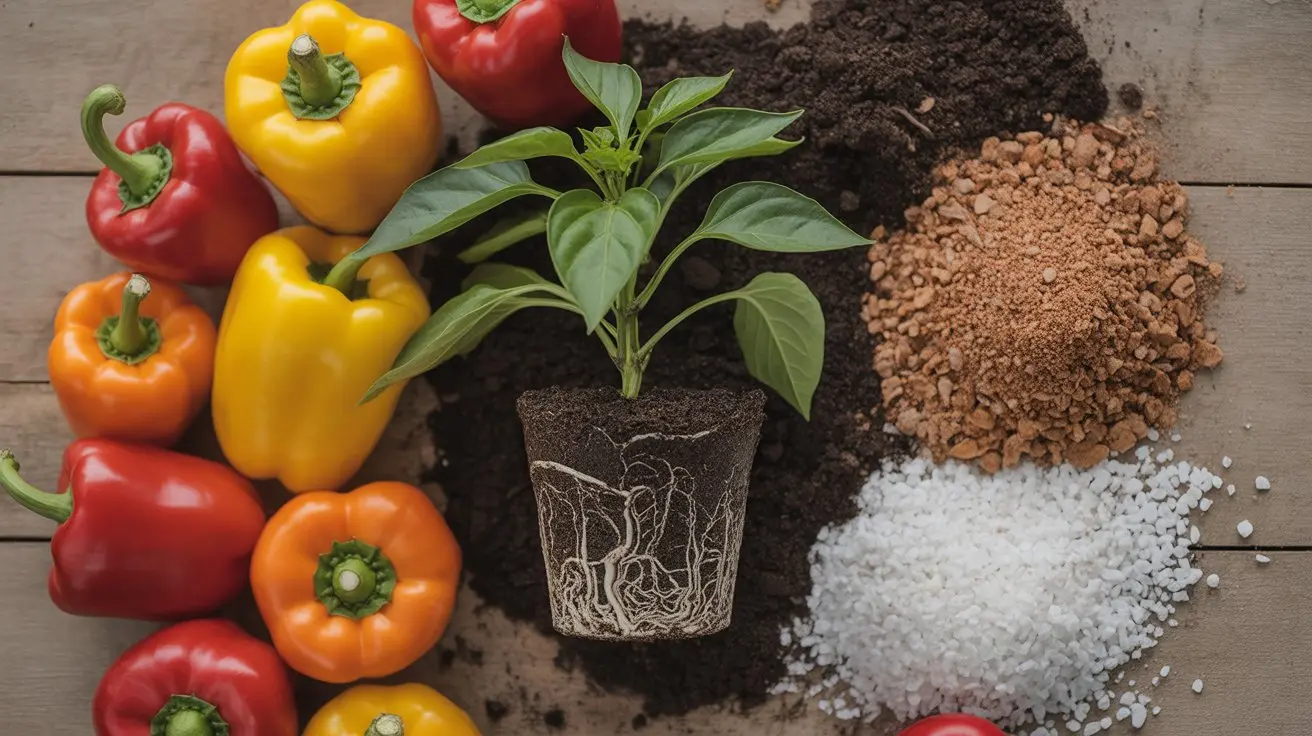
Start with the same basics we use for growing peppers from seed: warm medium, shallow planting, gentle moisture, and bright light as soon as seedlings appear. Heat helps before sprouting, but light quality matters more after the cotyledons open.
The first true leaves are the signal to start watching plant shape. Short, thick stems and flat green leaves are normal. Pale, stretched stems mean the plant needs stronger light before it can become a sturdy transplant.
Stage 2: seedling growth before transplant
During the seedling stage, bell peppers build roots and leaf area rather than visible fruit potential. This stage commonly lasts 4-6 weeks after germination, depending on light, tray size, and indoor temperature.
Do not rush a weak seedling outside because the calendar says spring has arrived. A compact seedling with several true leaves survives transplanting better than a tall plant that has already run out of root room.
Use the pepper growing calendar guide backward from your local transplant window. Bell peppers need enough indoor time to get sturdy, but not so much time that they flower in the cell tray.
Stage 3: transplant establishment
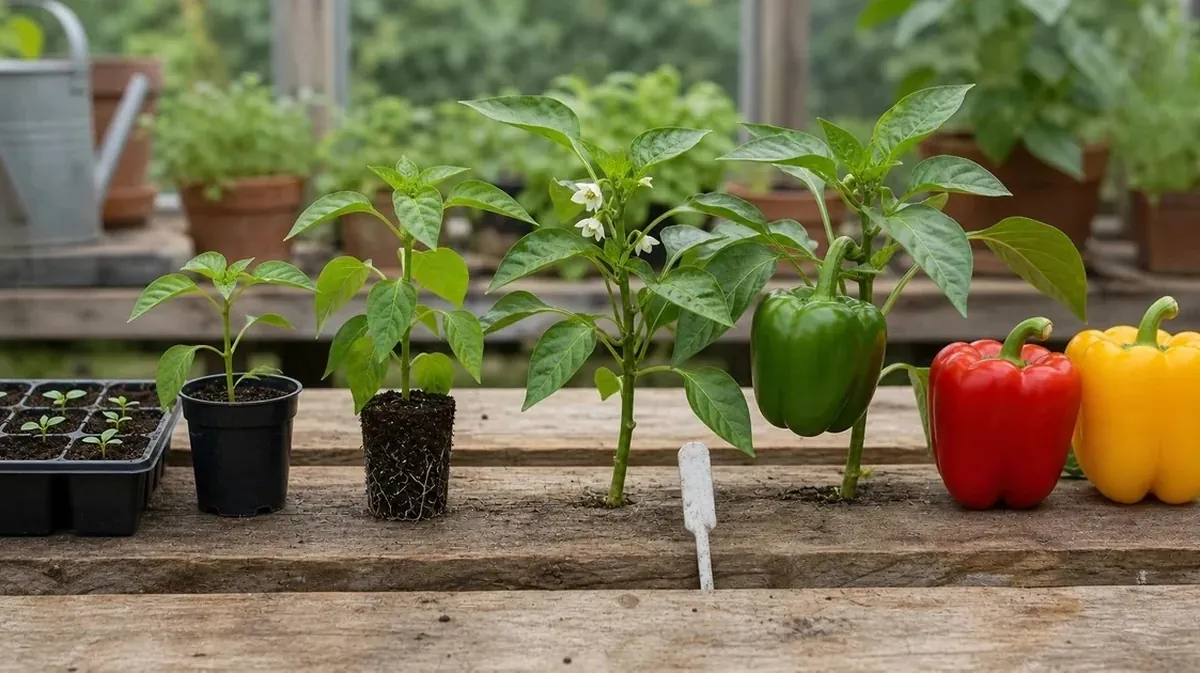
Transplant establishment is the quiet stage. The plant may pause top growth for 7-14 days while roots reconnect with garden soil or container mix.
Set bell pepper transplants after frost risk has passed and soil is near 65 F. Plant at the same depth as the pot, then water the root ball and surrounding soil together. The the pepper seedling transplant guide job should be gentle, not a deep burial.
Space bell peppers 18-24 inches apart in beds. They are blocky-fruit plants with heavy branches, so crowding reduces airflow and makes staking harder once fruit starts sizing. A quick pepper plant spacing guide pass before transplanting prevents most of that crowding.
Stage 4: vegetative growth and branching
After the transplant pause, the plant should add new leaves, thicker stems, and side branches. This vegetative stage builds the canopy that will support flowers and fruit later.
Steady water matters more than aggressive feeding. A bell pepper with uneven moisture can shed early flowers or later develop fruit disorders. Use the same deep-watering logic from watering pepper plants: soak the root zone, then let the top inch begin to dry.
If the plant is dark green and leafy but not flowering, check nitrogen and light. Too much nitrogen can make a pretty plant that delays fruit. Too little sun makes a plant that stretches instead of branching.
Stage 5: flowers and fruit set
Bell pepper flowers are small, white, and easy to miss under the canopy. A healthy plant can open flowers before it is ready to carry full-sized fruit, especially if it was stressed in the tray.
Some flower drop is normal. Heat, cool nights, dry soil, or recent transplant shock can interrupt pollination. The useful check is whether the plant keeps growing and opens another round of flowers after conditions settle.
Bell peppers are not harvested for heat, so this stage differs from a the cayenne pepper profile or other hot pepper planting. The goal is a thick wall and full size, not a fast flush of small pods.
Stage 6: fruit sizing, color, and harvest
Green bell peppers are mature enough to harvest before they change color. Red, yellow, and orange bells stay on the plant longer, which is why colored fruit takes more patience and more plant energy.
A blocky green fruit can sit at full size for days before ripening. During that window, keep watering steady and avoid stripping too many leaves around the fruit. Leaf cover protects the fruit from sunscald and feeds the ripening process.
Harvest with pruners or a knife instead of pulling. Bell branches can snap when heavy fruit is yanked sideways. If the plant is loaded, pick some green fruit so the remaining peppers can color more evenly, then compare storage choices with the pepper storage guide if you are harvesting several plants at once.
When a stage looks stuck
When a stage stalls, check the basics before blaming disease:
- Seedlings stuck: check light and root-zone temperature first.
- Transplants stuck: check cold soil, dry root balls, or rough hardening off.
- Flowering stalls: check heat spikes and water swings.
For container plants, root volume can be the hidden limit. A bell pepper in a small pot may flower and fruit early because it is stressed, not because it is ahead. Use a 7-10 gallon container when you want full-size fruit, or follow our container pepper growing sizing rules.
For bed plants, compare symptoms with pepper pests and diseases only after checking the basics. Most slow bell pepper stages come from light, water, temperature, or root space before disease is involved.
If the fruit develops a dark sunken bottom during the sizing stage, compare the symptom with pepper blossom end rot. That problem is tied to calcium movement and water swings, so it belongs to the fruiting stage rather than the seedling stage.
Stage notes by fruit goal
If your goal is green bell peppers, the harvest stage arrives earlier and the plant can keep setting new fruit. If your goal is red or yellow bells, leave fewer fruit on each plant and keep moisture steady while color develops.
That choice changes how you judge progress. A plant full of green fruit may be productive already, while a plant waiting for color needs more time, not a different fertilizer.