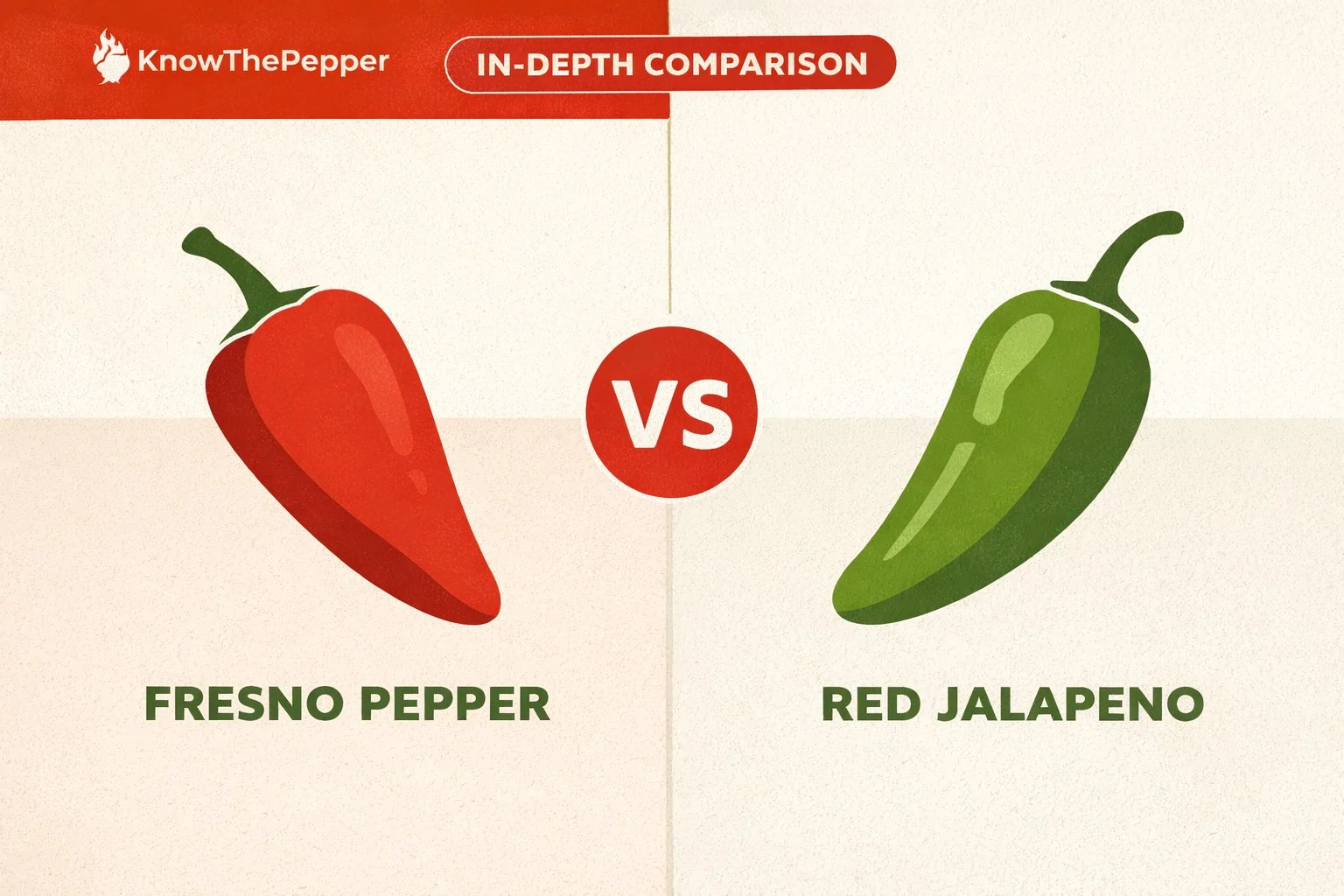
Red vs Green Jalapeno: Same Pepper, Riper and Sweeter
Red and green jalapenos are the same pepper harvested at different ripeness stages. Green jalapenos are crisp, grassy, and best for fresh salsa, poppers, and pickles. Red jalapenos are ripe, sweeter, softer, and better for roasted salsa, hot sauce, jelly, and chipotle-style smoking.

Red Jalapeño
Ripe stageGreen Jalapeno
Unripe stage- Heat range: Usually 2,500 to 8,000 SHU vs Same 2,500 to 8,000 SHU range
- Flavor: Bright, grassy, vegetal, crisp vs Sweeter, fruitier, rounder
- Texture: Firm thick walls, strong crunch vs Softer walls, ripe sweetness
Red Jalapeño vs Green Jalapeno at a glance
Red Jalapeño and Green Jalapeno side by side
The ripe pod for red hot sauce, jelly, and smoking.
The firm, fresh stage for salsa, poppers, and pickles.
Same Plant Two Stages
Red and green jalapenos are the same Capsicum annuum pepper harvested at different ripeness stages. Green pods are picked before full maturity. Red pods stay on the plant until the fruit ripens and turns red.
That single timing difference changes how the pepper cooks. The green stage gives firm walls, grassy aroma, and a sharper fresh bite. The red stage gives more sweetness, softer flesh, and a rounder flavor that suits roasted sauces.
The best choice is not the hotter one by default. It is the one that fits the job: green for crunch, red for sweetness and color.
Are Red Ones Hotter
Red jalapenos can taste hotter, but both sit in the same published 2,500 to 8,000 SHU range. Color alone does not move the pepper into a new heat tier.
Ripeness changes perception. A red pod has spent more time on the plant, so it may hold more developed capsaicin, less water, and more sugar, which can make the burn feel warmer and longer in a blended sauce.
Green pods can still be the hotter bite in a real basket. Water stress, weather, pod age, and seed-cavity size all move individual peppers around inside the same tier. We have cut green pods from one plant that were sharper than ripe reds from another, so use the Scoville range as the guide and a taste as the final check.
The ripening also concentrates flavor, not just heat. As the pod sits on the plant it loses water and builds sugars, so a red jalapeno often tastes both sweeter and a little warmer than the green one it started as, even though both sit in the same 2,500 to 8,000 SHU range.

Why Red Jalapenos Cost More
Red jalapenos are usually pricier and harder to find, and the reason is farming, not demand. Growers have to leave the pods on the plant longer to ripen, which ties up the plant and risks more loss to weather and pests.
Ripe pods also have a shorter shelf life. They soften and spoil faster than firm green ones, so stores stock fewer of them and sell them quicker. Green jalapenos ship and keep well, which is why they are the default bin at the supermarket.
For a cook, that means green is the everyday choice and red is worth seeking out when the recipe truly wants sweetness or red color. If you grow your own, the trade is just time: leave some pods on the plant and you get reds for free, minus a few weeks of waiting.
Flavor And Texture
The green stage is why most people recognize the pepper on sight. A green jalapeno smells grassy and slightly bitter when sliced, and the flesh stays crisp after chopping, which is why it holds up in pico de gallo and nachos.
The red stage tastes more like ripe fruit. The familiar warmth stays, but the raw edge drops and sweetness comes forward. Roasting pushes that sweetness further.
The ripe stage also connects to the chipotle profile, because a chipotle is a ripe red jalapeno that has been smoked and dried. Against another red chile, our Fresno vs red jalapeno test found Fresno fruitier and thinner-walled, while red jalapeno stayed juicier and more familiar.
Texture drifts with ripeness too. Green pods are firm and snappy, which is why they hold up diced in salsa. Red pods soften as the walls thin, so they blend and roast more easily but bruise faster and do not stay as crisp when raw.
Best Use By Stage
Green jalapenos
Crunch and fresh bite
Fresh salsa, nachos, burgers, tacos, and poppers. Thick walls hold cheese and stay crisp in vinegar, so they are also the cleaner pick for pickled jalapenos.
Red jalapenos
Sweetness, color, roast
Red hot sauce, roasted salsa, pepper jelly, fermented mash, and compound butter. They blend into vinegar sauces with less sharpness and disappear into a red dish while still adding medium heat.

Can You Swap Them
Yes. Use red and green jalapenos at 1:1 by weight or pod count in most home recipes. They share size, wall thickness, and heat range, so the swap rarely breaks a dish. The adjustment is flavor, not math.
If you replace green with red in fresh salsa, add a little more lime or onion for the bright edge. If you replace red with green in hot sauce, add a pinch of sugar or some roasted bell pepper to replace ripe sweetness. Expect red pods to soften faster in pickles and bake a little quicker in poppers.
Do not treat the seeds as the main heat control. Most capsaicin sits in the pale ribs, not the loose seeds, and how to cut jalapenos shows the cuts that lower heat without wasting the walls.
The Red Jalapeno Second Life
Ripe red jalapenos have a second career that green ones do not. A chipotle is simply a red jalapeno that has been smoke-dried, so the ripe pod is the raw material for that whole smoky flavor.
Red jalapenos also drive some famous sauces. Classic sriracha is built on ripe red jalapenos, which is part of why it reads sweet and mellow rather than sharply green. Red pepper jelly and many red hot sauces start the same way.
None of that works with green jalapenos, whose grassy snap is a different ingredient. So when a recipe points toward smoking, a red sauce, or a jam, it is really asking for the ripe stage, and the green pod is not a stand-in.
Buying Storage Ripening
Green jalapenos are easier to buy because growers harvest them earlier, when pods are firm and ship well. Red pods cost more because they need extra time on the plant and have a shorter shelf life.
Buy either color by feel first. The pod should be firm, glossy, and heavy for its size, and small tan corking lines are normal signs of maturity. Store fresh pods in a paper bag in the crisper; green often lasts a week or more, while riper red pods soften sooner, so use them first for sauce or roasting.
If you grow your own, let some pods stay on the plant to ripen from green to red, which takes another two to four weeks and slows new pod set. Our jalapeno growing guide covers the plant schedule; the red-versus-green decision happens at harvest.
| Stage | When you pick | Flavor and texture | Best for |
|---|---|---|---|
| Green | Firm and full-size, before color turns | Grassy, crisp, sharp | Salsa, nachos, poppers, pickles |
| Turning | Streaked green-to-red on the plant | Between grassy and sweet | Everyday cooking, mixed heat |
| Red | 2 to 4 weeks later, fully colored | Sweeter, softer, rounder | Hot sauce, jelly, roasting, smoking |
Red Jalapeño vs Green Jalapeno
Reach for Red Jalapeño when you want Fresh salsa, poppers, quick pickles. Reach for Green Jalapeno when you want Red hot sauce, jelly, roasting, smoking.