
Does Hot Sauce Go Bad? Shelf Life, Spoilage Signs, and Storage
Hot sauce can go bad, especially fresh, fruit-heavy, low-vinegar, or fermented sauces that were not finished and stored correctly. Vinegar-based commercial sauces usually last longest, but mold, off odor, gas pressure, or a raised pH are reasons to toss the bottle.
Hot sauce can go bad. Vinegar, salt, capsaicin, and fermentation all help preservation, but they do not make every bottle safe forever.
The right answer depends on the sauce type. A thin vinegar-based Louisiana-style sauce behaves differently from a fresh mango-habanero sauce pepper, a garlic-heavy homemade blend, or an active fermented sauce that is still producing gas.
Start with the sauce type
Most shelf-life confusion comes from treating all hot sauce as one product. Read the ingredient list first: vinegar-forward sauces last longer, while fresh fruit, roasted vegetables, oil, dairy, or low acid ingredients shorten the safe storage window.
Commercial shelf-stable hot sauces are usually formulated and processed under acidified-food controls. FDA guidance defines acidified foods around a finished equilibrium pH of 4.6 or below, but home cooks should not treat that number as a permission slip for pantry storage without a tested process.
| Sauce type | Best storage | Risk cue |
|---|---|---|
| Commercial vinegar-based sauce | Pantry unopened, fridge after opening for quality | Color darkening is common, mold is not |
| Fresh homemade sauce | Refrigerator | Fruit, garlic, herbs, or low vinegar |
| Fermented hot sauce | Refrigerator unless pH and process are controlled | Gas pressure, Kahm yeast, pH drift |
| Oil-based chile sauce | Follow label or refrigerate | Oil changes the risk profile |
If the bottle is homemade and you did not measure pH with a calibrated meter, store it cold and use it sooner. That is especially true for sauces based on fresh peppers, carrots, onion, garlic, or fruit.
How long hot sauce lasts after opening
A commercial vinegar-based hot sauce often keeps good quality for months after opening, especially in the refrigerator. It may darken, separate, or lose aroma before it becomes unsafe.
Homemade sauce is different. We treat refrigerator-stored fresh sauce as a short-window condiment unless it was made with a tested preservation process. For our own kitchen tests, a fresh pepper-vinegar sauce usually tastes best within 2-4 weeks, while fermented sauce can hold longer when pH, salt, and refrigeration are controlled.
- Unopened commercial sauce: follow the printed best-by date and storage label.
- Opened vinegar sauce: refrigerate for better color and flavor retention.
- Fresh homemade sauce: refrigerate and use within a short window.
- Fermented homemade sauce: refrigerate after blending unless you have verified pH and heat processing.
Quality loss is not the same as spoilage. A bottle that turns darker but smells clean may still be usable. A bottle with fuzzy growth, gas, or rotten odor is not a quality issue. It is a discard issue.
Clear signs hot sauce has gone bad
Throw away hot sauce when you see mold, fuzzy growth, a rotten or yeasty odor, unexpected gas pressure, or slimy texture. Do not scrape mold off the top and keep the rest.
Separation alone is usually normal. Pepper pulp, vinegar, and spices settle at different rates, especially in sauces without stabilizers. Shake the bottle and judge smell, surface growth, and pressure.
- Mold spots on the cap, surface, neck, or sauce line.
- Bulging cap, hiss, or spray from a sauce that was not meant to ferment.
- Rotten, solvent-like, or strongly yeasty odor.
- Stringy or slimy texture.
- Color change plus off smell, not color change alone.
For very hot sauces, do not let heat trick you into ignoring spoilage. A ghost pepper hot sauce can still spoil if the acid, salt, sanitation, or storage are wrong.
Should hot sauce be refrigerated?
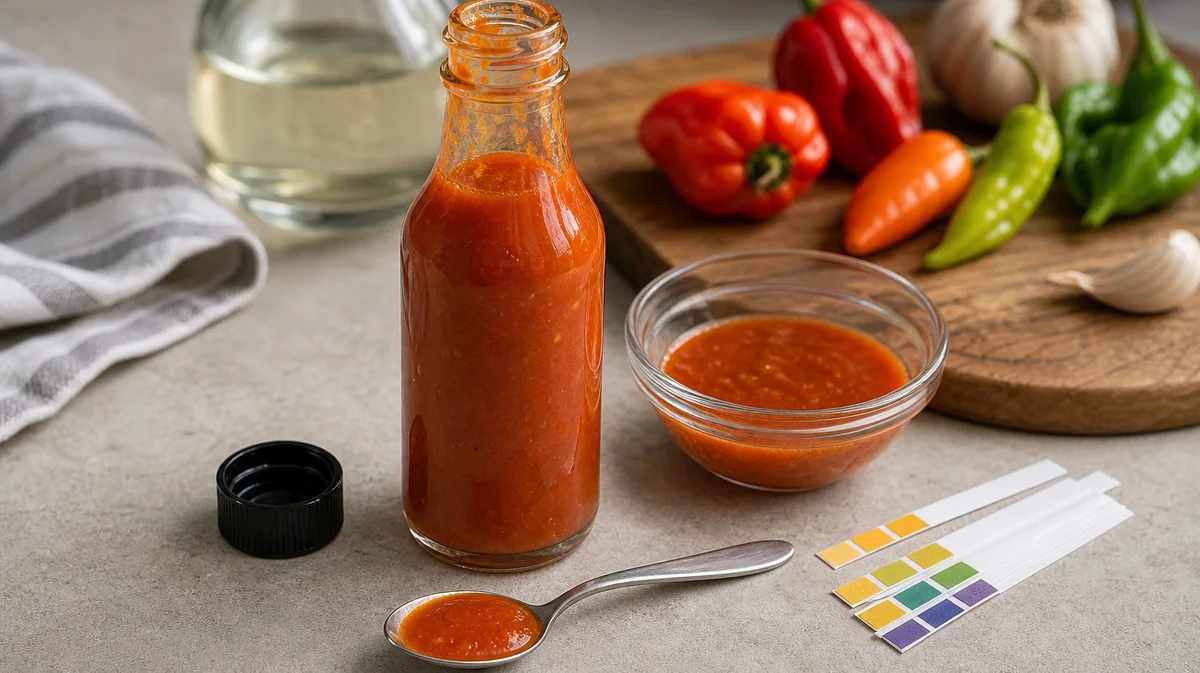
Refrigeration is the safer default after opening unless the label clearly says pantry storage is acceptable. It slows flavor loss, oxidation, and microbial growth.
Some commercial sauces are stable at room temperature because their formulation, pH, salt level, and process were designed that way. Homemade sauces do not get that assumption.
Home-sauce rule: if you made the sauce and did not verify pH with a calibrated meter, keep it refrigerated. Paper strips are useful for screening, but they are not the same as a controlled process.
This is why our make hot sauce at home guide treats vinegar sauces and fermented sauces as separate methods. They can both be excellent, but they do not have the same storage logic.
Does fermented hot sauce go bad?
Yes. Fermentation creates acid, flavor, and complexity, but a finished sauce can still spoil if solids float above brine, the pH stays too high, dirty tools enter the jar, or sugars are added after blending.
Active fermentation also produces carbon dioxide. If you bottle a sauce while fermentation is still active, pressure can build. Refrigeration slows that activity but does not erase a poor process.
For a deeper process plan, use the fermented hot sauce guide and treat pH, submersion, salt, and bottling as one system. A nice sour smell is encouraging, but measurement is better.
Can you freeze hot sauce?
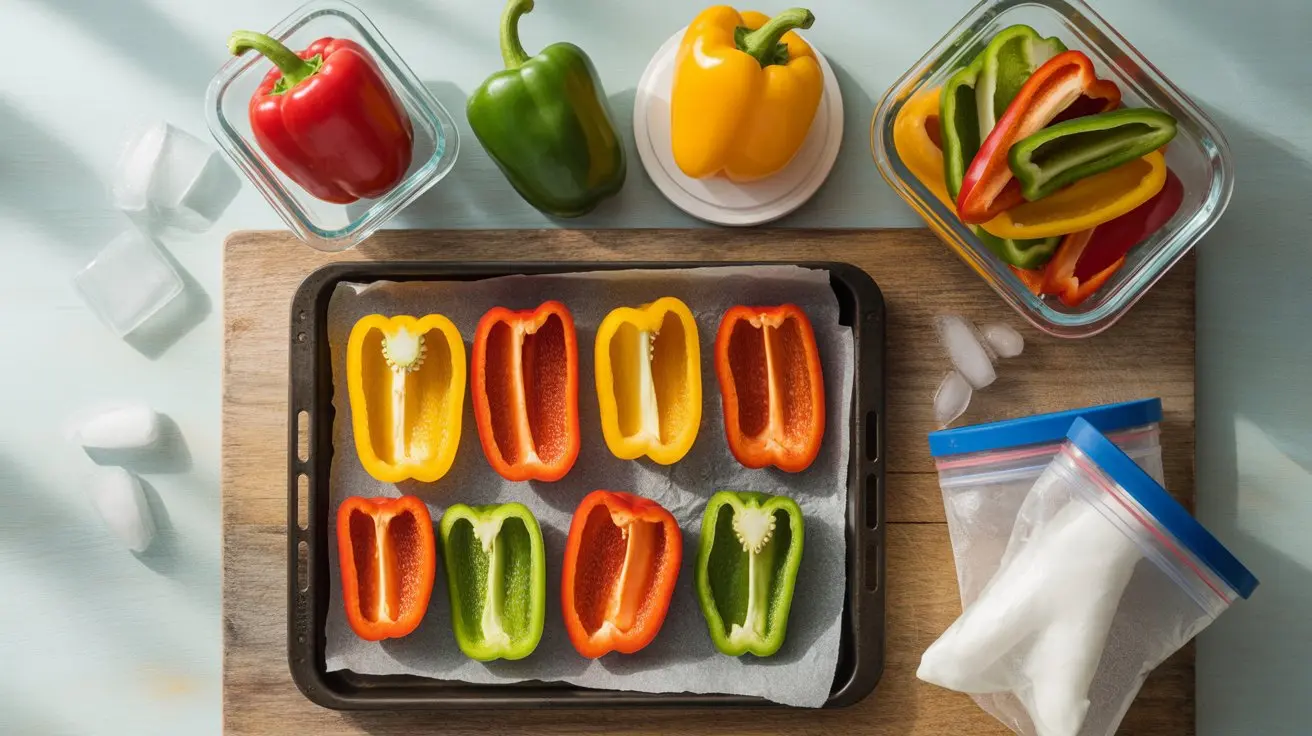
You can freeze many hot sauces, much like freezing extra peppers for later chilli and bell pepper storage for quality storage, especially fresh homemade batches you cannot use quickly. Freeze in small portions so you do not thaw and refreeze the whole bottle.
Texture may loosen after thawing because pepper solids and liquid separate. Blend or shake after thawing, then keep the thawed portion refrigerated.
Freezing does not make spoiled sauce safe. If the sauce already has mold, gas, or a rotten smell, discard it instead of freezing it.
Check the cap, neck, and sauce line
The bottle cap is often the first place spoilage shows. Sauce dries around the threads, catches bits of pepper pulp, and sits exposed to air every time the bottle opens.
Remove the cap and look at the inside rim, the neck, and the sauce line. Crust alone can be cleaned from a commercial bottle that still smells normal, but fuzzy growth or colored mold means discard the sauce.
We also check whether the bottle was stored next to the stove. Heat from a burner or sunny window speeds flavor loss and can make a borderline homemade sauce behave worse than the same bottle kept cold.
Why pH matters but does not answer everything
A pH below 4.6 is an important acidified-food boundary, but it is not the whole safety story for a home sauce. The pH must be measured after the sauce reaches equilibrium, and chunky sauces can read unevenly if solids and liquid are not blended well.
Paper pH strips are useful for a rough screen. A calibrated meter is better, especially for fermented or fruit-heavy sauces. Even then, sanitation, clean bottles, refrigeration, and avoiding post-ferment sugar additions still matter.
That is why we do not tell readers to pantry-store homemade sauce just because it tastes sour. A sauce can taste sharp and still be a poor candidate for room-temperature storage if the process is uncontrolled.
Cold storage is the conservative home answer.
How to store hot sauce cleanly
Use clean utensils, wipe the bottle neck, and keep the cap from crusting. A dirty cap is one of the easiest places for mold to start because sauce residue dries there.
Store opened bottles away from sunlight and stovetop heat. Heat and light damage color and aroma, especially in red sauces made with ripe Fresno-style peppers, red jalapenos, or fruit from the hot sauce pepper role.
If you sell sauce, the rules are stricter than home use. FDA acidified-food rules and process authority review exist because shelf-stable sauces in sealed containers need controlled pH and process proof, not guesses.