
Holes in Pepper Plant Leaves: Pest Clues and Fixes
Holes in pepper leaves are a symptom, not a diagnosis. Match the hole shape, timing, leaf age, and pest evidence before choosing hand-picking, barriers, or treatment.
Read the Hole Pattern Before Treating
Holes in pepper plant leaves are a symptom, not a diagnosis. The fix depends on the shape, timing, and whether new growth is still healthy.
Small round holes, ragged edges, scraped patches, and torn leaves point to different causes. Treating every hole as the same pest problem wastes time and can stress the plant further.
| Pattern | Likely clue | First move |
|---|---|---|
| Round small holes | Chewing insects | Inspect leaf undersides |
| Ragged edges | Larger chewing pest | Check at dusk and morning |
| Torn tissue | Wind or handling | Protect plant and watch new growth |
| Surface scraping | Early slug or caterpillar feeding | Look for slime, frass, or hidden larvae |
Look at the plant before reaching for a spray. A few old holes on lower leaves are not the same as fresh damage spreading across new growth.
Check Leaves at the Right Time of Day
Many pests hide during the brightest part of the day. Check leaf undersides in the morning, at dusk, and after rain if damage appears overnight.
Use a flashlight and look for insects, frass, eggs, webbing, and fresh bite marks. The pest evidence matters more than the size of one hole. If you find clusters of sticky sap feeders instead of chewing damage, compare symptoms with aphids on pepper plants or the spider-mite troubleshooting guide.
- Morning check: good for slugs, snails, and overnight chew patterns.
- Dusk check: useful for caterpillars and larger chewing pests.
- After rain: helps separate weather tears from active feeding.
Do not diagnose from one noon glance. The pest is often gone by the time the damage is obvious.
Separate Pest Damage From Weather and Handling Damage
Wind, hail, sunscald, rough transplanting, and brushing past a crowded bed can all leave leaf damage that looks dramatic but does not keep spreading. Pest damage usually comes with a repeat pattern.
If only the oldest leaves are torn and the newest growth is clean, the event may already be over. If new leaves keep showing fresh bites, you are likely dealing with an active feeder. This is why we compare the hole pattern with overall plant vigor and with nearby issues such as pepper leaves curling or plants not growing.
| Clue | More likely weather or handling | More likely pest |
|---|---|---|
| Only old damaged leaves | Yes | Less likely |
| Fresh bites on new growth | No | Yes |
| Frass, eggs, or slime | No | Yes |
| Damage after one storm event | Yes | Maybe not active now |
The useful question is whether the cause is still present. Old damage alone rarely needs chemical treatment.
Know the Common Culprits on Pepper Plants
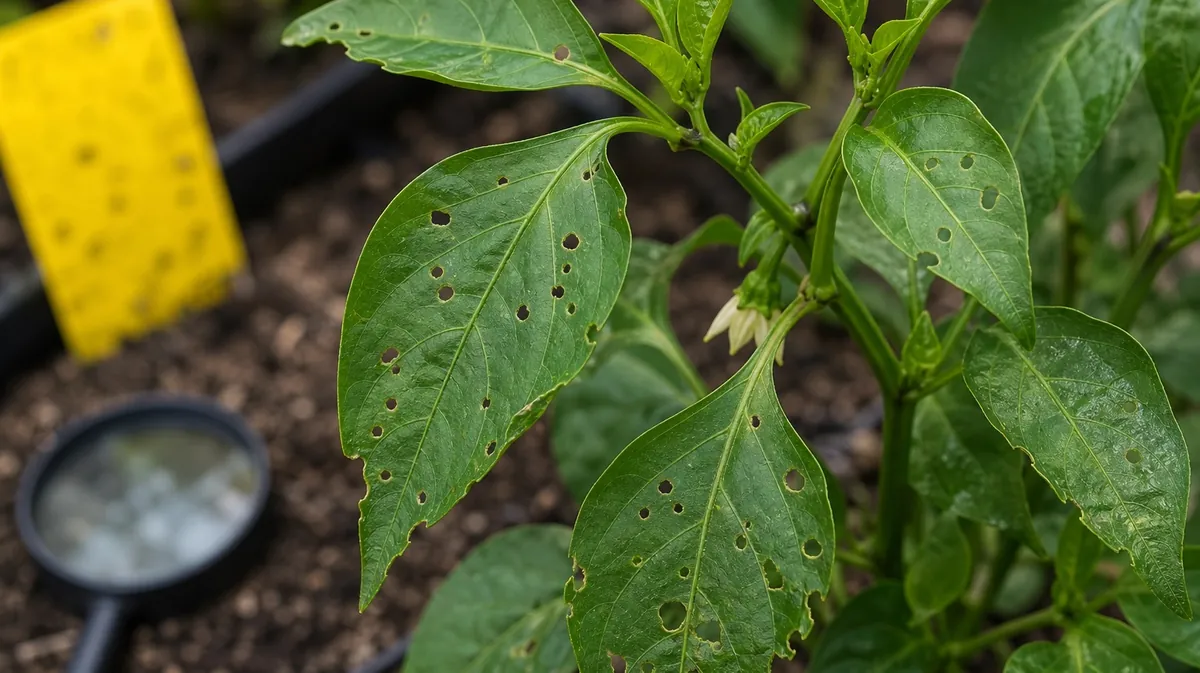
Pepper leaves get chewed by a short list of usual suspects in most home gardens: flea beetles, caterpillars, slugs or snails, grasshoppers, and occasional beetles. Each leaves a different rhythm of damage.
Flea beetles often leave many tiny holes. Caterpillars leave larger bites and frass. Slugs and snails tend to work at night and leave ragged damage with moisture clues. Grasshoppers remove bigger sections quickly, especially on exposed plants.
- Flea beetles: numerous pinholes, often worst on younger plants.
- Caterpillars: larger bites, dark droppings, feeding at dusk or early morning.
- Slugs and snails: ragged chewing plus slime or hidden shelter nearby.
- Grasshoppers: bigger sections missing, often in hot dry weather.
If fruit is also affected, widen the inspection. Leaf holes can be the first sign, not the whole problem.
Use the Lightest Effective Response First
Start with the least disruptive response that fits the evidence. Hand-picking, barriers, cleanup, and closer monitoring solve a surprising amount of pepper leaf damage without stressing the plants or the garden system.
We escalate only when the damage is active and spreading. This matters because peppers under heat or water stress can react badly to unnecessary treatments. Before spraying anything, confirm that the problem is not mostly cultural by checking irrigation with watering guidance and overall plant load with our yield-building guide.
| Response level | Use when | Example |
|---|---|---|
| Monitor only | Old or minor damage | Mark leaves and watch new growth |
| Physical control | Active pests are visible | Hand-pick, trap, barrier, row cover |
| Targeted treatment | Damage is spreading and confirmed | Use the least broad option that matches the pest |
The point is to protect new growth and fruit set, not to make every old leaf perfect again.
Judge Recovery by New Leaves, Not by Damaged Ones
Chewed leaves do not heal. Recovery shows up as clean new growth, continued flowering, and normal fruit sizing. That is the standard you should watch after any intervention.
If the plant keeps producing and new leaves look better, you have probably done enough. If new holes continue and growth slows, return to the inspection cycle and identify the active cause more precisely. This is especially important on container peppers and young transplants, where damage carries a bigger growth cost.
- Good recovery: clean new leaves and stable fruit set.
- Partial recovery: old leaves look rough but no new damage appears.
- Escalate: fresh damage keeps showing on the newest leaves.
Hole damage feels urgent because it is visible. The real measure is whether the plant keeps making healthy new tissue after you respond.
Do Not Treat Cosmetic Damage Like a Crop Emergency
Pepper plants can tolerate a fair amount of old leaf damage and still produce well. The danger is not the existence of a few holes. The danger is active chewing on new growth, spreading damage, or a stressed plant that is already struggling to flower and size fruit.
That is why we judge the whole plant, not one leaf. If flowering, new leaves, and fruit set are still steady, monitor first. If the plant is already weakened by drought or poor root conditions, fix the stress layer too. The same system view matters in pepper plant care and plants not growing.
- Cosmetic damage only: mark the leaf and monitor new growth.
- Damage plus weak growth: inspect both pests and plant stress.
- Damage on flowers or fruit: escalate the inspection quickly.
Spraying old holes does not repair anything. Protecting the next round of leaves and flowers is what actually saves the crop.
Check Nearby Plants So You Do Not Miss the Real Source
Pepper leaves rarely get chewed in isolation if the culprit is still active. Check nearby eggplant, tomato, weeds, mulch edges, and the underside of neighboring leaves. Many chewing pests spread across a small zone, and the pepper is only the most noticeable victim.
This wider check also helps you avoid treating the pepper repeatedly while the real shelter stays untouched. Use the same broader view you would use in pepper plant care, the aphid troubleshooting guide, or the spider-mite troubleshooting guide. A plant-by-plant diagnosis is good. A bed-level diagnosis is better.
- Inspect neighbors: pests often move between related crops.
- Inspect mulch and edges: night feeders hide there by day.
- Inspect new growth across the bed: that tells you whether the problem is spreading.
The hole pattern on one pepper leaf starts the diagnosis. The nearby plants often finish it.
Use Damage Pattern Plus Plant Vigor as the Final Diagnosis Check
Leaf holes by themselves are only half the diagnosis. The other half is how the plant is otherwise performing. A pepper that still pushes clean new leaves, flowers normally, and sizes fruit may not need much more than observation and a light physical response. A pepper with the same holes plus weak new growth, stalled fruit, or repeated wilt is carrying a bigger stress stack, even if the holes look similar at first glance.
This matters because growers often treat by visual drama alone. A few ragged leaves can trigger a spray, while a subtler but system-wide decline gets missed. The better method is to pair the hole pattern with the plant's momentum. Is the damage old or new? Is the newest growth clean or getting worse? Are fruit and flowers still moving? Those questions tell you whether the chewing issue is isolated, active, or part of a broader care problem that includes watering, spacing, and stress management.
- Minor chewing plus strong vigor: monitor closely and use the lightest control that fits.
- Fresh chewing plus slowing growth: inspect wider and respond more aggressively.
- Leaf damage plus moisture stress: fix the plant-care layer as well, or the problem will keep looking worse than it is.
That combined read is what turns this from guesswork into troubleshooting. The leaf tells you where to look. The plant's overall vigor tells you how urgent the problem really is.
Use One Week of Observation to Confirm the Fix
After you make a control decision, give the plant a structured follow-up week instead of checking once and moving on. Mark a few damaged leaves, inspect the same sections of the plant every day or two, and watch whether the newest growth stays cleaner. That is how you separate a real fix from a lucky pause in feeding pressure.
This follow-up matters because many chewing issues are intermittent. A single quiet day does not prove the problem is gone. What proves improvement is that new leaves stay cleaner, the damage rate slows, and the plant's overall vigor stops slipping. That kind of short tracking is much more useful than trying to remember whether the holes looked worse last Tuesday.
- Mark old damage: makes fresh chewing easier to spot.
- Watch new growth: it is the best indicator of recovery.
- Track flower and fruit progress: plant momentum tells you whether the fix was enough.
One week of deliberate observation turns a guess into a result. The goal is not to watch damaged leaves forever. It is to confirm quickly whether the plant is actually moving back toward healthy growth.
Decide When the Damage Is Cosmetic and When It Is Escalating
Not every hole justifies action. A pepper plant can outgrow minor chewing if new leaves stay clean and fruit set continues. The hard part is recognizing when the pattern has crossed from cosmetic damage into active loss.
We use three escalation triggers: fresh damage on new leaves, repeated overnight spread, and visible evidence such as frass, slime, or insects on the plant itself.
| What you see | Usually means | Response |
|---|---|---|
| Old lower leaves with a few holes | Past damage, limited risk now | Monitor and leave the plant alone |
| New leaves opening with fresh bites | Active feeder still present | Inspect at dusk and early morning |
| Damage plus reduced vigor | Plant is losing enough leaf area to matter | Act quickly with the lightest effective control |
| Holes after wind or storm only | Mechanical injury | Protect growth and watch the next flush |
- Photograph the same leaves so you can tell whether damage is spreading.
- Check nearby crops because peppers are often not the only host in the bed.
- Prioritize new growth over ugly old leaves when deciding treatment.
A calm diagnosis saves more plants than a fast spray. The real question is not whether the holes look bad. It is whether the plant is still losing ground today.
Inspect the Habitat Around the Plant, Not Only the Plant
Leaf holes often start at the edges of the growing space before they show up clearly on the pepper itself. Mulch piles, boards, weeds, dense groundcover, and nearby stressed plants all make good hiding space for the pests that chew peppers at night or in low light.
That is why a clean diagnosis includes a two-foot radius around the plant. You are not only looking for the insect. You are looking for the place it retreats to between feeding windows.
- Lift boards, trays, and dense mulch: slugs and snails often hide there through the day.
- Check nearby weeds: flea beetles and other feeders often stage on easier hosts first.
- Look at row edges: grasshoppers and larger chewers frequently start from the hottest open edge.
- Clear debris before spraying: otherwise the plant gets treated while the shelter stays untouched.
Peppers rarely exist in isolation. The faster you read the small habitat around the plant, the faster the hole pattern starts making sense.
Use New Growth as the Real Success Metric
Damaged old leaves can stay ugly for the rest of the season. What matters is whether the new growth opens cleaner after you intervene.
- Cleaner new leaves: the treatment or cultural fix is working.
- Fresh holes in the center growth: the feeder is still active.
- No new damage but weak growth: the plant may have a second stress layer to solve.
That focus keeps you from chasing cosmetic perfection when the real goal is stopping active loss.