
Grow More Peppers per Plant Without Overfeeding
Pepper yield improves when the plant keeps setting flowers, not when it grows the biggest canopy. Start with full sun, warm soil, steady moisture, light feeding, and frequent harvests.
Start With Fruit Set, Not Plant Size
To grow more peppers per plant, manage the plant for steady fruit set. A tall, leafy pepper can still underproduce if heat, dry soil, or heavy nitrogen makes flowers drop before they turn into pods.
We watch three signals before changing anything: new flowers every week, marble-size fruit that keep sizing up, and leaves that stay evenly green through the hottest part of the day. That pattern matters more than raw height on jalapeno pepper variety, the cayenne pepper profile, and heavy-fruited the bell pepper profile.
| Yield lever | What to check first | Better fix |
|---|---|---|
| Light | At least 6 to 8 hours of direct sun | Move containers or remove nearby shade |
| Moisture | Moist soil below the surface | Water deeply before leaves wilt |
| Harvest rhythm | Mature pods still hanging | Pick usable fruit twice a week |
| Nutrition | Dark leafy growth with few pods | Back off nitrogen and wait for reset |
The table is a triage tool, not a fertilizer schedule. Fix the clearest weak point first, then give the plant a week before stacking another change.
Give Roots Enough Room to Feed Flowers
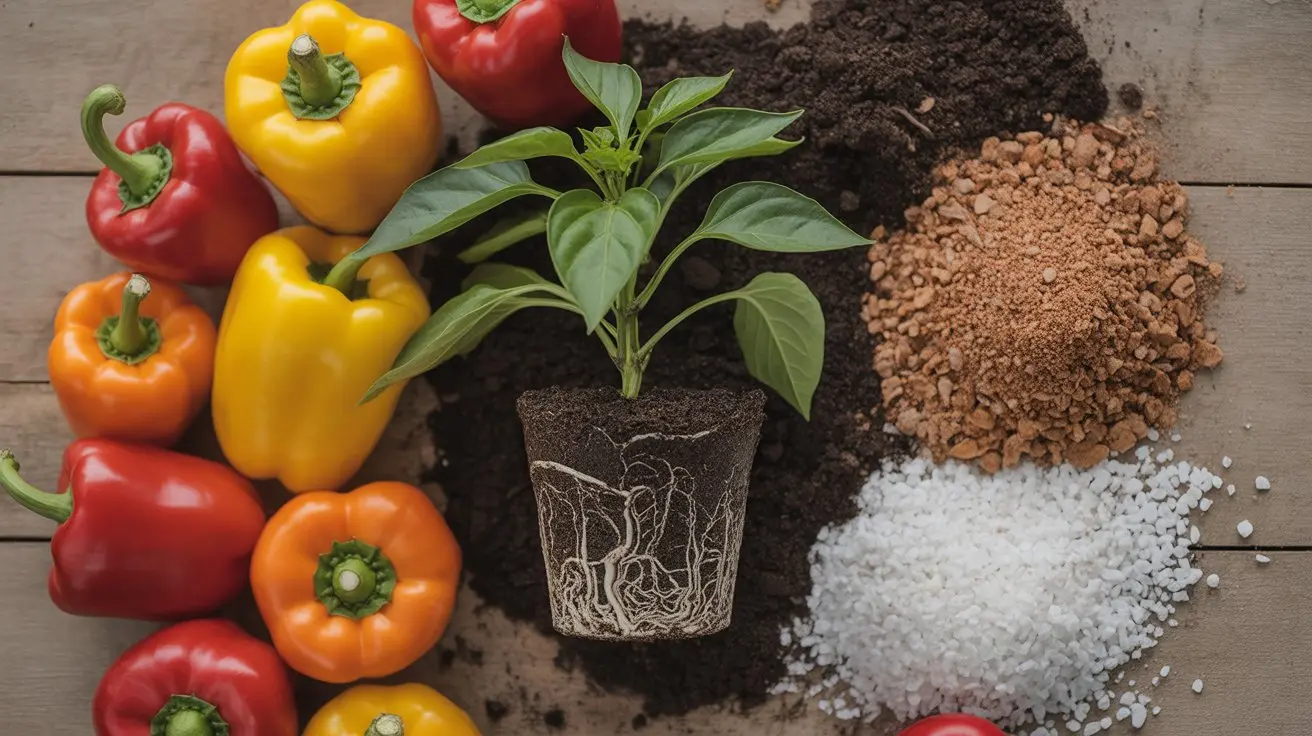
Root volume sets the ceiling for yield because pepper flowers and fruit draw from the same water supply. A cramped root ball dries fast, then the plant protects itself by dropping flowers or stalling small pods.
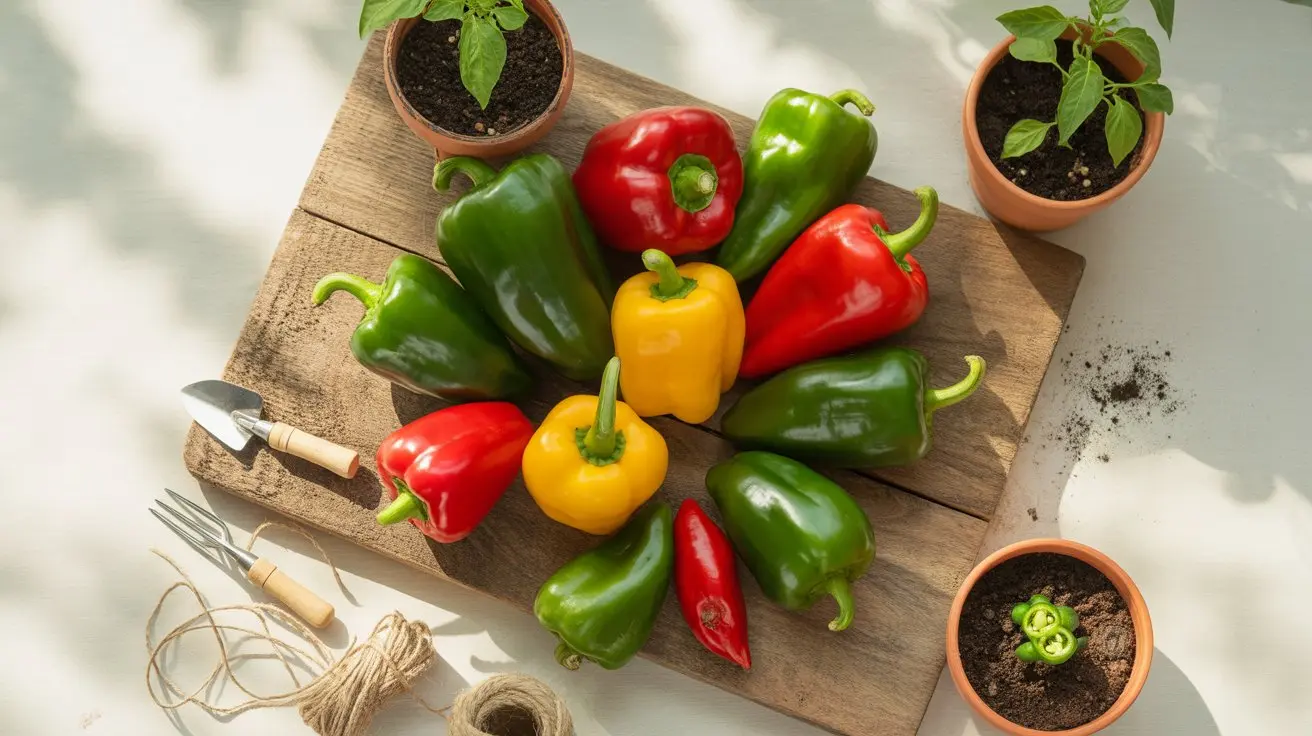
In beds, spacing should leave enough room for airflow, mulch, and harvest access. In pots, one productive plant usually does better in a true 5 gallon or larger container than in a decorative patio pot that looks big from above but holds little soil. If you are growing in containers, the setup in growing jalapenos in pots is a good baseline even for other medium peppers.
- Small hot peppers: can carry high pod counts if roots stay cool and evenly moist.
- Large-fruited peppers: need more root buffer because each pod pulls more water.
- Fabric pots: improve drainage, but they dry faster in wind.
- Raised beds: usually give the easiest balance of volume and drainage.
If the pot feels light by noon two days in a row, the container is probably the bottleneck, not the fertilizer.
Feed for Flowering, Not for Leaf Mass
Pepper plants need nutrition, but yield usually drops when feeding turns into a leaf-growing contest. Heavy nitrogen can make a plant look healthy while delaying flowering and fruit fill.
We use restrained feeding once the plant is established. That means enough fertility to support new growth, but not so much that every node pushes soft leaves instead of flowers. This matters on productive garden workhorses like serrano pepper variety and the banana pepper profile as much as it does on hotter types.
| Plant signal | Likely issue | Next move |
|---|---|---|
| Very dark leaves and few flowers | Too much nitrogen | Pause feeding and keep moisture steady |
| Pale new growth and slow sizing fruit | Plant may be hungry or roots are stressed | Check watering first, then feed lightly |
| Good flowers but tiny pods abort | Water and heat stress | Stabilize irrigation and mulch |
Do not correct every slowdown with more fertilizer. On peppers, overcorrection is one of the fastest ways to trade pods for canopy.
Keep Water Even Through Flowering and Fruit Fill
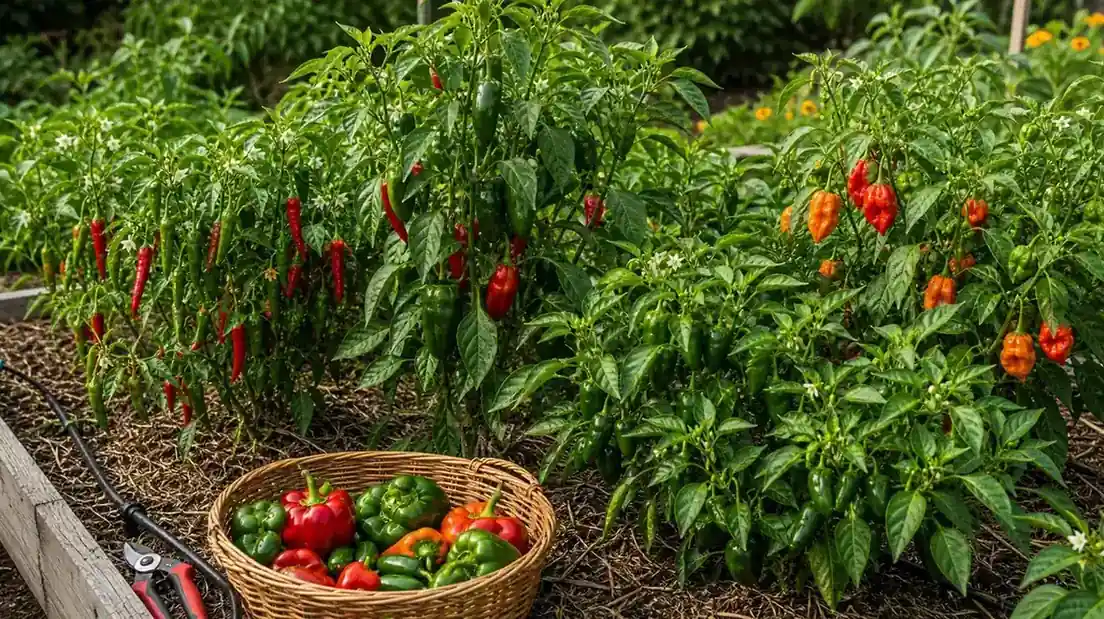
Most home yield problems are really water swing problems. Soil that flips from dusty dry to soaked can trigger blossom drop, uneven fruit shape, and slower ripening.
Use the same logic as in watering pepper plants: soak the root zone, then water again when the upper layer dries instead of sprinkling lightly every day. Mulch helps because it slows surface loss and keeps the root zone cooler during hot spells.
- During flowering: avoid letting the plant wilt hard in afternoon heat.
- During fruit fill: deep watering matters more than frequent shallow sprays.
- During heat waves: container plants may need a morning check and an evening check.
A plant that wilts often can still survive, but survival is not the same as yield. The pods that never set do not come back later.
Help Flowers Set During Heat
Peppers set best within a moderate temperature window. Once days or nights stay too hot, flowers may dry out, drop, or fail to pollinate cleanly even when the plant looks fine.
This is why a midsummer stall is common on growing bell peppers at home and other thick-walled types. The fix is usually microclimate management, not panic pruning. Morning sun, reflected heat, wall-side containers, and wind exposure all change how stressful a bed feels to the plant.
- Support pollinators: keep blooms coming and avoid broad spraying during flowering.
- Use light shade in extreme heat: afternoon shade cloth can save flower set in brutal weeks.
- Shake or tap plants lightly: useful in still air or greenhouse conditions.
Harvest Earlier if You Want More Total Pods
One of the cleanest yield moves is earlier harvest. When mature pods sit on the plant too long, the plant can slow new flowering because it is already carrying a full load.
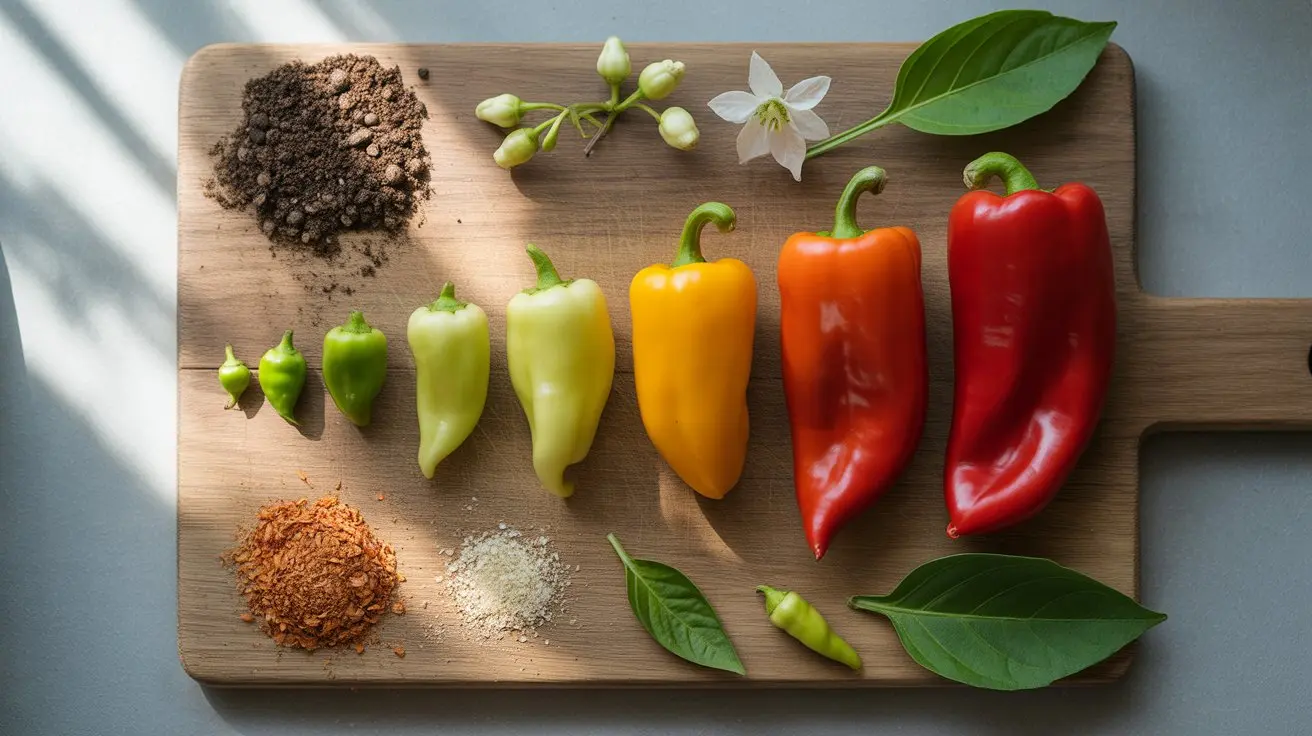
Pick by use. Harvest the jalapeno harvest-timing guide green for crunch and repeat production, leave some red if you want sweeter heat, and harvest long reds like cayenne often if the goal is drying or flakes. The same logic applies to the cayenne growing guide and many sauce varieties.
| Harvest style | What you gain | Tradeoff |
|---|---|---|
| Pick green and mature | Faster reset and more total pods | Less ripe sweetness |
| Hold for full color | Better red flavor and seed maturity | Lower total pod count on many plants |
| Mixed harvest | Best balance for home gardens | Needs more frequent checking |
If the plant is already loaded, a harvest pass often does more for next week's flower set than any bottle on the shelf.
Prune Lightly and Only for a Reason
Pruning can help airflow, access, and branch balance, but it does not automatically increase yield. Cutting a healthy, fruiting pepper too hard often removes the nodes that would have carried the next round of pods.
Prune with a job in mind: remove damaged leaves, open a crowded center slightly, or keep low foliage off wet soil. If the real problem is flower drop, root stress, or missed harvests, cutting branches just hides the cause. The same caution applies to guides on pinching pepper flowers and pepper plant care.
- Good pruning: broken stems, diseased leaves, light cleanup for airflow.
- Risky pruning: removing a large share of healthy flowering wood in summer.
- Best timing: before the plant is carrying its heaviest load.
Leave enough leaf cover to shade fruit and feed the plant. A pepper stripped for neatness usually yields less than one left with a working canopy.
Use a Weekly Yield Check Instead of Random Fixes
The simplest home system is a weekly walk with the same checklist. Count open flowers, small pods, harvestable fruit, and any dropped blossoms on the mulch. That tells you whether the plant is moving forward or just looking green.
We like a seven day reset because it catches problems before they become a lost month. If flowers are dropping and the soil is dry, correct irrigation. If flowers are present but pods are not sizing, check heat and root volume. If mature pods are piling up, harvest. If leaves are chewed, compare symptoms with holes in pepper plant leaves before assuming nutrition is the issue.
Yield comes from a repeatable rhythm: enough light, enough root volume, even water, modest feeding, and harvests that keep the plant producing. Most pepper plants do not need a secret trick. They need fewer conflicting stresses in the same week.
Fix the Yield Bottleneck You Actually Have
Most home pepper plants do not fail from one dramatic mistake. They lose yield because two or three smaller bottlenecks pile up in the same month. A plant in partial shade can still crop. A plant that misses one watering can still recover. A plant that keeps a few ripe pods too long can still push more flowers. But when all three happen together, the season suddenly feels unproductive even though the plant never looks completely dead.
That is why the useful question is not "What miracle trick gives me more peppers?" It is "What is the first bottleneck that is limiting this plant right now?" Start with the one that changes fruit set directly. If the canopy is lush but flowers keep dropping, fix heat and moisture before touching feed. If the plant is healthy but loaded with mature pods, harvest before feeding. If the plant is pale and stalled in a small pot, increase root support before pruning. This same order of operations is what separates a productive season from a constantly reactive one.
- Flower drop plus dry soil: moisture is the first job.
- Dark leaves plus weak yield: too much nitrogen is more likely than too little.
- Healthy plant plus too many finished pods: harvest is the missing reset.
- Strong top growth plus repeated wilt: root volume or heat management is too weak for the crop load.
Once you make the right first fix, stop changing everything else for a few days. Yield improves when the plant gets a stable run, not when every symptom triggers a new treatment. That boring pause is part of the method. It gives you time to see whether flower set improves, whether new pods hold, and whether the plant is finally using its energy for fruit instead of recovery.
Use Variety Choice to Make Yield Easier, Not Harder
Some yield problems start before the season does because the variety is a mismatch for the site. A short-season garden, a hot windy patio, or a tiny container setup narrows which peppers can actually produce well without constant rescue. A productive jalapeno, serrano, or cayenne in the right spot often outperforms a supposedly bigger-yield variety that never gets enough stable time to set and ripen properly.
That does not mean only grow easy peppers. It means match the variety to the conditions if the goal is more usable peppers per plant. In a cooler climate, choose earlier, steadier growers for the main crop and treat slower peppers as a smaller side project. In a container setup, favor varieties that keep producing in modest root volume rather than varieties that need the season length and branch strength of a large bed. The easiest extra yield is often choosing one plant that fits the system instead of wrestling three plants that do not.
- Short season: prioritize earlier, repeat-producing plants.
- Hot patio: choose peppers that tolerate container swings better.
- Main crop plan: let reliable peppers carry the season, then experiment around them.
Yield improves fastest when the plant's genetics and the site's limits stop fighting each other. That is not a trick. It is basic crop fit, and it saves more frustration than another round of midseason corrections.
Run a Weekly Yield Audit Instead of Guessing
When a pepper plant underperforms, we stop talking in generalities and check the same four things every week: open flowers, newly set fruit, usable harvest count, and water stress by late afternoon. That simple audit tells you whether the plant is short on energy, short on water, or just carrying too much mature fruit to keep setting new pods.
The most common mistake is reacting to one bad day. A plant can pause after a heat spike and recover on its own if the root zone stays stable. It is the repeated pattern that matters.
| Weekly signal | What it usually means | Best next move |
|---|---|---|
| Flowers open, then drop | Heat or moisture swing | Shade the hottest window and water earlier |
| Small fruit hold but do not size | Plant is overloaded or underfed | Harvest mature pods and feed lightly |
| Leaves stay soft by noon | Root zone is too small or too dry | Increase soil volume or tighten watering checks |
| Plant stays leafy with few blooms | Too much nitrogen | Pause feeding and wait for flower reset |
A productive plant does not need a heroic intervention. It needs fewer conflicting signals. Once you track the pattern for seven days, the bottleneck usually becomes obvious.
- Pick ripe pods fast: older fruit suppress new set on many plants.
- Record weather with the check: heat spikes explain a lot of false alarms.
- Change one variable at a time: otherwise you never learn what actually helped.
If you want more peppers per plant, manage the crop like a weekly system, not a series of random fixes.