
Basic Jalapeno Hot Sauce
This is the five-ingredient version: fresh green jalapenos, garlic, white vinegar, salt, and lime, simmered just long enough to soften. It pours bright and tangy at a workable 2,500 to 8,000 SHU, and you drop the heat by scraping the white inner membrane out of the pods before they go in the pan.
Five ingredients is the whole recipe, and that is the point. A basic jalapeno hot sauce does not need onion, tomato, or a long fermenting project. Green jalapenos, garlic, white vinegar, salt, and lime give you a bright, pourable sauce in under half an hour.
We make this version when we want heat that tastes fresh instead of cooked down and sweet. It lands at a friendly 2,500 to 8,000 SHU, the standard range the jalapeno sits in (a range documented by the Chile Pepper Institute at New Mexico State University), so most people at the table can use it freely.
Five ingredients
Strip a sauce to five parts and every one has to work. There is nowhere to hide a weak ingredient or a lazy substitution.
- Green jalapenos bring the grassy, slightly vegetal heat that defines the sauce.
- Garlic adds savory depth so the vinegar does not read as flat sour.
- White vinegar at 5% acidity carries the brightness and keeps the sauce from spoiling fast.
- Kosher salt sharpens the pepper flavor and balances the acid.
- Lime juice, stirred in at the end, lifts the whole thing with a fresh top note.
Drop any one and you feel the gap. That is the trade you make for a short list: there is no tenth ingredient to paper over a mistake, so use a fresh lime and a vinegar you would actually taste.
Use a small nonreactive pot, stainless or enameled, not bare aluminum. The vinegar will pick up a metallic edge from a reactive pan and dull the bright flavor you went to the trouble of protecting.
Which pods?
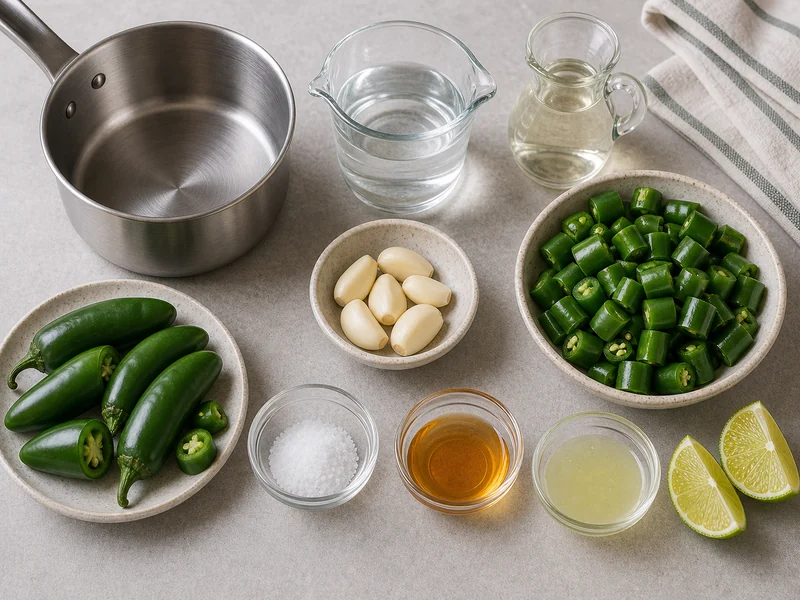
We buy 10 ounces of jalapenos by feel, not by count, since pod size swings a lot. Squeeze a few and keep the ones that are heavy and rigid; a pod that gives under light pressure is past its prime and waters down the sauce.
Look for taut, glossy skin with no soft brown spots near the stem, the first place a jalapeno breaks down. Wrinkled shoulders mean the pod has been sitting and lost moisture, which shows up as a thinner, duller sauce.
The vinegar choice is not a throwaway. We use distilled white vinegar standardized to 5% acidity because that fixed strength gives the sauce a predictable tang and a reliable level of acid, rather than guessing with a softer wine or cider vinegar.
Reach for fresh limes over the bottled juice too. Bottled lime juice carries preservatives and a slightly bitter, oxidized note that fights the green flavor, while two tablespoons squeezed fresh keeps the finish clean.
Green or red?
Reach for jalapenos that are firm and deep green, not the ones turning red on the shelf. Red jalapenos have ripened, and they trade the grassy snap for a sweeter, mellower flavor.
Green fruit is what keeps this sauce tasting bright. The same pepper picked later would push the sauce toward the jammy, sweet profile of a red sauce, which is a fine thing to make, just not this thing.
You may also notice fine white lines, called corking, on some jalapeno skins. Those are a sign of a mature, full-flavored pepper and are exactly what you want here; they do nothing bad to the sauce.
Keep the simmer short for the same reason you bought green pods. Twelve minutes softens the chiles without cooking the fresh, green character out of them.
Membrane heat
Most people blame the seeds for the heat. The real source is the pale inner membrane, the placental tissue the seeds attach to, which holds the bulk of the capsaicin (the Chile Pepper Institute at New Mexico State University points to that placental tissue, not the seeds, as the hot part).
Scrape that membrane out of half the peppers and you cut the burn by a noticeable margin while keeping full jalapeno flavor. Leave it all in if you want the sauce closer to the top of the range. The seeds themselves mostly add a slightly bitter, gritty texture, which is why we leave them out when we want a smoother pour.
Wear a glove for the scraping, or wash your hands well after, since the capsaicin clings to skin long after the pods are in the pot. We learned to keep our hands away from our eyes until the knives are washed.
If you want to understand why that white tissue matters so much, our guide to capsaicin walks through where the compound forms in the pod. For a sense of how mild this sauce is next to hotter chiles, the Scoville scale puts the jalapeno near the bottom of the heat ladder.
Simmer cues?
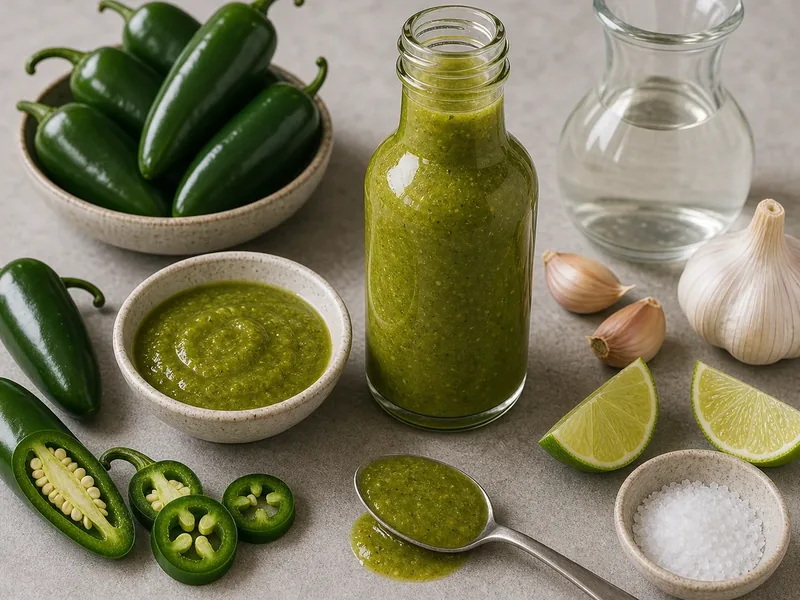
Chop the jalapenos and garlic to a rough, even quarter-inch before they go in. You are not after a fine mince here, since everything gets blended, but even pieces simmer at the same rate so nothing stays raw while the rest overcooks.
Watch the color, not just the clock. Raw jalapenos go in a vivid grass green and shift to a flatter army green when they are cooked through, which is your real signal that the twelve minutes did its job.
The garlic gives a second cue. When its sharp raw smell turns soft and mellow over the pot, the cloves have lost their bite and will blend in without an aggressive edge.
Let the pot rest off the heat for five minutes before blending. Hot liquid expands fast in a sealed blender and can blow the lid, so a short cool-down is a safety step, not just patience.
Acid balance
Load the blender solids first, then pour the warm cooking vinegar over them. Starting with the chiles and garlic at the bottom gives the blades something to grab, so the sauce purees evenly instead of spinning around a trapped air pocket.
Add the lime juice only after the base is smooth. Blending the lime in at the end keeps its fresh top note from cooking off, which is the whole reason it goes in cold rather than into the simmer.
Then taste and adjust in small steps. If the sauce reads too sour, a pinch more salt rounds it; if it tastes flat or sweet, a few extra drops of lime snaps it back without making the whole batch thinner.
Thin or thick?
Straight out of the blender this sauce is medium bodied, somewhere between a splash and a drizzle. You control that with two levers.
For a thinner, shake-it-on sauce, add a tablespoon of water at a time while blending, or strain the finished sauce through a fine sieve to drop the pulp. For a thicker sauce that clings to a taco, blend in less water and simmer the blended mixture an extra five minutes to reduce.
A high-speed blender gets you a silky sauce with no straining. A weaker blender will leave some texture, which is where the sieve earns its place if you want a bottle that pours clean through a shaker top.
When you strain, press the pulp against the sieve with the back of a spoon to pull every bit of liquid through. The leftover green solids are not waste; we stir them into beans or a pot of rice the same night.
Either way, taste before you bottle. A sauce that seems perfectly salted while hot will taste flatter once it chills, so season it to taste slightly bold and warm.
Batch fixes
A five-ingredient sauce gives problems nowhere to hide, but the same short list makes each fix simple. Here is what we run into and how we correct it.
- Too thin and watery: usually too much added water or under-reduced. Simmer the blended sauce a few extra minutes, or strain less of the pulp out next time.
- Harsh and raw tasting: the simmer ran short or the garlic stayed sharp. Give it the full twelve minutes until the chiles turn army green and the garlic smells mellow.
- Too hot to enjoy: too much membrane left in. Scrape the placental tissue from more of the pods, or stretch the batch with a couple of extra peppers and a splash more vinegar.
- Dull or brown color: the green oxidized from overcooking or sitting out. Keep the simmer short, blend while still warm, and bottle promptly to hold the bright green.
- Sauce separates in the jar: normal for a pure-blend sauce with no stabilizer. Just shake the jar before each pour, or strain for a thinner sauce that stays mixed longer.
Five variations
The angle here is a short list, so the best variations swap a part rather than pile on new ones. Each of these keeps the count at roughly five.
For a roasted version, char the jalapenos and garlic under a broiler before they hit the pot. You trade some of the raw green snap for a deeper, smoky-sweet body, and the rest of the method stays the same.
Swap green pods for ripe red jalapenos and you get a sweeter, mellower red sauce with a softer burn. It is a different mood, warmer and rounder, made from the same five parts.
For a smoked edge without changing the count, use a chipotle (a smoke-dried red jalapeno) in place of one or two of the fresh pods. That single swap pushes the sauce toward earthy smoke while keeping it honestly a jalapeno sauce.
Scale ahead?
The whole job needs one nonreactive pot, a knife, and a blender, with a fine sieve only if you want a strained pour. Nothing here calls for special gear, which is part of why we keep coming back to it.
This batch yields about a cup and a half. It scales cleanly by simple multiples, so a double or triple batch works as long as your blender is not so full that it cannot pull the solids down.
It also keeps well as a make-ahead. The flavor settles and rounds out after a day in the fridge as the garlic and acid marry, so a sauce made the night before often tastes better than one bottled an hour ago.
Best uses
A bright jalapeno sauce earns its keep on the everyday plate, not the special one. We pour it over scrambled eggs, into a pot of beans, and across street-style tacos where its green tang cuts through the fat.
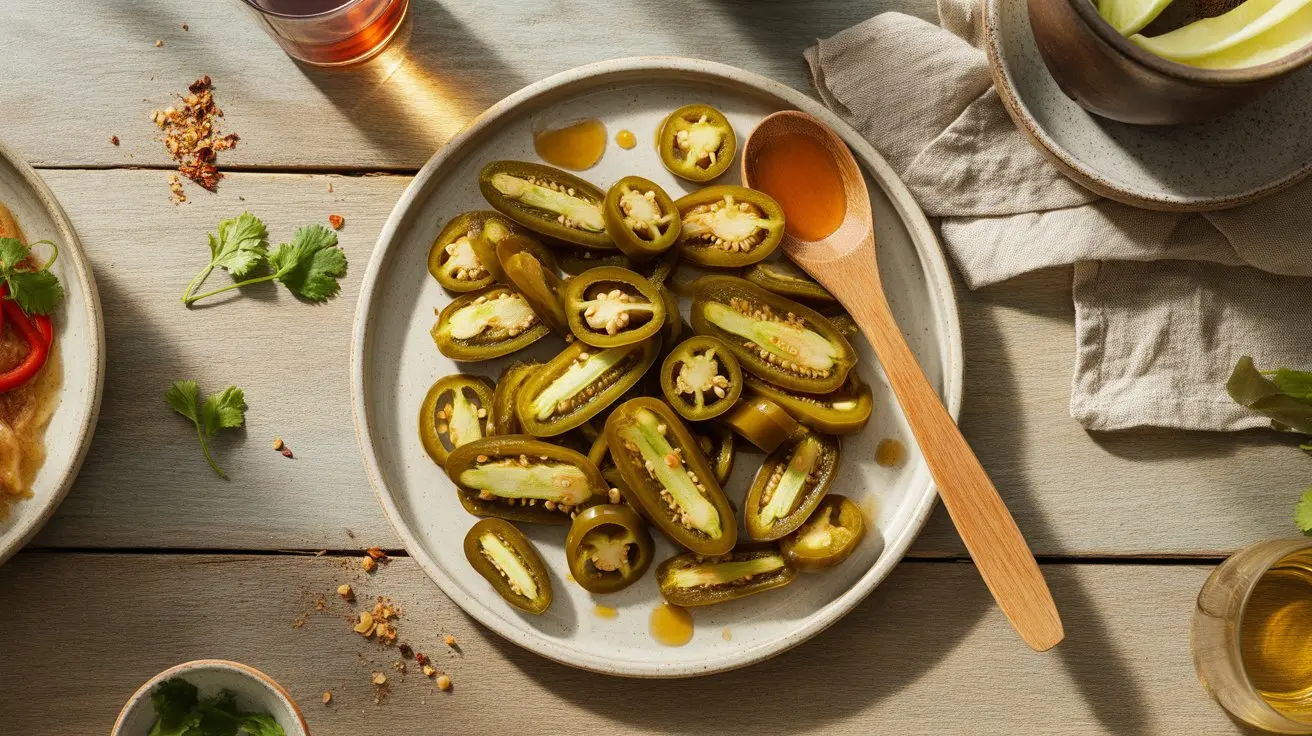
It also makes a fast base for other things. Thin it with a little oil and extra lime for a salad dressing, or stir a spoon into mayo for a sandwich spread. If you like heat on tacos, our pickled jalapenos bring a crunchy, briny texture to the same plate that a smooth sauce cannot.
On the numbers, a jalapeno is a low-calorie, vitamin-C-bearing pod (per USDA FoodData Central), so a few teaspoons of this sauce adds a lot of flavor for almost no calories.
Fridge clock
This is a refrigerator sauce, not a shelf-stable canned one. The vinegar gives it real acidity, but a home cook cannot verify the exact pH the way a tested canning recipe requires.
Kept in a clean, sealed jar in the fridge, it holds its bright flavor for about two to three weeks. The color dulls from vivid green toward olive over time, which is normal oxidation and not a sign of spoilage.
For anything longer, freeze it in a small jar with headspace, or in an ice cube tray for single-pour portions. If you want to can a batch for the pantry, follow a lab-tested recipe from the hot sauce guide rather than guessing at acidity, since safe canning depends on a verified pH at or below 4.6 (National Center for Home Food Preservation).
Chef's Tip
Stir a spoon of finely chopped raw jalapeno into the finished, cooled sauce. You get a fresh green top note sitting over the softer simmered base.
Ingredients
-
10 oz fresh green jalapenosstemmed and roughly chopped
-
4 garlic clovespeeled
-
3/4 cup distilled white vinegar (5% acidity)
-
1 1/2 teaspoons kosher salt
-
2 tablespoons fresh lime juice
Full Recipe Instructions
Scrape the white…
Scrape the white inner membrane out of half the jalapenos if you want a milder pour, then chop everything to an even size.
Simmer the jalapenos,…
Simmer the jalapenos, garlic, vinegar, and salt in a small nonreactive pot for 12 minutes, until the chiles turn army green and soften.
Cool for 5…
Cool for 5 minutes, then blend with the lime juice until smooth, adding a tablespoon of water at a time only if the blades stall.
Taste for salt…
Taste for salt and acid, bottle in a clean jar, and refrigerate.