
Jalapeno Jelly
Green jalapeno jelly succeeds when the pectin formula is respected: chop small, boil hard at the right moment, and choose fridge storage or tested canning before you start.
This green pepper jelly is a pectin set first and a pepper recipe second. The batch works when sugar, vinegar, chopped pepper, and liquid pectin meet in the right order.
This recipe is for clear green pepper jelly that spoons softly over cheese or melts into a glaze. It is narrower than pepper jelly recipe and less chunky than spicy red pepper jam.
Storage First
For this batch, refrigerator storage is the default. If you want shelf-stable jars, follow a tested pepper jelly process from the pectin maker or the National Center for Home Food Preservation.
That distinction matters because canning is not just filling hot jars. Jar size, headspace, acidity, altitude, and processing time all matter.
Do not reduce vinegar for a canned batch. Vinegar supports flavor, set, and safety in tested formulas.
For refrigerator jelly, the practical goals are clean jars, fast cooling, clear labels, and cold storage.
Before heating, line up jars, lids, ladle, towel, spoon, and pectin. Jelly moves quickly once it reaches the rolling boil, and searching for tools can cost the set.
A wide pot helps because the boil climbs high. Use more headroom than you think you need, especially with liquid pectin.
Wear gloves for chopping if the jalapenos are hot. Sugar does not stop capsaicin from reaching your skin during prep.
Pectin Formula
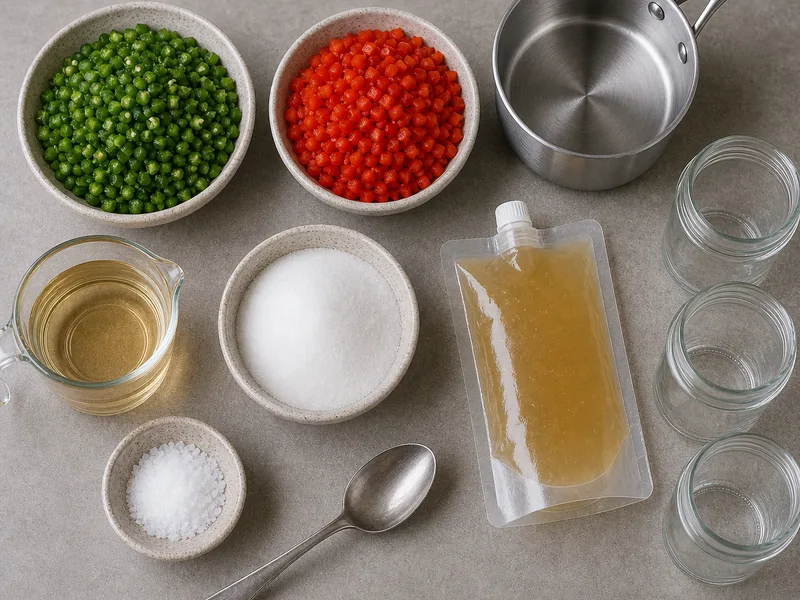
Regular liquid pectin expects a high-sugar formula. Cutting sugar without changing pectin type is the fastest path to syrup.
Powdered pectin and low-sugar pectin often use a different order. Read the package before swapping products.
We use cider vinegar because it has enough edge to keep the jelly from tasting like plain sugar. Rice vinegar is too soft here, and distilled vinegar tastes sharper.
- Regular liquid pectin: use the full sugar amount.
- Low-sugar pectin: follow that product's formula.
- Powdered pectin: do not add it at the same point as liquid pectin unless the package says so.
The full sugar amount also protects the texture after chilling. Low sugar with regular pectin can taste fine from a spoon but slide off crackers like syrup.
If you need less sweetness, change the pectin system rather than freelancing the ratio. Low-sugar pectin exists for exactly that job.
Salt is small but useful. It keeps the jelly from tasting flat against cheese and makes the jalapeno flavor easier to notice under the sugar.
Pepper Suspension
Jalapenos heat profile measure about 2,500 to 8,000 Scoville heat units according to the New Mexico State University Chile Pepper Institute. In jelly, that medium heat gets softened by sugar, so rib removal is the main heat dial.
Fine chop is better than puree. Puree clouds the jelly; large pieces float or sink.
Red bell pepper gives color contrast and body without adding more heat. It also helps the green jalapeno pieces look intentional instead of sparse.
If you are choosing between red and green pods, red jalapeno vs green jalapeno is a real flavor choice: red tastes rounder and fruitier, green tastes sharper.
A food processor can chop the peppers, but pulse in short bursts. The goal is even tiny pieces, not a wet puree.
If the processor bowl looks watery, drain off a little free liquid before measuring. Extra water changes the set and can dilute the vinegar.
For a clearer jelly, avoid scraping every bit of pepper foam from the cutting board into the pot. The flavor loss is tiny, and the finished jar looks cleaner.
Heat Prep
The safest place to adjust heat is before the pot boils. Once pectin enters, big changes can break the set.
For mild jelly, scrape ribs from half or all of the jalapenos and keep the bell pepper amount the same. For hotter jelly, leave more ribs in or replace a small part of the bell pepper with more jalapeno.
Do not add extra vinegar at the end to tame heat. It may sharpen the flavor, but it can also change the set if the amount is large.
Do not add fresh chopped pepper after the boil. The pieces will taste raw, and the batch will no longer match the cooked formula.
One-Minute Boil
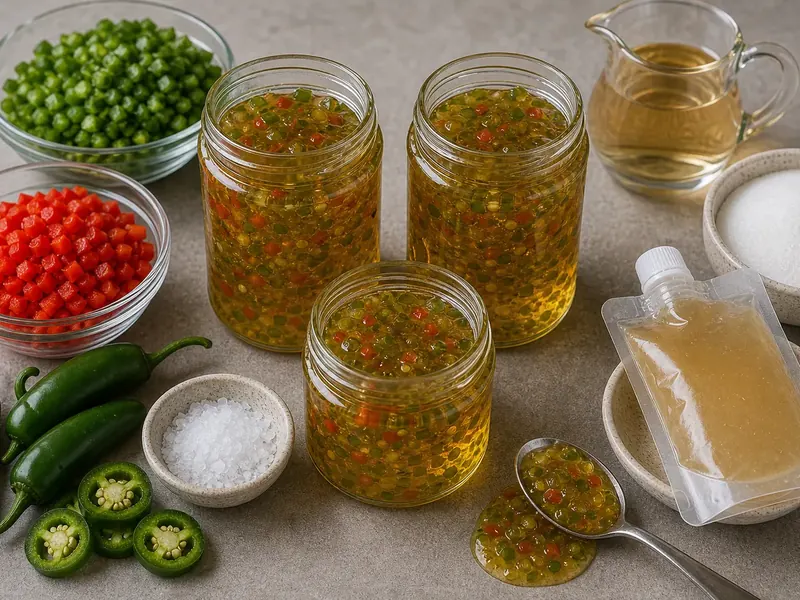
Before pectin, heat the peppers, vinegar, salt, and sugar until the sugar dissolves and the mixture reaches a full rolling boil. A rolling boil keeps bubbling while you stir.
Add liquid pectin all at once. Then return the pot to a full rolling boil and boil for 1 minute, stirring constantly.
Longer boiling after pectin can toughen the set and darken the color. A weak boil can leave the batch loose even when the ingredient list is right.
Set up jars, ladle, towel, and spoon before the boil starts. Searching for equipment during the pectin minute is how batches overcook.
Foam And Float
Foam rises during the hard boil. Skim it after the pectin minute, not before, because new foam forms as soon as pectin hits the pot.
Pepper float often means the pieces were too big or the jars were filled while the syrup was still thin. Let the pot stand a few minutes off heat, stir gently, then fill.
Do not wait too long. If the jelly starts setting in the pot, the jars fill unevenly and the top can look rough.
During the pectin minute, stir across the bottom and into the corners. Sugar syrup can stick at the edges and darken before the center shows any problem.
Start timing only after the boil returns. Timing from the moment pectin enters the pot can undercook the set if the boil drops hard.
After the minute, remove the pot from heat immediately. Carryover heat is enough for skimming and filling.
Best Uses
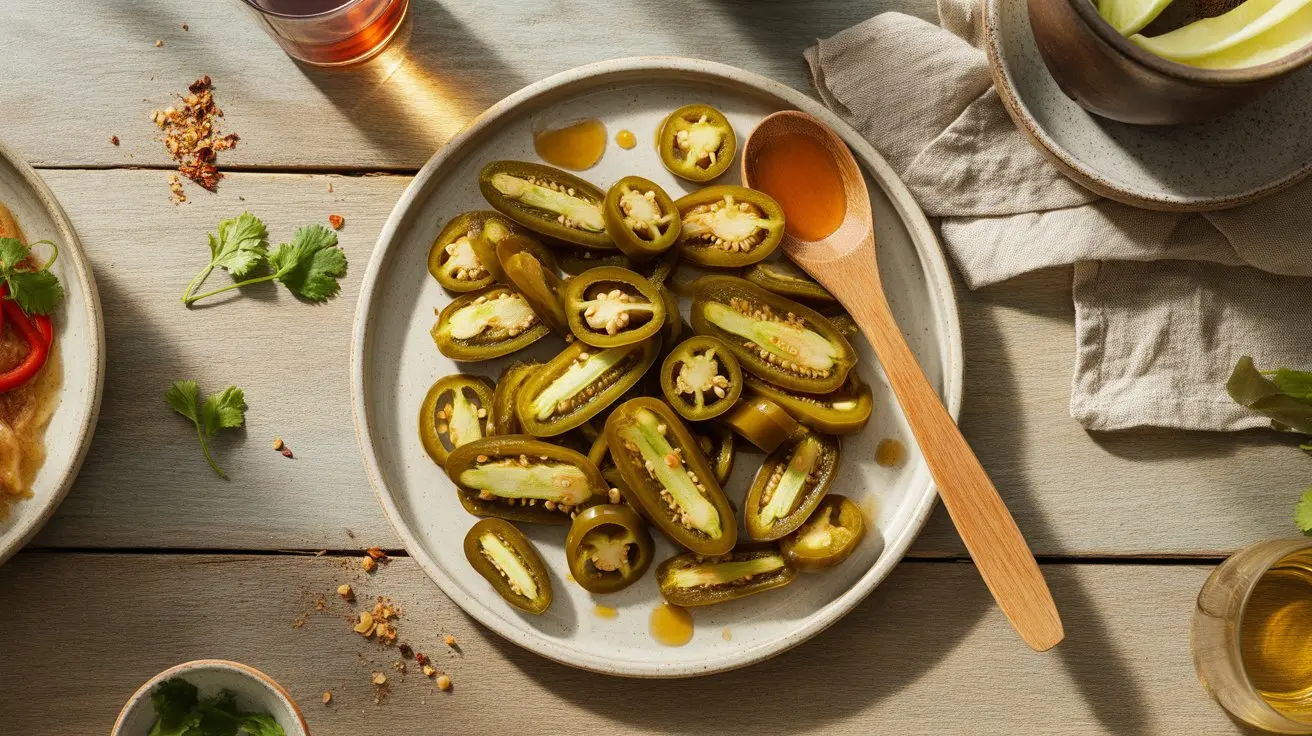
Cream cheese and crackers are the default, while pickled jalapenos show the opposite job: salt and acid instead of sweet set. The jelly should stand up to cheddar, ham biscuits, pork chops, fried chicken, and grilled sausage.
For a glaze, warm 2 tablespoons jelly with 1 teaspoon vinegar. Brush near the end of cooking so the sugar does not scorch.
- Cheese board: chill the jar fully so the jelly cuts cleanly and does not slump.
- Sandwiches: use a thin layer because bread and salt carry the pepper better than a thick spread.
- Meat glaze: add vinegar or lime juice to loosen the set and brighten the sugar.
- Soft set: call it jalapeno glaze in your kitchen and use it on pork, chicken, or roasted carrots.
USDA FoodData Central frames the serving size: raw peppers are low-calorie produce, but this jelly is sugar-led. A tablespoon serving makes more sense than a heavy spread.
Heat changes after chilling. Sugar hides capsaicin while warm, then the bite shows more clearly once the jar is cold.
Keep notes on pepper amount, rib removal, and pectin brand. Jelly is formula-sensitive, and written notes matter more than memory on the next batch.
Batch Read
Pepper jelly has to do two jobs at once: set softly and hold visible pepper pieces. A rock-firm set looks tidy but melts poorly into glazes.
- Floating pepper: the jelly was jarred before the gel thickened enough to suspend pieces.
- Cloudy jelly: peppers were pureed, foam was stirred back in, or the boil was too violent.
- Sticky rims: wipe before lids go on, even for refrigerator jars.
- Gift jars: label the date and refrigerator note so no one assumes pantry storage.
A chilled plate test gives an early clue, not a final verdict. The overnight set is the real read because pectin continues to firm as the jar cools.
Pectin brand and sugar ratio matter more than pepper mood. We do not reduce sugar casually in a standard pectin jelly because the set depends on that formula.
The pepper prep is where heat can move safely. Remove more ribs for a mild jar, or keep a little rib for bite while leaving the pectin structure alone.
- Red flecks: add a little red jalapeno or red bell pepper for color contrast.
- Clearer jelly: mince instead of puree and skim foam before jarring.
- Hotter jelly: change pepper prep, not boil time.
Use the final jar with salty food before judging heat. Sugar makes jalapeno seem softer from a spoon, but cheddar or ham brings the pepper back forward.
A softer set is not a failure when the flavor is right. Pepper jelly should spoon over cheese and melt into a glaze, so the ideal texture is gentler than grape jelly.
Next-Day Set
For a hotter serving, add fresh minced jalapeno beside the cheese board rather than changing the jelly formula after it has set.
Hot jelly always looks loose. Judge the set after the jars have cooled and spent a night in the refrigerator.
A soft spoonable set is correct. Rubbery jelly means too much pectin, too long a boil, or too much evaporation.
Loose jelly can still be useful as a glaze. Reworking needs instructions for the pectin product you used, so do not guess a second boil.
For gifts, label refrigerator storage clearly unless you followed a tested canning process. A pretty jar can still need the fridge.
Ingredients
-
1 cup finely chopped jalapeno
-
1 cup finely chopped red bell pepper
-
1 1/2 cups cider vinegar
-
5 cups sugar
-
1 pouch liquid pectin
-
1/2 teaspoon kosher salt
Full Recipe Instructions
Finely chop the…
Finely chop the jalapeno and red bell pepper so the pieces are small enough to suspend in the jelly.
Combine peppers, cider…
Combine peppers, cider vinegar, salt, and sugar in a large saucepan and stir over medium heat until the sugar dissolves.
Bring the mixture…
Bring the mixture to a full rolling boil, then stir in the liquid pectin all at once.
Return to a…
Return to a full rolling boil and boil for 1 minute, stirring constantly.
Remove from heat,…
Remove from heat, skim foam, ladle into clean jars, cool, and refrigerate unless following tested canning instructions.