
Chipotle Peppers In Adobo Sauce
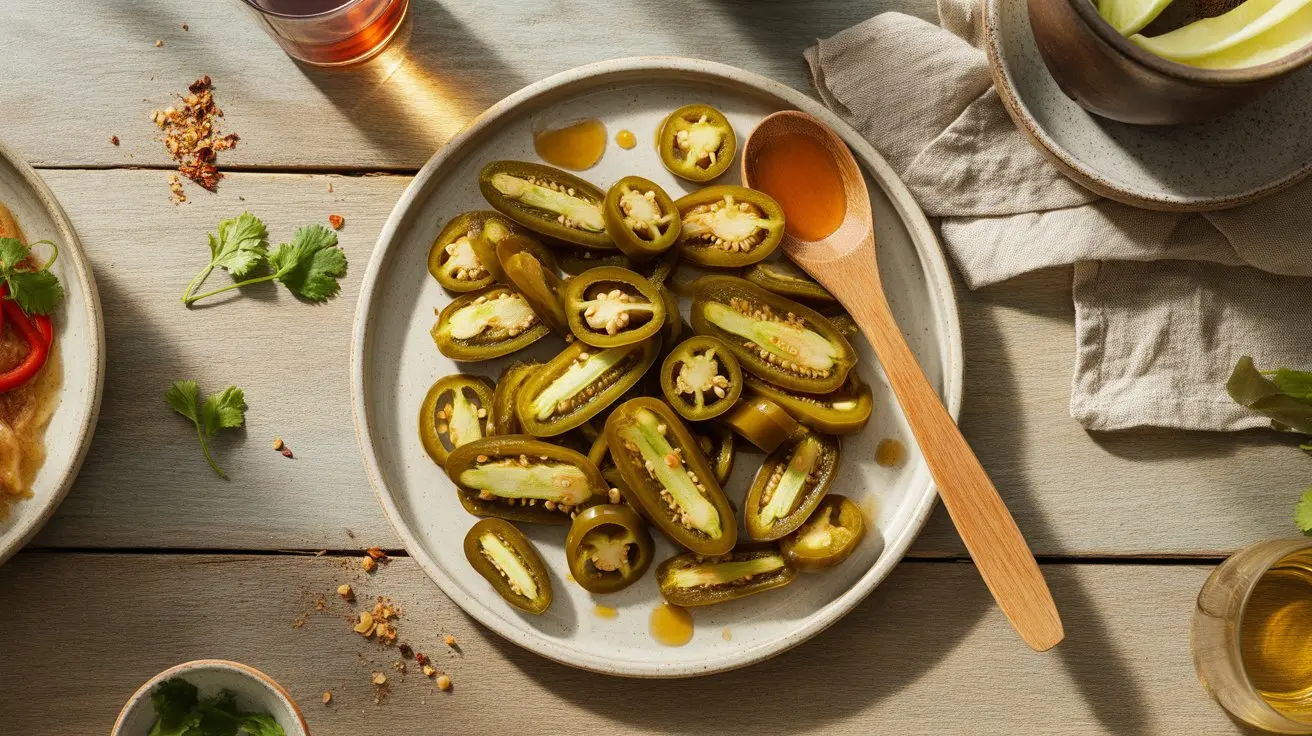
This pantry-style jar keeps whole smoked jalapenos soft in a cooked adobo made with ancho, vinegar, tomato, garlic, and spices.
This jar is about whole softened chipotles, not just a smoky sauce. The sauce matters, but the peppers stay intact and become an ingredient you can mince, spoon, or freeze.
Use easy adobo sauce when you want a smooth cooking base. Use this recipe when you want chipotle peppers packed in sauce like the canned ingredient, but with control over smoke, vinegar, and texture.
Start by deciding canned-style or cook-style
A canned-style jar should give you soft peppers and a spoonable sauce that can go straight into mayo, beans, eggs, or marinades. A cook-style jar can be thicker, smokier, and less sweet because it is meant to disappear into a pot.
We write this version for the canned-style job. That means the sauce needs enough vinegar and tomato to stay bright, enough body to coat the peppers, and enough liquid to spoon without scraping paste from the jar.
- For table use: keep the sauce looser and the vinegar clearer.
- For braising: reduce a little longer and use more meco if you like stronger smoke.
- For freezing: leave the sauce slightly loose because it thickens after thawing.
Choose morita or meco before seasoning
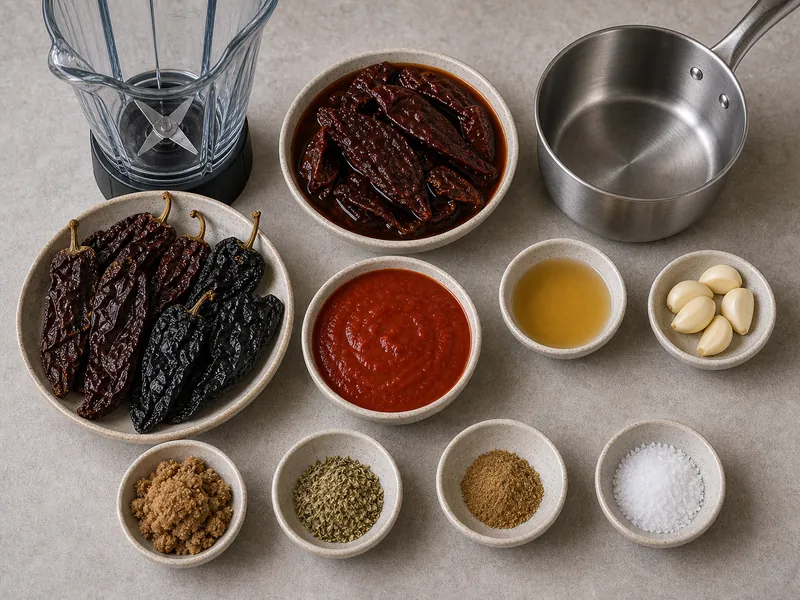
Chipotle is smoked ripe jalapeno. Morita usually tastes softer, redder, and a little fruity, while meco tends to taste drier, tan, and more smoke-forward.
The chipotle pepper heat profile still carries jalapeno-level heat at its core, but drying and smoke change how it reads in food. The NMSU Chile Pepper Institute heat ranges help explain the burn; the smoke explains the cooking role.
- Morita jar: better for eggs, beans, mayo, and quick sauces.
- Meco jar: better for braises, barbecue, soups, and stronger smoke.
- Mixed jar: useful when you want smoke plus red color.
Clean the soaking liquid before it becomes sauce
The first soak often pulls dust, loose seeds, and rough tannins from dried chiles. Taste a spoonful before adding it to the pot.
If it tastes smoky and lightly bitter, use part of it. If it tastes dirty or harsh, discard it and use fresh water or stock for the sauce. Whole chipotles already bring enough smoke, so the liquid should help texture instead of dragging the jar down.
Keep the peppers whole while soaking. Splitting them early releases more seeds into the sauce and makes the finished jar harder to portion cleanly.
Soak the whole peppers until bendable
The whole chipotles need to soften before they simmer in adobo. If they go into the sauce tough, the skins stay chewy.
Soak them with the ancho for about 20 minutes, then bend one with tongs. It should fold without cracking.
The dried pepper soak also gives you control over bitterness. If the water tastes harsh, use fresh water in the sauce.
Use spices as background, not taco seasoning
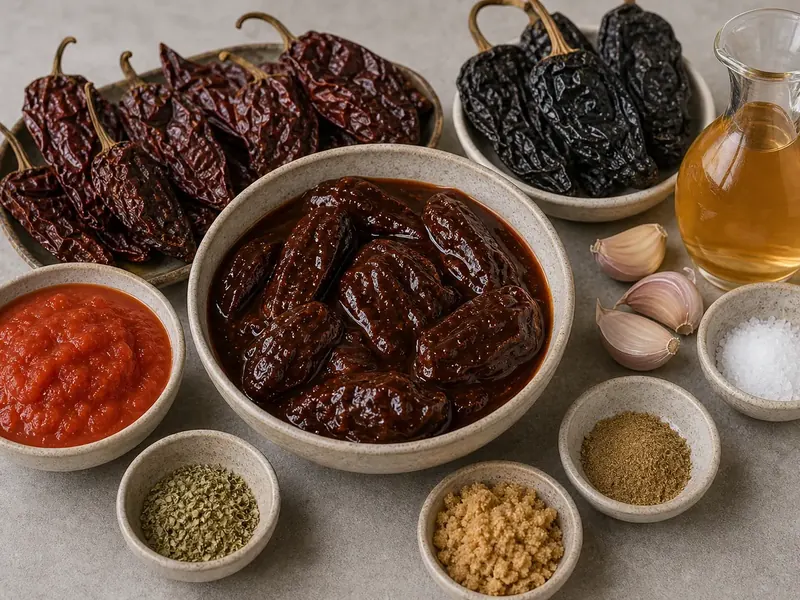
Cumin, oregano, and a little clove can make the sauce taste familiar, but too much turns the jar into a finished taco sauce. The point is to keep it flexible.
Cook the spices in the tomato-onion base until they smell rounded, then add vinegar. That order keeps the vinegar from making the raw spices taste dusty.
USDA FoodData Central treats dried chiles as concentrated plant material with low water compared with fresh peppers. That is why a small spice shift can feel big after the sauce reduces.
Use ancho for body, not chipotle filler
Ancho gives the adobo body and dark sweetness. Without it, the sauce can taste thin and all smoke.
The ancho chile is dried poblano, so it brings raisin-like depth without making the jar much hotter. That lets the whole chipotles stay in front.
Blend the ancho into the sauce. Keep the chipotles whole so the finished jar has two usable parts: peppers and adobo.
Balance vinegar and sweetness for later use
The jar should taste a little stronger than you want on its own because most uses dilute it into beans, mayo, soup, meat, or sauce. Still, sharp vinegar should not be the first thing you smell.
Brown sugar is not there to make the jar sweet. It softens tomato acidity and helps the sauce cling to the whole peppers.
After 10 minutes of simmering, taste the sauce without a pepper. If it tastes flat, add salt. If it tastes harsh, simmer longer before adding sugar. If it tastes smoky but thin, reduce before the whole peppers go in.
- Too sharp: longer simmer first, then a small pinch of sugar.
- Too sweet: vinegar by the teaspoon, then salt.
- Too thin: reduce sauce before adding whole peppers so they do not break apart.
Cook the adobo before adding the whole chipotles
The blended sauce needs its own simmer. Tomato puree, vinegar, garlic, oregano, cumin, sugar, and salt should cook until glossy before the whole chipotles go in.
This step removes raw tomato flavor and lets the spices settle. If the whole chipotles simmer in raw sauce from the start, they can overcook before the adobo tastes finished.
- Finished sauce: darker, glossy, lightly thick.
- Under-cooked sauce: sharp tomato, raw garlic, dusty spice.
- Over-cooked sauce: paste-like and too salty after chilling.
Portion by pepper count, not spoon count
Most recipes that call for canned chipotles ask for one pepper, two peppers, or one spoonful of adobo. Store this batch the same way you plan to cook with it.
For the refrigerator, keep whole peppers covered by sauce in a clean jar. For the freezer, place one or two peppers with a spoonful of sauce in each small container so you do not thaw the whole batch for a tablespoon.
Label morita or meco if you made separate jars. The two jars can look similar after cooking, but they behave differently in a pot.
Let the peppers absorb the sauce
After the adobo tastes cooked, add the softened whole chipotles and simmer 10 more minutes. The sauce should coat the peppers, not drown them in thin liquid.
Cool the jar before judging salt and vinegar. Smoke gets stronger as the sauce rests, and hot vinegar can taste sharper than it will tomorrow.
For a smoother condiment, blend a spoonful of sauce with one pepper. For a cooking ingredient, leave the jar chunky and pull one pepper at a time.
Use the jar where smoke needs time to spread
One minced pepper can change a pot of black beans, chili, barbecue sauce, braised chicken, or tomato soup. The sauce gives smoke and acid first, then the pepper flesh adds deeper heat.
For cold uses like mayo or crema, mince the pepper very fine and add sauce by the half teaspoon. Cold fat mutes heat at first, then the chipotle catches up after a minute.
If you want a finished salsa, use chipotle meco salsa instead. This jar is an ingredient base, so it should stay concentrated and flexible.
Keep this jar out of the salsa category
This recipe overlaps with chipotle meco salsa, but the serving job is different. Salsa is ready to spoon at the table; chipotles in adobo are usually cooked into something else.
Use the peppers in beans, shredded chicken, chili, crema, mayo, marinades, eggs, rice, and braised beef. Use the sauce when you need smoke, acid, and color without adding a whole pepper.
For hot sauce, blend it thinner and add more vinegar. That becomes a different recipe, closer to hot sauce making than pantry-style chipotles.
Store in small portions
Refrigerate the jar and use it within about 1 week. Keep a clean spoon in the process, because smoky sauce hides off smells until the jar is already tired.
NCHFP preservation guidance does not make this shelf stable just because vinegar is present. The recipe is a refrigerator or freezer ingredient unless you use a tested canning process.
Freeze tablespoon portions of sauce and individual peppers on a small tray, then bag them. That avoids wasting a jar when a recipe only needs one pepper.
Judge the jar again the next day
Chipotles keep absorbing adobo as they cool. A jar that tastes separate on day one often tastes more complete after a night in the refrigerator.
Do the final correction after that rest when possible. Add vinegar if the sauce tastes flat, water if it tightens too much, or salt if the smoke is present but the tomato tastes dull.
That overnight check also helps with portioning. Once the peppers are fully soft, you can mince one cleanly without tearing half the jar apart.
Keep one pepper whole in the jar until the end of the batch. It works as a flavor marker: if that last pepper tastes smoky, soft, and seasoned through, the sauce around it was balanced enough.
Fix the jar by deciding pepper or sauce problem
Tough peppers need more time in hot liquid, not more blending. Simmer them gently with a splash of water until the skins soften.
Thin sauce needs reduction before storage. Remove the peppers, simmer the sauce until glossy, then return the peppers so they do not break apart.
- Too smoky: add tomato puree and a pinch of sugar.
- Too sweet: add vinegar by the teaspoon.
- Too sour: simmer 3 minutes before adding sugar.
- Too salty: use smaller amounts in food rather than diluting the jar.
The best jar has soft whole peppers, a sauce that clings, and enough vinegar to stay lively in beans or braises.
Ingredients
-
2 oz whole dried chipotle morita or meco peppers
-
2 dried ancho chilesstemmed and seeded
-
2 garlic cloves
-
1/2 cup tomato puree
-
1/3 cup apple cider vinegar
-
1 tablespoon brown sugar
-
1 teaspoon Mexican oregano
-
1/2 teaspoon cumin
-
3/4 teaspoon kosher salt
Full Recipe Instructions
Toast ancho chiles…
Toast ancho chiles briefly and warm the whole chipotles just until fragrant.
Soak ancho and…
Soak ancho and chipotle peppers in hot water for 20 minutes until pliable.
Blend the soaked…
Blend the soaked ancho with garlic, tomato puree, vinegar, sugar, oregano, cumin, salt, and 1/2 cup soaking water.
Simmer the adobo…
Simmer the adobo sauce 20 minutes until darker and glossy.
Add the softened…
Add the softened whole chipotles and simmer 10 more minutes so the peppers absorb the sauce.