
Roasted Tomato Tomatillo Salsa
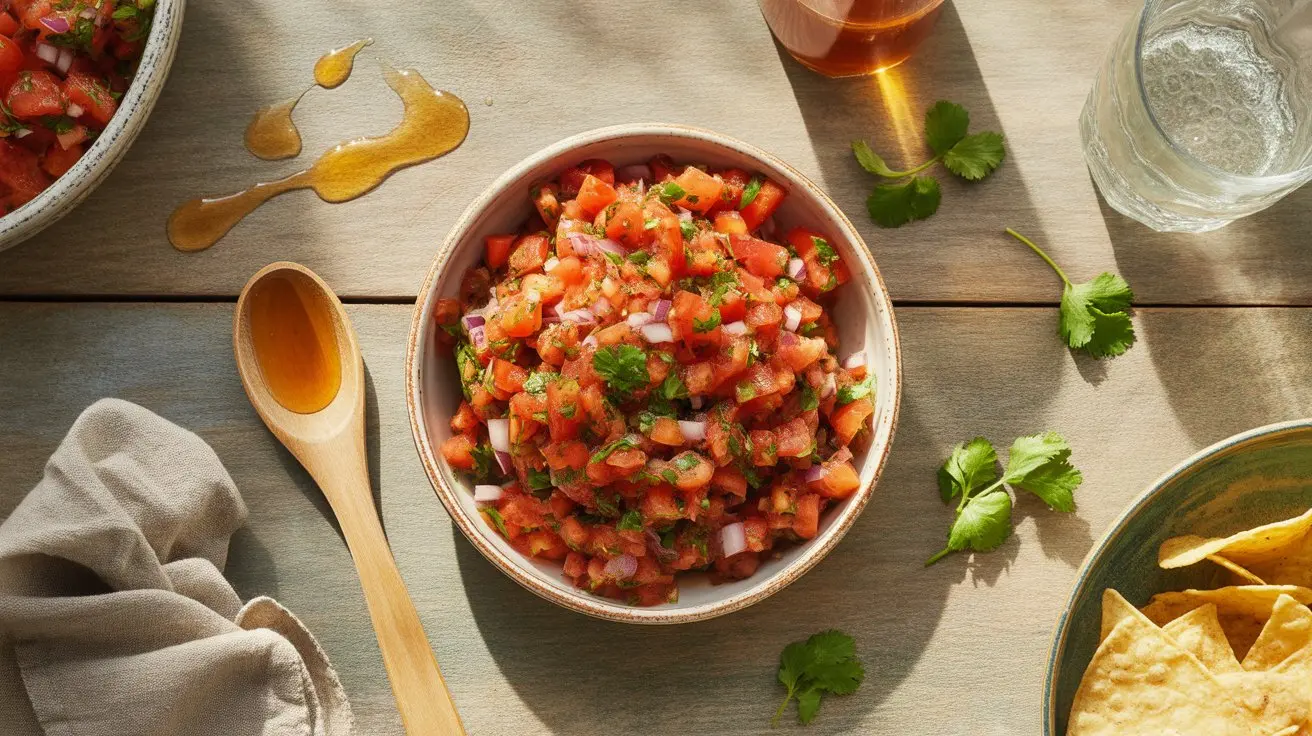
This roasted table salsa balances sweet Roma tomato with tart tomatillo, then uses jalapeno, onion, cilantro, lime, and salt to stay thicker than pico but brighter than cooked red salsa.
Roasted tomato tomatillo salsa sits between red salsa and salsa verde. Roma tomatoes bring sweetness and body, tomatillos bring tartness and pectin, and jalapeno stays in the background.
The first choice is ratio. Use roughly equal weights of tomato and tomatillo when you want a balanced bowl; push tomato higher for chips and tomatillo higher for tacos.
Roast Out Water
Roasting is not only for char. It drives off water so the salsa tastes concentrated instead of thin.
Place tomatoes cut side down when possible, and roast tomatillos until they blister and collapse. If the pan floods, save the liquid and add it back only if the blender needs help.
Our roasting method for peppers applies here too: watch texture and aroma, not only color.
Roast on a rimmed pan because both tomato and tomatillo leak. A flat sheet can spill juice and leave the vegetables dry at the edges.
Pull garlic before it burns. Garlic finishes faster than tomato, and one burnt clove can make the whole salsa taste harsh.
Two Leads
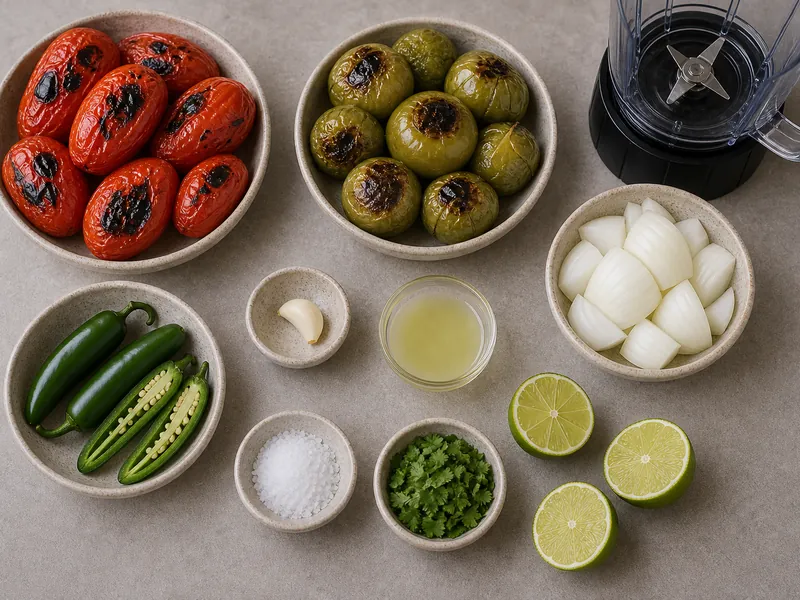
Tomato and tomatillo should both be easy to taste. Roma tomato gives red sweetness; tomatillo gives green tartness.
If tomato takes over, the bowl becomes a roasted red salsa. If tomatillo takes over, it moves closer to roasted jalapeno salsa verde.
- More tomato: softer, sweeter, better for chips.
- Equal weights: balanced, good all-purpose table salsa.
- More tomatillo: brighter, better for tacos and eggs.
Weighing is more reliable than counting. Four small tomatillos can weigh less than two large Romas, so counts can push the ratio off without warning.
Use the saved roast liquid as a flavor tool. A spoonful can loosen the blender while keeping the tomato-tomatillo balance intact.
Jalapeno Supports
Jalapeno brings green heat without taking over the tomato-tomatillo split. Jalapeno heat and flavor usually stay medium enough for a shared bowl.
Roast one jalapeno with the vegetables for mild heat. Use two when the salsa will go on rich food, or leave some ribs in for a sharper finish.
If you want a cleaner green burn, use serrano pepper heat instead. If you want smoke, move to tomatillo chipotle salsa.
Roasting makes jalapeno taste softer but does not remove all heat. Rib removal still matters when the salsa is meant for a broad table.
If the jalapeno is very mild, add a second roasted pod after blending the base. That keeps the ratio steady instead of making the salsa watery.
Pulse, Then Stop
A full puree hides the reason this salsa exists. Pulse until the pieces are small enough to spoon but still visible.
Start without added liquid. Roasted tomatillos release juice as they break down, and tomato gel can make the blender look dry before it suddenly loosens.
For tacos, blend a little smoother so the salsa coats meat. For chips, leave more texture so each scoop carries tomato skin, tomatillo pulp, and onion.
Let the blender run in short bursts. Long blending breaks tomato skin and tomatillo pulp into a smooth sauce that feels less like table salsa.
If a chunk catches under the blade, stir with the blender off. Adding water just to move the blades weakens the finished bowl.
Season After Rest
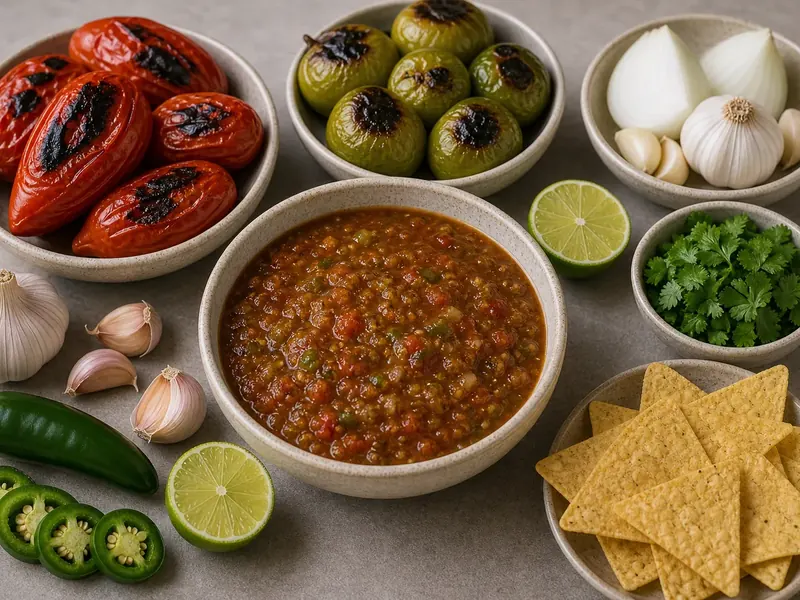
Hot roasted tomatillo tastes sharper than it will after a short rest. Let the salsa sit 10 minutes before changing salt or lime.
Add lime only after tasting. Tomatillos already bring acid, so extra lime should brighten the bowl, not turn it sour.
If the salsa tastes flat, add salt before adding more pepper. Salt wakes up the roast flavor faster than more heat.
Resting also lets garlic settle. Right after roasting, garlic can taste loud; after 10 minutes, tomato sweetness catches up.
Salt should make the roast flavor clearer, not make the salsa taste salty. Add it in pinches because warm salsa hides salt more than cold salsa.
Where It Fits
This salsa belongs where raw pico feels too crisp and salsa verde feels too sharp. It works with tacos, eggs, beans, grilled chicken, and thick chips.
Use fresh tomato salsa when you want crunch and raw tomato. Use this roasted version when you want softer edges and deeper vegetable flavor.
For a heavier dried-chile table salsa, guajillo salsa or pasilla chile salsa will taste more earthy than this tomato-tomatillo bowl.
With chips, the salsa should be thick enough that each scoop holds together. With tacos, a looser blend is better because it falls into the filling.
For breakfast, use it warm over eggs or potatoes. Warmth brings back the roast smell that fades in the fridge.
The ratio can change in the blender because tomato and tomatillo release different amounts of liquid. Taste after pulsing, not only before roasting.
If the salsa tastes too red, add roasted tomatillo and a pinch of salt. If it tastes too green, add roasted tomato or a spoon of saved tomato juice.
Color helps, but it is not the final test. A balanced batch looks warm red-orange, yet still smells a little grassy from tomatillo.
Write down the weight ratio when a batch works. Counts shift with produce size, but weights make the next bowl easier to repeat.
The liquid on the roasting pan is not waste. It holds tomato sugar, tomatillo acid, garlic, salt, and a little browned flavor from the pan.
Add it in spoonfuls after the first pulse. Too much at once makes the salsa loose, and then you have to fix texture instead of flavor.
If the pan juice tastes bitter, leave it behind. Bitterness usually means a burnt garlic edge or scorched tomato skin, and blending it in spreads the problem.
Good pan juice tastes bright and lightly roasted. Use it to loosen tacos salsa; keep chips salsa thicker so each scoop carries roasted pieces.
Tomato variety changes the ratio too. Roma tomatoes keep the salsa thick, while round slicing tomatoes add more juice and need a little longer under the broiler.
If you use large slicing tomatoes, remove some seed gel before roasting. That keeps the tomatillo acidity clear and prevents a watery blender batch.
Pan color can change the result. A dark sheet pan browns faster and gives deeper roasted edges; a light pan keeps the salsa brighter but may need a few extra minutes.
If you use parchment, expect less browning and cleaner pan juice. If you roast directly on metal, scrape only the browned vegetable juices, not burnt flakes.
For a small batch, roast vegetables in a tight cluster so the juices do not spread thin and scorch. For a double batch, use two pans instead of stacking vegetables high.
Store and Fix
Refrigerate for up to four days. The roast flavor settles overnight, while jalapeno heat becomes easier to read.
If it gets watery, drain and save the liquid. If it tastes too sweet, add tomatillo or lime; if it tastes too sharp, add roasted tomato.
For a hotter table, put extra minced roasted jalapeno beside the bowl. That protects the balanced salsa and lets heat lovers build their own bite.
Use a shallow container so the salsa cools quickly. Deep jars trap heat and can make the top taste dull by the time it reaches the fridge.
If the salsa tastes better the next day but looks thin, stir before draining. Tomatillo pectin can settle and make the texture look worse than it is.
Chef's Tip
Let the roasted vegetables cool for a few minutes before blending. Steam in a closed blender jar can push the lid up and make the salsa too smooth.
Ingredients
-
3 medium Roma tomatoeshalved
-
8 oz tomatilloshusked and rinsed
-
1 medium jalapenostemmed
-
1/4 white onioncut into wedges
-
2 garlic clovesunpeeled
-
1/2 cup cilantro leaves and tender stems
-
1 tablespoon fresh lime juice
-
3/4 teaspoon kosher salt
-
1/4 teaspoon sugaroptional
Full Recipe Instructions
Heat the broiler.…
Heat the broiler. Place tomatoes cut side up, tomatillos, jalapeno, onion, and unpeeled garlic on a foil-lined sheet pan.
Broil for 12…
Broil for 12 to 15 minutes, turning the jalapeno once, until tomatoes wrinkle and tomatillos slump with browned spots.
Peel the garlic.…
Peel the garlic. Scrape jalapeno ribs for milder salsa, or leave them in for medium heat.
Pulse roasted vegetables…
Pulse roasted vegetables with cilantro, lime juice, salt, and optional sugar until chunky.
Rest 10 minutes,…
Rest 10 minutes, then taste with a chip and adjust salt or lime.