
Tomatillo Chipotle Salsa
Tomatillo chipotle salsa should be tart first and smoky second. This version keeps roasted tomatillo as the base, uses chipotle as a measured smoky accent, and explains how to avoid turning it into chipotle meco salsa, adobo sauce, or ordinary salsa verde.
Tomatillo chipotle salsa should stay bright green with a smoky finish. Roasted tomatillos lead the sauce, while one chipotle adds smoke, heat, and depth without turning the bowl brown and heavy.
The first answer is balance: tart tomatillo first, smoke second, heat last. That order makes the salsa useful on tacos, eggs, beans, and roasted potatoes.
Tomatillo Leads
Tomatillos give this salsa its acidity, body, and green color. Roast them until they slump and leak, then stop before they dry out.
Small tomatillos can taste sharper than large ones. If your batch is very sour, rest the salsa before adding lime because salt and smoke soften the edge.
This is why the page differs from roasted tomato tomatillo salsa. Tomato shares the lead there; here it would mute the green flavor.
Husk and rinse the tomatillos well. The sticky coating can taste dusty after roasting if it stays on the fruit.
When buying, choose husks that are snug but not wet. Soft tomatillos often collapse into a watery salsa with less green flavor.
Smoke in One Pod
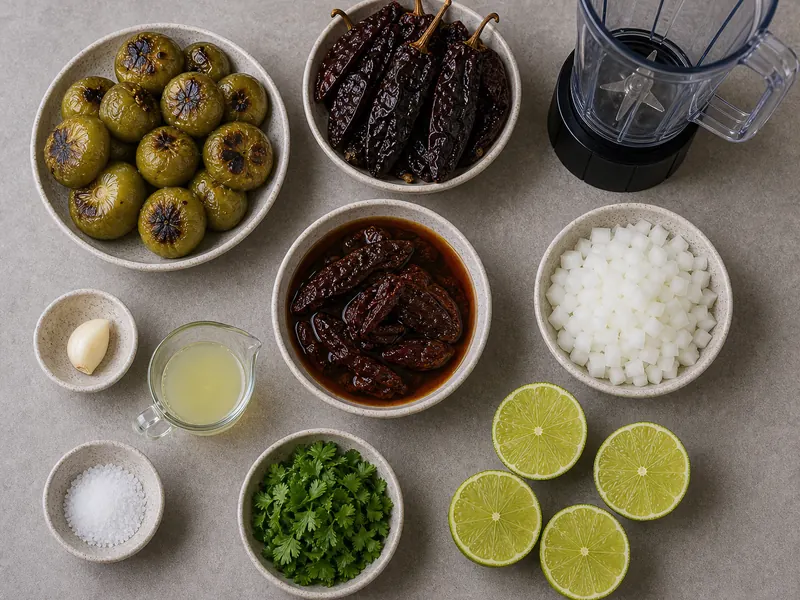
One chipotle is usually enough for about two cups of salsa. Chipotle pepper smoke and jalapeno heat can spread through the whole bowl after blending.
Blend the first chipotle fully before adding a second. Smoke grows as the salsa rests, so a warm taste can become too heavy in the refrigerator.
If you want smoke to be the main flavor, make chipotle meco salsa. This bowl uses chipotle as a finish, not the headline.
Chipotle heat is familiar because it starts as ripe jalapeno, but smoke changes how the burn feels. It arrives slower and can seem heavier than fresh green chile.
That slow smoke is useful in beans and pork. It can feel too much with delicate fish, where the tomatillo should stay cleaner.
Canned or Dried
Canned chipotles in adobo make the fastest version. They add vinegar, garlic, and a little sweetness, so use the sauce around them with care.
Dried chipotles need soaking. Use our dried pepper rehydration method until the skin bends easily, then blend the flesh into the roasted tomatillos.
- Canned chipotle: softer, tangier, faster.
- Dried morita: fruitier smoke and clearer red color.
- Dried meco: stronger smoke and a rougher, earthier finish.
If using canned chipotle, scrape off extra adobo before blending when you want a greener salsa. You can add the sauce back by the teaspoon.
If using dried chipotle, remove any hard stem and check for dusty pods. A brittle pod that smells flat will not improve after soaking.
Roast the Support
Onion and garlic should roast with the tomatillos. Raw onion makes the salsa taste sharp in the wrong way, while roasted onion gives sweetness without adding sugar.
Peel garlic after roasting so it blends smooth. Burnt garlic will make the smoke taste bitter, and chipotle cannot hide that mistake.
Use the broiler when you want fast blistering. Use a skillet when you want a drier salsa that sits better on tacos.
Roast the onion in wedges so the edges brown while the center stays juicy. Small diced onion burns too fast under the broiler.
If garlic browns before the tomatillos are ready, pull it early. Sweet roasted garlic helps; burnt garlic makes the salsa taste like smoke and ash.
Texture by Use
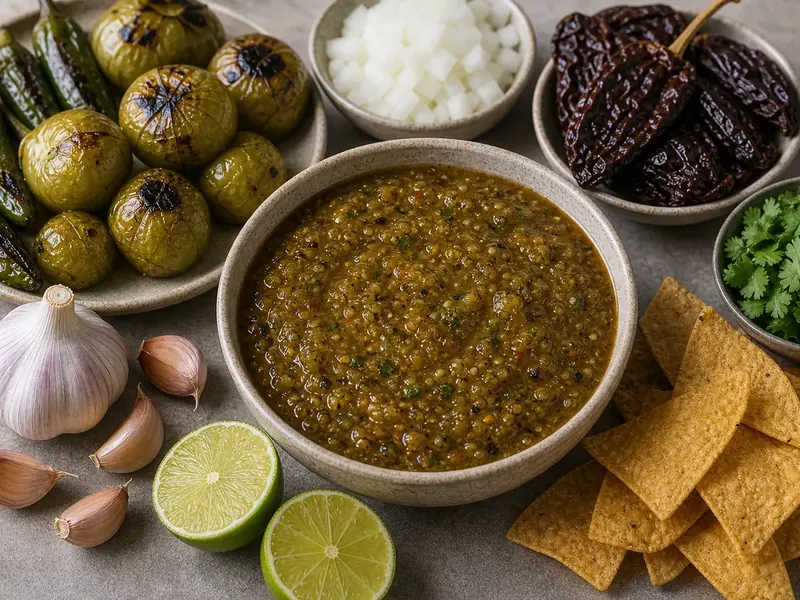
For chips, keep the salsa thick enough to scoop. Pulse cilantro at the end so it stays green and visible.
For tacos, blend it smoother and looser. A smooth salsa coats carnitas, chicken, and black beans without dropping chunks from the tortilla.
Do not add water at the start. Tomatillos release liquid as they blend, and extra water makes the smoke taste thin.
For a table bowl, leave a little tomatillo skin visible. For a cooking sauce, blend smoother so it coats shredded chicken or beans evenly.
Cilantro should be added after the hot vegetables cool slightly. High heat turns the herb dull and can make the salsa taste grassy.
Fix the Flavor
If smoke is too strong, add roasted tomatillo and a squeeze of lime. Do not add raw onion, because it fights the smoke and makes the bowl taste harsh.
If the salsa is too sour, add a small piece of roasted onion or a spoon of the adobo sauce. If it is too flat, add salt before adding more chipotle.
For a hotter but less smoky green salsa, habanero salsa verde gives a cleaner burn. For a bottle sauce, chipotle hot sauce uses vinegar and a thinner texture.
A salty canned chipotle can make the first taste misleading. Wait until the tomatillo, onion, and chile are blended before the final salt.
If the color turns too brown, add fresh cilantro and a small roasted tomatillo. Do not add raw tomatillo unless you want a sharper, greener bite.
Make-Ahead Smoke Check
Chipotle grows stronger after a night in the fridge. If you are serving tomorrow, stop just short of the smoke level you want today.
The safer make-ahead move is to blend the tomatillo base, then hold back a spoon of chipotle puree. Stir it in the next day after the salsa is cold and rested.
This also protects color. A little chipotle gives a warm olive-green salsa; too much turns the bowl muddy and makes every bite taste the same.
For a party, label the smoky bowl and keep a plain green salsa nearby. People who dislike smoke often still want tomatillo heat.
Adobo sauce brings salt before you add your own. That is why canned chipotle batches should be seasoned after blending, not before.
Start with the chile flesh first and only a teaspoon of adobo. Blend, taste, then add more sauce if the salsa needs tang, garlic, or sweetness.
If the salsa tastes salty but still flat, add roasted tomatillo instead of water. Water lowers salt but also thins the green flavor that makes the recipe work.
Dried chipotle gives you more salt control, but it needs better prep. The soaking water can taste smoky and bitter, so add it only when you like its flavor.
Tomatillo size also affects smoke. A small tomatillo batch needs less chipotle because there is less tart pulp to carry it, so scale the chile by taste instead of by habit.
When using dried chipotle, save the first soaking liquid in a cup and smell it before adding any. If it smells like clean smoke and fruit, use a spoonful; if it smells bitter or dusty, use water or tomatillo juice instead.
For canned chipotle, mince the chile before blending when your blender is weak. A whole soft chile can stick under the blades and leave one smoky chunk in an otherwise green salsa.
Store and Reuse
Refrigerate the salsa for up to four days. The chipotle note gets stronger overnight, so taste again before serving.
Leftovers make a good cooking sauce. Simmer with shredded chicken, spoon over scrambled eggs, or stir into beans when you want smoke without adding more dried chile.
If the bowl tightens in the fridge, loosen it with a spoon of tomatillo juice or water, then add salt only after it tastes balanced again.
Freeze only if you plan to cook with it later. Thawed tomatillo salsa loses fresh texture, but it still works well in a skillet with chicken or potatoes.
For breakfast, warm a spoonful in a pan before adding eggs. Heat wakes the smoke back up and keeps the salsa from cooling the dish.
Chef's Tip
Start with one chipotle. Tomatillo should stay in front, with smoke behind it.
Ingredients
-
1 lb tomatilloshusked and rinsed
-
1 canned chipotle in adoboor 1 small dried chipotle soaked
-
1/4 white onion
-
2 garlic clovesunpeeled for roasting
-
1/2 cup cilantro leaves and tender stems
-
1 tablespoon fresh lime juice
-
3/4 teaspoon kosher salt
-
1 tablespoon wateronly if needed
Full Recipe Instructions
Roast tomatillos, onion,…
Roast tomatillos, onion, and unpeeled garlic under a broiler or in a skillet until softened and spotty.
Peel the garlic…
Peel the garlic and add it to a blender with the roasted tomatillos, onion, chipotle, lime juice, and salt.
Blend until spoonable,…
Blend until spoonable, adding water only if the blades need help.
Pulse in cilantro…
Pulse in cilantro briefly so it stays fresh.
Rest 10 minutes,…
Rest 10 minutes, then taste for salt, lime, and smoke balance.