
Homemade Jalapeno Salsa Verde
This roasted verde is the deeper roasted version of raw jalapeno salsa verde: broiled tomatillos, charred jalapenos, lime, cilantro, and salt built for tacos, eggs, and grilled meat.
This roasted verde is for readers who want deeper tomatillo flavor while keeping jalapeno as the main chile. Roasting the peppers and tomatillos gives the salsa body and sweetness, while lime and cilantro keep it bright enough for tacos and eggs.
The important boundary is raw versus roasted. Raw jalapeno salsa verde should taste sharper and fresher; this version should taste rounder and more cooked.
Broiler distance changes the result. Too close and the skins char before the centers soften; too far and the tomatillos leak without browning. We like the pan close enough to blister in 8 to 12 minutes.
If the tomatillos are different sizes, pull the small ones early. Burnt small tomatillos can make the whole batch bitter.
Line the pan if you want easier cleanup, but do not crowd it. Crowding traps steam and gives boiled flavor instead of roast.
Roast point
The tomatillos need more than a few brown spots. They should blister, soften, and leak a little juice onto the pan.
That juice matters. It carries pectin and roasted flavor, so save it and add it back only after the blender has started moving.
Jalapenos can roast on the same pan, but they do not need to collapse as fully as tomatillos. If they blacken hard, peel the loose burnt skin before blending.
Garlic roasts best in its skin. Bare garlic can burn before the tomatillos are ready, and burnt garlic makes a green salsa taste muddy.
Store jalapenos are often milder than garden pods, especially late-season stressed plants. Taste a tiny roasted piece before deciding whether both pods belong in the blender.
If you want more green pepper flavor without much more heat, remove ribs and use the walls from a third jalapeno. That adds flavor while keeping the burn in check.
If you want sharper heat, add a small raw jalapeno piece after blending. That gives a fresh bite but moves the salsa slightly away from the roasted profile.
Medium heat?
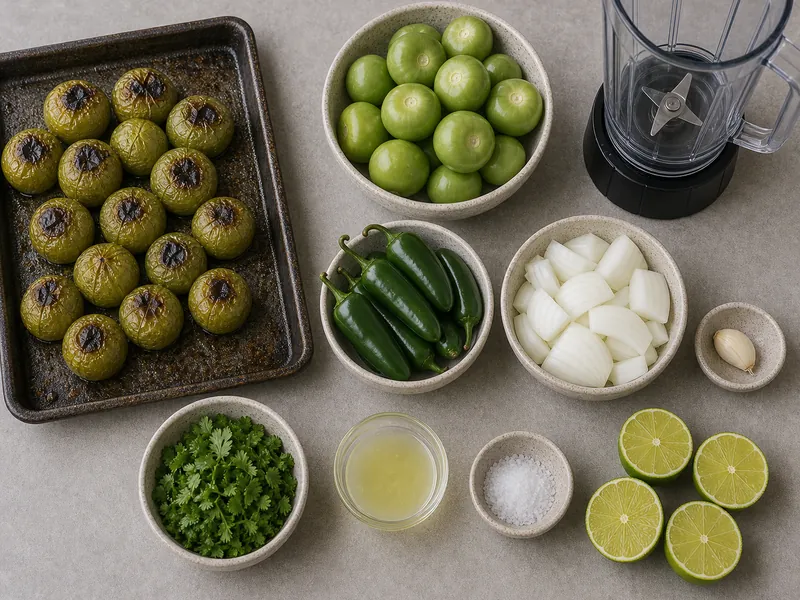
Jalapenos usually sit around 2,500 to 8,000 Scoville heat units in New Mexico State University Chile Pepper Institute references. That range lets you use enough pepper for flavor, not just heat.
For a mild batch, remove the pale ribs after roasting. For a hotter batch, leave some ribs in and use both jalapenos.
If your jalapenos are very large, two pods may be too much pepper flesh for one pound of tomatillos. Taste after the first blend before adding the second pod.
The capsaicin guide is useful here because the heat is mostly in the inner tissue, not in the seeds themselves. That is why scraping ribs changes the salsa more than rinsing seeds.
Blend then brighten?
Start with roasted tomatillos, jalapeno, onion, peeled garlic, and salt. Add water only if the blender stalls.
Cilantro should join late so it stays green. Over-blended cilantro can make the salsa pale and grassy.
Lime comes after the first blend because hot tomatillos can taste more acidic than they will after a short rest. Add lime, wait a few minutes, then taste with a chip or tortilla.
If the salsa tastes flat, add salt before more lime. If it tastes sharp but thin, add more roasted tomatillo pulp or let it sit 10 minutes before judging.
Table texture?
For tacos, smoother is better. A smoother salsa coats meat, beans, eggs, and tortillas without dropping large pieces.
For chips, a little texture is better. Pulse less and leave soft tomatillo bits so the salsa feels like roasted vegetables, not green sauce.
For grilled meat, thin a small portion with saved pan juice. The sauce should spoon over the meat rather than sit like a dip.
If you need both chip dip and taco salsa, split the batch after blending. One jar can be thick, and one can be loosened for service.
This roasted version is the most flexible weeknight verde. It is smoother than molcajete salsa, deeper than raw verde, and milder than habanero verde.
That means it can sit on tacos, breakfast eggs, grilled chicken, rice bowls, and beans without taking over the plate.
If a recipe needs bright raw crunch, choose the raw version. If it needs hand-crushed texture, choose the molcajete version.
Verde family?
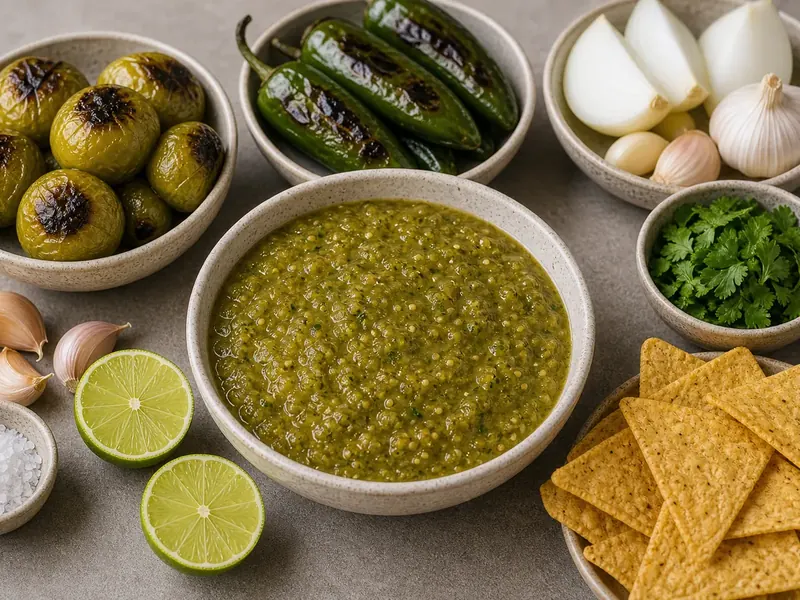
Salsa verde molcajete style is about crushed texture and mortar order. This recipe is about a roasted blender salsa.
Use this version when the meal needs a spoonable green sauce that can sit in the fridge and still taste roasted the next day. That is a different job from a raw tomatillo salsa, where the sharp fresh bite matters more than body.
The raw verde version is brighter and more fragile. This roasted version holds better in the refrigerator and tastes better with hot food.
Habanero verde is a different recipe because the heat changes the whole eating experience. Jalapeno keeps this salsa medium and flexible.
If the recipe starts needing oil, crema, or avocado, it has moved away from this page. Those can be serving additions, but they should not be part of the base.
Chilled roasted salsa can taste less acidic than it did warm. Retaste after refrigeration before adding more lime, because cold also makes salt read differently.
If serving warm, heat gently and stir. Boiling after blending can dull cilantro and make the salsa taste cooked rather than roasted.
For freezing, leave cilantro out and add it after thawing. The base freezes better than the herb.
Make-ahead flavor?
This is a refrigerator salsa, not a tested canning recipe. The National Center for Home Food Preservation treats salsa canning as ratio-sensitive, so pantry storage is outside this recipe.
Cool the salsa, refrigerate it, and use it within 4 to 5 days. Roasted tomatillo holds better than raw tomatillo, but cilantro fades quickly.
- Too chunky for tacos: pulse half the batch smoother and fold it back into the rest.
- Too smooth for chips: add chopped roasted tomatillo or roasted onion, not raw onion.
- Pale color: fold cilantro in by hand instead of blending longer.
- Too lime-heavy next day: add roasted tomatillo at serving rather than sugar.
Buy firm tomatillos that mostly fill their husks. Tiny loose fruit can be very tart and may need more roasting time before it tastes like salsa rather than green acid.
Use white onion when you want the cleanest verde profile. Yellow onion works, but roasting makes it sweeter and can move the salsa away from the jalapeno-led profile.
For chilaquiles, keep it a little looser and salt it clearly because tortilla chips absorb liquid fast. For grilled fish, keep it smoother and brighter so roasted chunks do not overwhelm the flakes.
Batch fixes?
The best batch notes are short: tomatillo weight, jalapeno count, roast time, and whether pan juice went into the blender.
For a cleaner serving bowl, add cilantro after the last texture correction. Herbs cannot fix body, and extra blending only makes them duller.
Watery salsa usually means too much pan juice or water went in early. Strain a little liquid off, then fold it back only if needed.
Bitter salsa usually means burnt garlic, burnt jalapeno skin, or over-roasted tomatillos. Next batch, peel loose black skin and keep garlic protected.
Dull salsa usually needs salt first, then lime. More jalapeno rarely fixes dullness.
If the salsa foams pale, it was over-blended. Let it settle, stir, and pulse less next time.
Chef's Tip
Season after the salsa cools for a few minutes. Hot tomatillo salsa hides salt, and salting too early is the fastest way to overshoot the batch.
Ingredients
-
1 lb tomatilloshusked and rinsed
-
2 medium jalapenosstemmed
-
1/4 white onionpeeled and cut into wedges
-
2 garlic clovesunpeeled for roasting
-
1/2 cup fresh cilantro leaves and tender stems
-
1 tablespoon fresh lime juiceplus more to taste
-
3/4 teaspoon kosher saltplus more to taste
-
1 to 2 tablespoons wateronly if needed
Full Recipe Instructions
Heat the broiler…
Heat the broiler and set a rack about 5 inches from the element. Line a sheet pan with foil.
Place tomatillos, jalapenos,…
Place tomatillos, jalapenos, onion, and unpeeled garlic on the pan. Broil for 6 minutes, turn the chiles, and broil 4 to 6 minutes more until the tomatillos slump and the jalapenos blister.
Peel the garlic.…
Peel the garlic. For milder salsa, scrape the pale ribs from one jalapeno; keep both chiles whole for medium heat.
Blend the roasted…
Blend the roasted vegetables with cilantro, lime juice, and salt until mostly smooth. Add water only if the blades will not catch.
Rest 5 minutes,…
Rest 5 minutes, then taste and adjust with more salt or lime before serving.