
Chipotle Meco Salsa
Chipotle meco salsa should taste dry-smoked, leathery, and thick. Toast the tan smoked jalapenos briefly, soak them until pliable, use tomato as support, and blend a sturdy salsa for tacos, eggs, beans, and grilled meat.
Chipotle meco salsa is for dry smoke, not soft sweetness. The tan smoked jalapeno should taste leathery, earthy, and a little dusty in the best way.
Use this salsa when you want a thick spoonable sauce for tacos, eggs, beans, and grilled meat. If you want a pourable bottle, make chipotle hot sauce instead.
Meco Check
Meco and morita both come from smoked jalapenos, but they do different jobs. A meco pod is usually tan, stiff, and deeply smoked. Morita chiles are darker, softer, and fruitier.
That difference decides the whole salsa. Meco gives a drier, heavier smoke that can stand beside grilled beef or beans. Morita gives a softer red fruit note that fits a brighter salsa.
Smell the pods before they hit the pan. Good meco smells like smoke, dry chile, and a little tobacco. If it smells like old cardboard, no amount of tomato will fix it.
Use fewer pods than you would use for a mild dried chile salsa. The chipotle pepper profile explains why smoked jalapeno flavor carries farther than its size suggests.
Check the stems and seams too. Good dried pods may feel firm, but they should not crumble into dust before you toast them. Very brittle pods usually need a longer soak and a gentler blender start.
If the store sells mixed smoked jalapenos from an open bin, buy enough to sort at home. Use the tan, dry-smelling pods here and save darker fruitier pieces for a softer salsa.
A good meco pod can look rough, so do not judge by beauty alone. Judge by smell, weight, and whether the pod still has enough flesh to soften after soaking.
Skip pods with visible mold or a sour damp smell. Smoke cannot protect a chile that was stored badly.
Toast And Soak
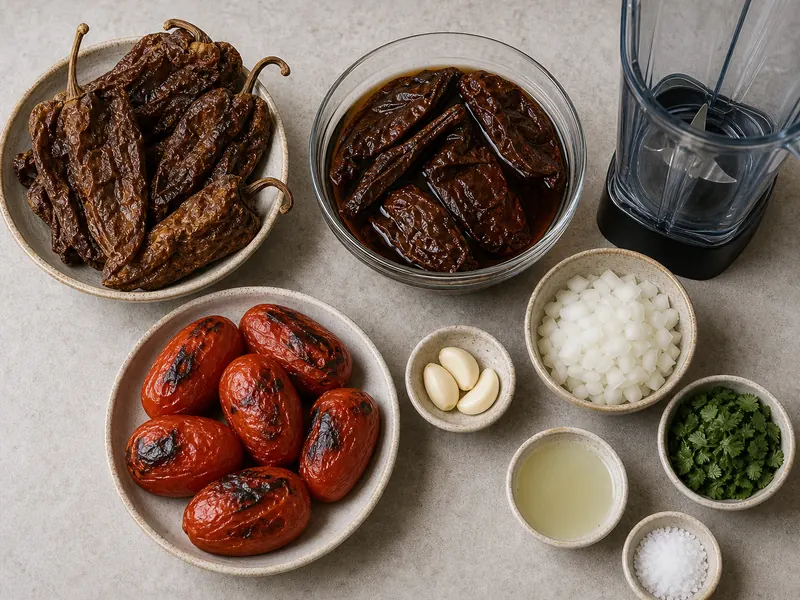
Toast the pods in a dry skillet just until the room smells smoky. That may take less than a minute. If the skins darken hard or smoke sharply, pull them out right away.
Cover the toasted pods with hot water and let them soak until they bend. The goal is not to wash away flavor. It is to make the chile soft enough for the blender to break down.
Use the soaking liquid only after tasting it. Some batches taste rich and smoky; others taste bitter. The dried pepper rehydration guide is useful here because it treats the soaking water as an ingredient, not a default.
Do not rush the soak because leathery meco skin resists the blender. If the pod still snaps instead of bending, give it more time in hot water.
After soaking, tear one pod open and scrape away any hard seed clumps. The salsa does not need to be seedless, but dry seeds can make the texture feel sandy.
Save a few tablespoons of soaking liquid before you drain the bowl. You can always add more during blending, but you cannot remove a bitter soak once it is inside the salsa.
Tomato Backing
Roasted tomato rounds the salsa and gives the blender enough moisture to move. It should not turn the salsa into tomato sauce.
Use one small roasted tomato or a modest amount of canned fire-roasted tomato for a batch built around several meco pods. Onion and garlic should taste cooked, not raw, because raw bite fights the deep smoke.
Vinegar is a small correction, not the main sour note. A teaspoon can lift the finish. Too much makes the salsa taste like barbecue sauce before you add any sugar.
If you want sweet chipotle glaze, make honey chipotle BBQ sauce. If you want green tartness with smoke, tomatillo chipotle salsa fits that job better than this recipe.
Cumin can work, but use a pinch, not a spoonful. Too much cumin turns the salsa into a seasoning paste and hides the dry smoked chile.
Oregano is optional. Mexican oregano fits better than Italian oregano because it keeps the flavor drier and less sweet.
Tomato skin is not a problem if the blender is strong. If your blender leaves flakes behind, peel the roasted tomato or strain the finished salsa.
Do not add stock. Stock makes the salsa taste like soup and weakens the chile focus.
Thick Blend
Blend the soaked pods, tomato, onion, garlic, salt, and a little soaking liquid in pulses at first. Stop and scrape the jar so the chile skins do not hide under the blades.
A good meco salsa lands thicker than table salsa. It should sit on a taco and cling to beans. If it runs across the plate, blend in another piece of soaked chile or simmer it for a few minutes.
Grainy texture means the pods needed more soaking or more blender time. Add warm water by the spoonful and blend again. Do not add oil to solve grit unless you want a different condiment, such as chipotle olive oil.
Flat salsa usually needs salt before it needs more chile. Taste on a tortilla, not from a spoon, because salt behaves differently once the salsa touches corn or fat.
Texture Fixes
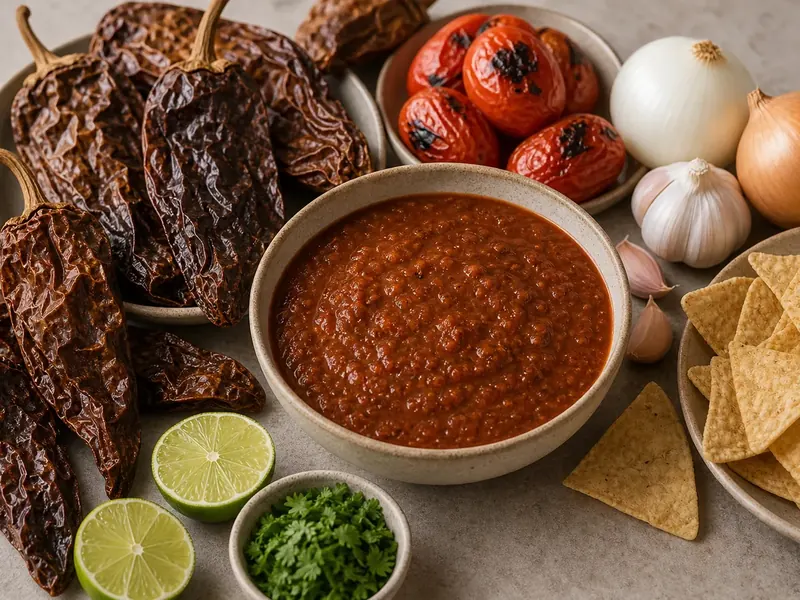
If you want a smoother restaurant-style texture, push the salsa through a medium sieve, then stir a spoonful of the strained solids back in. That keeps body without leaving tough skin pieces.
If you want a rustic texture, stop blending before the tomato disappears completely. Small tomato bits can make the smoke feel less heavy.
For tacos, aim for a salsa that moves slowly when you tilt the spoon. For chips, loosen it a little more so people do not break the chip trying to scoop it.
If the salsa thickens overnight, stir in warm water, not cold water. Warm water wakes the chile paste faster and needs less stirring.
Serving Match
This salsa belongs with carne asada, eggs, refried beans, potatoes, mushrooms, and roasted squash. Those foods give the smoke something to hold.
It can overpower raw fish, delicate salads, and fresh fruit salsa. Use a lighter chipotle format like chipotle peppers in adobo when you need sweeter sauce and softer smoke.
Storage Moves
Store leftovers in a sealed jar in the fridge. The smoke gets rounder by the next day, but bitterness also becomes easier to notice. If the batch tastes harsh after resting, stir in more roasted tomato and a pinch of salt rather than more acid.
Use small portions in bowls, then refill from the jar. Repeated dipping adds water and crumbs, and this salsa tastes worse when it thins out.
For sandwiches, mix a spoonful with mayonnaise instead of spreading it straight. Fat softens the dry smoke and helps the salsa cover bread more evenly.
It also works under fried eggs, but use less than you expect. The smoke blooms when it hits hot yolk and fat.
For beans, stir in a spoonful near the end instead of cooking the whole jar with the pot. Long cooking makes the smoke dull and can bring out bitterness.
For grilled meat, spoon it on after resting. Direct grill heat can scorch the chile solids that you worked to soften.
If you need to stretch the salsa for a party, make a second tomato-onion base and mix in the meco salsa slowly. Do not thin the original jar with water alone, because water spreads smoke but weakens salt and body.
Chef's Tip
Taste the soaking liquid before using it. If it tastes bitter, use warm water for thinning and rely on the soaked chiles for smoke.
Ingredients
-
4 dried chipotle meco chilesstemmed
-
1 1/2 cups hot waterfor soaking
-
1 Roma tomatohalved
-
1/4 white onion
-
2 garlic clovesunpeeled
-
1 tablespoon apple cider vinegar
-
3/4 teaspoon kosher salt
-
1/2 teaspoon brown sugaroptional
Full Recipe Instructions
Toast stemmed chipotle…
Toast stemmed chipotle meco chiles in a dry skillet for about 20 seconds per side, just until fragrant and flexible.
Cover toasted chiles…
Cover toasted chiles with hot water and soak 15 to 20 minutes until pliable. Reserve the soaking liquid.
Roast tomato, onion,…
Roast tomato, onion, and unpeeled garlic in the skillet or under a broiler until softened and lightly charred. Peel the garlic.
Blend soaked chiles,…
Blend soaked chiles, roasted tomato, onion, garlic, vinegar, salt, optional brown sugar, and 2 tablespoons soaking liquid until thick.
Adjust with more…
Adjust with more soaking liquid one tablespoon at a time until the salsa is spoonable but not thin.