
Chipotle Olive Oil
Dried chipotle makes a smoky finishing oil when the chile steeps like tea, not when it fries, and the jar stays strained and refrigerated.
Chipotle oil is a dried-chile infusion, not a jar of wet adobo in fat. We warm the oil gently, steep the smoke off heat, and strain the solids before they turn the bottle bitter.
The bottle works as a finishing drizzle for beans, eggs, corn, tacos, soups, and roasted vegetables. If you need spoonable chile body, use chipotle peppers in adobo sauce instead. If you need a pourable vinegar bottle, chipotle hot sauce fits better than oil.
Dry Chipotle
Dried chipotle starts as a smoked, dried jalapeno. The New Mexico State University Chile Pepper Institute lists jalapeno at about 2,500 to 8,000 Scoville heat units, but the drying and smoking make the flavor feel bigger than the heat number.
Canned chipotles do not belong in this oil. They bring water, vinegar, tomato, and sugar, which changes both the flavor and the storage risk.
Morita chipotle makes a redder, fruitier oil. Meco chipotle makes a tan, drier, heavier smoke that can dominate mild food. That heavier pod behaves closer to chipotle meco salsa than to a light finishing oil.
If the dried pods smell dusty before they hit the pan, the oil will taste dusty too. Use a fresh package with a clear smoke aroma.
There is one simple buying rule: choose dried chipotle that still bends slightly. Brittle pieces are not useless, but they need a shorter steep because the broken dust turns bitter fast.
Remove stems and loose seeds before crushing. Seeds do not add much heat here, and they can taste woody after steeping in fat.
If you are comparing morita and meco, smell them before choosing. Morita usually smells sweeter and redder; meco smells drier and more like a smokehouse.
The oil should match that choice. Morita in olive oil tastes round and almost tomato-friendly, while meco in neutral oil tastes sharper and better on meat.
Oil Finish
Extra-virgin olive oil gives the bottle a grassy edge. That works well on beans, eggs, bread, and roasted squash.
Neutral oil makes a cleaner taco and grilled-meat drizzle because it lets the smoke sit forward. It also helps if the chipotle is already strong.
Do not rescue old oil with chile. Rancid oil tastes like crayons or stale nuts, and smoke only makes that flavor warmer.
- Olive oil: bread, beans, eggs, vegetables.
- Neutral oil: tacos, rice bowls, grilled chicken.
- Half and half: softer olive flavor with enough body for dipping.
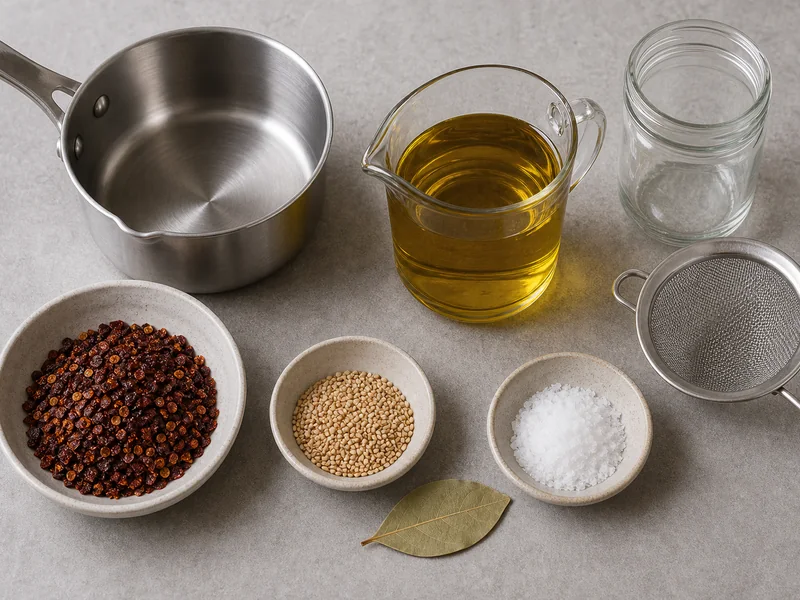
Use a small, heavy saucepan if you have one. Thin pans create hot spots, and a hot spot can scorch a few chile flakes before the rest of the oil warms.
A thermometer is helpful but not required. If you use one, stay well below frying temperature; the practical cue is quiet oil with no aggressive bubbling.
Bay leaf is optional because it can pull the flavor toward stew. Use it when the oil is for beans or lentils, skip it when the oil is for eggs or raw tomato.
Chipotle Form
Morita is the easiest chipotle for this recipe because it gives red color, light fruit, and enough smoke without tasting ashy. It is the better choice for eggs, beans, and vegetables.
Meco is stronger and drier. Use it when the oil needs to stand up to grilled meat, black beans, or a heavy stew garnish.
Crushed dried chipotle is convenient, but it creates more sediment. Whole pods are slower and cleaner because you can split them, steep them, and remove them before the oil gets muddy.
Chipotle powder is the last choice. It colors quickly, but it often contains fine dust that turns gritty and bitter in oil.
Gentle Warmth
The pan should never sound like frying. If the chipotle bubbles hard, the dried flesh is cooking instead of steeping.
Warm the oil until it lightly shimmers, then take it off the burner. Add the crushed chipotle after the heat source is gone.
Ten minutes gives a light smoke. Twenty minutes gives a stronger amber oil, but it also pulls more bitterness from fine chile dust.
Smell is the best cue. Warm smoke and dried fruit are good; burnt coffee means the pan got too hot.
Do not walk away during the steep. The color can look perfect at 12 minutes and taste harsh at 25 minutes, especially with crushed chile.
Taste on a warm spoon or a torn tortilla. Tasting the oil alone is useful, but tasting it on food tells you whether the smoke is loud enough.
If the smoke is right but the color is pale, accept the pale oil. Color can be adjusted next batch with a redder morita, but over-steeping this batch will not make it better.
Sediment Choice
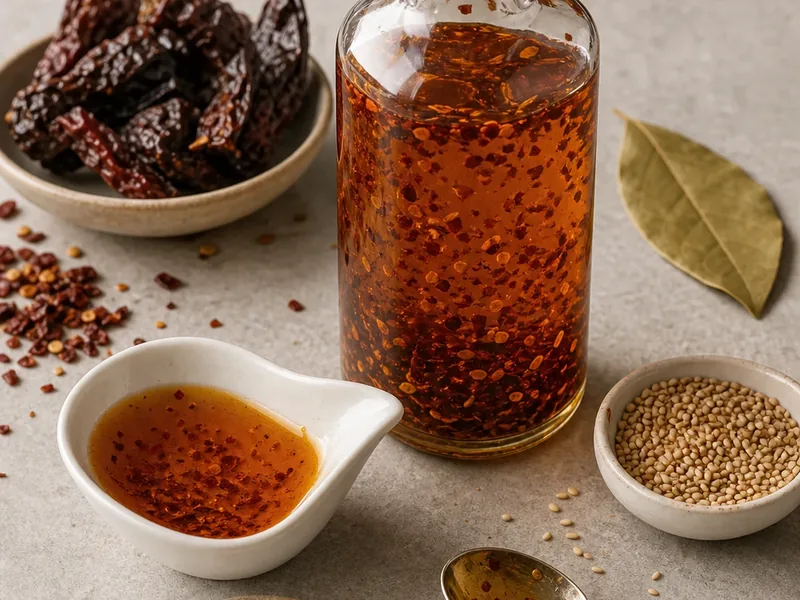
Clear oil is better for storage and smooth foods. A coffee filter catches fine powder, though it drains slowly.
A little sediment is fine for same-day tacos or beans. It is less pleasant on soup, eggs, or bread because the dust collects in gritty spots.
Whole split pods give a cleaner infusion. Crushed chipotle gives faster color and stronger flavor, so it needs earlier straining.
Do not press hard on the filter. Pressing forces bitter powder through and removes the advantage of filtering.
Sediment also changes where the oil works. Grit is fine in a bean bowl, but it is distracting on white fish or a smooth squash soup.
For a clear oil, filter while the oil is still warm enough to flow. Cold oil moves slowly and traps more particles in the filter.
Label the jar as chipotle, not generic chile oil. That helps later when you are choosing between smoky oil and a brighter fresh chile condiment.
No Fresh Garlic
The National Center for Home Food Preservation warns about low-acid vegetables and herbs stored in oil because oil limits oxygen exposure. This recipe avoids fresh garlic, fresh herbs, and canned chipotle for that reason. That safety boundary also separates this bottle from jalapeno-infused olive oil.
Dried chile has less moisture than fresh ingredients, but we still treat this as a refrigerator oil. A small batch is the best practice because it gets used before the smoke fades.
Store strained oil in a clean jar for up to 2 weeks in the refrigerator. If you leave chile solids in the jar, use it within 1 week.
This oil also works as a finishing layer over mild sauces. A few drops over crema, yogurt, or mashed avocado give smoke without making the whole bowl taste like chipotle.
For tacos, drizzle after the salsa, not before. Salsa moisture wakes the chile aroma and keeps the oil from feeling greasy.
For roasted vegetables, toss with salt first and oil second. If the chipotle oil is used as the cooking fat, the smoke fades in the oven.
For soup, add it in the bowl. A pot of soup can swallow the aroma, while a few drops on the surface reach the nose first.
If you want a hotter table condiment, make a second jar with more chipotle instead of leaving solids in the first jar. For superhot oil logic, ghost pepper oil shows why dose control matters more than jar size. That keeps the clean oil clean and the hot oil clearly labeled.
Finishing Drops
USDA FoodData Central keeps the serving size honest: oil is calorie-dense no matter what chile flavors it. A teaspoon or less is usually enough.
Drizzle after cooking. Long simmering hides the chipotle aroma and leaves only a smoky shadow. For sweet brushed smoke, use honey chipotle BBQ sauce instead of oil.
- Black beans: salt and lime the beans first, then finish with a few drops.
- Fried eggs: add the oil after the whites set so the smoke stays on top.
- Cold vegetables: whisk the oil into lime juice or vinegar before dressing.
- Grilled steak: use a stronger steep than you would for soup.
Do not keep topping up the same jar. Old chile residue keeps extracting and can make the next pour harsher than the first.
If the jar tastes dusty, the chipotle was probably old before you started. Better filtering removes grit, but it cannot restore fresh smoke.
Do the final taste on warm food, not from a cold spoon. Smoke opens with heat, and a cold spoon can make a good oil seem flat.
Filter Choice
Filtering changes both texture and flavor. A fully clear oil looks tidy, but a lightly filtered oil can carry more chipotle aroma if the flakes are fresh.
- For salads: strain through paper so grit does not sit on raw vegetables.
- For beans: a fine sieve is enough because the food can handle a little sediment.
- For gifting: filter clearer and label it for refrigerator storage.
- For same-day cooking: leave a little sediment only if everyone understands the jar is short-lived.
Chipotle powder is the hardest version to clean up. It gives fast color, but it can leave a dusty finish that no amount of extra oil fixes.
Bottle Fixes
Bitter oil means too much heat, too much time, or too much powder. Next batch, steep off heat and filter earlier.
Weak oil means old chipotle, large pieces, or a short steep. Crush the chile more, but do not solve weakness with high heat.
Flat oil usually needs salt on the food. Salt does not dissolve well in the jar, so seasoning the dish works better than salting the oil.
If the jar smells fermented, looks fuzzy, or releases gas, discard it. Do not taste-test suspicious oil. The spoilage logic in hot sauce storage guidance is not oil-specific, but off smells still mean stop using it.
Ingredients
-
2 tablespoons dried chipotle peppercrushed
-
1 cup olive oil or neutral oil
-
1 small dried bay leafoptional
-
1/2 teaspoon kosher saltoptional for finishing
-
1 teaspoon toasted sesame seedsoptional
Full Recipe Instructions
Place the oil,…
Place the oil, bay leaf, and sesame seeds if using in a small saucepan over low heat.
Warm until the…
Warm until the oil lightly shimmers, then remove the pan from the heat before anything sizzles hard.
Stir in the…
Stir in the crushed dried chipotle and steep off heat for 10 to 20 minutes.
Strain through a…
Strain through a fine sieve or coffee filter into a clean jar.
Cool, label the…
Cool, label the date, refrigerate, and use strained oil within 2 weeks.