
Jalapeno Infused Olive Oil
Fresh jalapeno oil is a same-week refrigerator drizzle: dry the slices hard, warm them gently, strain the jar, and never treat it like pantry oil.
Fresh jalapeno oil is a short-use drizzle, not a pantry project. The flavor is green and bright, but the storage clock starts as soon as fresh pepper touches oil.
This fresh oil is intentionally different from dried chipotle olive oil. Chipotle brings smoke with low moisture; fresh jalapeno brings water, green aroma, and stricter handling.
Safety First
USDA FoodData Central lists raw peppers as water-rich produce. In jalapeno salsa, that water is normal; in oil, it becomes the main limit.
The National Center for Home Food Preservation warns about vegetables and herbs in oil because low-acid ingredients can be risky without tested controls. That is why this recipe skips fresh garlic and uses short refrigerator storage.
Make a small jar for one week of meals. If you want a longer-lasting chile oil, use dried chiles or make ghost pepper oil instead of fresh slices.
The first decision is whether you truly need fresh flavor. If the food needs green snap, fresh jalapeno is worth the short storage window; if the food needs lasting heat, dried chile is a better fit.
Olive oil should smell fresh before the pepper goes in. If the bottle smells stale, the jalapeno will not fix it.
A lighter olive oil gives the cleanest pepper flavor. A grassy extra-virgin oil can be good on bread, but it may compete with the jalapeno on seafood.
Dry Twice
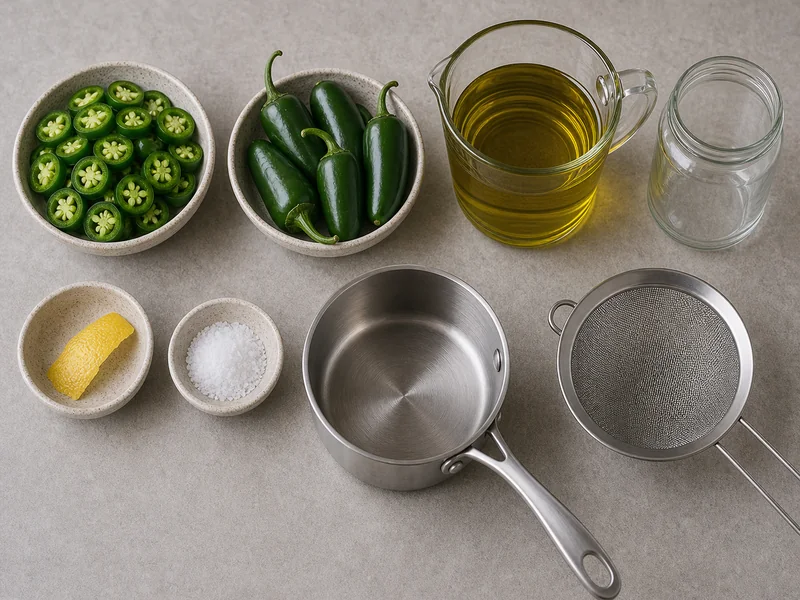
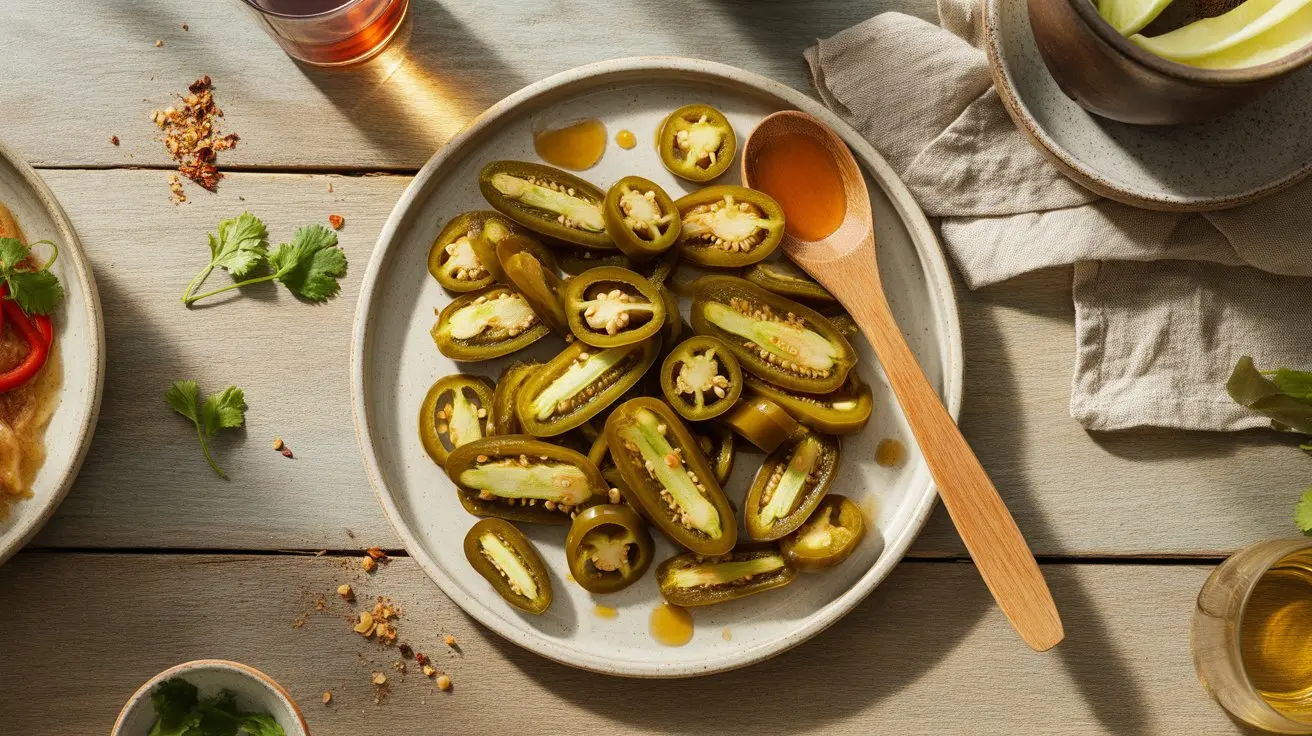
Wash the pods, dry them whole, slice them, then blot the cut sides. That second drying step matters more than the first.
Wet slices sputter in the pan and leave droplets at the bottom of the jar. Droplets are a discard sign, not a texture quirk.
Remove ribs if you want softer heat. The New Mexico State University Chile Pepper Institute places jalapeno around 2,500 to 8,000 SHU, and most of the perceived burn comes from the pale inner ribs.
- Green jalapeno: crisp, grassy oil.
- Red jalapeno: softer, ripe pepper aroma.
- Thin rings: faster extraction.
- Large chunks: weaker flavor and more trapped moisture.
Garden jalapenos guide often carry more variation than store pods. Taste a small slice first if the harvest came from a stressed plant or a hot week.
Firm glossy pods give the best aroma. Wrinkled pods can still be safe when fresh, but they taste duller in oil.
If you want red jalapeno flavor, use one red pod with one green pod. All-red oil tastes softer and can lose the fresh snap people expect from this recipe.
Dish First
Fresh jalapeno oil can disappear on heavy food and shout on delicate food. Decide where it is going before choosing how many ribs to leave in.
For eggs, avocado, tomato salad, and seafood, remove most ribs and keep the oil green. Those foods show bitterness and raw heat quickly.
For beans, grilled corn, potatoes, and pizza crust, leave more rib tissue. Starch and fat soften the burn and make the pepper taste rounder.
If you are serving several heat tolerances, make a mild strained oil and put fresh jalapeno slices on the side. People can add heat without changing the whole jar.
Gentle Steep
The pan should stay calm. Loud sizzling means the jalapeno is frying, and fried jalapeno tastes dull in a finishing oil.
Warm the oil over low heat, add the dry slices, and hold them gently for about 5 minutes. Take the pan off heat before the edges brown.
A strip of lemon peel can brighten the aroma. Use only colored peel, not juice, because juice adds water.
Salt belongs on the food, not in the jar. Salt pulls moisture from the pepper and does not dissolve evenly in oil.
A heavy pan gives you more control because the heat rises slowly. A thin skillet can jump from warm to frying in seconds.
Keep the slices mostly submerged. Exposed edges brown first, and browned jalapeno turns the oil bitter.
After the off-heat steep, taste the oil on a warm tortilla or a piece of bread. The food test shows whether the aroma carries.
Strain Now
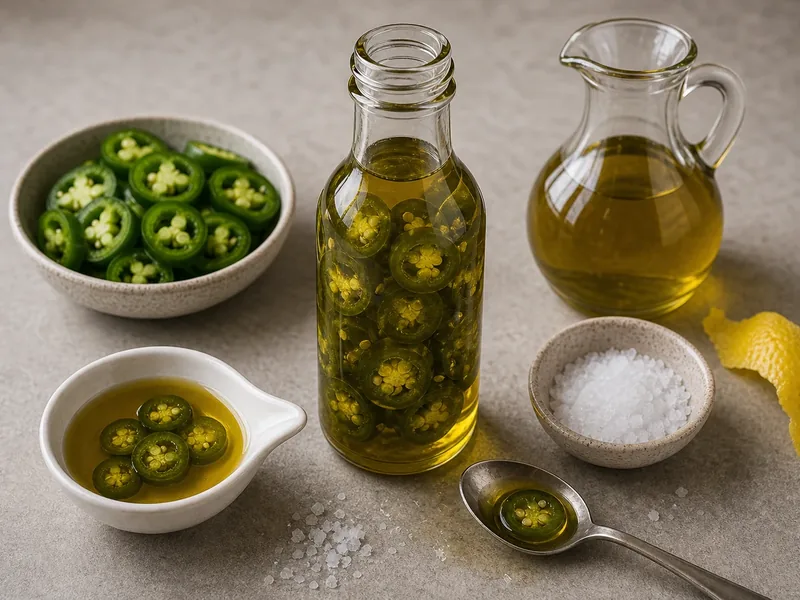
Jalapeno rings look good in a bottle, but they are poor storage companions. Straining gives a cleaner jar and a smoother drizzle.
If you want visible rings, cut a fresh slice at serving. It looks brighter and does not ask the storage jar to hold wet solids.
A fine sieve is enough for this oil because fresh jalapeno does not create powder like dried chiles. Let the oil drain instead of pressing the slices.
Strained slices can be used right away on eggs or tacos if they taste good. Do not put them back in the jar.
If the oil looks cloudy from tiny pepper bits, strain again through a clean sieve. Do not use a coffee filter unless you are patient; olive oil moves slowly through paper.
For a brighter plate, pair the oil with fresh acid. Lime on the food and oil over the top taste cleaner than lemon juice stored in the jar.
Fresh Uses
Drizzle after cooking. Oven heat and long simmering flatten the fresh pepper aroma.
We use it on fried eggs, beans, avocado toast, roasted corn, pizza crust, grilled shrimp, and tomato salad. It also works in a quick lime dressing if the acid is whisked separately first.
For beans, season with salt and lime before the oil. The oil carries aroma, but it cannot season starch by itself.
For pizza, drizzle after baking. Hot cheese wakes the aroma without cooking it away.
Fresh oil also changes with the variety of jalapeno. Thick-walled store pods give a clean green scent; hotter garden pods can make the same method taste sharper and more raw.
If the first batch tastes too grassy, use one red jalapeno next time. Red pods add ripe sweetness while still keeping the fresh-oil flavor.
If the first batch tastes too soft, use lighter olive oil or a neutral oil. Strong extra-virgin oil can cover the jalapeno before you ever reach the right heat.
Keep the oil away from the stove after it is made. Warm storage ages olive oil fast and turns the pepper aroma dull.
Do not pour unused table oil back into the jar. Food crumbs and moisture from the table change the storage risk.
Cold Storage
Refrigerate the strained oil and use it within 3 to 5 days. The best flavor is day one, while the green aroma is still crisp.
Olive oil may cloud in the refrigerator. That is normal; set the jar out briefly and shake before serving.
- Small jar: less headspace helps the aroma hold during the short storage window.
- Brunch: set the jar out while the eggs cook so it loosens in time.
- Party service: keep the storage jar cold and refill a small table dish.
- Bad signs: discard oil that smells sour, fizzes, grows mold, or shows water droplets at the bottom.
Fresh jalapeno aroma is fragile. If the oil tastes hot but not green, the slices were likely old or warmed too long.
For less risk and better flavor, make the oil the day you plan to serve it. Same-day oil spends the least time holding fresh pepper contact.
If guests need more heat, put minced fresh jalapeno in a separate condiment cup. That keeps the oil clean and lets heat seekers build their own bite.
Fresh Versus Dried
Fresh jalapeno brings green aroma and water risk. Dried chile oil brings deeper flavor and longer practical storage, but it cannot copy that fresh pepper snap.
- Fresh wall slices: give the cleanest green flavor when they are dried well before warming.
- Ribs: raise heat faster than flavor, so use them only when burn matters more than aroma.
- Seeds: can make the jar look rustic but do not solve weak jalapeno flavor.
- Huge pods: often taste watery in oil, so use the outer green walls and leave most of the interior behind.
This is why the jar stays small and short-lived. The recipe is built for a fresh finish, not for a pantry bottle.
The safety decision comes before flavor because fresh pepper carries moisture. Drying the slices twice, once after washing and once after cutting, is what keeps the oil from tasting watery.
- Cleanest aroma: use firm medium jalapenos with glossy green walls.
- More heat: add a little rib, then strain fully before storage.
- Less bite: use outer walls only and finish with salt on the food.
National Center for Home Food Preservation guidance is the reason this recipe avoids garlic-in-oil shortcuts and keeps the storage window short.
Batch Fixes
Bitter oil means the jalapeno browned or the lemon peel had too much white pith. Keep the next batch cooler and use less peel.
Weak oil means thick slices, a short steep, or tired peppers. Slice thinner and steep off heat a little longer.
Heat spikes mean solids stayed in the jar. Strain for storage and garnish fresh at the plate.
Vegetable-stale flavor means the oil sat too long. Fresh jalapeno oil is best treated like a meal-prep condiment, not a pantry staple.
Ingredients
-
2 fresh jalapenossliced and patted dry
-
1 cup olive oil
-
1 small strip lemon peeloptional
-
1/2 teaspoon kosher saltoptional for serving
Full Recipe Instructions
Wash, dry, slice,…
Wash, dry, slice, and pat the jalapenos very dry, removing ribs if you want less heat.
Warm the olive…
Warm the olive oil over low heat until hot but not smoking.
Add jalapeno slices…
Add jalapeno slices and lemon peel, hold at a very gentle heat for 5 minutes, then remove from heat.
Steep for 10…
Steep for 10 minutes, then strain through a fine sieve into a clean jar.
Cool, refrigerate, and…
Cool, refrigerate, and use within 3 to 5 days.