
Chipotle Hot Sauce
Chipotles are smoke-dried ripe jalapenos, so this sauce tastes deep and smoky rather than sharp. You rehydrate dried morita or meco pods, or start from canned chipotles in adobo, then blend and simmer with cider vinegar and a little brown sugar. Same 2,500 to 8,000 SHU as fresh jalapeno, but the smoke makes the heat read slower and rounder.
Chipotles are smoked, dried jalapenos, and that one fact shapes the whole sauce. You are not working with a fresh pepper here. You are working with a jalapeno that ripened to red, then spent hours over smoldering wood until it dried hard and turned the color of old leather.
So this sauce tastes deep and smoky instead of sharp and green. The heat sits in the same 2,500 to 8,000 SHU band as the fresh fresh jalapeno it came from, but the smoke and the drying make that heat read slower and rounder on the tongue.
That same SHU band is confirmed by the Chile Pepper Institute at New Mexico State University, which lists chipotle as a processed form of the jalapeno rather than a hotter pepper. Smoking and drying change flavor, not the capsaicin count.
Pods or adobo?
You have two honest ways to a chipotle sauce, and they start in different aisles.
The first is whole dried pods, which you toast and rehydrate yourself. This gives you the most control over smoke and texture. The second is canned chipotles in adobo, which are chipotles already stewed soft in a tomato-vinegar sauce; blend a few of those with a splash of their adobo and you have a shortcut sauce in minutes.
If you go with dried pods, know your two main types:
- Morita pods are smaller, reddish, and smoked for less time. They taste fruitier and slightly sweet, and they are what most stores stock.
- Meco pods, also called tipico, are gray-brown, smoked longer, and taste stronger and more savory. Cooks in central Mexico often prefer them.
This recipe uses dried pods because that is where the real smoky depth lives. The canned version works in a pinch, but it carries tomato and reads more like a stewed sauce than a clean chipotle one.
Good dried pods?
Not every bag of chipotles is worth buying, and the difference shows up in the bottle.
A good morita or meco pod still bends a little when you press it. It should flex like leather, not snap like a chip, because a pod that shatters has dried past its prime and will taste flat and dusty after soaking.
Look for whole pods with the stem still attached and few cracks in the skin. Pale gray patches are fine on meco, but heavy white bloom or a sour, musty smell means the batch has aged badly or picked up moisture in storage.
You will find dried chipotles in Mexican grocers, the Latin aisle of larger supermarkets, and most spice shops that sell whole dried chiles by weight. Buying loose by weight beats sealed packets when you can, since you get to feel each pod for that bend before it goes in your bag.
Silky blend
The dried pods need three steps before they become sauce, and each one has a cue worth watching.
Toast each stemmed pod about thirty seconds a side in a dry pan over medium heat. You are waiting for the smell to bloom into campfire and for the pod to flex easily, which is the sign the inner oils have woken up.
Then cover the toasted pods in hot water, around 200 degrees but off the boil, and let them soak twenty minutes until they go fully pliable. Boiling water cooks the skins hard and dulls the smoke, so hot-but-not-rolling is the temperature you want.
Save that soaking liquid. It carries dissolved smoke and a little sweetness, and blending the softened pods with about a cup of it gives the sauce its body and its color in one move.
Blend until it looks smooth, then push the puree through a fine sieve if you want a glossy, seedless sauce. Straining costs you a few minutes and a little yield, but it is the step that turns a rough chile paste into something that pours clean off a spoon.
Smoke balance?
A blended chipotle puree on its own tastes one-note: heavy smoke, dull edges. The fix is a short simmer and two small additions that pull the flavor into balance.
Simmer the blended sauce about ten minutes so the smoke and the cider vinegar marry instead of sitting in separate layers. If it tightens too far, loosen it back with a splash of the reserved soaking liquid rather than plain water, which would thin the flavor along with the texture.
A spoon of brown sugar or grated piloncillo in the blend balances the smoke from the other side. It is not there to make the sauce sweet; it is there to round the edge so the smoke reads as depth rather than char.
Finish with fresh lime stirred in off the heat. The vinegar carries the keeping acid, but the lime added at the end keeps a bright top note that cooking would otherwise flatten.
Mellow heat
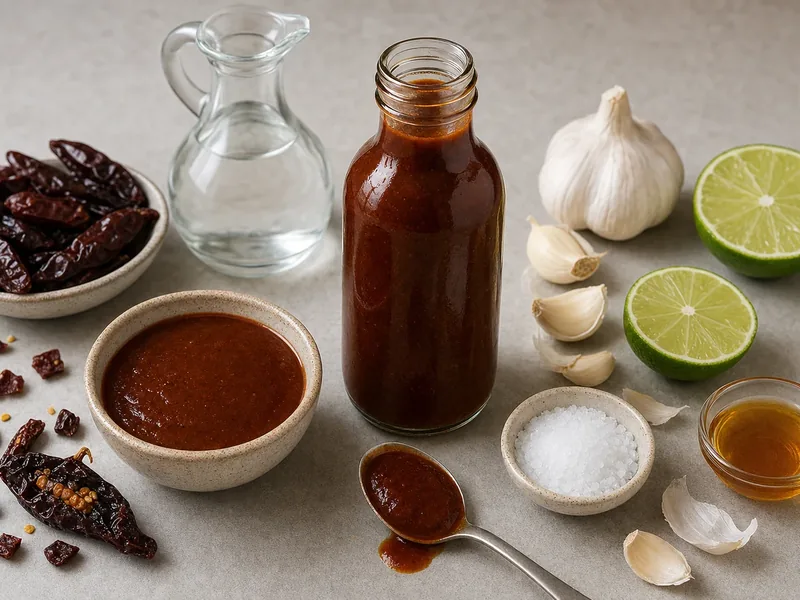
A fresh jalapeno hits with a quick, green bite. A chipotle made from that same pepper feels gentler, even though the capsaicin has not gone anywhere.
Two things soften the perception. Drying concentrates the pepper's natural sugars, so the sauce tastes a little sweet against the heat. Smoking layers in woody, almost chocolate-like notes that give your palate something to notice besides the burn.
The result is a sauce where the heat arrives late and spreads out, instead of spiking at the front of your mouth. That is why a chipotle sauce sits well on eggs and beans where a sharp green sauce might feel aggressive. To see how the dried form differs from the fresh pepper in detail, the chipotle profile covers how the smoking is done.
Avoid ash
The one place this sauce goes wrong is the toasting step. You toast the dried pods to wake up the smoke, but a few seconds too long and you cross from smoky into bitter.
Toast each pod about thirty seconds a side, just until it smells of campfire and bends easily. If you see the skin blacken or smell anything acrid, you have gone too far, and that scorched, ashy taste will carry straight into the finished sauce with no way to pull it back out.
Batch fixes?
Most chipotle sauce problems trace back to one of five causes, and most are easy to read once you know the signs.
- Bitter or ashy: you scorched the pods while toasting. There is no rescue once it is in the blend, so toss it and toast lighter next time, pulling the pods the second they smell of smoke.
- Too thin: you added too much soaking liquid. Simmer it uncovered a few more minutes to reduce, and it will thicken and gain body as the water cooks off.
- Flat with no smoke: the pods were old, or you skipped the toast. Whisk in a small amount of finely chopped canned chipotle in adobo to put the smoke back.
- Too sharp or sour: the vinegar is dominating. Stir in another half spoon of piloncillo or brown sugar and a pinch of salt to settle the acid down.
- Gritty: the pieces of skin and seed never broke down. Blend longer, then strain through a fine sieve, which is the cleanest fix for texture.
Useful variations
The base recipe is a foundation, and a few swaps take it in different directions without losing the chipotle character.
For the quickest version, skip the dried pods entirely: blend four canned chipotles in adobo with a tablespoon of their adobo straight into the half cup of vinegar, then simmer briefly to take off the raw edge. You trade some control for ten minutes saved.
For a redder, rounder sauce, blend in a small roasted tomato. It softens the smoke and gives the sauce a stewed, salsa-like body that suits tacos and grilled meat.
For more sweetness against the smoke, lean harder on piloncillo, the unrefined Mexican cane sugar, which brings a faint molasses note that brown sugar only hints at. And to push the heat up without losing the smoke, add one toasted, soaked arbol pod, which brings a clean, sharp burn that rides on top of the chipotle base instead of fighting it.
Gear and scale?
You need very little gear: a dry skillet for toasting, a bowl for soaking, and a blender that can puree softened pods smooth. A fine-mesh sieve is optional but it is what separates a rustic sauce from a silky one.
The recipe doubles and triples cleanly. The only thing to watch when you scale up is the toasting, since pods toast in batches in a single layer, not piled in the pan, so plan a few rounds rather than crowding them.
This is a make-ahead sauce by nature. The smoke settles and deepens over the first day, so a batch blended the night before genuinely tastes better than one bottled an hour ago, with the rough toasted edge smoothing into the vinegar overnight.
Best uses
This is the sauce we reach for at breakfast. It pools into the yolk of a fried egg, and it turns a pot of plain black beans into something worth eating on its own.
It also brushes well onto grilled chicken or pork in the last minutes of cooking, where the sugar in the sauce catches a little color and the smoke doubles up with the grill. For more ways to build smoke and heat into a bottle, including fermenting and aging, our guide to making hot sauce goes further than a quick simmer can.
Keep the smoke
Because this sauce is cooked and acidified with cider vinegar, it keeps a little better than a raw blend. In a clean, sealed jar in the fridge it holds well for about three to four weeks.
The smoke actually settles and deepens over the first few days, so a one-day-old sauce often tastes better than a fresh one. If the surface ever looks fuzzy or smells off, throw it out, since refrigeration slows spoilage but does not stop it.
For shelf storage rather than the fridge, the National Center for Home Food Preservation calls for a tested recipe that holds the finished sauce at a pH of 4.6 or below, since smoke and chiles alone do not make a sauce safe to can. Without a verified pH reading, freeze in small portions instead. A chipotle sauce freezes and thaws cleanly because there is no fresh fruit in it to go watery, and the smoke survives the freezer better than fresh herbs ever would.
Chef's Tip
Toast the pods only until they smell like a campfire and flex without cracking, about thirty seconds a side. The moment they smell sharp or look charred, they will turn the sauce bitter.
Ingredients
-
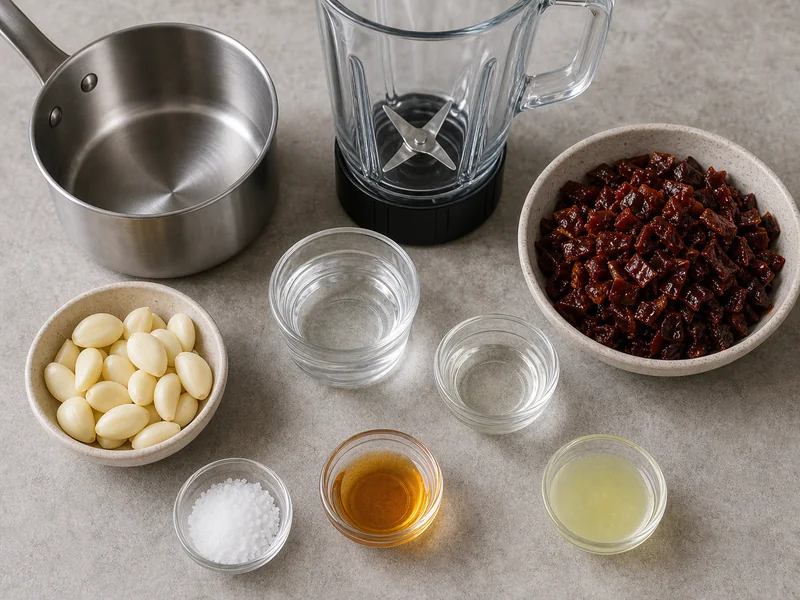
6 dried chipotle pods (morita or meco)stemmed
-
2 cups hot waterfor soaking
-
1/2 cup apple cider vinegar
-
3 garlic clovespeeled
-
1 tablespoon brown sugar or grated piloncillo
-
1 teaspoon kosher salt
-
1 teaspoon fresh lime juice
Full Recipe Instructions
Toast the stemmed…
Toast the stemmed chipotle pods in a dry skillet over medium heat for about 30 seconds per side, just until they smell of smoke and bend without cracking.
Cover the pods…
Cover the pods with the hot water and soak for 20 minutes, until pliable; keep the soaking liquid.
Blend the softened…
Blend the softened pods with 1 cup of the soaking liquid, the vinegar, garlic, brown sugar, and salt until smooth.
Simmer the blended…
Simmer the blended sauce for 10 minutes to marry the smoke and acid, loosening with more soaking liquid if it thickens too far.
Stir in the…
Stir in the lime juice, strain for a silkier texture if you like, then cool and bottle.