
Pasilla Chile Salsa
Pasilla chile salsa should taste dark, smooth, and mildly sweet, with raisin-cocoa notes from toasted dried pasilla. Toast gently, soak until flexible, use roasted tomato for body, and fix bitterness before adding more heat.
Pasilla chile salsa starts with smell. If the toasted chile smells like raisin, cocoa, and dry fruit, the salsa can turn smooth and deep. If it smells burnt, the blender cannot save it.
This is a mild dark salsa for tacos, eggs, beans, roasted vegetables, and grilled chicken. It should not chase the same smoky punch as Pasilla de Oaxaca salsa.
Sweet Toast
Wipe the pasilla pods clean, remove the stems, and shake out most of the seeds. A few seeds are fine, but a pile of seeds can make the salsa dusty.
Press each chile briefly against a warm dry pan. Stop when the skin becomes flexible and the smell turns sweet. Pasilla burns fast, and burnt dried chile tastes bitter all the way through the sauce.
The pasilla pepper profile helps explain the goal: this chile is about dark fruit and mild heat, not brute force. Let those traits lead the recipe.
Work in batches if your skillet is small. Crowded pods steam instead of toast, and then the salsa tastes dull even when nothing burns.
Set the toasted pods on a plate before soaking them. That pause lets the aroma settle and gives you one more chance to catch a scorched piece.
If one piece burns, throw that piece away. One bitter strip can mark the whole blender jar.
Use a lower heat than you use for guajillo. Pasilla skin is dark already, so color is a poor cue.
Name Check
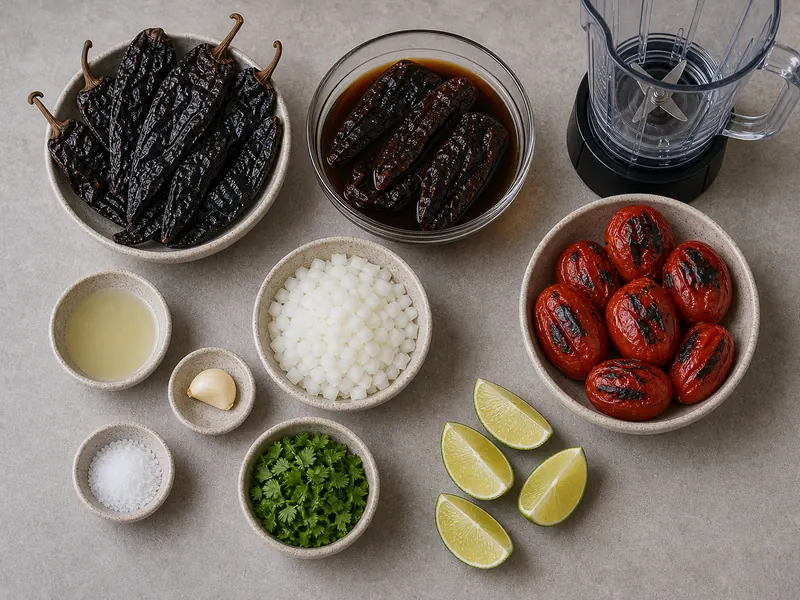
Regular pasilla is long, dark, and usually not heavily smoked. Pasilla de Oaxaca brings a stronger smoky character and can take over the bowl.
That split matters when you shop. The Pasilla de Oaxaca and pasilla comparison is useful if a label looks unclear or the pods smell much smokier than expected.
If you only have the smoky chile, make the Oaxaca recipe on purpose. Do not force it into this salsa and expect the same mild raisin finish.
Labels can also confuse pasilla with ancho in some stores. If the pod is broad and heart-shaped, you may be holding ancho. Pasilla should look longer and narrower.
That label check keeps the salsa from drifting into mole-like sweetness. Ancho can be delicious, but it changes the body and makes the sauce taste rounder.
Pasilla also differs from very hot dried chiles because heat is not the selling point. If the recipe needs fire, add a hotter salsa at the table.
Soak Liquid
Cover the toasted pasilla with hot water until it bends easily. The soak should soften the skin and flesh, not erase the chile.
Taste the soaking liquid before adding it to the blender. If it tastes sweet and earthy, use some of it. If it tastes bitter, use clean water or roasted tomato juice instead.
This choice changes the final salsa more than many extra ingredients do. The rehydrating dried peppers guide treats that liquid as optional because dried chiles vary by age, storage, and toast level.
Roasted tomato gives body and a little acid. Garlic and onion should stay in the background. Pasilla already has depth, so too many aromatics make the salsa taste crowded.
Aromatic Control
Use less tomato than you would in a fresh red salsa. Tomato should help the blender and soften the edges, not turn the sauce red and bright.
If you use canned tomato, choose plain tomato with no basil or Italian seasoning. Those herbs fight the dried chile flavor.
A small piece of white onion is enough. Too much onion makes the salsa taste sweet in a raw way and steals attention from the chile.
Roast the garlic in its skin if you want a softer flavor. Raw garlic can make the mild chile seem harsher.
Smooth Body
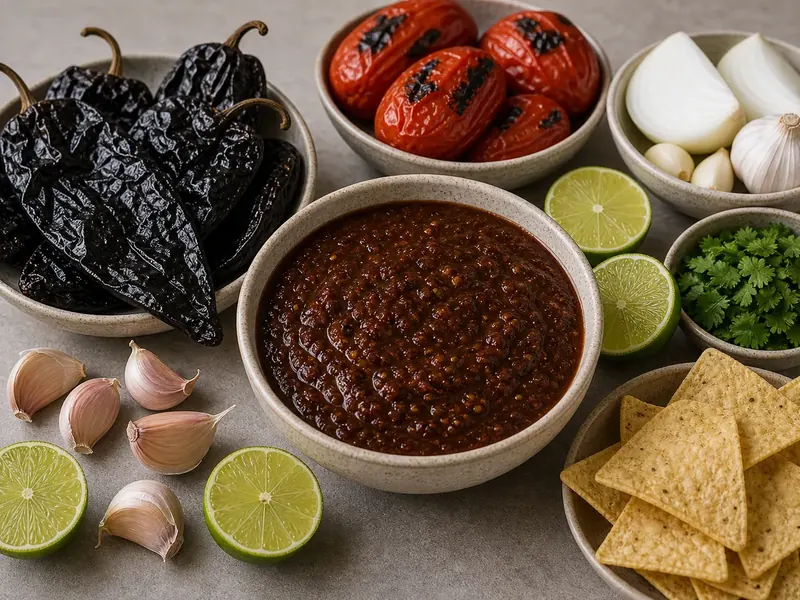
Blend the soaked chile, roasted tomato, garlic, onion, salt, and a little liquid until the skins disappear. Stop, scrape, and blend again if the sauce looks speckled.
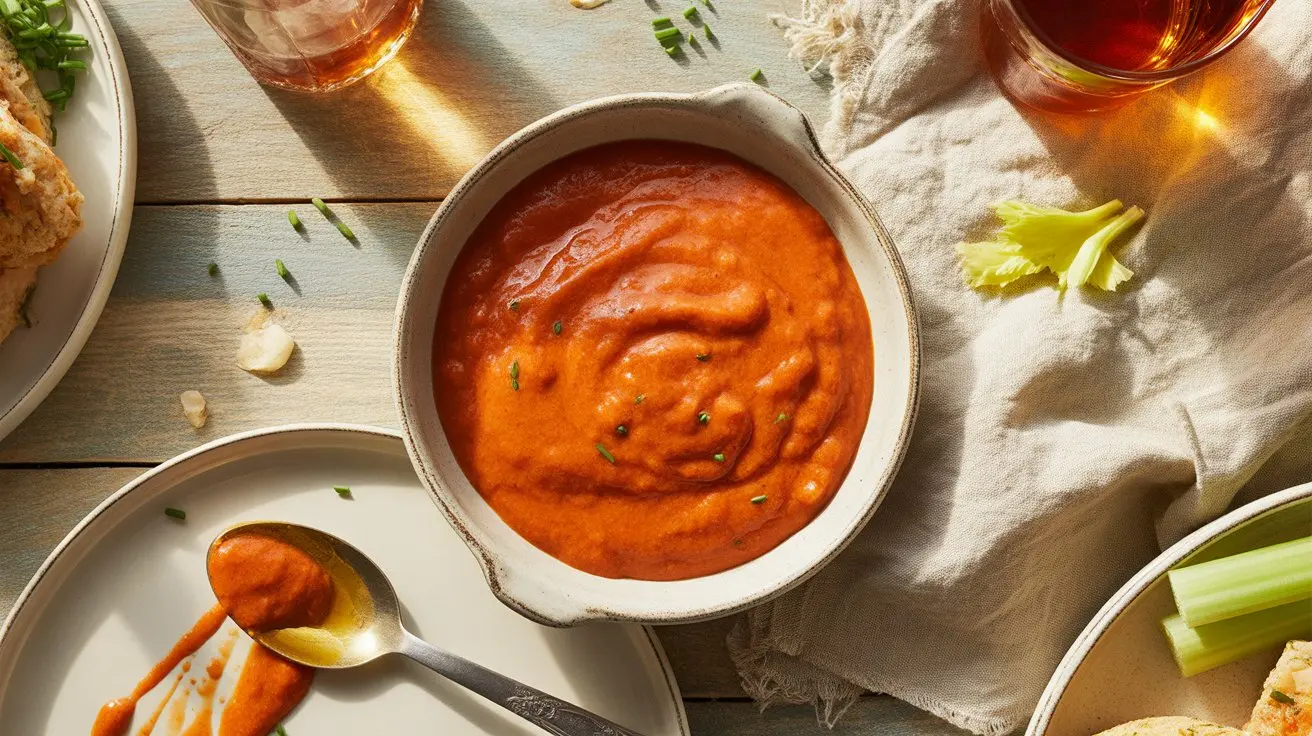
A good pasilla salsa coats a spoon but still falls back into the bowl. If it looks like paste, add liquid by the spoonful. If it runs thin, simmer it briefly after blending.
This texture separates it from brighter red dried chile salsas. Guajillo salsa should taste tangier and redder. Cascabel salsa recipe can feel nuttier and rounder.
If the blender leaves skins behind, rest the salsa for five minutes and blend again. Warm chile skins soften a little after the first pass.
A fine sieve gives a cleaner finish for enchiladas. For tacos, leave more body so the salsa does not drip through the tortilla.
If you plan to spoon it over eggs, keep it slightly looser. Eggs make thick dried chile salsa feel heavier.
Flavor Fixes
Bitter salsa usually means the chile scorched or the soaking liquid was harsh. Add more roasted tomato first. Then add salt. Add sugar only if the bitterness is small and the sauce already has enough body.
Flat salsa needs salt and acid, not a hotter pepper. A small splash of vinegar or lime can lift the fruit note, but too much makes the salsa taste like a quick table sauce instead of a cooked dried chile salsa.
If the salsa needs heat for a specific plate, add a little chile de arbol salsa on the side instead of changing the whole batch. That keeps pasilla's mild dark role clear.
For a different dried-chile structure, use the Mexican dried chile trinity guide to decide when ancho, guajillo, or pasilla should lead.
Best Plates
Pasilla salsa is strong with scrambled eggs, mushroom tacos, black beans, roasted squash, grilled chicken, and quesadillas. It adds a dark base note without punishing the rest of the plate.
It is less useful on raw seafood, fruit salsa, or very fresh green dishes. Those plates need sharper acid and brighter heat.
If you need a pantry backup, use the pasilla substitute guide to match dark fruit and mild heat first. Heat alone is the wrong target for this salsa.
Cool leftovers before sealing the jar. Warm trapped steam can thin the salsa and make condensation run back into the surface.
The flavor is often better after an hour because salt reaches the chile paste. If it tastes flat right after blending, wait briefly before you make a large correction.
Serve it warm for beans and grilled meat. Serve it cool for chips or quesadillas. The same batch reads darker when warm and sweeter when cool.
Do not freeze a watery version. Reduce or blend it thicker first, because thawed tomato water can split the sauce.
Serving Fit
For enchiladas, warm the salsa and thin it just enough to coat tortillas. For tacos, keep it thicker so each spoonful stays where you put it.
For chips, add a touch more acid and salt than you would for cooked food. Cold tortilla chips mute dried chile flavor.
If the salsa tastes dusty, pass it through a sieve and stir back only the smooth part. Dusty texture usually means seed fragments or tough skin stayed in the blend.
If you want more aroma at serving time, warm a spoonful in a small pan before adding it to the plate. Heat wakes the dried fruit note, but a full second simmer can make the sauce thicker than you want, especially for chips.
Chef's Tip
Taste the soaking liquid before thinning the salsa. If it tastes bitter or dusty, use warm water instead.
Ingredients
-
1 oz dried pasilla chilesstemmed and seeded
-
1 1/2 cups hot waterfor soaking
-
2 Roma tomatoeshalved
-
1/4 white onion
-
2 garlic clovesunpeeled
-
1 tablespoon apple cider vinegar
-
3/4 teaspoon kosher saltplus more to taste
-
1/4 teaspoon sugaroptional
Full Recipe Instructions
Toast the stemmed…
Toast the stemmed pasilla chiles in a dry skillet for 10 to 15 seconds per side, just until fragrant and flexible.
Cover the toasted…
Cover the toasted chiles with hot water and soak for 15 minutes, then reserve the chiles and taste the soaking liquid.
Roast the tomatoes,…
Roast the tomatoes, onion, and unpeeled garlic in the same skillet until softened and patchy, then peel the garlic.
Blend the softened…
Blend the softened chiles, roasted vegetables, vinegar, salt, optional sugar, and 3 tablespoons soaking liquid or warm water until smooth.
Adjust with more…
Adjust with more liquid one tablespoon at a time, then rest 10 minutes and taste again for salt and vinegar.