
Fermented Jalapeno Hot Sauce
Fermented jalapeno hot sauce uses a 3 percent brine, a 5 to 7 day ferment, and a vinegar finish for tangy green heat.
Fermented jalapeno hot sauce is a tangy green sauce built around a short salt-brine ferment, not a vinegar-first simmer. The best version keeps jalapeno flavor recognizable, lets the brine round off the raw bite, then uses vinegar only after fermentation to set the final brightness.
This page covers the fermented version. For a quick cooked green sauce, use the basic jalapeno hot sauce recipe instead; for a raw tomatillo salsa, the jalapeno salsa verde page answers a different job.
Ingredients That Control Ferment
Fresh green jalapenos profile set the main flavor, so skip pods with soft shoulders, black stem mold, or wrinkled skin. A ferment can soften a pepper, but it cannot rescue old produce.
Garlic belongs in the jar from day one because fermentation rounds its bite along with the peppers. Add onion only if you want a sweeter sauce; it makes the final bottle taste less like pure jalapeno.
Salt is the ingredient that does the most work. It shapes the brine, slows the wrong microbes, and keeps the peppers firm enough to blend cleanly after the ferment.
Vinegar is not part of the fermenting liquid here. It is the finishing acid, added after the peppers taste sour enough, so the sauce keeps a fermented pepper base instead of tasting like quick pickles.
Brine Target
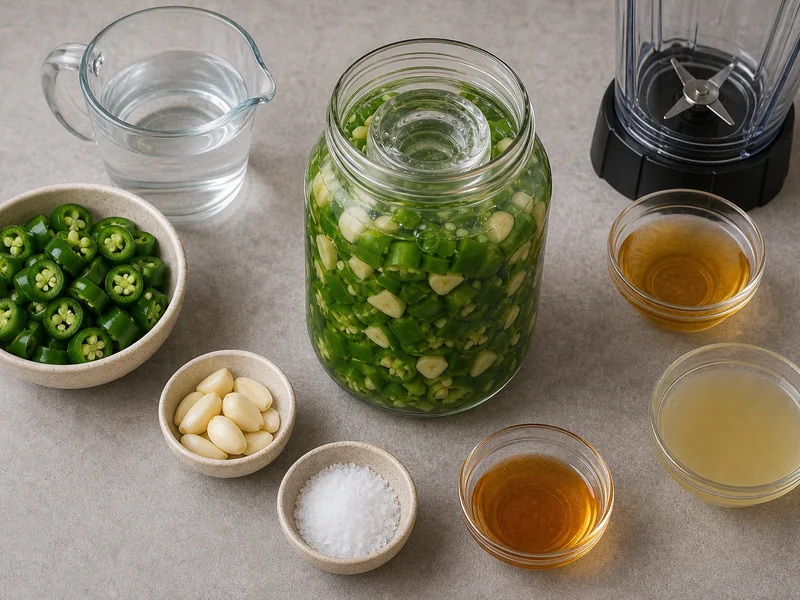
The brine controls safety, flavor, and texture before the blender ever runs. Use a 3 percent salt brine by water weight: 30 grams fine sea salt for 1 liter of non-chlorinated water.
That ratio is salty enough for a small pepper ferment without making the finished sauce taste like pickle brine. If you use Diamond Crystal kosher salt or another coarse salt, weigh it instead of using spoon volume.
Keep the jalapenos fully under brine with a clean weight. Floating pepper pieces are the usual cause of surface yeast, soft smell, and uneven fermentation.
Jar Setup
A quart jar is the easiest size for this batch because the peppers fit tightly enough to stay submerged. A wide-mouth jar also makes it easier to add a glass weight without trapping pepper pieces above the liquid.
Leave at least one inch of headspace. Active jalapeno ferments can push brine upward, and an overfilled jar leaks before you notice pressure building.
An airlock is convenient, but it is not required. A loose lid works if you check the jar daily, wipe any spilled brine, and tighten the lid only after the active bubbling slows.
Use clean tools rather than sterile-theater anxiety. Wash the jar, knife, board, and weight well, then keep your hands and tasting spoons out of the brine once the peppers are packed.
Ferment Window
Five to seven days is the sweet spot for this sauce. At room temperature, jalapenos usually shift from sharp green heat to a rounder, lightly sour flavor in that window.
A colder kitchen slows the process. A warmer kitchen can make the brine cloudy and active by day two, so start tasting sooner instead of chasing a fixed calendar.
Burp the jar if you use a tight lid. Bubbles, cloudy brine, and a clean sour smell are normal; fuzz, rotten odor, or slimy peppers mean the batch should be discarded.
Longer fermentation can taste good, but it changes the goal. After two weeks, the sauce becomes more sour and less fresh-green, which may be better for tacos than eggs or grilled chicken.
Blend Texture
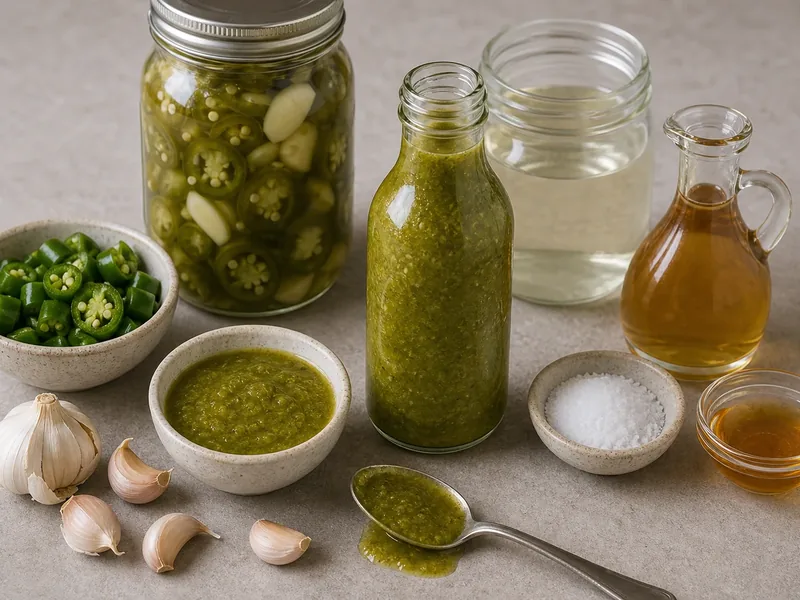
Blend the drained peppers first with garlic, a small amount of reserved brine, and vinegar. Add liquid slowly because fermented jalapenos collapse faster than fresh ones.
A smooth bottle sauce needs a longer blend and a fine strain. A taco-shop texture can stay lightly pulpy, especially if you want the pepper skins to help it cling to meat.
Do not add sugar to hide a harsh ferment. If the sauce tastes too sharp, add a spoon of honey only after checking salt and vinegar first.
Acid Finish
Vinegar enters after fermentation, not before. It brightens the sauce, slows further fermentation in the refrigerator, and makes the flavor read as hot sauce instead of pepper mash.
Start with 1/3 cup white vinegar for this batch. Apple cider vinegar is softer, but it can push the sauce toward fruit sauce if the jalapenos were already very ripe.
If you track pH, aim below 4.0 for a refrigerator sauce with a clean acid profile. This is not a shelf-stable canning recipe, so do not treat the pH number as permission to store it at room temperature.
Heat Control
Jalapenos usually sit around 2,500 to 8,000 SHU, so pod choice matters more than people expect. Older red-streaked pods often taste sweeter; firm green pods keep the sauce brighter.
For a milder bottle, remove half the white ribs before fermentation. For more heat, leave the ribs in and add one small serrano to the jar, but keep the salt ratio based on water weight.
The mistake is adding more vinegar when the sauce tastes too hot. Vinegar changes sharpness, not capsaicin load. Dilute heat with more fermented pepper flesh, roasted green pepper, or a small amount of carrot.
Serving Roles
This sauce works where tang and green pepper taste help the food: eggs, tacos, grilled shrimp, bean bowls, roasted potatoes, and chicken soup.
It is less useful as a wing sauce unless you blend in butter or oil at serving time. The lean fermented base is bright, not sticky.
For a table bottle, strain it thinner and keep the salt slightly forward. For spooning, leave it thicker and let the pepper pulp carry the flavor.
Where It Does Not Fit
Do not use this sauce when a recipe needs a thick sweet glaze. The fermented base is lean, salty, and sharp, so it will slide off ribs or wings unless you mix it into butter, honey, or another sticky base at serving time.
It also is not the right sauce for canning experiments. If you want a pantry-stable bottle, use a tested process from a preservation source instead of adapting this refrigerator ferment.
Cold Storage
Store the finished sauce in a clean bottle in the refrigerator. Leave headspace, because live fermentation can still produce a little pressure after blending.
A swing-top bottle looks tidy, but it can hide pressure. For the first week, a screw-cap jar or squeeze bottle is easier to open carefully, smell, stir, and clean around the rim.
Use it within about one month for best flavor. If the bottle smells yeasty, grows visible mold, or sprays pressure after opening, discard it and tighten the next batch by keeping solids submerged during the ferment.
Batch Fixes
If the sauce tastes salty before blending, drain the peppers well and start with vinegar instead of reserved brine. Add brine back one teaspoon at a time only after the acid is balanced.
If the sauce tastes flat, it usually needs acid rather than more salt. Add vinegar in small splashes, blend again, and taste it on food instead of judging it from a spoon.
If the sauce is too thin, blend in a few drained fermented peppers or a small roasted green pepper. Simmering fermented sauce to thicken it can dull the fresh sour aroma.
If the bottle separates, shake it before serving or blend in a little more pepper flesh next time. Separation is a texture issue, not a safety issue, as long as the sauce smells clean and stays refrigerated.
Chef's Tip
Weigh the salt and water. Spoon measures vary too much for a small ferment, and the brine ratio is what keeps this sauce predictable.
Ingredients
-
1 pound fresh jalapenosstems removed
-
3 garlic clovespeeled
-
1 liter non-chlorinated water
-
30 grams fine sea salt
-
1/3 cup white vinegarplus more to taste
-
1 teaspoon honeyoptional
-
1/4 teaspoon ground cuminoptional
Full Recipe Instructions
Dissolve the salt…
Dissolve the salt in the water to make a 3 percent brine. Pack the jalapenos and garlic into a clean quart jar and cover completely with brine.
Weight the peppers…
Weight the peppers below the liquid, cover loosely or use an airlock, and ferment at room temperature for 5 to 7 days until the brine smells clean and sour.
Drain the peppers,…
Drain the peppers, reserving 1/2 cup brine. Blend peppers and garlic with vinegar and 2 tablespoons reserved brine until smooth.
Taste for salt,…
Taste for salt, acid, and heat. Add more reserved brine for salt, vinegar for brightness, or honey only if the sauce tastes too sharp after acid is balanced.
Bottle in a…
Bottle in a clean jar or squeeze bottle and refrigerate. Shake before using and keep the sauce cold.