
Extra Spicy Sweet Chili Sauce
This hotter sweet chili sauce keeps the glossy dip texture while Thai chiles and a small habanero raise the burn.
The bottle still has to pour, cling, and taste sweet before the heat lands. It needs glossy body, garlic sweetness, vinegar snap, and enough sugar to cling, even when Thai chiles and habanero make the burn much louder.
This guide is not a repeat of sweet Thai chili sauce. That version is a balanced dip; this one is a controlled hot glaze for people who want the same texture with a sharper burn.
Decide whether this is a dip or a glaze
A dip needs a softer landing because the sauce is eaten by the spoonful. A glaze can run hotter because it gets brushed thinly over wings, tofu, shrimp, or roasted vegetables.
That decision changes the chile cut. For a dip, mince Thai chiles fine and use only part of the habanero. For a glaze, keep more habanero and let the sugar carry the heat across the surface of the food.
- Dip texture: slightly looser, bright vinegar, visible chile flecks.
- Glaze texture: thicker, shinier, strong enough to cling after heat.
- Table sauce: thinner than glaze, hotter than dip, poured in small amounts.
Set the heat ceiling before the pan warms
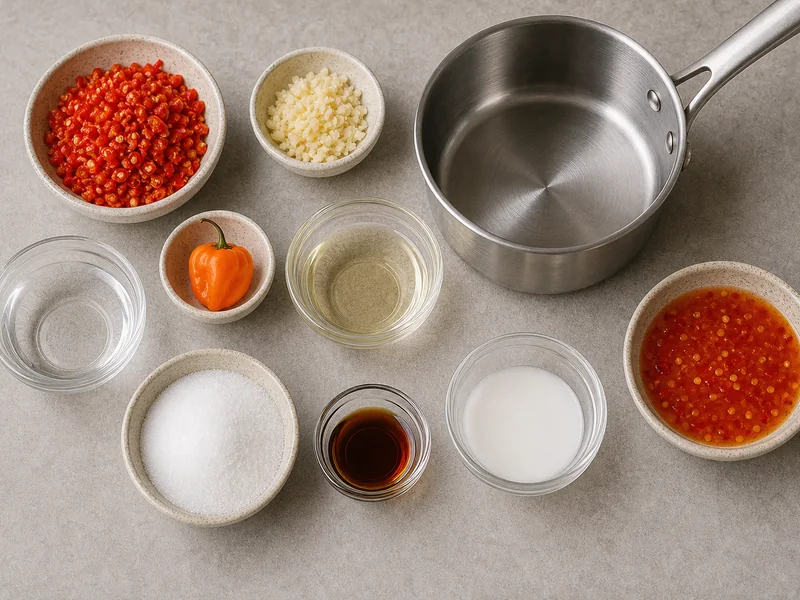
The heat decision happens on the cutting board. Thai chiles bring fast, needle-like heat, while habanero adds fruit and a longer burn.
NMSU Chile Pepper Institute heat ranges put Thai-type chiles near serious hot-sauce territory, and habanero can sit much higher. A small amount changes the whole bottle.
- Clean hot: use Thai chiles only.
- Fruitier hot: add a small habanero with some ribs removed.
- Severe hot: keep habanero ribs, but label the bottle clearly.
Wear gloves while mincing. Sugar does not protect your hands from capsaicin, and the board can still irritate skin after the sauce is cooked.
Keep garlic sweet instead of sharp
Garlic gives sweet chili sauce its familiar middle, but raw garlic can taste harsh when the sauce is extra hot. Simmer it in the vinegar-sugar base before the slurry goes in.
The goal is soft garlic flavor, not browned garlic flavor. Browning pushes the sauce toward stir-fry sauce, while raw garlic makes the heat feel rough at the back of the throat.
If the pot smells like raw garlic after thickening, cook it one minute longer on low and stir constantly. Do not raise the heat hard after the starch has thickened or the sauce can turn stringy.
Build the syrup before thickening
Sweet chili sauce gets its shape from a pepper-vinegar syrup first. Cornstarch only finishes the body.
Simmer the chiles, garlic, vinegar, water, sugar, and fish sauce until the garlic softens. The sauce should smell sharp, sweet, and savory before the slurry touches it.
If the garlic is still raw when the slurry goes in, the finished sauce tastes harsh. Thick sauce traps that raw garlic bite instead of cooking it out.
Control color by cooking time
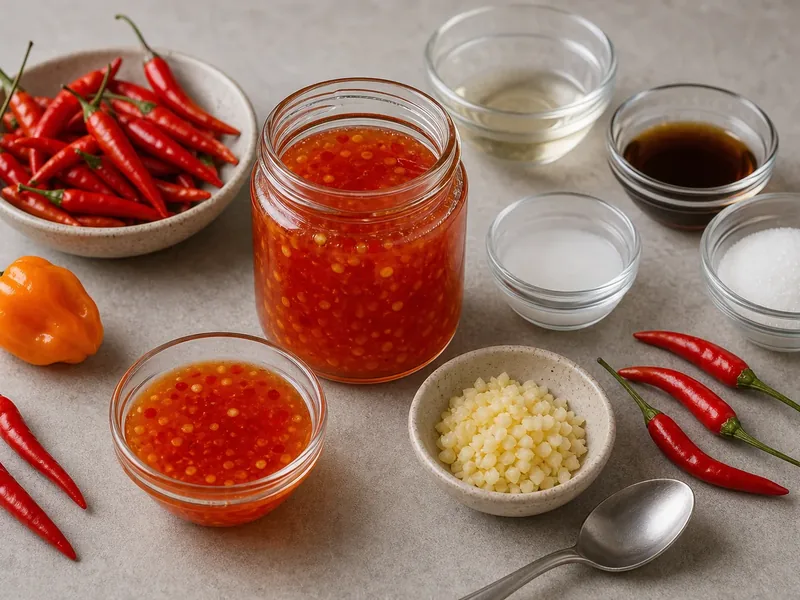
Short cooking keeps the sauce bright red-orange and fresh. Longer cooking darkens the sugar and makes the chile pieces look duller, even if the flavor is still good.
We stop once the bubbles turn glossy and slower around the spoon. At that point the sauce should coat the back of the spoon but still fall in a ribbon.
USDA FoodData Central lists fresh chiles as mostly water, so early simmering drives off water and concentrates flavor. The starch slurry should finish the texture, not do all the work by itself.
Use fish sauce or soy sauce as the quiet salt
Fish sauce gives depth without making the sauce taste fishy at this dose. Soy sauce works when you want a vegetarian version or a cleaner pantry option.
Do not skip salt entirely. Sugar and vinegar without a savory line make the sauce taste like hot candy.
- For wings: fish sauce gives better glaze depth.
- For spring rolls: soy sauce keeps the finish cleaner.
- For tofu: either works, but add a squeeze of lime at serving.
Match vinegar to the heat style
Rice vinegar keeps the finish clean and light, which helps Thai chiles feel sharp. Apple cider vinegar adds fruit and roundness, which helps habanero feel less jagged.
Do not swap in a very dark vinegar unless you want a heavier sauce. It can hide the chile color and make the bottle taste closer to barbecue glaze than sweet chili sauce.
Taste the vinegar before cooking. If it smells harsh from the bottle, the finished sauce will need more sugar to feel balanced, and that can make the texture too sticky.
- Rice vinegar: bright dip, cleaner heat, lighter color.
- Apple cider vinegar: rounder glaze, better with habanero fruit.
- White vinegar: sharpest finish, useful only in small adjustments.
Add slurry late and gently
Cornstarch should be mixed with cold water and stirred again right before it goes into the pot. Settled slurry creates lumps.
Whisk it into a simmer, then cook only 1 to 2 minutes. The sauce should turn glossy and coat a spoon, not bounce like jelly.
A sauce that looks slightly loose while hot will thicken as it cools. Stop early if you plan to use it as a pourable dip.
Build heat in layers without hiding the sugar
Extra heat does not mean all the burn has to arrive at once. Thai chiles give immediate sting, habanero gives aroma and a longer finish, and optional flakes add a dry edge.
Use flakes only after tasting the cooked sauce. They can make the bottle look dramatic, but they also keep releasing heat during storage, so next-day sauce may feel hotter.
For a controlled bottle, strain out some seeds after simmering. For a hotter table sauce, keep them and write the heat level on the jar so nobody treats it like the milder version.
Keep it different from sriracha
Homemade sriracha sauce is pepper-garlic sauce with tang and a smooth squeeze-bottle texture. This sauce is a sweet, glossy dip and glaze.
That difference changes how you season. Sriracha can take more garlic and vinegar; extra-spicy sweet chili needs sugar and starch to keep its balance.
Use this sauce for fried chicken, spring rolls, roasted shrimp, grilled pork, crispy tofu, egg rolls, and sweet-hot wing glaze. Use sriracha when you want a thinner sauce that cuts through rich food.
Dose the heat after cooling
Hot syrup hides heat. The same spoonful tastes softer from the pan than it will from the refrigerator.
Cool 10 minutes before making a final call. If it is too hot, thin with a little water and serve with fatty food rather than adding more sugar.
USDA FoodData Central shows sugar and peppers as very different ingredients nutritionally, but the useful kitchen point is simpler: sugar slows the perception of heat, then the chile catches up.
Cool before bottling so the texture settles
Hot sauce looks thinner in the pan and thicker in the refrigerator. Let it cool 10 minutes before bottling, then stir once so chile pieces distribute evenly.
If the sauce gels too hard after chilling, whisk in a teaspoon or two of hot water. If it stays watery, simmer it briefly and add a very small amount of fresh slurry.
Store it as a refrigerator sauce
Cool the sauce completely, then bottle it in a clean jar or squeeze bottle. Refrigerate and use within about 2 weeks.
NCHFP canning guidance does not treat homemade pepper sauces as shelf stable unless the formula is tested for acidity and processing. This recipe is built for the refrigerator.
If the sauce thickens too much after chilling, whisk in hot water 1 teaspoon at a time. Do not microwave the whole bottle; heat a small portion instead.
Plan for reheating if it becomes a glaze
Refrigerated sauce can thicken more than expected because sugar and starch keep setting as they chill. That is useful for wings, but annoying for a dip.
Warm thick sauce gently with a splash of water or vinegar, then whisk before judging. Do not boil it hard after storage, because the starch can loosen and the garlic can taste tired.
If you use it as a glaze, brush it on near the end of cooking. Sugar scorches quickly over direct heat, and scorched sugar makes even good chiles taste bitter.
Use a narrow-neck bottle only if the sauce is fully smooth or lightly strained. Visible chile pieces look good in a jar, but they can clog a squeeze bottle and make people shake harder than the cap can handle.
For takeout-style dipping cups, keep the sauce slightly loose. It thickens as it cools beside fried food, and a very stiff dip tears breading instead of coating it.
Fix the sauce by texture first
A sauce that is too thin needs another short simmer, not more dry cornstarch. Mix a tiny fresh slurry and add it only while the sauce is simmering.
A sauce that is too thick needs warm water and acid checked again. Thin sauce can still taste balanced, but thick diluted sauce can turn flat.
- Too hot: serve with fried food, yogurt, or mayo-based dips.
- Too sweet: add rice vinegar in 1 teaspoon increments.
- Too sharp: simmer 2 more minutes before changing sugar.
- Lumpy: strain while warm and use a fresh slurry next batch.
The goal is not maximum pain. The goal is a sweet chili sauce that stays sticky, bright, and honestly hot.
Ingredients
-
6 Thai chilesminced
-
1 small habanerominced with some ribs removed
-
1/2 cup rice vinegar
-
1/2 cup water
-
1/2 cup sugar
-
2 garlic clovesminced
-
1 tablespoon fish sauce or soy sauce
-
1 tablespoon cornstarch mixed with 2 tablespoons cold water
Full Recipe Instructions
Combine Thai chiles,…
Combine Thai chiles, habanero, vinegar, water, sugar, garlic, and fish sauce in a saucepan.
Simmer 8 minutes…
Simmer 8 minutes until the garlic softens and the syrup turns lightly red.
Whisk the cornstarch…
Whisk the cornstarch slurry again, then stir it into the simmering sauce.
Cook 1 to…
Cook 1 to 2 minutes until glossy and lightly thickened.
Cool 10 minutes,…
Cool 10 minutes, then adjust with salt, vinegar, or a spoonful of water if needed.