
Scotch Bonnet Hot Sauce
Scotch bonnet hot sauce should taste fruity before it tastes punishing. Simmer Scotch bonnets with onion, garlic, vinegar, mango or pineapple, and a mustard base, then blend smooth for a Caribbean-style bottle that works on jerk chicken, fried fish, and rice.
Scotch bonnet hot sauce needs fruit, mustard, and vinegar to show the pepper clearly. The heat is serious, but the best bottle tastes tropical and tangy before it tastes harsh.
This is a cooked Caribbean-style sauce for jerk chicken, fried fish, patties, rice, and grilled vegetables. It is not a raw salsa, and it should not taste like a generic orange habanero sauce.
Pepper Prep
Trim the stems and inspect the shoulders of each pod. Soft spots near the stem make the sauce taste stale after cooking.
Seed removal is optional, but rib removal changes the heat more. If the sauce is for a mixed table, scrape half the ribs and keep the rest for aroma.
Do the pepper prep before the onion and fruit. Once a glove touches Scotch bonnet oil, it should not touch the mango, knife handle, or fridge door.
Bonnet Fruit
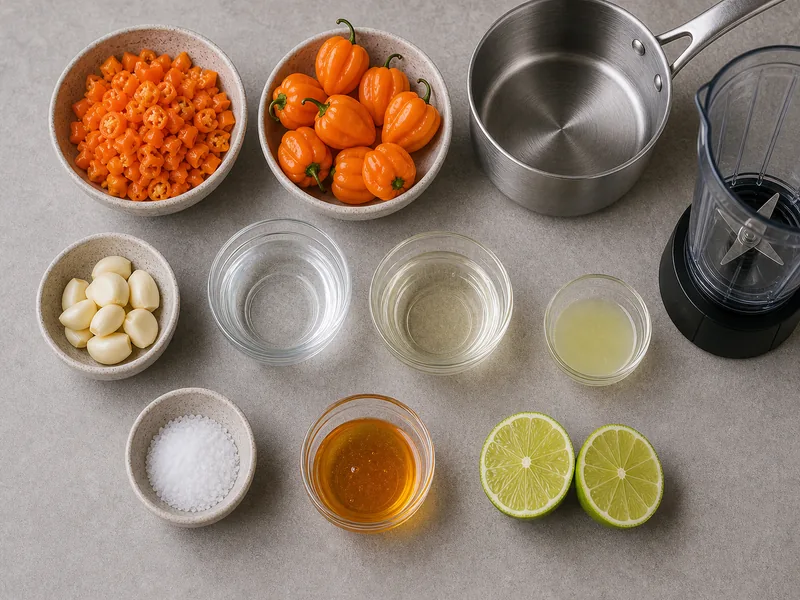
The pepper choice matters because Scotch bonnet heat comes with a sweet, floral fruit note. That flavor is the reason the sauce works with seafood and jerk spice.
The Scotch bonnet fruit and heat profile sits in the same broad range as habanero, but the plate reads different. Bonnet tastes rounder and more tropical.
If you only chase heat, the sauce loses its point. Start with ripe orange or yellow pods that smell fruity when cut, not wrinkled pods with a dull skin.
Island-Style Balance
Caribbean pepper sauces often balance chile heat with acid, fruit, and savory body instead of chasing pure burn. That is why this bottle uses mustard and fruit together.
The sauce should taste lively on rice before it tastes right from a spoon. Rice shows whether the salt, vinegar, fruit, and heat can season food as a group.
If rice tastes flat, add salt. If it tastes sharp but empty, add a little more mango or pineapple and blend again.
Mustard Body
Prepared yellow mustard gives the sauce body and tang. It also keeps the bottle from tasting like vinegar with pepper floating in it.
Add the mustard after the pepper mixture softens, then blend. Cooking mustard too long can make the flavor flat, but adding it raw at the end can taste sharp.
Plain yellow mustard works better than whole-grain mustard here. Seeds create grit and distract from the pepper.
If you dislike mustard, reduce it by half before removing it fully. Without it, the sauce moves closer to simple habanero hot sauce and loses the Caribbean feel.
Fruit Choice
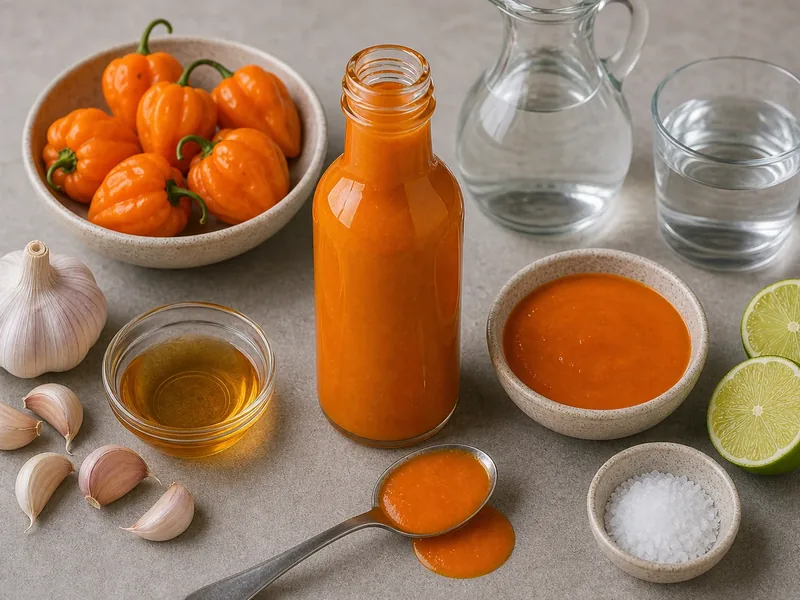
Mango gives the smoothest body. Pineapple tastes brighter and makes the sauce feel sharper on fried food.
Use ripe fruit, not canned syrup. The fruit should soften the Scotch bonnet edge without turning the bottle into a sweet glaze.
Vinegar Line
Distilled white vinegar keeps the sauce clean and bright. Apple cider vinegar tastes rounder, but it can make the fruit note taste cooked.
The vinegar should frame the mustard, not erase it. If the sauce smells like pickle brine, simmer for one more minute and add a little fruit.
Do not use low-acid vinegar for a refrigerator hot sauce unless you know its strength. Five percent acidity is the practical grocery-store baseline.
Cooked Sauce
Simmer the peppers, onion, garlic, fruit, vinegar, salt, and sugar until everything softens. Ten minutes is enough for small pieces.
Blend only after the pepper flesh has collapsed. A raw blend leaves hard bits of skin and a thin vinegar burn.
Return the sauce to the pan for two minutes after blending. That short finish pulls mustard, fruit, and pepper into one texture.
For broader hot-sauce method decisions, making hot sauce at home explains how acid, heat, and texture fit together.
Safe Prep
Wear gloves before trimming the pods. Scotch bonnet sits in the extra-hot pepper range, and the oil can stay on your hands long after the board is clean.
Cut out some ribs if the sauce needs to be shareable. Loose seeds are less important than the pale ribs where capsaicin concentrates.
If pepper oil reaches your skin or eyes, stop cooking and clean up before continuing. Capsaicin burn relief is easier before the oil spreads to towels, handles, and lids.
Pour Texture
A good bottle should pour in a narrow ribbon. If it drops in heavy blobs, it will sit on food instead of spreading through it.
Thin the sauce with water only after the flavor is balanced. Water fixes flow, but it cannot fix dull mustard or weak fruit.
If the sauce gets too loose, simmer it for one or two minutes with the lid off. Stop as soon as it coats a spoon, because over-reducing makes the heat feel blunt.
Plate Match
This sauce belongs on food with fat, starch, or smoke. Jerk chicken, fried snapper, rice and peas, roasted plantains, and grilled pork all give the pepper room.
For chopped fresh tomato, lime, and raw bonnet bite, use Scotch bonnet salsa instead. A hot sauce should pour; a salsa should spoon.
Rest Overnight
The sauce tastes separate when it is warm: mustard first, fruit second, pepper last. Overnight chilling makes those edges join.
Make small corrections after that rest. Add vinegar for heaviness, salt for dullness, fruit for harsh heat, and water only when the bottle will not pour.
If you judge it straight from the blender, you will usually overcorrect. Scotch bonnet heat blooms as the sauce sits.
Shared Table Rule
For a mixed table, serve Scotch bonnet sauce with a spoon instead of a squeeze bottle. A spoon makes the dose visible and slows people down.
Put it next to starchy food first: rice, bread, fried plantain, or potatoes. Those foods carry the fruit note and make the heat easier to judge.
Do not hide the heat in a marinade without warning guests. Scotch bonnet can taste mild for the first second, then rise hard after the bite is swallowed.
Heat Warning
Taste this sauce with food, not from the blender jar. A straight spoonful can feel exciting for two seconds and then overwhelm your palate.
If guests are new to Scotch bonnet, put the sauce in a small dish with a spoon. That makes each serving visible and keeps one person from flooding a plate by accident.
For marinades, start with one tablespoon per pound of meat. Add more only after you know the group wants that level of heat.
If the bottle is for a cookout, make it one day early and bring it cold. Cold sauce pours slower, which helps people use less while they learn the heat.
Shake before serving because fruit pulp can settle near the bottom. That first pour should taste like the whole sauce, not plain vinegar.
Bottle Fixes
If the sauce tastes too hot, blend in more mango and a splash of vinegar, then simmer one minute. Do not fix it with plain water because water thins flavor without reducing capsaicin much.
If the sauce tastes dull, add salt in small pinches. Fruit and mustard need enough salt to taste connected.
Cool, bottle, and refrigerate. The sauce tastes better after one night, when mustard and fruit stop feeling separate.
If Scotch bonnets are unavailable, choose a substitute by aroma as much as heat. A Scotch bonnet substitute should bring fruit, not only fire.
Chef's Tip
Let the bottle sit a day before you judge it. The mustard, fruit, and scotch bonnet need a night in the fridge to stop tasting like separate ingredients.
Ingredients
-
8 scotch bonnet peppersstemmed (seeded for less heat)
-
1/2 cup prepared yellow mustard
-
1/2 ripe mangochopped (or 1/2 cup chopped pineapple)
-
1/2 cup distilled white vinegar (5% acidity)
-
1/4 onionchopped
-
2 garlic clovespeeled
-
1 teaspoon kosher salt
-
1 teaspoon brown sugar
Full Recipe Instructions
Wear gloves to…
Wear gloves to stem and seed the scotch bonnets; this chinense pepper transfers oil to skin and eyes for hours.
Simmer the peppers,…
Simmer the peppers, onion, garlic, mango, vinegar, salt, and sugar for 10 minutes, until everything softens.
Blend with the…
Blend with the mustard until smooth, loosening with a splash of water if it is too thick to pour.
Return to the…
Return to the pan for 2 minutes to cook off the raw mustard edge, then cool and bottle.