
Simple Habanero Hot Sauce
Nothing gets cooked here. You blend raw habaneros with vinegar, lime, garlic, and a little fruit, then bottle. Skipping the stove keeps the apricot and floral aroma that a simmer would drive off. The trade is real heat, 100,000 to 350,000 SHU, so glove up and lean on the acid and fruit to keep it drinkable.
Nothing in this recipe ever touches heat, and that is exactly why it tastes the way it does. A habanero carries a fruity, almost apricot and floral aroma sitting on top of its serious burn. Those aromas live in delicate fruity esters that a simmer would boil straight off, a quirk the New Mexico State University Chile Pepper Institute attributes to the aromatic compounds specific to Capsicum chinense.
So we blend the sauce raw and bottle it cold. You keep the fruit, you keep the perfume, and you have a finished sauce in about ten minutes. The trade is that the heat stays at full strength, 100,000 to 350,000 SHU for the habanero, which is roughly forty times a jalapeno.
Handle first
This is the one step we will not soften. Habanero oil clings to skin, and it moves from your fingers to your eyes, nose, and anywhere else hours later, long after you think you washed it off.
Glove up. Wear disposable gloves to stem and handle the peppers, and do not touch your face until the gloves are off and your hands are washed with soap and a degreasing dish detergent, which cuts the oil better than water alone.
If the burn does reach skin, our guide on how to stop pepper burn covers what actually helps, which is usually dairy or dish soap rather than plain water.
Ventilation matters more than people expect with a raw sauce. Blending whole habaneros throws capsaicin into the air as a fine mist, and a lungful of that will make you cough and water at the eyes the moment you pop the blender lid.
Open a window, run the range hood, and lift the lid away from your face after the blend settles for a few seconds. Treat the glove rule as all or nothing too. One bare finger on a seed pod is enough to ruin the next two hours.
Which habanero?
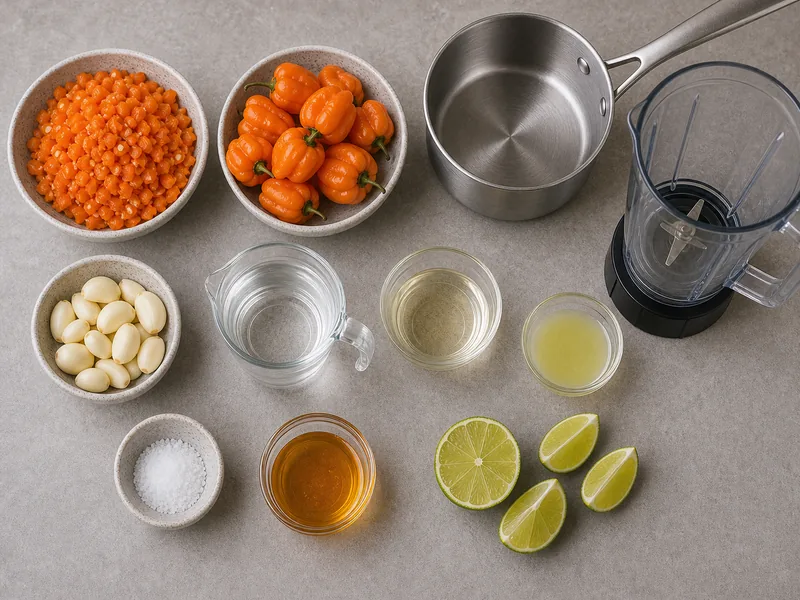
The standard orange habanero is the one most stores carry, and it is the right starting point for this sauce. It is fruity, bright, and fierce.
If you find red savina or a chocolate habanero, they work too. The red savina runs noticeably hotter and reads sharper, while the chocolate type leans earthier and a touch smoky, which can be lovely but pulls the sauce away from the clean tropical profile.
Ripeness is doing real flavor work here. A fully colored orange pod, with no green shoulders, carries the most apricot-and-citrus character, and that is the whole reason you are blending it raw.
Firmness is your freshness tell. Pick pods that are glossy and taut, since a raw sauce shows off the quality of the fruit with nothing cooked in to hide behind. A wrinkled or soft habanero tastes flat and slightly fermented before you want it to, and that off note lands straight in the bottle.
Two-minute blend
Once the peppers are handled safely, the method barely qualifies as cooking. Everything goes in the blender at once: habaneros, a chopped carrot, vinegar, lime, garlic, and salt.
A higher-powered blender pays off here, because it pulverizes the skins and seed membrane into the liquid instead of leaving gritty flecks. If your blender is modest, chop the carrot small and give the machine a minute to find a vortex before you trust it.
Run it on high for about a minute, until the sauce is completely smooth. Stop and scrape the sides once, then run it again, since the pepper skins like to ride up the walls and dodge the blades.
Texture is a choice you make with the vinegar. For a pourable, shake-and-splash bottle, keep the acid at the full half cup; for a thicker sauce you spoon onto tacos, hold back a tablespoon or two and add it only if the blend stalls.
Let it rest ten minutes before you taste. Raw garlic and acid keep reacting for a few minutes, and a sauce that tasted harsh straight out of the blender usually settles into balance.
Taste cold, not warm. Adjust acid last, a teaspoon of vinegar at a time, because once the brightness is right the salt and heat usually fall into place on their own.
Make it drinkable?
A straight habanero sauce is punishing. The fix is not less pepper; it is a little sweetness to give the heat something to land on.
The carrot in this recipe does quiet work, adding body and a mild sweetness without announcing itself. That sweetness does not lower the SHU. It rounds the perception, so the fruit reads first and the burn follows a beat later instead of slamming the front of your mouth.
To see where this sits among milder and hotter bottles, the Scoville scale puts the habanero well up the ladder, far above anything a carrot can soften on the actual heat reading.
Several swaps keep the sauce fully no-cook while changing its character. Each one trades the carrot for a different fruit or adds a small accent:
- Mango: swap the carrot for roughly half a cup of ripe mango for the classic Caribbean version, lush and almost dessert-sweet against the burn.
- Pineapple: use about half a cup of fresh pineapple for a brighter, more acidic sauce that needs a little less vinegar to balance.
- Carrot plus fruit: keep half the carrot and add a couple of tablespoons of mango for body and sweetness together, which holds texture better than fruit alone.
- Lime zest: grate in the zest of half a lime before blending for a floral citrus lift that echoes the habanero aroma.
If you want a deeper, tangier sauce, there is a slower path. You can lacto-ferment the peppers in a salt brine for a week before blending, which builds a sour complexity that raw acid cannot, and our guide to making hot sauce walks through that ferment safely.
That fermented route is still technically no-cook, but it is a different project with its own timing and salt math, so treat it as a next step rather than a quick swap.
Raw-sauce fixes
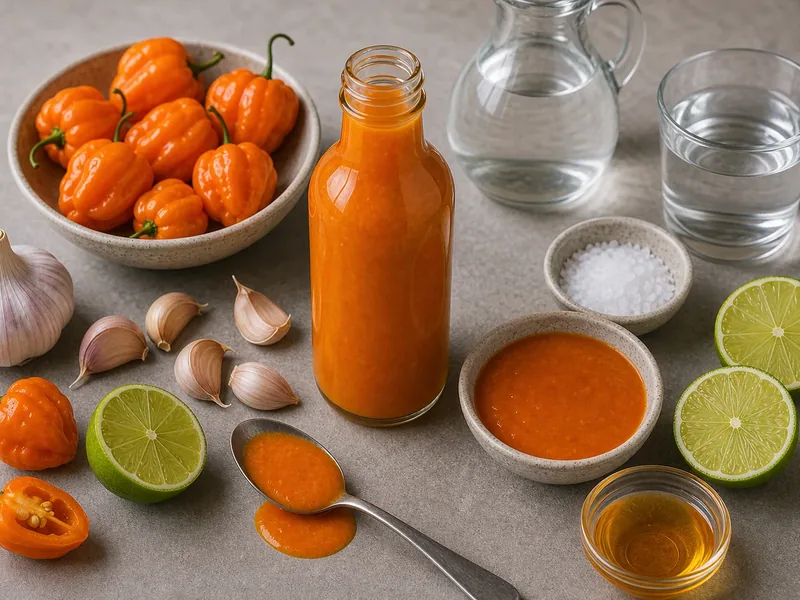
Most problems with this sauce come from one of a few causes, and each has a clean fix. Match the symptom to the cause before you start adding things:
- Too hot to eat: the seeds and the white membrane are the cause, since they hold the most capsaicin; next batch, seed and devein the pods, or blend in more carrot or mango to round the burn without losing the sauce.
- Too thin and watery: usually too much vinegar or a watery fruit like pineapple; blend in a little more carrot or a second habanero to rebuild body, or hold back acid next time.
- Separates in the bottle: normal for a raw, unemulsified sauce with no cooked binder; a hard shake before each use brings it back, and a small amount of carrot helps it hold together longer.
- Tastes raw or harsh: the garlic and acid have not married yet; give it a full hour in the fridge, or even overnight, and the sharp edge mellows on its own.
- Not keeping well: almost always not enough acid or a bottle that was not clean; use the full vinegar measure, fill a sanitized bottle, and keep it cold the entire time.
One thing troubleshooting cannot fix is a stale pepper. If the habaneros were soft going in, no amount of acid or fruit rescues the flat note, so the fix lives at the store, not the blender.
Storage clock
Skipping the stove costs you some shelf life, and it is worth being honest about that. A cooked, acidified sauce can hold for a month; this raw one is best inside one to two weeks.
The vinegar and lime are not only for flavor. The acid is what lets a raw, uncooked sauce keep safely in the fridge, by pulling the whole blend to a low pH where spoilage organisms struggle.
Here is the safety line that actually matters. Never store this sauce, or the peppers, in oil at room temperature, because raw garlic submerged in oil with no acid and no air is a textbook botulism setup, exactly the scenario the National Center for Home Food Preservation warns against.
The reason is simple once you see it. Oil seals out air, garlic carries the bacteria, and a low-acid, room-temperature environment lets it produce toxin; vinegar plus refrigeration removes two of those three conditions at once.
So vinegar in the fridge is the safe choice, and oil on the counter is not. Keep it cold the entire time in a clean sealed bottle, and date the bottle so you actually use it inside that two-week window.
Freezing works well for a raw sauce when you want to keep a batch longer. Portion it into a small jar with headspace or an ice cube tray, thaw only what you need, and a quick shake brings the texture back together after thawing.
Chef's Tip
Chill the bottle and a few spoons before serving a raw sauce. Cold mutes the first blast of habanero just enough to taste the fruit underneath.
Ingredients
-
6 fresh habanerosstemmed (seed them for less heat)
-
1 medium carrotpeeled and chopped
-
1/2 cup distilled white vinegar (5% acidity)
-
2 tablespoons fresh lime juice
-
2 garlic clovespeeled
-
3/4 teaspoon kosher salt
Full Recipe Instructions
Put on disposable…
Put on disposable gloves before you touch the habaneros; the oil clings to skin and transfers to eyes for hours.
Blend the habaneros,…
Blend the habaneros, carrot, vinegar, lime juice, garlic, and salt on high until completely smooth, about 60 seconds.
Let the sauce…
Let the sauce rest 10 minutes so the raw garlic and acid settle, then taste and add a splash more vinegar if it needs brightening.
Funnel into a…
Funnel into a clean bottle and refrigerate; no cooking needed.