
Habanero Bbq Sauce
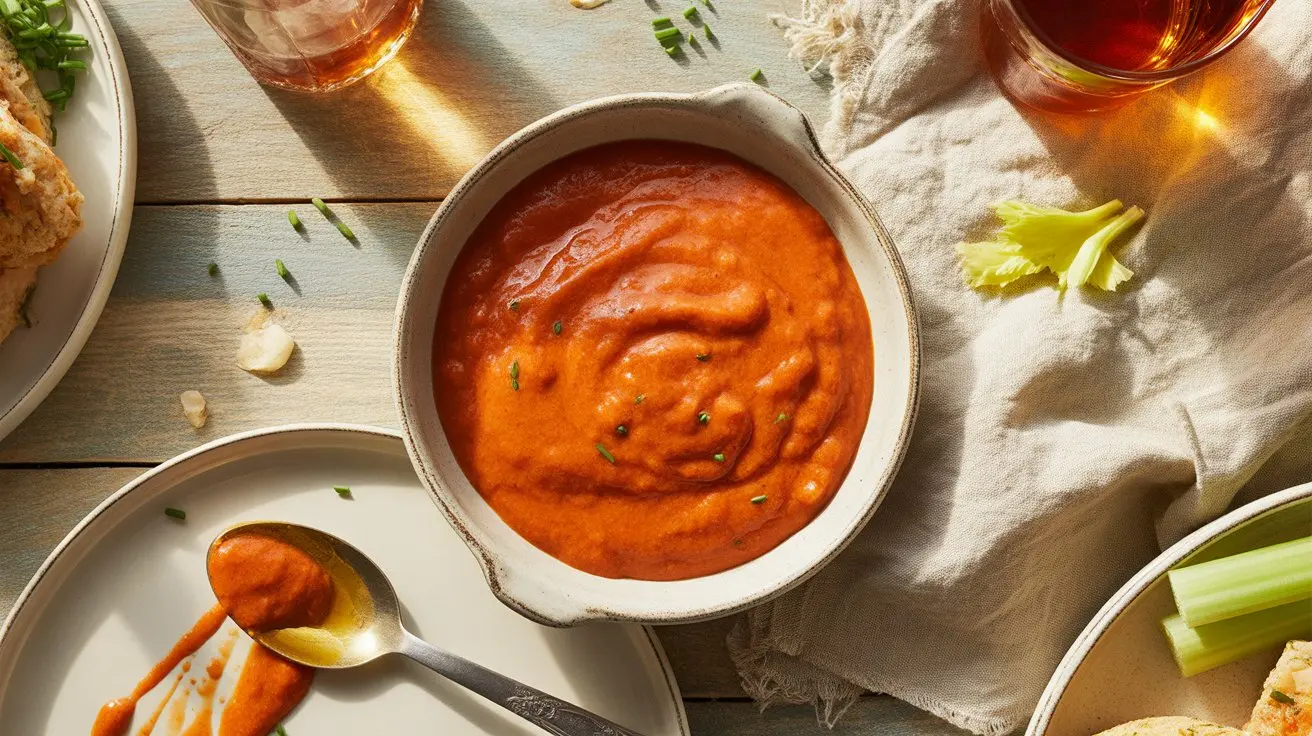
This fruity hot barbecue sauce uses a small dose of habanero, tomato, cider vinegar, brown sugar, molasses, mustard, and garlic for a brushable glaze with real heat.
Habanero BBQ sauce should taste like fruit heat on grilled food, not sugar hiding a super-hot burn. This batch uses habanero, tomato, cider vinegar, brown sugar, molasses, mustard, and spices to make a brushable sauce with a sharp orange bite.
The answer comes before the pot starts: use one seeded habanero for a hot family sauce, or two pods when the sauce is meant for ribs, wings, and burgers that can handle real heat.
Prep Before Heat
Cut the habanero before any aromatics hit the pan. Habanero heat and fruit flavor sit high enough that late chopping leads to rushed choices.
Use gloves and scrape the pale ribs if you want control. Seeds can carry heat on their surface, but the ribs hold the stronger burn.
One pod makes the sauce hot but flexible. Two pods make it chile-forward and better for chicken thighs, pork ribs, and grilled sausages.
Do this prep near a sink, not over a crowded grill station. Habanero oil on tongs, lids, or phone screens can turn into a cleanup problem.
Keep the chopped pepper in a small bowl until the pan is ready. That lets you add half, taste later, and decide whether the second half belongs.
Soften, Do Not Brown
Cook onion and garlic in oil until they smell sweet. Browning them makes the sauce taste dark before the fruit heat has a chance to show.
Add tomato paste after the onion softens, and stir until the raw edge fades. This short step gives body without turning the sauce into a long tomato stew.
If you want smoke as the main flavor, use honey chipotle BBQ sauce instead. Habanero needs a cleaner base so its citrus note can cut through.
Low heat gives onion time to sweeten. If the garlic colors before the onion softens, lower the burner and add a spoon of water.
Tomato paste should darken one shade, not scorch. Scorched paste adds bitterness that reads like burnt sugar once molasses enters.
Sweetness Has a Job
Brown sugar gives quick sweetness, while molasses gives darker body. Together they help the sauce cling to grilled food.
Sweetness should frame the heat, not erase it. If the sauce tastes like candy before it hits the grill, reduce the sugar or add cider vinegar in small spoonfuls.
- Chicken: lean slightly brighter with more vinegar.
- Pork ribs: keep the molasses because fat can carry it.
- Burgers: use less sauce and brush late.
For a milder red pepper base, ancho BBQ sauce gives dried chile depth without the same quick burn.
Mustard gives the sauce a sharper middle. It keeps brown sugar from making the finish feel sticky.
Cider vinegar gives a cleaner fruit edge than white vinegar. It also helps the sauce taste brighter after it cools.
Cook to Brushable
Simmer until the sauce coats a spoon and still spreads with a brush. It should not set like jam.
Blend only after the habanero softens. A rough blend leaves pepper flecks that can hit too hard in one bite.
If it gets too thick, add water one tablespoon at a time. If it tastes thin, simmer uncovered for a few more minutes before adding more sugar.
Use a wide pan if you want faster thickening. A narrow pot traps steam and can make the sauce cook longer than the habanero needs.
The spoon test should leave a slow trail. If the sauce runs like juice, it will slide off meat before it can set.
Use It Late
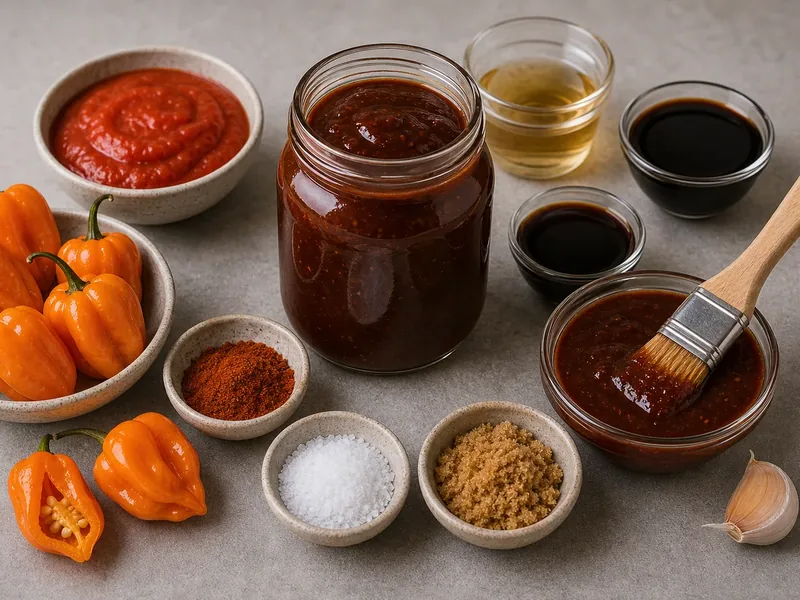
Brush this sauce during the last 5 to 8 minutes of grilling. Earlier brushing can burn the sugar before the meat is done.
On wings, toss after cooking and return them to the grill for one short set. On ribs, brush a thin coat, let it tack up, then add a second thin coat.
The grilling method matters. Our pepper grilling guide is useful when you want charred chile flavor without scorching the sauce.
Keep a clean bowl for finished sauce. Do not dip a brush that touched raw chicken back into the storage jar.
For oven ribs, brush after the ribs are tender and return them to high heat for only a few minutes. The sauce sets fast because of the sugar.
Taste on Food
Taste the sauce on bread, chicken, or a spoon of beans. A plain spoon makes habanero taste sharper than it will on fatty food.
If the heat feels too high on food, add tomato paste and vinegar, not only sugar. Sugar dulls the first bite but leaves the back-end burn.
If you need less heat next time, use orange habanero pods with ribs removed, or compare the jump against jalapeno and habanero heat before scaling for guests.
Cold sauce tastes sweeter and less hot than warm sauce. Taste once warm and once cooled if you plan to bottle it for later meals.
Fat changes the heat. Pork makes the burn rounder; lean chicken makes the habanero feel sharper.
Chicken needs a thinner coat than ribs because the skin can burn fast. Brush once near the end, then serve extra warm sauce at the table.
Ribs can take two thin coats because the surface already has fat and bark. Let each coat tack up before adding the next one.
Burgers need the least sauce. Spread a small amount after flipping, or the sugar drips into the grill and tastes scorched.
For grilled vegetables, use the sauce after cooking. Direct heat can make the molasses bitter before the vegetables soften.
A smooth blend makes this sauce easier to brush. It also spreads habanero heat evenly, so one bite does not get most of the chile.
Straining gives a cleaner bottle, but it removes pepper skin, onion fiber, and some tomato body. Use it when the sauce is for wings or a squeeze bottle.
Leave it unstrained for ribs and burgers. The extra pulp helps the sauce cling to meat and gives a more homemade texture.
If you strain, push gently with a spoon and stop when the solids look dry. Forcing every bit through can bring bitterness from skins and spice grit.
For meal prep, divide the sauce before adding the second habanero. One jar can stay family-hot, while the second jar gets the extra pepper for people who want a stronger burn.
A squeeze bottle needs a smoother sauce than a brush bowl.
Use a fine strainer only for the bottle version.
Store and Repair
Cool the sauce quickly and refrigerate it in a clean jar for up to two weeks. Use a clean spoon each time because sugar and cooked tomato are not a license for room-temperature storage.
If the bottle separates, shake it or blend again while warm. For longer hot sauce storage rules, use the hot sauce storage guide, but keep this barbecue sauce in the fridge.
For a thinner vinegar bottle, use simple habanero hot sauce. This sauce is built for a brush, not a dropper.
This is not a shelf-stable canning recipe. The vinegar helps flavor and fridge life, but the recipe is written for refrigeration.
If the sauce tastes hotter on day two, stir in tomato paste and a splash of vinegar, then simmer briefly. Do not dilute with water unless texture is the only problem.
Chef's Tip
Brush this sauce near the end of grilling. The sugar burns if it sits over high heat too long, and burnt sugar makes habanero taste sharper.
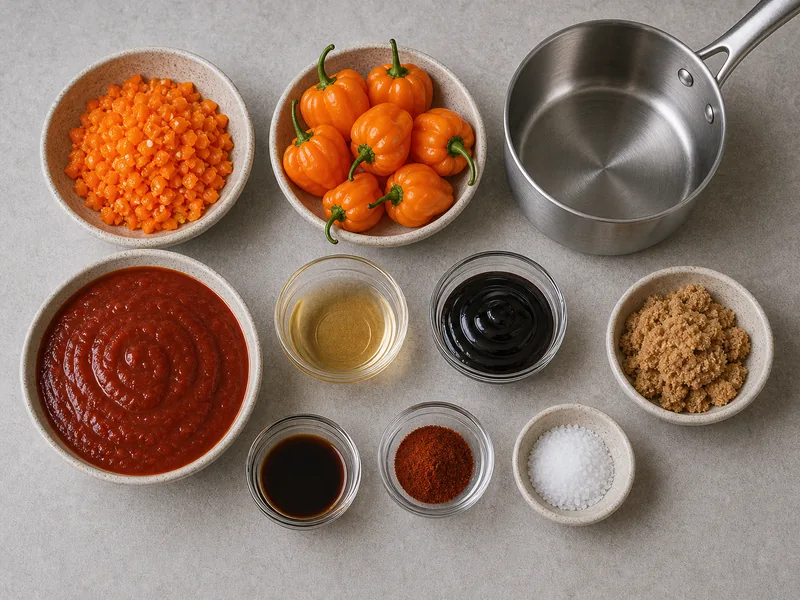
Ingredients
-
1 to 2 habanerosstemmed and seeded for milder heat
-
1 tablespoon neutral oil
-
1/2 cup finely diced yellow onion
-
2 garlic clovesminced
-
3/4 cup tomato sauce
-
2 tablespoons tomato paste
-
1/2 cup apple cider vinegar
-
1/3 cup packed brown sugar
-
2 tablespoons molasses
-
1 tablespoon Worcestershire sauce
-
1 teaspoon mustard powder
-
3/4 teaspoon kosher salt
Full Recipe Instructions
Wear gloves if…
Wear gloves if desired, then stem the habaneros. Seed them for milder heat or leave the ribs in for a hotter sauce.
Warm oil in…
Warm oil in a saucepan over medium heat. Cook onion for 4 minutes, then add garlic and habanero and cook 1 minute more.
Stir in tomato…
Stir in tomato sauce, tomato paste, vinegar, brown sugar, molasses, Worcestershire, mustard powder, and salt.
Simmer uncovered over…
Simmer uncovered over medium-low heat for 22 to 25 minutes, stirring often, until the sauce coats a spoon.
Blend until smooth,…
Blend until smooth, cool for 10 minutes, then taste and adjust with vinegar, salt, or water.