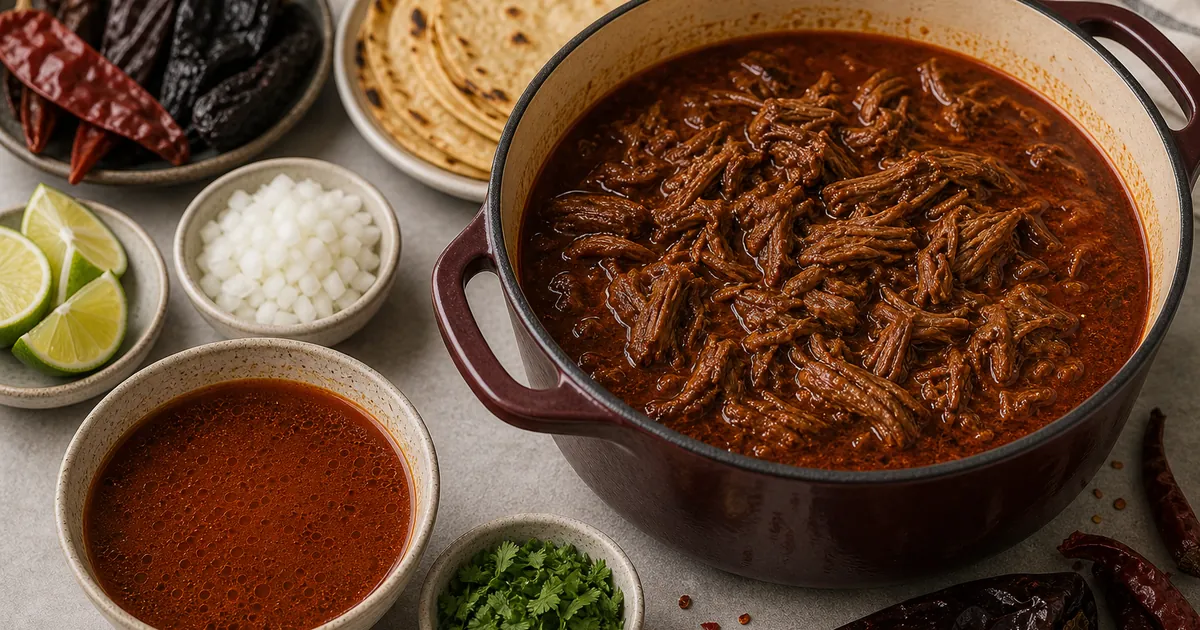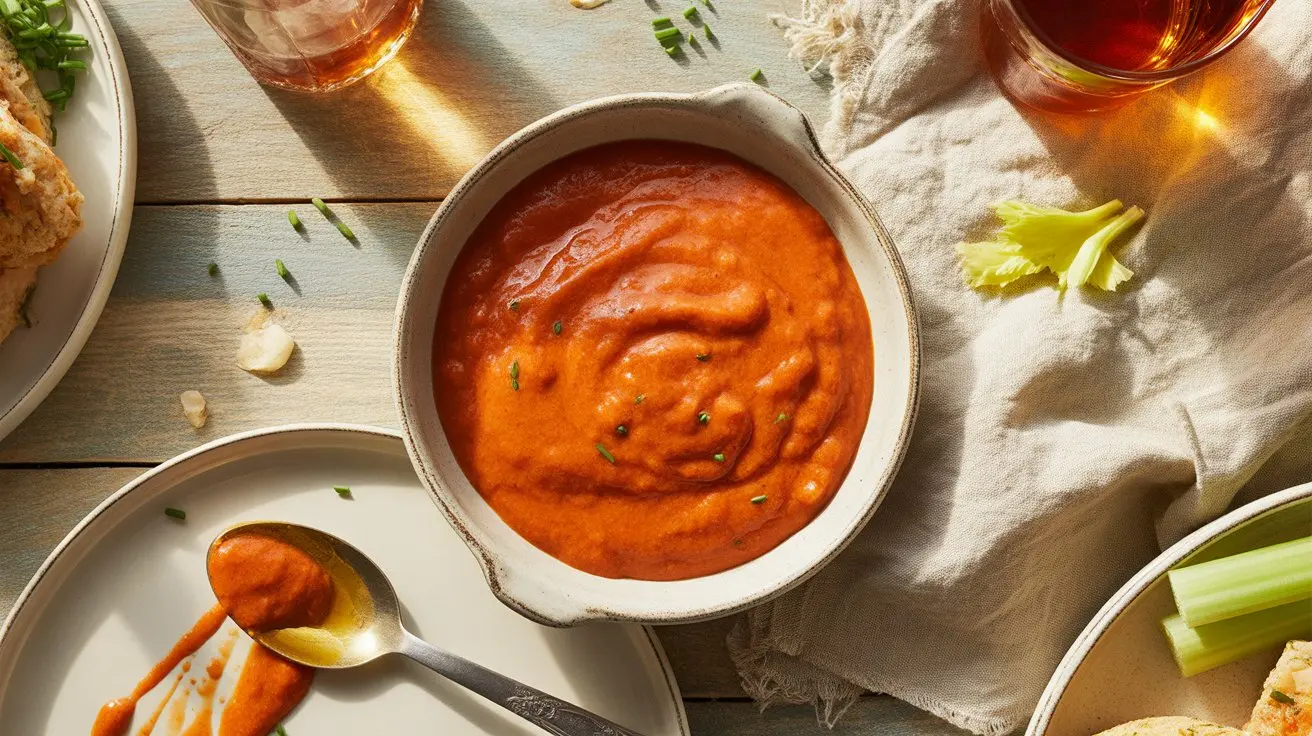

Authentic Enchilada Sauce
Authentic enchilada sauce should start with whole dried chiles, not chili powder roux. Use guajillo for red color, ancho for body, optional pasilla for depth, and fry the strained sauce before coating tortillas.
Authentic red enchilada sauce should start with whole dried chiles. Chili powder can season a quick sauce, but it cannot give the same body as softened chile skin and flesh.
The base answer comes first: use guajillo for red color and clean tang, ancho for dark body, and optional pasilla for a deeper finish. Then strain and fry the sauce before it touches tortillas.
Chile Backbone
Guajillo gives the sauce its red color and light berry-like acidity. Ancho gives raisin sweetness and a thicker mouthfeel.
Pasilla is optional. Use it when you want a darker sauce, but keep it behind the guajillo so the color does not turn muddy. The same dark-fruit behavior drives pasilla chile salsa, but enchilada sauce needs a smoother strain.
This is why the sauce is not just guajillo salsa poured over tortillas. Enchilada sauce needs strainable body, oil frying, and enough thickness to coat.
If a store label is confusing, choose pods by shape and smell. Broad ancho, smooth red guajillo, and long dark pasilla each change the sauce in a different way.
The Mexican dried chile trinity helps when you need to decide which dried chile should lead. Enchilada sauce usually needs more than one note.
Use more guajillo for a lighter red pan. Use more ancho for a darker and sweeter pan. Keep pasilla modest unless the filling can handle deeper bitterness.
Fast Toast
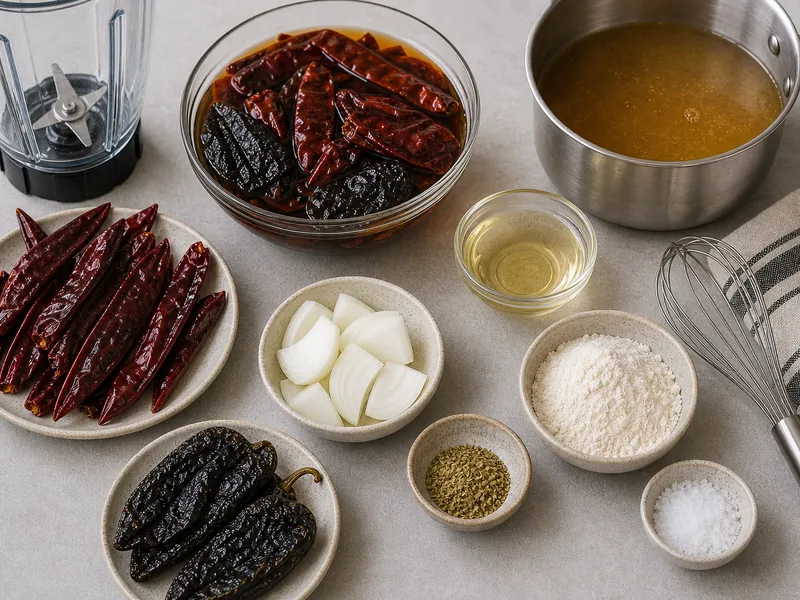
Open the pods, remove stems, and shake out loose seeds. A few seeds are fine, but piles of seeds make the sauce dusty.
Toast each chile for seconds in a dry skillet. Stop when the smell turns warm and the skin bends.
Do not wait for black spots. Burnt dried chile will make the whole pan bitter.
Toast garlic and onion lightly after the chiles, or simmer them with the softened pods. Raw aromatics can make the finished sauce taste sharp.
Set toasted chiles on a plate before soaking. That pause gives you one more chance to smell and reject a scorched piece.
Soak Judgment
Hot water softens the chiles so the blender can work. It also pulls out bitterness from old pods.
Taste the soaking liquid before using it. If it tastes clean, use some. If it tastes harsh, use broth or clean warm water.
The same rule appears in the dried pepper rehydration guide, but enchilada sauce is less forgiving than salsa because the sauce coats every bite.
Do not oversoak until the pods lose all smell. Flexible is enough.
If a pod still feels leathery after the soak, tear it smaller before blending. Large tough strips can wrap around the blades.
Blend And Strain
Blend the softened chiles with garlic, onion, Mexican oregano, cumin, salt, and enough liquid to move the blades.
Strain the puree through a medium sieve. This step removes tough skins and gives the sauce the smooth coating texture enchiladas need.
Press the solids, then stop. Scraping every dry fragment back into the sauce makes the texture sandy.
If the strained sauce looks thin, do not add flour first. Fry it and reduce it, because the chile puree will tighten as water cooks off.
A high-speed blender can reduce straining work, but it does not remove the need to check texture. Enchilada sauce should feel smooth on a tortilla.
Fry The Sauce
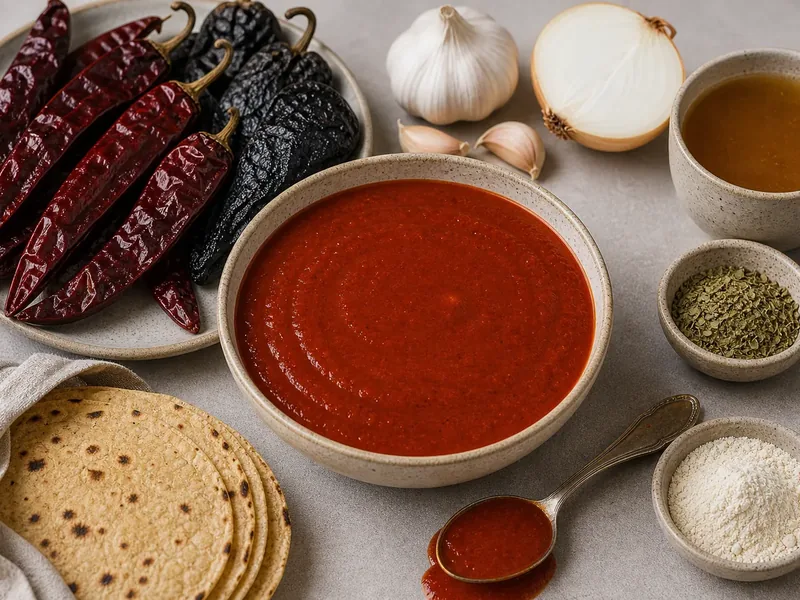
Heat a little oil in the pan, then add the strained sauce carefully. It should sizzle, darken slightly, and smell more rounded.
Frying changes the sauce from raw puree into a coating sauce. It also blooms the dried chile flavor in fat.
Keep the heat moderate and stir often. Scorched chile paste tastes bitter and sticks to tortillas in a rough way.
If you want green tomatillo flavor instead, make green enchilada sauce. Do not force tomatillos into this red dried-chile base.
Frying also shows salt balance. A sauce that seemed fine in the blender can taste flat after oil rounds the chile.
Add salt after the first fry, not before. The sauce reduces as it cooks and can become too salty if you season hard in the blender.
If the sauce splatters, lower the heat and stir from the edge. Thick chile puree can jump when it hits hot oil.
Coating Thickness
The right sauce coats the back of a spoon and falls slowly. It should not sit like paste or run like broth.
Thin sauce makes soggy enchiladas. Thick sauce tears tortillas and clumps in the pan.
Loosen thick sauce with warm broth. Tighten thin sauce by simmering uncovered for a few minutes.
For a darker barbecue-style use of ancho, ancho BBQ sauce uses sugar, vinegar, and tomato in a way this recipe should not.
Pan Workflow
Warm tortillas before dipping so they bend without cracking. A dry, cold tortilla breaks even when the sauce is perfect.
Dip, fill, roll, and sauce the pan with a steady rhythm. If the tortillas sit too long in sauce before filling, they soften too far.
Use less filling than you think. Overfilled enchiladas split and push sauce out of the pan.
The sauce should support the filling, not hide it. Chicken, cheese, beans, and mushrooms all need slightly different sauce thickness.
Cheese enchiladas can handle a thicker sauce. Chicken needs a little more flow so the tortillas do not feel dry.
For bean enchiladas, add a little more acid. Beans mute dried chile brightness faster than cheese or chicken.
Storage Fixes
Red enchilada sauce thickens in the fridge. Reheat it gently with a splash of broth before using leftovers.
If the sauce tastes bitter after resting, add a little tomato, salt, and time on low heat. Sugar can round a small bitter edge, but it cannot fix scorched chiles.
If you need a pantry backup, match the dried chile role first. The guajillo substitute and ancho substitute pages help when one pod is missing.
Freeze in small portions if you cook enchiladas often. Thaw slowly and whisk before judging thickness.
If you use the sauce for chilaquiles, thin it more than you would for rolled enchiladas. Chips soak up sauce faster than tortillas.
If you freeze the sauce, leave room in the container. Dried-chile sauces expand and can crack a full glass jar.
Label the container as sauce, not salsa. It looks similar after freezing, but it needs frying or reheating before it coats tortillas well.
If thawed sauce separates, whisk it warm before judging. The chile solids and liquid often come back together with gentle heat.
Party Timing
For a party tray, make the sauce the day before but roll the enchiladas the day you bake. Sauce improves after resting, while filled tortillas get fragile.
Keep a little extra sauce warm on the side. Dry corners on a baked tray are easier to fix at serving than before baking.
If the sauce thickens while guests arrive, whisk in hot broth by the tablespoon. Cold water can make the chile paste taste flat.
Hold the sauce warm, not boiling. A hard simmer keeps reducing it and can make the last enchiladas taste stronger than the first.
Use a ladle, not a brush, for final saucing. A brush can drag chile skin bits across the tortilla surface.
If you bake with cheese on top, keep some sauce uncovered at the edges. That lets you judge whether the tray is drying before the cheese browns.
Chef's Tip
Taste the soaking liquid before using it. Bitter soaking water makes bitter enchilada sauce.
Ingredients
-
5 dried guajillo chilesstemmed and seeded
-
2 dried ancho chilesstemmed and seeded
-
1 dried pasilla chileoptional
-
2 cups hot waterfor soaking
-
2 garlic cloves
-
1/4 white onion
-
1 teaspoon Mexican oregano
-
1/2 teaspoon ground cumin
-
1 teaspoon kosher saltplus more to taste
-
1 tablespoon neutral oil
-
1 to 1 1/2 cups chicken or vegetable broth
Full Recipe Instructions
Toast opened dried…
Toast opened dried chiles briefly in a dry skillet, just until fragrant and flexible.
Soak the toasted…
Soak the toasted chiles in hot water for 15 minutes, then taste the soaking liquid.
Blend softened chiles…
Blend softened chiles with garlic, onion, oregano, cumin, salt, and 1 cup broth or clean soaking liquid.
Strain the puree…
Strain the puree through a fine sieve, pressing firmly to capture the smooth pulp.
Fry the strained…
Fry the strained sauce in oil, then simmer with enough broth to coat a spoon.