
Sweet Thai Chili Sauce
A Thai-style dipping sauce works when vinegar stays bright, sugar gives shine, and minced Thai chile adds quick heat without turning the jar into syrup.
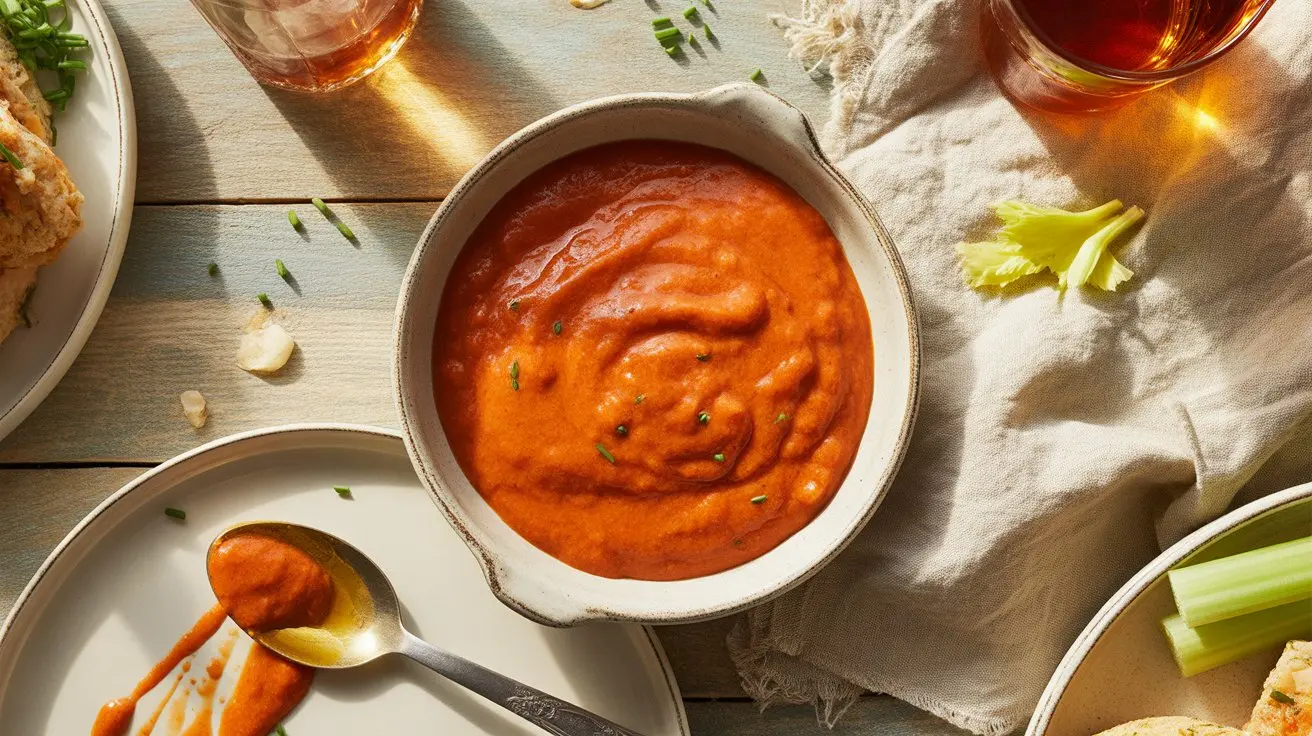
Sweet Thai chili sauce works when the jar is glossy, bright, and spoonable, with Thai chile heat showing up in small sparks instead of taking over. This is the balanced dip-and-glaze version, not sriracha, chile paste, or an extra-hot challenge sauce.
The recipe uses rice vinegar, sugar, water, garlic, minced Thai chiles, fish sauce or soy sauce, and a cornstarch slurry. The useful decision is not whether it should be sweet; it is how far the sweetness can go before the sauce stops tasting like chile.
Base Ratio
The base ratio is easy to remember: equal parts rice vinegar, water, and sugar, with a small chile and garlic dose. That gives enough shine for dipping without making the sauce taste like candy syrup.
We keep the first batch at equal parts because cooling changes the sauce more than people expect. A hot spoonful tastes thinner and sharper; the same sauce tastes sweeter and clings harder after 30 minutes in the fridge.
Thai chiles are small, thin-walled, and direct. The Thai chili profile explains the heat range, but in this sauce the practical point is portion control: three chiles make a gentle table jar, while five chiles are clearly hot.
- 3 chiles: mild enough for spring rolls and grilled chicken.
- 5 chiles: sharper, better for fried food and rice bowls.
- More than 5: make the extra-spicy recipe version instead of forcing this sauce to do two jobs.
Cook First
The first simmer should smell like vinegar, garlic, and fresh chile, not raw sugar. If the pan still smells flat after a few minutes, keep simmering before the slurry goes in.
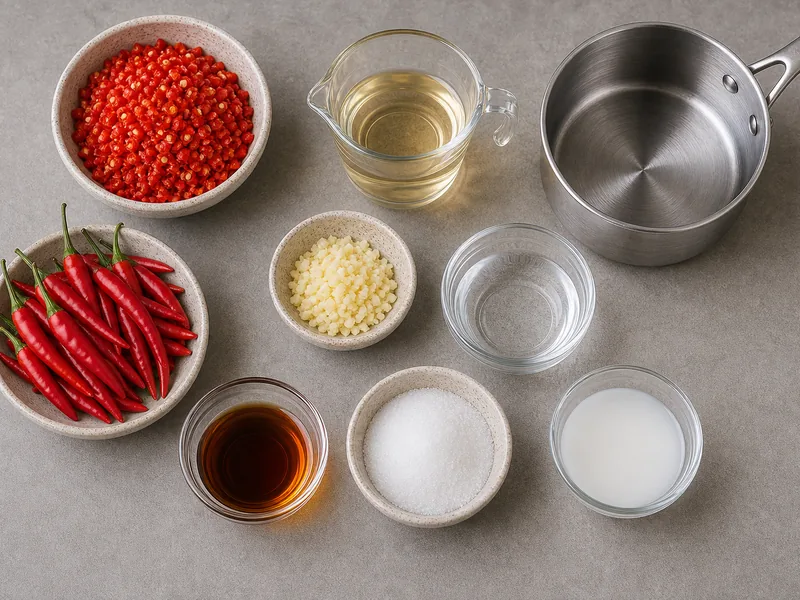
Simmer the vinegar, water, sugar, garlic, chiles, and fish sauce before starch enters the pan. That short cook softens the garlic and lets the chile pieces flavor the liquid.
Use a small saucepan rather than a wide skillet. A wide pan reduces too fast, which pushes the sauce toward candy before the garlic has time to mellow.
If the slurry goes in too early, the sauce thickens before the garlic loses its raw edge. You get a glossy jar that smells sharp in the wrong way.
That timing separates this sauce from Thai chili paste. Paste depends on concentrated chile and aromatics; sweet chili sauce starts with a clear syrup base that carries small chile pieces.
Add slurry in a thin stream
Starch changes the sauce fast, so the heat should be steady rather than roaring. A hard boil can tighten the sauce before you can judge the shine.
Stir the cornstarch with cold water again right before using it, then whisk it into a gentle simmer. A thin stream prevents clear jelly clumps from forming at the bottom of the pan.
The sauce should lightly coat a spoon after 60 to 90 seconds. It will thicken more as it cools, so stop before it looks like bottled glaze in the pot.
For a dipping sauce, drag a finger through the back of the spoon; the line should close slowly, not stay open like jam. For a glaze, stop thinner because heat from grilled chicken, shrimp, tofu, or vegetables will tighten the coating again.
- Cloudy but thin: simmer another 30 seconds.
- Clear and rubbery: the starch cooked too hard or too long.
- Loose after cooling: simmer the next batch longer before adding more starch.
Chile Texture
The cut of the chile changes how each bite feels. Tiny mince spreads heat evenly through the jar; larger flecks make the heat arrive in pops, which is better for dipping but rougher for glazing.
Minced fresh chile gives the sauce its red flecks and quick heat. A food processor can work, but a knife gives cleaner pieces and less watery pulp.
Do not puree the chiles unless you want a cloudy sauce. The visible red pieces help each spoonful taste like sweet chili sauce instead of plain red syrup.
For a smoother jar, scrape out some seeds and mince the chile walls finely. For a hotter spooned sauce, leave more inner ribs and cut the pieces a little larger.
Do not chase heat with dried flakes unless that is the pantry you have. Flakes make the sauce darker and deeper, while fresh Thai chiles keep it bright.
For a cleaner look, remove some seeds after splitting the chiles. For a more rustic dipping sauce, leave them in and accept that heat will vary from spoon to spoon.
Sauce Choice
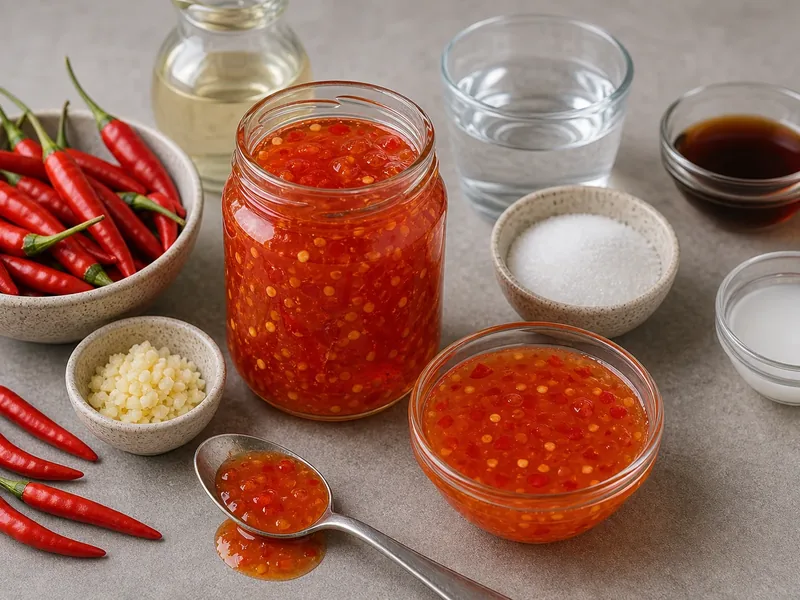
Homemade Thai chili sauce can be a broader table sauce with more savory depth. This recipe is narrower: sweet, glossy, vinegar-bright, and built for dipping or brushing.
Homemade sriracha recipe should taste like red pepper, garlic, and tang in a squeeze line. Sweet chili sauce should fall from a spoon and leave chile pieces behind.
If the reader wants a hotter version with the same dip/glaze texture, extra-spicy sweet chili sauce is the better page for that question. This version stays balanced so the food still tastes like itself.
Texture Uses
The sauce should answer the food in front of it. Fried food wants a thicker dip that clings to crisp edges, while grilled food needs a thinner brush-on layer that will not burn before the meat finishes.
For fried spring rolls, shrimp, chicken wings, egg rolls, and grilled pork, use it cold or room temperature so the gloss stays intact. Heat loosens the sauce and makes the vinegar smell louder.
Fried food stays crisp longer when the sauce sits on the side instead of being tossed early. The starch pulls moisture into breading once it sits, so dunking beats coating for anything crunchy.
For a glaze, brush near the end of cooking. Sugar can brown quickly, so the sauce belongs in the final minutes, not at the start of a grill or oven cook.
We keep one jar slightly loose when it is meant for weeknight cooking. A thicker party dip looks better in a bowl, but a looser sauce is easier to brush onto chicken, tofu, or vegetables.
Check it cold before serving because chilled sauce clings more firmly.
- Dipping: keep the sauce a little thicker.
- Glazing: loosen with a teaspoon of water.
- Rice bowls: mix with lime juice for a sharper drizzle.
- Mayo dips: cool fully before stirring in.
Store Cold
Cold storage also protects the texture. At room temperature the sauce loosens and the garlic gets louder, which makes the same jar taste sharper by the end of dinner.
This is a refrigerator condiment, not a pantry preserve. Cool it for 10 minutes, transfer it to a clean jar, and refrigerate once the jar is no longer hot.
Use within about 2 weeks. The garlic gets stronger, the chile pieces soften, and the starch can tighten, so a splash of hot water is the cleanest fix for a thick jar.
If the sauce smells yeasty, grows mold, or builds pressure, discard it. That is a storage problem, not a flavor adjustment. The same caution behind hot sauce spoilage guidance applies here too.
For serving after refrigeration, stir before judging. Cornstarch settles into a firmer gel at the bottom of the jar, and one good stir often fixes the texture without more water.
Do not freeze this sauce unless you plan to reheat and whisk it. Freezing breaks the starch gel, so a thawed jar can turn watery around the chile pieces.
Ingredients
-
3 to 5 Thai chilesminced
-
1/2 cup rice vinegar
-
1/2 cup water
-
1/2 cup sugar
-
2 garlic clovesminced
-
1 tablespoon fish sauce or soy sauce
-
1 tablespoon cornstarch mixed with 2 tablespoons cold water
Full Recipe Instructions
Combine rice vinegar,…
Combine rice vinegar, water, sugar, garlic, minced Thai chiles, and fish sauce in a small saucepan.
Bring to a…
Bring to a gentle simmer and cook for 7 minutes, stirring until the sugar dissolves and the garlic softens.
Stir the cornstarch…
Stir the cornstarch slurry again, then whisk it into the simmering sauce in a thin stream.
Cook for 60…
Cook for 60 to 90 seconds, until the sauce turns glossy and lightly coats a spoon.
Cool for 10…
Cool for 10 minutes, adjust vinegar or water if needed, then refrigerate in a clean jar.