
Habanero Salsa Verde
This roasted tomatillo verde is built for readers who want green sauce with real C. chinense heat. The method builds body first, then adds habanero in measured stages so the salsa stays bright, spoonable, and distinct from jalapeno salsa verde.
This is a roasted green salsa for people who want tomatillo brightness with real habanero heat. The salsa works only when the tomatillos provide body first and the habanero enters as a measured seasoning, not as the whole base.
It should taste tart, green, and hot in that order. If it tastes like plain habanero puree, the tomatillo structure failed before the pepper ever had a chance to behave.
We also separate pan juice from pulp before blending. Start with the roasted solids, then add juice only after the blades move, because too much liquid early makes the salsa thin and foamy.
If the tomatillos are very tart, roasting the onion a shade darker helps. If they are mild and sweet, use less onion and let lime handle the finish.
Do not add oil to the tray. Oil makes the tomatillos roast slick and can mute the clean green flavor that this salsa needs.
Tomatillo base
Tomatillos are the base ingredient here because they give the salsa its body, acidity, and green color. We roast them until they slump and leak a little juice, then keep that juice because it carries pectin and roasted flavor.
A watery tomatillo tray makes a thin salsa. A tray that roasts until the cut sides brown lightly gives enough concentration to carry a very hot pepper without tasting sharp and hollow.
Use firm tomatillos that fill their husks. Small loose tomatillos can taste fine, but they often release more liquid and need a longer roast.
Garlic and onion should roast beside the tomatillos, not brown hard in a pan. Their job is to soften the green acidity, not make the salsa taste like cooked onion dip.
Habanero heat is also slower than the first spoon suggests. Taste, wait a minute, then decide whether more pepper belongs in the blender.
If you need to serve a wide table, blend the main salsa with half a pod and mince extra roasted habanero into a side dish. Heat seekers can stir it in without taking over the whole batch.
Orange habanero gives the cleanest fruit note. Red savina or chocolate types can taste deeper and hotter, so they need a smaller starting dose.
Measured habanero
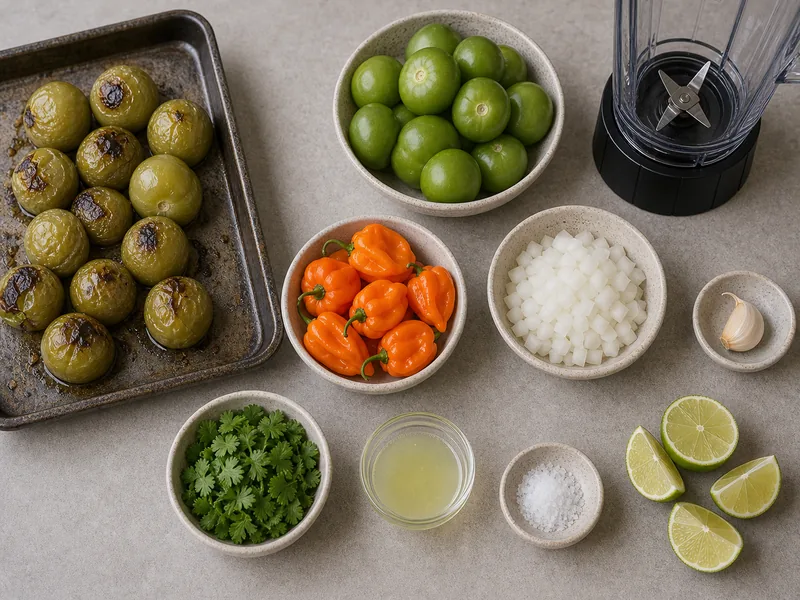
Habanero commonly lands around 100,000 to 350,000 Scoville heat units in New Mexico State University Chile Pepper Institute references. That is far beyond the jalapeno heat band, so this recipe starts with half a pod.
The pale ribs inside the pod carry much of the perceived burn. Scraping them gives you habanero fruit with less delayed sting, while leaving them in makes the salsa feel hotter after the first bite.
We add habanero in stages. Blend half the pod with the roasted base, taste on a chip after the salsa rests, then add more only if the tomatillo still leads.
- Half pod, ribs removed: hot but still table-friendly.
- Half pod, ribs included: clear habanero finish.
- Whole pod: only for people who already like chinense heat.
- Extra pod on the side: safer than overpowering the whole batch.
Green roast?
High heat gives better tomatillo texture than a long slow roast. The goal is blistered spots and collapsed flesh, not dried edges.
Do not roast cilantro. Add it after blending begins so it stays fresh and green.
If the salsa looks brown, the tomatillos roasted too long or the garlic skin burned and got blended in. Peel the garlic after roasting and leave any blackened paper behind.
Water is a last adjustment, not a main ingredient. Add it by the tablespoon only if the blender cannot move.
For a smoother taco salsa, strain only if tomatillo skins feel papery. Straining for looks alone removes body that helps the salsa cling.
For a chip bowl, pulse in cilantro at the end instead of blending it from the start. The green flecks stay brighter and the salsa smells fresher.
For grilled meat, a slightly thinner spoon sauce works better than a chunky dip. The heat spreads across the meat instead of landing in one hot bite.
Three textures
For tacos, blend the salsa smoother so it coats meat, beans, or eggs without dropping large tomatillo pieces. A smooth texture also spreads habanero heat more evenly.
For chips, stop sooner and leave a little body. The salsa should mound lightly on the chip without tasting like puree.
For grilled fish or chicken, thin a small portion with lime juice and saved tomatillo juice. That version behaves more like a spoon sauce and less like a dip.
Do not force one jar to serve every use. Split the batch after blending if you need both a dip and a taco salsa.
Jalapeno boundary
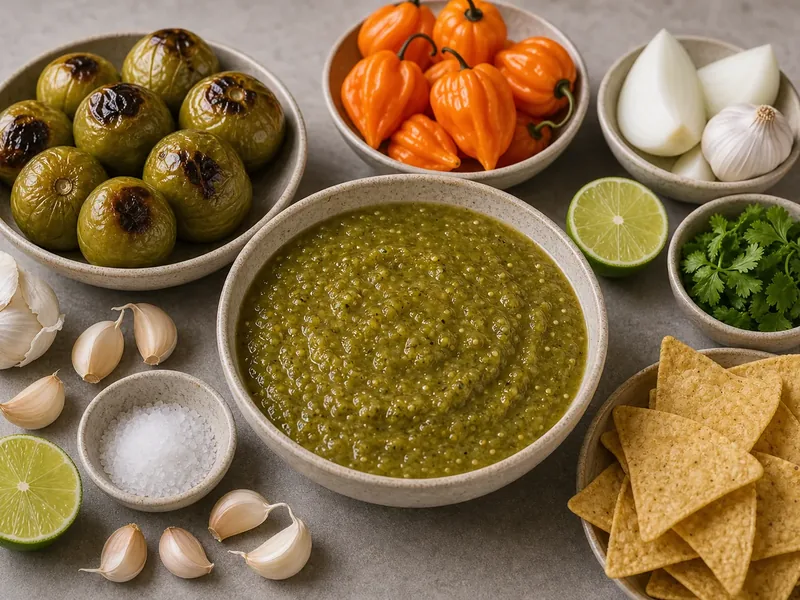
Raw jalapeno salsa verde is brighter, sharper, and more fragile because the tomatillos are not roasted. This roasted habanero version is richer and hotter.
Roasted jalapeno salsa verde is the medium-heat version. It can use more pepper flesh because jalapeno heat is much lower.
Molcajete salsa verde is about crushed texture. This guide is about measured habanero heat in a blended green base.
If the reader wants habanero flavor without a tomatillo salsa, basic habanero hot sauce is the cleaner bottle-sauce choice.
A salty chip changes the tasting read, so test with the food you expect to serve. A salsa that tastes perfect from a spoon can become too salty with chips.
If the salsa is for tacos, taste it on a warm tortilla. Warm corn softens acid and makes habanero fruit taste rounder.
If you plan to serve it cold, make it slightly brighter before chilling. Cold mutes tomatillo aroma and makes the heat feel sharper.
Rest, then season
Freshly blended habanero reads louder in the first few minutes than it does after the tomatillo pulp rests. We wait 10 minutes before the final salt and lime pass, then taste with the chip or taco filling that will carry it.
Salt comes before lime here. Salt makes roasted tomatillo taste fuller, while lime sharpens the edge; reversing that order can make a balanced salsa taste sour before it tastes seasoned.
- Hot but dull: add salt first, rest again, then add lime only if the tomatillo still tastes flat.
- Hot and sour: fold in roasted tomatillo or a tiny pinch of sugar instead of adding more chile.
- Pale and grassy: roast the tomatillos longer next time and pulse cilantro later, after the base is smooth.
- Separated after chilling: stir in reserved tomatillo juice. Reblending can turn a spoonable salsa foamy.
USDA FoodData Central gives useful context for the eating feel: this salsa is built from water-rich produce, not fat or starch. Body comes from roasted tomatillo mass and controlled blending.
For a party bowl, keep the main batch medium-hot and offer minced roasted habanero on the side. That protects the verde flavor while giving heat seekers a clear path.
Buying matters because a weak pod makes people add too much chile. Choose firm orange habaneros with glossy skin; wrinkled pods can still burn, but the fruit note usually fades first.
Keep it verde
The roasted tomatillo base can go in more than one direction, but it should still taste green, tart, and habanero-fruity. We keep a small cup of the unsalted base aside before the final seasoning so adjustments do not push the whole batch off course.
- For tacos: keep the salsa spoonable and a little thicker, since meat juices will loosen it.
- For chips: cool it fully, then salt against the actual chip instead of a spoon.
- For meal prep: hold cilantro back and add it after reheating the food, not before refrigeration.
- For heat seekers: serve minced roasted habanero beside the bowl instead of adding a second pod to everyone's salsa.
- For cooked dishes: use separated leftovers in beans or braises, where texture matters less than flavor.
This is also where the raw jalapeno salsa verde version stays separate. That page should taste brighter and fresher; this one should taste roasted, round, and hotter.
We also keep the raw allium load modest because habanero magnifies sharp edges. A little garlic helps the tomatillo taste savory; too much garlic makes the salsa taste hot and harsh rather than hot and green.
- Orange pod, green bowl: add habanero after the base is roasted so the color stays bright.
- Thick tomatillos: reserve their pan juice and use it for texture corrections.
- Very tart tomatillos: roast longer before reaching for sugar.
Fresh-salsa storage
This is a refrigerator salsa, not a shelf-stable canned salsa. The National Center for Home Food Preservation treats salsa canning as a tested-ratio category because peppers, onions, tomatillos, and acid all affect safety.
Cool the salsa quickly, refrigerate it, and use it within 4 to 5 days. The habanero heat stays clear, but cilantro and roasted tomatillo aroma fade after the first couple of days.
Wear gloves for prep and wash boards, knives, and blender parts carefully. Habanero residue can linger on plastic and surprise the next food that touches it.
If the salsa is too hot after resting, blend in more roasted tomatillo or serve it in smaller spoonfuls over rich food. Do not try to fix a full batch with only lime; acid sharpens heat before it tames it.
Chef's Tip
Start with half a habanero for a mixed table. Add more after the salsa rests.
Ingredients
-
1 lb tomatilloshusked and rinsed
-
1/2 to 1 orange habanerostemmed
-
1/4 white onion
-
2 garlic clovesunpeeled for roasting
-
1/2 cup cilantro leaves and tender stems
-
1 tablespoon fresh lime juice
-
3/4 teaspoon kosher salt
-
1 tablespoon wateronly if needed
Full Recipe Instructions
Roast tomatillos, onion,…
Roast tomatillos, onion, garlic, and habanero until the tomatillos slump and the habanero softens lightly.
Peel the garlic…
Peel the garlic and remove habanero ribs if you want a softer heat.
Blend roasted vegetables…
Blend roasted vegetables with cilantro, lime juice, and salt until spoonable.
Rest 10 minutes,…
Rest 10 minutes, then taste for salt, lime, and heat.
Add water only…
Add water only if the salsa is too thick after resting.