
Fiery Pasilla De Oaxaca Salsa
This smoked chile salsa keeps Pasilla de Oaxaca clean and dark with roasted tomato, brief toasting, careful soaking, and lime.
The goal is clean smoke, not burnt chile. Pasilla de Oaxaca brings a deep campfire aroma, dark fruit, and moderate heat that works best when tomato stays in support.
This recipe is different from standard pasilla chile salsa. Regular pasilla tastes darker and raisin-like; Pasilla de Oaxaca is smoked, so the whole shape of the salsa changes.
Buy for smoke quality before heat level
A good smoked pod smells like dried fruit, wood smoke, and warm chile skin. It should not smell like ash, damp cardboard, or fireplace soot.
Pasilla de Oaxaca is often sold in small bags, and quality swings a lot. Choose pods that still feel pliable at the thick end, with skins that look dark brown to black but not dusty gray.
- Good sign: smoke aroma appears before you open the bag all the way.
- Weak sign: the pod smells only dry and flat, with no fruit behind the smoke.
- Bad sign: sour, moldy, or chemical odors.
That buying choice changes the whole salsa. A stale smoked chile cannot be repaired with more lime because the missing aroma never comes back.
Protect the smoke from bitterness
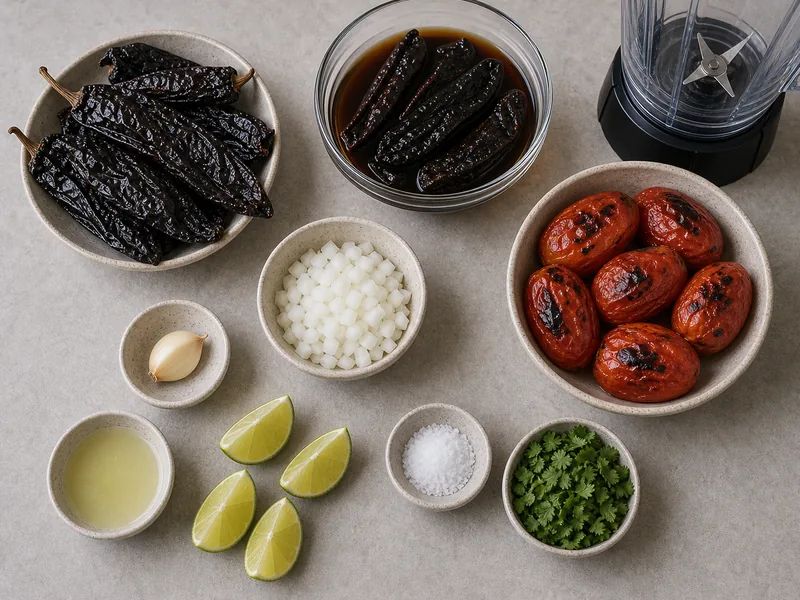
Pasilla de Oaxaca needs less toasting than most dried chiles because it already carries smoke. Ten to 15 seconds per side is often enough.
The goal is to wake the chile, not add another layer of char. If the pan smells acrid, the salsa will taste harsh even after tomato and salt.
- Good toast: flexible chile, glossy skin, warm smoke.
- Bad toast: black spots, dry ash smell, brittle edges.
- Best heat: medium skillet, quick turns, no oil.
Use tongs and keep your face back from the pan. The capsaicin vapor can irritate your throat when dried chiles hit heat.
Soak for texture, not only softness
Soaking gives the blender enough moisture to pull the chile skin into the sauce. A half-soft pod leaves flakes that feel papery.
Taste the soaking water before using it. If it tastes smoky and round, add a small amount to the blender; if it tastes bitter, use fresh hot water.
The rehydrating dried peppers method matters more here than with a mild sauce because the smoked skin is strong. A rushed soak makes the salsa feel rough.
Use garlic and onion as anchors, not rivals
Smoke gets tiring when there is nothing savory under it. Roasted garlic and onion give the salsa a low base note, but they should not turn the bowl sweet or heavy.
We brown the onion cut side down until it smells sweet, then stop before it collapses. Garlic stays in its skin so it softens without burning, which keeps the finished salsa from tasting sharp.
If the first spoon tastes smoky but empty, add a little more roasted onion. If it tastes sweet and muddy, add lime and salt before adding any more tomato.
Roast tomato until it sweetens
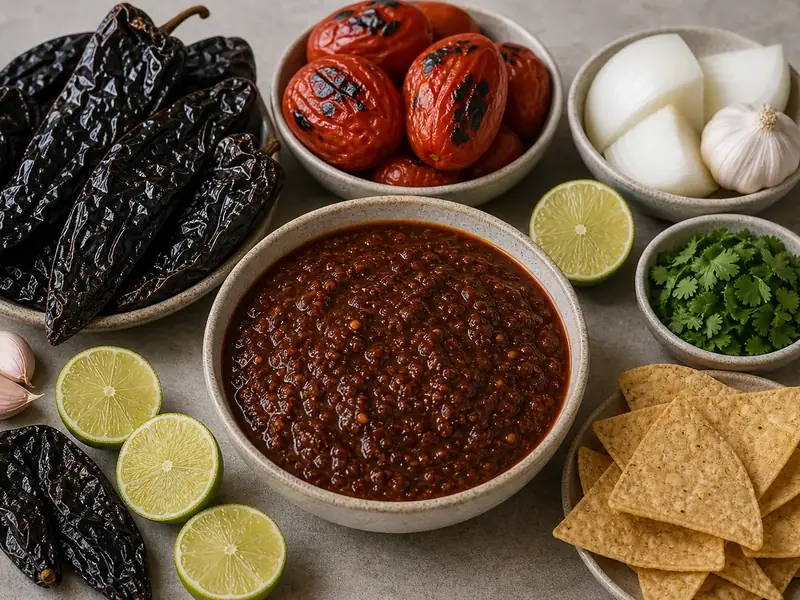
Tomato is the counterweight. It should soften the smoke and give the salsa body without pushing the chile into the background.
Roast the tomatoes until the skins wrinkle and the cut side browns. Raw tomato makes this salsa taste thin, while over-roasted tomato can make the smoke feel muddy.
Onion and garlic should brown at the edge. They are not a sofrito; they are a small sweet base for the chile.
Choose blender speed by skin thickness
Smoked dried chiles can leave tiny skin flakes even after a good soak. High speed fixes that texture, but it can also whip air into the salsa and make the color look gray for a few minutes.
Start on medium until the tomato breaks down, then run high only long enough to smooth the chile skins. Stop, scrape, and taste before adding more liquid.
If the salsa feels gritty after blending, pass only half through a mesh strainer and stir it back into the bowl. Full straining makes the smoke feel thin, while partial straining cleans the texture without taking away the dark body.
- Best texture: smooth enough to coat a spoon, still thick enough to mound slightly.
- Too airy: rest 10 minutes and stir before judging color.
- Too gritty: strain part of the batch instead of flooding it with water.
Blend dark but not muddy
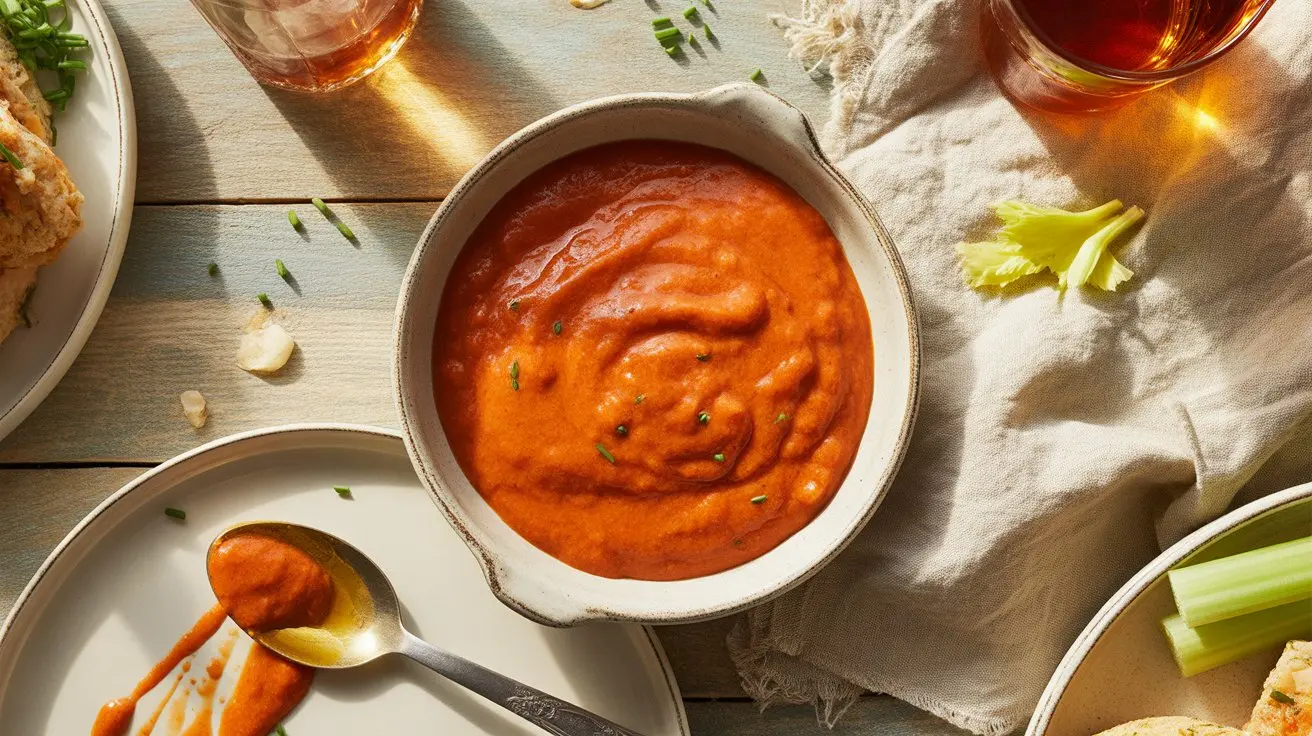
The finished salsa should be dark brick-red or brown-red, depending on the pods. It should look smooth enough for tacos but not shiny like hot sauce.
Start with 1/4 cup liquid. Add more only after the blades catch, because thin smoked salsa can taste hollow.
- Taco texture: loose spoonfuls that spread over meat.
- Dip texture: thicker, with a little tomato pulp left.
- Marinade texture: thinner, with extra water and salt checked again.
Rest the salsa 10 minutes before the final adjustment. Smoke moves forward as the sauce cools, so a hot blender taste can fool you.
Pair it with foods that can carry smoke
This salsa is strongest on foods with fat, starch, or char. It works on grilled mushrooms, black beans, eggs, roasted squash, pork, or a corn tortilla with melted cheese.
It is less useful as a bright chip dip because the smoke can dominate a plain chip after three bites. For a snack bowl, thin it slightly and add more lime so the finish clears faster.
Use small spoonfuls at first. The NMSU Chile Pepper Institute heat context helps with burn, but smoke intensity is not measured in SHU, so tasting in the final dish matters more than the number.
Keep it separate from chipotle salsa
Both chipotle and Pasilla de Oaxaca bring smoke, but they do not fill the same job. Chipotle meco salsa tastes sharper and more jalapeno-like under the smoke.
Pasilla de Oaxaca is earthier and less sweet. It belongs with barbacoa, grilled mushrooms, black beans, roasted squash, eggs, and tortillas warmed on a comal.
If a dish already has tomato sauce, use a small spoonful as a smoky accent. If the dish is plain grilled meat, use a heavier spoonful and let the salsa carry the plate.
Salt smoke with more restraint than fresh salsa
Smoked chile makes salt feel stronger because the aroma already reads savory. Add salt in small rounds, then wait a minute before tasting again.
If you salt hard too early, the salsa can taste like smoked broth instead of chile. Lime can brighten that mistake, but it cannot remove the extra salt.
Use the tortilla test for final seasoning. Spoon a little salsa on a warm corn tortilla, then taste. If it wakes up the corn without making the smoke taste salty, the bowl is ready.
Use heat as a background rumble
The NMSU Chile Pepper Institute lists chile heat by capsaicin concentration, but the eating experience also depends on smoke, fat, and acid. This salsa can feel hotter with chips than with beans or meat.
For a hotter batch, add one or two toasted chile de arbol pods. Do not over-toast the Pasilla de Oaxaca just to force heat, because bitterness will arrive before useful fire.
- More heat: add chile de arbol or keep more seeds from the smoked pods.
- Less heat: use more roasted tomato and serve with fatty food.
- More smoke: add another Pasilla de Oaxaca, not smoked paprika.
Let the salsa cool before final judgment
Warm smoked salsa tastes louder and rougher than chilled salsa. After blending, rest it until the steam is gone, then taste for lime, salt, and water.
If it thickens into a paste, loosen with a spoonful of clean soak liquid or warm water. If it separates into water and pulp, blend 10 seconds more and add a little tomato flesh.
NCHFP storage guidance is the boundary here: this is a fresh refrigerated salsa unless you use a tested canning formula. The smoke does not make it shelf-stable.
Store it like a fresh salsa
Move the cooled salsa to a clean jar and refrigerate it. The smoke stays strongest for the first 2 days, then softens.
NCHFP-tested salsa canning formulas control acid for shelf storage. This recipe uses lime or vinegar for flavor balance, so it should not be treated as shelf stable.
Freeze extra salsa in small portions if needed. The thawed texture loosens, but it still works in beans, soups, braises, and breakfast tacos.
Smoke should arrive before acid, but acid should clean the finish. If the salsa tastes smoky for too long after swallowing, add lime by the quarter teaspoon and taste with food, not straight from the spoon.
For a hotter bowl, add a toasted de arbol pod instead of over-toasting the Pasilla de Oaxaca. That keeps the smoked chile clean while giving the burn a clearer edge.
Fix the batch by separating smoke, acid, and salt
A bitter salsa needs tomato first. Add one roasted Roma tomato, blend, then retaste before adding acid.
A flat salsa usually needs salt. Smoked chiles can taste big but dull until salt makes the fruit and smoke separate.
- Too smoky: add roasted tomato and a squeeze of lime.
- Too sour: add a pinch of sugar only at serving.
- Too thick: add warm water one spoonful at a time.
- Too thin: rest it, then blend in more roasted tomato pulp.
The next batch starts with the toast. Pasilla de Oaxaca is already smoked, so restraint is the technique.
Ingredients
-
1 oz dried Pasilla de Oaxaca chilesstems removed
-
3 Roma tomatoesroasted
-
1/4 white onionroasted
-
1 garlic cloveroasted in its skin
-
1 tablespoon lime juice or cider vinegar
-
3/4 teaspoon kosher salt
-
1/4 cup hot soaking waterplus more as needed
Full Recipe Instructions
Toast the Pasilla…
Toast the Pasilla de Oaxaca chiles for 10 to 15 seconds per side, just until fragrant.
Soak the toasted…
Soak the toasted chiles in hot water for 15 minutes until soft.
Roast tomatoes, onion,…
Roast tomatoes, onion, and garlic until the tomato skins wrinkle and the onion browns at the edge.
Blend drained chiles,…
Blend drained chiles, roasted vegetables, lime juice or vinegar, salt, and 1/4 cup soaking water.
Rest 10 minutes,…
Rest 10 minutes, then adjust with salt, acid, or a spoonful of soaking water.