
Garlic Habanero Hot Sauce
Garlic habanero hot sauce should taste savory first, then fruity-hot. Soften the garlic without browning it, add habanero after the base has shape, keep oil out of the bottle, and adjust acid after blending.
Garlic habanero hot sauce should taste savory before it tastes sweet. The garlic leads the bottle, and habanero brings fruit heat after the base has shape.
The key is soft garlic, not browned garlic. Browned garlic can taste good in food, but it makes this sauce muddy and bitter in a small bottle.
Soft Garlic
Use several cloves, then cook them gently with onion and a little water. The cloves should soften and smell sweet.
Do not let them brown. Once garlic turns dark, the sauce moves toward roasted bitterness instead of clean savory heat.
If the pan dries out, add water by the spoonful. Oil is not the fix because oil changes the sauce texture and storage behavior.
This separates the recipe from simple habanero hot sauce, where fruit and raw brightness carry more of the flavor.
Slice thick garlic cloves before cooking so they soften at the same pace as onion. Whole cloves can stay hot and raw in the center.
If the garlic is old and sprouted, remove the green shoot. It can taste sharp and make the sauce seem harsher.
Do not use pre-minced jarred garlic for this bottle. It often tastes sour before the habanero even enters the pan.
Habanero Timing
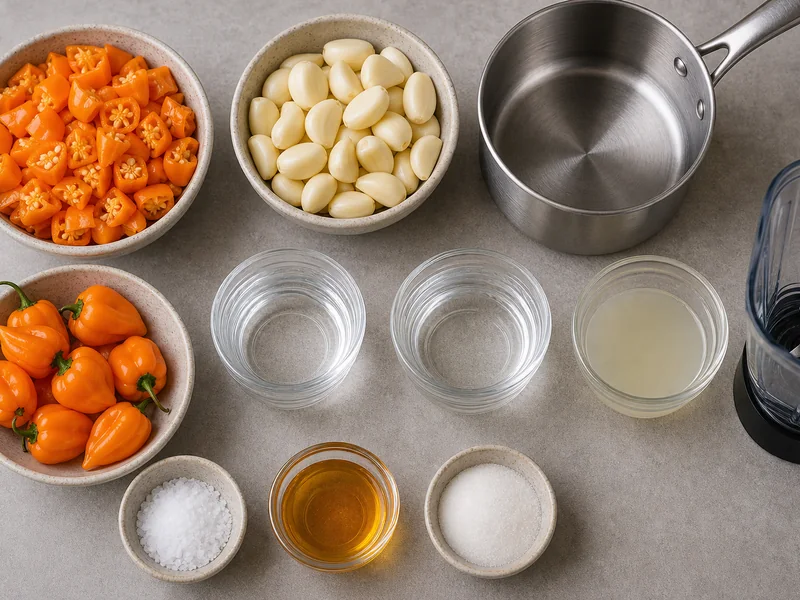
Add chopped habanero after the garlic and onion have softened. The pepper needs enough heat to soften, but not a long boil.
Wear gloves before cutting the pods. Habanero oil spreads easily, and the cleanup guidance in pepper burn treatment matters if you touch your eyes or face.
Use fewer pods for a garlic-forward bottle and more for a chile-forward bottle. The garlic stays the same, but the heat target changes.
If you want a lower, greener burn, compare the choice in habanero versus serrano before swapping peppers.
Use ripe orange habaneros for the cleanest fruit note. Green habaneros can work, but they push the bottle toward sharper vegetable flavor.
Cut the pods into similar pieces so they soften evenly. Uneven chunks can leave tough skins in the blender.
If you want visible orange color, avoid dark vinegar and heavy spices. Garlic already makes the sauce savory.
Acid Layers
White vinegar keeps the bottle sharp and clean. Apple cider vinegar adds roundness, but it can make the garlic taste sweeter.
Add part of the vinegar before blending and part after blending. That lets you control the finish instead of locking in too much acid early.
Lime can brighten the last taste, but it should not carry the whole sauce. Long storage favors vinegar more than fresh citrus.
If the sauce tastes harsh, add salt and a spoonful of cooked onion before adding sugar. Sugar hides heat faster than it fixes balance.
If the garlic tastes heavy, add a small splash of vinegar and wait. Acid can lift garlic, but too much turns the sauce into pickled heat.
Blend Texture
Blend warm sauce until the garlic disappears. A narrow bottle needs a smoother blend than a spooned jar.
Strain only if the habanero skins stay rough. Straining gives a cleaner pour, but it also removes some pepper solids.
If the sauce is too thin, simmer it after blending. If it is too thick, loosen it with water first, then correct salt and vinegar.
Do not add raw garlic after blending. Raw garlic gets louder in the fridge and can take over the bottle.
For a polished bottle, strain once and bottle while the sauce is still warm. For a spooned jar, keep more pulp and use a wider mouth.
Let the blender run long enough for the garlic to emulsify into the liquid. Grainy garlic makes the sauce feel unfinished.
Heat Balance
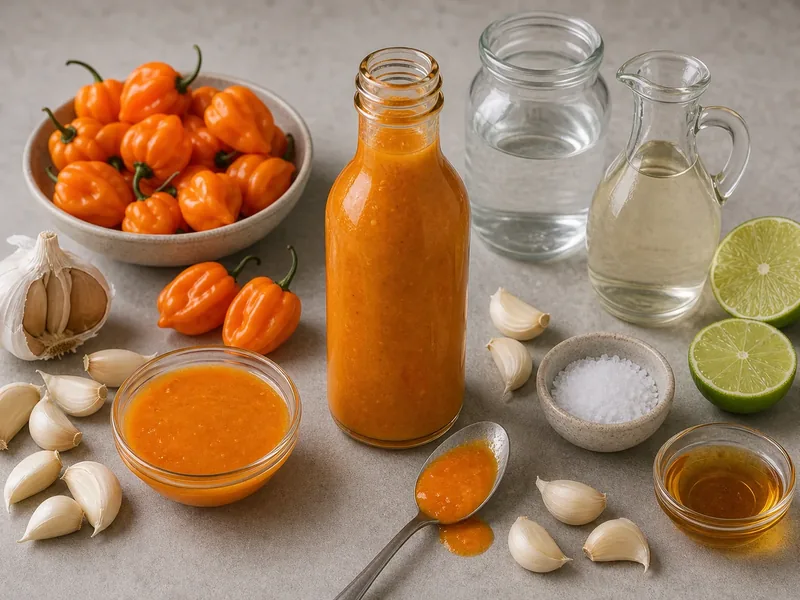
Habanero heat blooms after a few seconds, so taste on food and wait. A spoonful from the blender can mislead you.
If the sauce is too hot, blend in more softened garlic and onion. If it is too mild, add a small piece of cooked habanero and blend again.
Use the habanero substitute guide only when the fruit heat matters less than the overall bottle. Scotch bonnet and Fresno do different work.
For a sweeter cooked use, habanero BBQ sauce handles sugar and smoke better than this lean garlic bottle.
If you need to lower heat without losing garlic, make a second garlic-onion base and blend the hot sauce into it slowly.
If the sauce tastes sweet but still burns too hard, dilution is the only real fix. More sugar will make the bottle sticky before it makes it balanced.
Best Uses
Use this sauce on eggs, grilled chicken, roast vegetables, beans, pizza, and fried potatoes. Garlic makes it feel more savory than a plain habanero sauce.
It can overpower raw seafood, fruit salsa, or delicate salads. Those foods need a brighter, less garlicky heat.
For a green tomatillo dish, habanero salsa verde is a better match. Its acid comes from tomatillo, not a garlic-vinegar bottle.
If you want a sharper green bottle beside it, serrano hot sauce gives a cleaner and less fruity burn.
Use this sauce on food that can take garlic. It is less useful in dishes where fresh herbs or citrus need to stay delicate.
Next-Day Read
Garlic gets stronger after a night in the fridge. Taste again the next day before deciding the batch is too mild.
If the sauce tastes flat, add salt. If it tastes sharp, add a spoonful of cooked onion or a little water.
If garlic turns harsh, use the sauce in cooked food instead of adding more acid. Heat can soften the edge in beans or a pan sauce.
Keep the bottle refrigerated and discard it if it grows mold, smells off, or builds gas. The warning signs in hot sauce storage guidance still apply.
Small bottles work better than one large jar. You open each bottle fewer times, and the garlic aroma stays cleaner.
Use a clean spoon or pour directly. Dipping cooked food into the bottle can shorten storage life.
If the sauce thickens after chilling, shake it before adding water. Garlic pulp settles and can make the top look thinner than the bottom.
For repeat batches, write down garlic weight, not just clove count. One large clove can equal two small ones, and garlic strength changes the whole bottle.
If the next batch tastes sharper with the same clove count, cook the garlic longer at lower heat before blaming the habanero.
Chilled Texture
For a thinner table sauce, strain after chilling instead of before chilling. Cold sauce shows whether the garlic pulp is actually a problem.
For a thicker spoon sauce, keep the pulp and use a jar. The texture suits bowls, grilled meat, and roasted vegetables better than a narrow bottle.
If the sauce separates, shake once and then judge. Garlic pulp can settle under a thin top layer.
If shaking fixes it, leave the recipe alone and keep the same blend time next batch. If it separates again within minutes, blend longer next time before straining.
Do not add oil to smooth the bottle. Oil makes storage harder and changes the sauce into a different condiment.
If you want a glossy finish, strain more carefully instead of adding fat. A clean strain keeps the sauce bright and pourable without dulling the garlic.
Chef's Tip
Do not brown the garlic. Soft garlic tastes round; browned garlic can turn bitter in a hot sauce.
Ingredients
-
2 to 4 orange habanerosstemmed
-
5 garlic clovespeeled
-
1/4 cup chopped white onion
-
1/2 cup white vinegar
-
1/4 cup water
-
1 tablespoon fresh lime juice
-
3/4 teaspoon kosher salt
-
1 teaspoon honeyoptional
Full Recipe Instructions
Simmer garlic, onion,…
Simmer garlic, onion, vinegar, water, and salt for 5 minutes, until the garlic softens.
Add habaneros and…
Add habaneros and simmer 3 to 4 minutes more without boiling hard.
Blend with lime…
Blend with lime juice until smooth.
Taste for salt…
Taste for salt and add honey only if the sauce needs rounding.
Bottle cleanly, cool,…
Bottle cleanly, cool, and refrigerate.