
Spicy Red Pepper Jam
This chunky red pepper jam balances bell pepper pulp, Fresno heat, vinegar, sugar, and pectin for a glossy refrigerator spread.
This jam sets because the fruit, sugar, vinegar, and pectin are measured as a system. Red bell pepper gives glossy body, while Fresno adds medium red heat that stays friendly enough for cheese boards, burgers, and grilled meat.
We keep the batch chunky because the pepper pieces are the point. This is not a clear jelly and not the same page as jalapeno jelly.
Cut for jam texture before you think about heat
The knife work decides whether the jar looks generous or watery. Fine dice gives suspended pepper pieces; large chunks drop through the syrup and make the spoon feel uneven.
We use red bell for most of the volume because it has thick walls, bright color, and enough natural sweetness to support vinegar. Fresno should be smaller and sharper in the mix, so each bite gets heat without turning the jar into hot sauce.
- For a smoother spread: pulse half the peppers and dice the rest.
- For visible pieces: dice everything small and keep the boil active.
- For less heat: remove Fresno ribs, then taste after cooking before adding flakes.
Choose the storage method before chopping
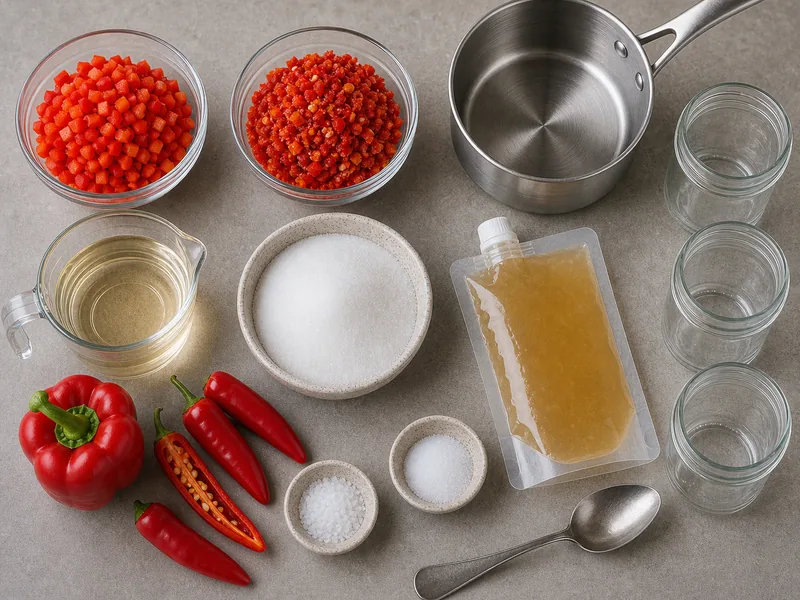
Storage comes before heat adjustment. A refrigerator jam gives you room to tune heat and texture, but a shelf-stable jar needs a tested canning process.
NCHFP canning guidance matters here because peppers are low-acid vegetables. Vinegar in the pot helps flavor and set, but safe shelf storage depends on the full tested formula.
If you are not following a tested water-bath recipe, cool the jars and keep them in the refrigerator. That boundary keeps this recipe useful without pretending the acid math is optional.
Use red bell for body and Fresno for heat
Red bell pepper supplies sweetness, color, and pulp. Fresno brings the warm red chile flavor that makes the jam spicy instead of just sugary.
The Fresno pepper usually sits in the same medium-heat neighborhood as jalapeno, but ripe red pods taste fruitier. The NMSU Chile Pepper Institute range for jalapeno-type peppers helps explain why one cup of Fresno can feel gentle in jam but sharp raw.
- Milder jam: remove most Fresno ribs and keep the red bell amount high.
- Hotter jam: keep some ribs or replace 1/4 cup bell pepper with extra Fresno.
- Cleaner color: avoid green peppers, which dull the red jar.
Do not puree the peppers. Tiny pieces suspend better than big cubes, but puree turns the jam cloudy and makes the set feel pasty.
Read pectin instructions as part of the recipe
Commercial pectin is not one generic ingredient. Some boxes are written for full sugar, some for low sugar, and some need calcium water or a different order of mixing.
Use the pectin type named in your pantry and follow its timing. If the label says to boil fruit and acid before sugar, do that; if it says to mix pectin with sugar first, skipping that step can make clumps that never dissolve.
USDA FoodData Central shows bell peppers are mostly water, which is why the set needs pectin and a hard boil. The pepper is flavor and pulp; the gel structure comes from acid, sugar, pectin, and evaporation working together.
Measure sugar and vinegar like structure
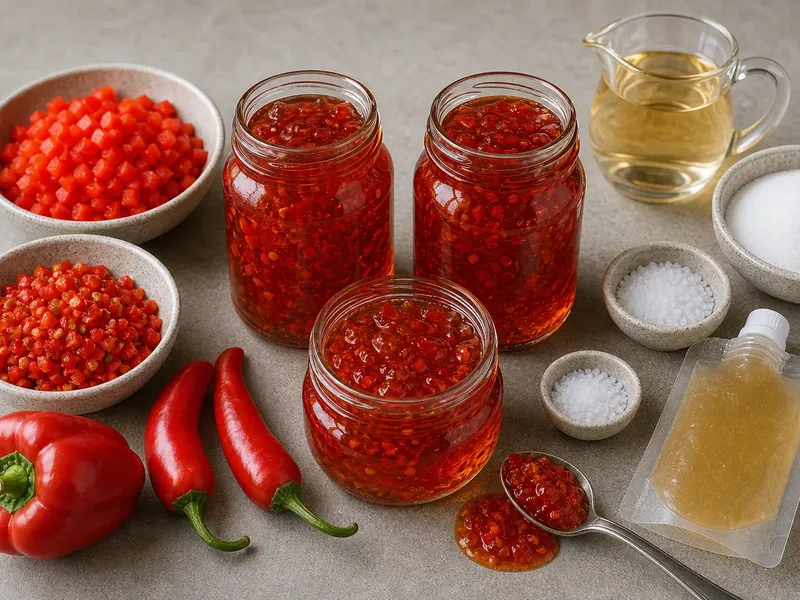
Sugar is not only sweetness in this recipe. It helps pectin set, gives the jam shine, and keeps the pepper pieces from tasting like boiled relish.
Apple cider vinegar brings the acid line. It should taste present but not harsh, because the jam will be eaten in small amounts with salty or fatty food.
USDA FoodData Central lists peppers as mostly water, which is why a loose pepper measure can change the set. Finely chopped peppers should be packed into the cup without being crushed into juice.
Use pot width to control the finish
A wide pot cooks off water quickly and keeps the red pepper flavor brighter. A narrow pot needs more time, which darkens the sugar and makes the jam taste heavier.
Choose a pot with enough headroom for a hard boil. Pepper jam foams when sugar and pectin hit full heat, and stirring space matters more than a neat fill line.
Skim only heavy foam. A few small bubbles settle as the jam cools, but a thick cap of foam traps pepper bits and makes the jar look cloudy.
- Wide pot: faster set, fresher pepper flavor, more stirring surface.
- Narrow pot: slower set, darker syrup, easier boil-over risk.
- Too much foam: lower heat for a moment, stir through the center, then return to a hard boil.
Boil in two different phases
The first boil cooks the peppers with vinegar, sugar, and salt. This softens the skins and drives off enough water to help the final set.
The second boil starts after liquid pectin goes in. That boil should be hard, active, and timed for 1 full minute.
- Before pectin: stir often and watch that sugar does not scorch at the edge.
- After pectin: boil hard and do not wander away.
- Foam control: skim lightly, but do not stir so much air into the jam that it clouds.
If the pot only simmers after pectin, the finished jars often stay loose. A hard boil is not a style choice here; it is the set step.
Keep pepper pieces suspended
Floating pepper usually means the pieces were too large, the jam was jarred too hot and thin, or the batch did not rest before the jars were moved.
Cut the peppers fine, then give the jam a short off-heat pause after boiling. Stir gently once the bubbles calm down so the pieces distribute before ladling.
A little float is normal in a chunky jam. A full pepper cap at the top means the chop or set needs work next time.
Check the set with a cold plate, not panic
Hot jam always runs looser than cooled jam. Put a small plate in the freezer before cooking, then drop a teaspoon of jam on it when the boil looks glossy.
After one minute, push the drop with your finger. A soft wrinkle means the jam will spread; a loose puddle means it needs more boiling; a rubbery mound means it went too far and will need a warm spoon to serve.
Do not keep boiling just because the pot looks thin while hot. Pepper jam thickens as it cools, and overcooking dulls the fresh red pepper flavor before it fixes a set problem.
Serve it where sweetness needs salt
This jam is strongest with salty, creamy, or grilled food. Spoon it over cream cheese, sharp cheddar, pork chops, turkey sandwiches, breakfast sausage, roasted carrots, or cornbread.
It also works as a glaze, but add it late. Sugar burns quickly on a grill, so brush it on during the last few minutes rather than at the start.
For a clearer, more classic pepper jelly texture, use pepper jelly recipe instead. This guide is for chunk, red pepper aroma, and spoonable heat.
Let sweetness settle before adding more chile
Freshly cooked jam tastes hotter and sweeter than it will after chilling. Heat, sugar, and vinegar separate in your mouth while the syrup is still warm.
Cool a spoonful before adding flakes or minced chile. If the cold spoon tastes sweet first and warm second, the balance is right for cheese and meat. If it tastes sugary with no finish, add heat in tiny amounts and simmer only long enough to distribute it.
Do not add raw pepper after the set is finished. It releases water into the jar and gives a raw bite that does not match the cooked fruit base.
Adjust heat without breaking the set
Heat control belongs in the pepper prep, not in the pectin ratio. The capsaicin that makes chiles hot sits mostly in the pale inner membrane, not just the seeds.
For safer handling, wear gloves while chopping Fresno peppers and wash the board before touching your eyes or face. Our pepper burn guide covers the same capsaicin cleanup problem in more detail.
- Too mild: add minced hot red chile in the next batch.
- Too hot: serve with cream cheese or mix into a larger glaze.
- Too sweet: add lemon juice at serving, not extra vinegar in sealed jars.
Keep the jar useful after opening
For refrigerator storage, use clean jars and leave room for the jam to expand slightly as it cools. Once opened, keep the rim clean so sugar crystals and pepper bits do not glue the lid shut.
Serve with a clean spoon instead of dipping crackers or meat into the jar. That small habit matters because this version is written as a refrigerator recipe, not a shelf-stable canning process.
A small jar is easier to use than one large jar because sugar crystallizes around the rim after repeated openings. Several small jars also let you keep one mild and stir extra heat into another after cooling.
Read the set after it cools
Do not judge the jam from the hot spoon. Pectin firms as the jar cools, and a warm batch can look runny even when it will set.
If the cooled jam is loose, use it as a glaze or spoon sauce instead of reworking it blindly. Reboiling can darken the pepper and make the sugar taste cooked.
The best fix is process control in the next batch: smaller pepper chop, fresh pectin, full sugar measure, and a hard 1-minute boil after pectin.
Ingredients
-
2 cups finely chopped red bell peppers
-
1 cup finely chopped Fresno peppersribs adjusted for heat
-
1 1/2 cups apple cider vinegar5% acidity
-
5 cups granulated sugar
-
1 pouch liquid pectin3 oz
-
1/2 teaspoon kosher salt
-
1 teaspoon lemon juiceoptional for brightness
Full Recipe Instructions
Prepare clean jars…
Prepare clean jars and lids, and decide whether the batch will be refrigerated or processed with a tested canning method.
Finely chop the…
Finely chop the red bell and Fresno peppers, keeping the pieces small but not pureed.
Boil peppers, vinegar,…
Boil peppers, vinegar, sugar, and salt for 8 to 10 minutes, stirring often.
Stir in liquid…
Stir in liquid pectin and boil hard for 1 minute.
Ladle into jars,…
Ladle into jars, rest until set, and refrigerate unless using a tested water-bath process.