
How to Store Poblano Peppers by Roasting and Freezing
Store fresh poblanos dry and chilled when you will cook them within about a week. For a bigger batch, roast, steam, peel, flatten, and freeze them in labeled packs. That keeps the pepper useful for rajas, sauces, soups, chile relleno filling, and quick weeknight meals.
Best answer. Store fresh poblano peppers dry in the refrigerator if you will use them within about a week. For longer storage, roast, steam, peel, and freeze them flat so the peppers are ready for sauces, rajas, soups, and fillings.
Poblanos are not jalapenos with a wider body. Their broad walls, roasting skin, and common link to dried ancho chiles make the best storage path different.
Our default move is simple. Keep three or four firm pods fresh for the week, then roast the rest before they wrinkle. Future meals get better when the freezer bag already holds peeled strips.
Choose fresh or roast freeze
The first decision is whether you need raw structure or cooked poblano flavor later. Raw fresh poblanos can hold shape for stuffing, while roasted frozen poblanos give faster flavor in cooked dishes.
Poblano peppers profile usually sit in the mild to medium range, but storage is about wall texture more than heat. Wide pods bruise, crease, and soften when they sit too long in a wet bag.
| Need later | Best method | Prep now | Best use |
|---|---|---|---|
| Whole stuffed pods | Fresh fridge storage | Keep dry and unwashed | Chile relleno style dishes |
| Fast cooked strips | Roast and freeze | Peel, seed, flatten | Rajas, tacos, eggs |
| Sauce base | Freeze roasted pieces | Pack in meal portions | Soups, salsa, enchilada sauce |
| Dried chile flavor | Ripen and dry | Use fully red ripe pods | Ancho-style sauces |
This guide focuses on preserving poblano texture and roasted flavor before the pods collapse, with general pepper storage handled separately.
Fresh poblanos need airflow
Fresh poblanos keep best when they are dry, cool, and protected from bruising. Do not wash them before storage unless dirt must come off right away.
Use a loose produce bag, a paper towel lined container, or the crisper drawer. The goal is to slow water loss without trapping wetness against the skin.
A poblano with a shallow wrinkle can still roast well. A poblano with soft sunken patches, leaking spots, or mold around the stem should not go into the storage pile.
If you are growing your own, the harvest timing in growing poblano peppers affects storage. Firm green pods hold better than overripe pods that already feel loose under the skin.
Store poblanos in a single layer when you can. Their shoulders dent easily, and those dents become the first soft spots after a few days.
If the market packed them in a tight plastic bag, open it when you get home. Dry the outside of any damp pod before it touches the rest of the batch.
Roast before freezing
Roasting before freezing solves two problems at once. It removes the tough skin and changes the pepper into the form most poblano recipes actually need.
Char the skins under a broiler, over a flame, or on a hot grill, then steam the pods in a covered bowl or towel. When cool enough to handle, peel, stem, seed, and open each pepper into flat pieces.
Flat packs freeze faster and thaw faster. Put waxed paper between layers if you want individual pieces, or pack strips by the cup for quick rajas.
The same roasting logic connects to our broader roast peppers method. For poblanos, the roast is not just flavor. It is the storage prep.
Pack by future dish
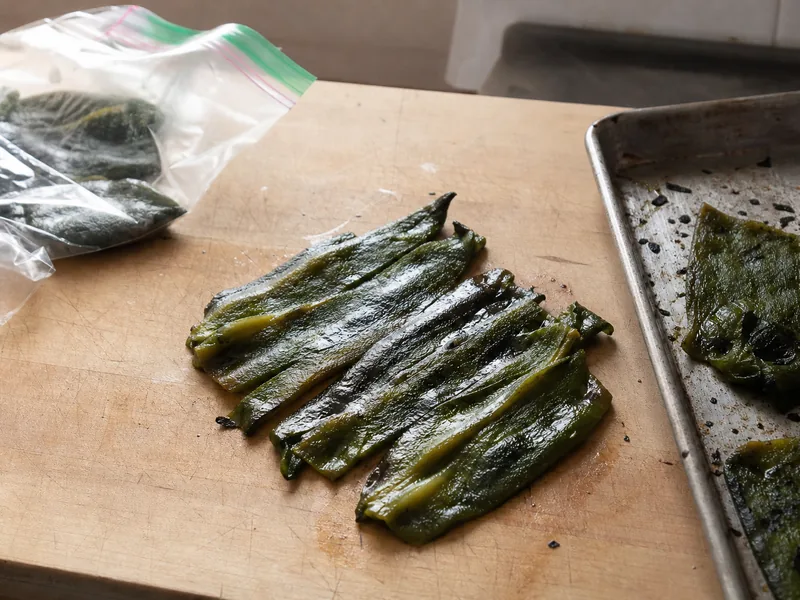
Poblano freezer packs work better when each pack already matches a meal. Whole flattened halves suit stuffed dishes, strips suit tacos and eggs, and chopped roasted pieces suit soup.
We pack strips in one-cup portions because that amount fits a quick skillet. Halves get two or four per bag, depending on whether we plan a small dinner or a full pan.
Do not pack a wet pile. Drain peeled peppers well before freezing, because extra liquid turns into ice crystals that weaken flavor and make the bag messy to thaw.
Flat bags are the poblano freezer trick. They freeze faster than round containers, stack neatly, and let you break off a portion before the whole pack thaws.
Raw freezing has a place
Raw frozen poblano pieces are useful when you plan to cook them into soup, stew, or sauce. They are not the best choice for stuffed whole pods.
Wash, dry, stem, seed, and slice the peppers, then tray-freeze before bagging. This follows the same loose-piece idea in our freeze peppers guide.
Raw freezing skips the peel step, so the skin may separate in the dish. That is fine in blended sauces but distracting in a clean strip filling.
Use raw frozen poblanos as an ingredient, not as a fresh pod replacement. That one expectation prevents most disappointment.
Red poblanos become ancho
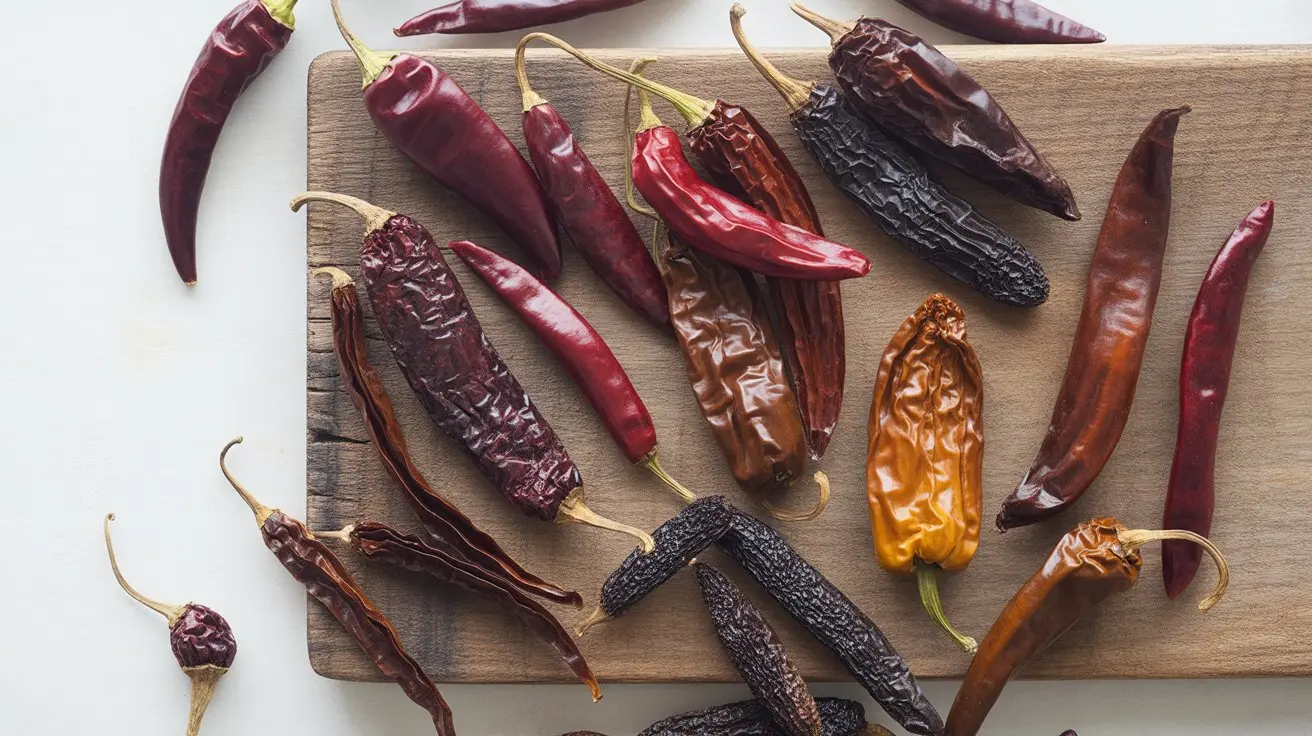
A fully ripe red poblano can move toward drying instead of freezing. Once dried, it becomes the ancho form used in sauces, moles, and chile pastes.
If you want that path, choose unblemished ripe pods and dry them thoroughly before storage. Then follow the airtight rules in our dried pepper storage guide.
For sauce work, ancho often sits beside guajillo and pasilla. Our Mexican dried chile trio guide explains why those dried forms behave differently in a pot.
Bad pods and safe packs
Discard poblanos with mold, sour odor, wet collapse, or leaking flesh. Do not roast a moldy pod and hope heat fixes the storage problem.
For freezer packs, label the date and form. Write roasted strips, roasted halves, or raw dice, because the bags look similar after a few months.
If a frozen bag has heavy ice crystals inside, the flavor may be weaker. It can still be safe if it stayed frozen, but it belongs in soup or blended sauce rather than a dish where poblano flavor leads.
Thaw without wasting texture
Roasted frozen poblanos can go straight into a hot pan if they are already sliced. For halves, thaw in the refrigerator so they stay intact enough to fill or layer.
Drain thawed roasted peppers before adding dairy, eggs, or thick sauces. The freezer pulls out some liquid, and that liquid can thin a filling.
Raw frozen pieces do not need a full thaw for soup or stew. Add them while still firm, then let the pot finish the texture work.
The thaw decision should match the final dish. A blended sauce forgives extra liquid, while a stuffed pepper does not.
Keep stuffing pods intact
If you want whole poblanos for stuffing, handle them differently from sauce peppers. The pod needs dry storage, gentle stacking, and fewer days in the fridge.
Do not pile heavy produce on top of poblanos. A crease may look minor at first, but it can split under heat when the pepper is roasted or filled.
Use the straightest, firmest pods first for stuffing. Curved, thin, or scarred pods are better candidates for roasting into strips or sauce packs.
If a pod tears during roasting, do not force it into a stuffed dish. Chop it for eggs, soup, or sauce and save intact pods for the job that needs structure.
Keep roasted flavor clean
Roasted poblanos pick up freezer odors if the package is thin or loose. Use freezer bags made for long storage, press out extra air, and close the seal carefully.
Double-bagging is worth it for roasted peppers because smoke and chile aroma move both ways. A weak bag can make the freezer smell like charred pepper, and the peppers can pick up stale freezer notes.
Cool roasted peppers before sealing them. Warm peppers create steam, and steam becomes ice inside the bag.
If you freeze sauced poblano strips, label the sauce too. Plain roasted strips are more flexible later than strips already mixed with cream, tomato, or onion.
We keep one plain pack for every seasoned pack. The plain pack can become breakfast, soup, or enchilada sauce without fighting a flavor choice made months earlier.
Plan the batch before cooking
Poblano storage works best when you decide before the pods soften. A fresh bag from the market should not wait until the last good day for a plan.
We roast a sheet pan when we have more than four poblanos. Two go into dinner, and the rest cool into flat freezer packs before the kitchen is cleaned.
If the same harvest includes jalapenos, use jalapeno storage for those smaller pods. If you are keeping next year's planting stock, dry and label seeds with the separate pepper seed storage process.
That division keeps the freezer honest. Poblanos become roasted meal starters, jalapenos become green heat, and dried pods become sauce anchors instead of forgotten vegetables.
For a market haul, set a deadline before the bag goes into the fridge. If the poblanos are not cooked by day three or four, roast and freeze them while they still peel cleanly.
For a garden harvest, sort by size first. Large straight pods stay fresh for stuffing, and smaller curved pods move straight to roasting.
If you miss that deadline, roast immediately instead of trying to save raw texture. A slightly tired poblano can still make a good roasted strip, but it rarely becomes a clean stuffed pod.