
Increase Pepper Yield: Fix the Real Bottlenecks
Low pepper yield usually traces to sun, heat stress, or feeding. Learn the ranked fixes that get more peppers per plant without gimmicks or wasted effort.
A pepper plant that grows tall and leafy but sets only a handful of pods is almost always fixable. Low yield rarely comes from bad luck or bad soil alone. It usually traces to a few specific limits, and once you find the one holding your plant back, the pods follow.
The levers that matter most are sunlight, heat stress, feeding, and steady water. We will rank them, show what each one costs you, and give the fix that actually moves the number. Skip the gimmicks. Most of what raises pepper yield is boring, cheap, and reliable.
What actually limits your pepper yield
Yield works like a chain, and the weakest link caps the whole plant. Adding fertilizer does nothing if the real problem is shade or a heat wave, so the first job is to find the one factor holding you back, then fix that.
Reading the plant tells you which lever is stuck. A tall, dark-green plant with few flowers is usually overfed on nitrogen or short on sun. A plant that flowers well but drops the blooms is fighting heat. Pods with a sunken brown base point to calcium and water. If your plant makes flowers but never sets fruit, match the symptom to the cause before you spend a cent.
| Lever | Why it caps yield | The fix |
|---|---|---|
| Sunlight | Too little light means a small plant and thin flowering | Give 6 to 8 hours of direct sun |
| Heat stress | Hot spells make open flowers drop before they set | Shade and water through 90°F days |
| Feeding | Too much nitrogen grows leaves instead of pods | Switch to low-nitrogen feed at flowering |
| Water | Wild swings drop flowers and cause rot | Keep soil evenly moist, then mulch |
| Harvest habit | Ripe pods left on the plant slow new set | Pick often once pods size up |
Work down this list in order. Sun and heat fix more plants than any fertilizer, and both cost nothing but better placement and timing.
Change one lever at a time when you can. Fix the sun, the feeding, and the water all in the same week and you will never know which one carried the crop, so next year you are guessing again. Fix the most likely limit first, watch for two weeks, then move to the next.
Start with sun and spacing
Peppers are sun plants. They need 6 to 8 hours of direct light to build the energy for a full set of pods, and a plant sitting in part shade stays small and flowers thinly no matter how carefully you feed it.
Crowding limits yield from below. Plants packed tighter than about 18 inches apart shade each other and fight for water and food, so each one carries less. Our notes on pepper plant spacing cover the room each type needs, and if you grow in pots the right container size decides how big the plant can get.
A weak, stretched start also caps the finish. Seedlings that grew tall and floppy indoors come out of the gate behind and rarely catch up to a stocky plant, so strong early growth is part of the yield story before the first flower ever opens.
Heat stress is the hidden yield killer
Flower drop is the reason many healthy-looking plants set almost nothing in midsummer. When blossoms fall off before they form pods, heat is usually the cause, not a disease or a pest, and knowing that saves you from spraying a problem the weather created. Our guide to pepper flower drop walks through every trigger.
Peppers set fruit best between about 65°F and 85°F. Once days push past 90°F or nights stay above 75°F, the plant aborts open flowers to protect itself, and set stalls until the weather breaks. Cold works the other way, and nights under 55°F slow flowering just as hard.
You cannot change the weather, but you can soften it. Light shade cloth over a heat wave, a deep morning watering, and mulch to cool the roots all keep more flowers on the plant. Timing helps too, so get transplants outside early enough that the plant is strong and flowering before the worst heat arrives.
The payoff comes after the hot stretch. A plant you kept alive and unstressed sets a fresh wave of flowers within days of cooler weather, while a scorched, dried-out plant needs weeks to recover first.
Feed for pods, not leaves
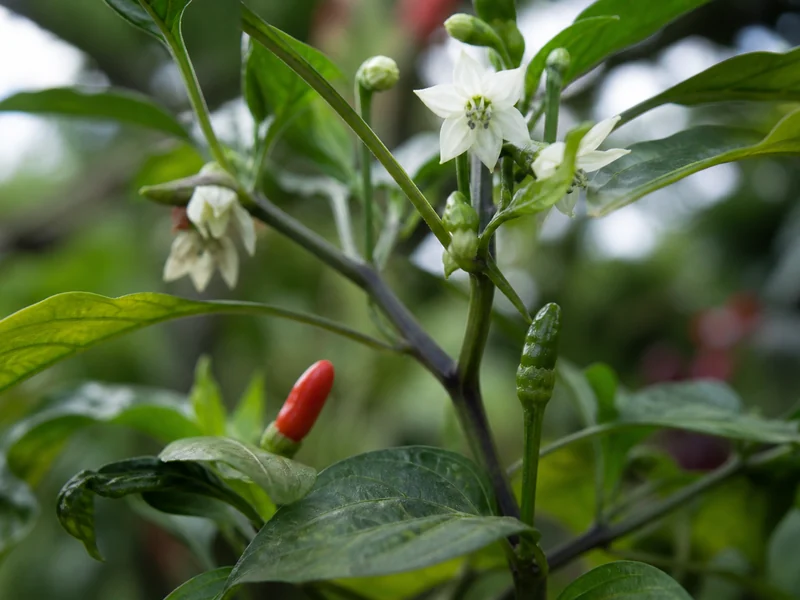
Feeding is where good intentions backfire most. A high-nitrogen fertilizer grows lush green leaves and very few peppers, because the plant pours its energy into foliage instead of fruit.
We learned this the slow way with a bed of bells that grew waist-high and gave us four peppers all summer. The soil was rich and we kept feeding it, which turned out to be the whole problem. Once we stopped the nitrogen and switched to a bloom feed, the next flush finally held.
Once a plant starts flowering, ease off the nitrogen and favor phosphorus and potassium, the nutrients behind flowering and fruit set. A balanced or slightly low-nitrogen feed every two to three weeks is plenty for most plants, and our guide to feeding pepper plants breaks down which numbers to reach for and when.
- Before flowers appear, a balanced feed is fine to build a strong plant
- At flowering, shift to low-nitrogen with higher phosphorus and potassium
- Keep water steady so roots can carry calcium up to the pods
Water steady and mulch the roots
Peppers hate swings. A plant that dries out hard and then gets flooded will drop flowers and grow pods with rot, even when sun and feeding are right.
Aim for even moisture, roughly 1 to 2 inches of water a week and more in heat, delivered deeply rather than in daily splashes. Deep, less frequent watering guide pushes roots down where the soil stays cooler and steadier.
A layer of mulch is the quiet multiplier. It holds moisture, evens out the wet-dry cycle, and keeps roots cooler through the hottest hours, which protects both flowers and calcium uptake at the same time.
Containers change the math. A pot dries out far faster than open ground, so in summer heat it can need water every day, sometimes twice. Push a finger two inches into the soil and water when it feels dry at the fingertip rather than watering on a fixed schedule.
Help the flowers set
Peppers pollinate themselves, so each flower can become a pod on its own. What they need is a little movement to shake pollen loose inside the bloom, and in still air that movement can go missing.
Outdoors, wind and visiting insects usually handle it. In a greenhouse, on a covered patio, or during a dead-calm spell, a gentle daily tap on the stems or a soft brush across the open flowers lifts set noticeably. Protecting pollinators helps as well, so avoid spraying anything harsh while the plant is in flower.
Air matters as much as movement. Very dry air can dry out the pollen before it works, and very humid, still air can make it clump and stick inside the flower. A little airflow, plus watering the roots rather than the leaves, keeps the flowers in the range where pollen actually takes.
Pick often to keep pods coming
Harvest habit is a free yield lever most gardeners miss. A plant carrying ripe pods slows down, because it reads its job as done and pours energy into seed rather than new flowers.
Pick peppers as soon as they reach full size, even at the green stage, and the plant keeps setting. Leave a few to ripen red for flavor if you like, but a plant you harvest often guide through the season will out-produce one you strip once at the end. Growers who grow jalapenos see this clearly, since steady picking keeps a single plant loaded for weeks.
How many peppers per plant is normal
Part of chasing yield is knowing what a full plant actually looks like, so you stop worrying about a number that was never realistic. Smaller-fruited types naturally carry many more pods than large ones.
| Pepper type | Typical pods per healthy plant |
|---|---|
| Bell peppers | About 5 to 10 |
| Jalapenos | About 25 to 35, often more |
| Cayenne and thai types | Often 50 to 100 or beyond |
| Habaneros | About 30 to 50 |
A big jalapeno plant easily out-counts a bell, and small hot types like cayenne and thai peppers profile can bury both, while a habanero sits in between with heavy, steady set. A first-year plant in a short season lands at the low end, and an established plant in a long, warm season reaches the top.
If your plant sits inside these ranges it is doing its job. If it falls well short, walk back down the levers, because one weak link is almost always the reason. For the full start-to-harvest picture, see our guide to growing peppers from seed.