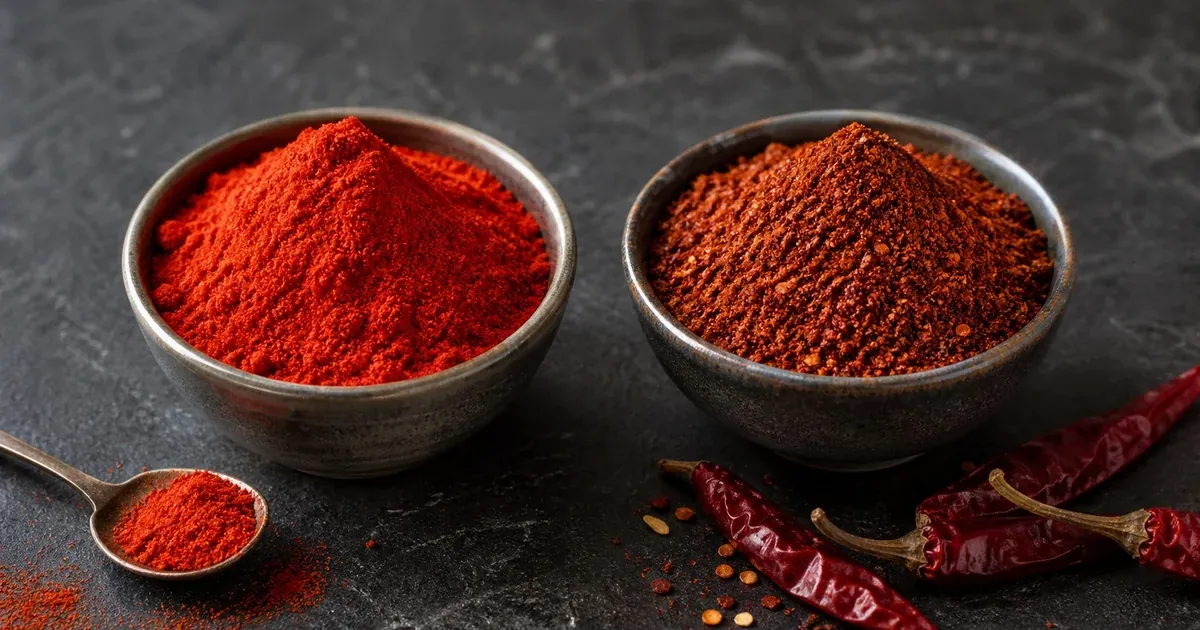
Chili Flakes vs Chili Powder: Coarse vs Fine Blend
Chili flakes are coarse dried chile pieces for visible bite, table heat, and oil-bloomed texture. Chili powder is usually a fine seasoning blend with ground chile plus spices. Choose flakes for texture and finishing. Choose chili powder for an even cooked base.

Chili Flakes
Coarse flakesChili Powder
Spice blend- What's inside: Almost always just crushed red chile vs Chile plus cumin, garlic, oregano, salt
- Heat delivery: Sharp bursts in single bites vs Even warmth spread through the dish
- Best moment: Finishing and oil-blooming vs Cooked into the base early
Chili Flakes vs Chili Powder at a glance
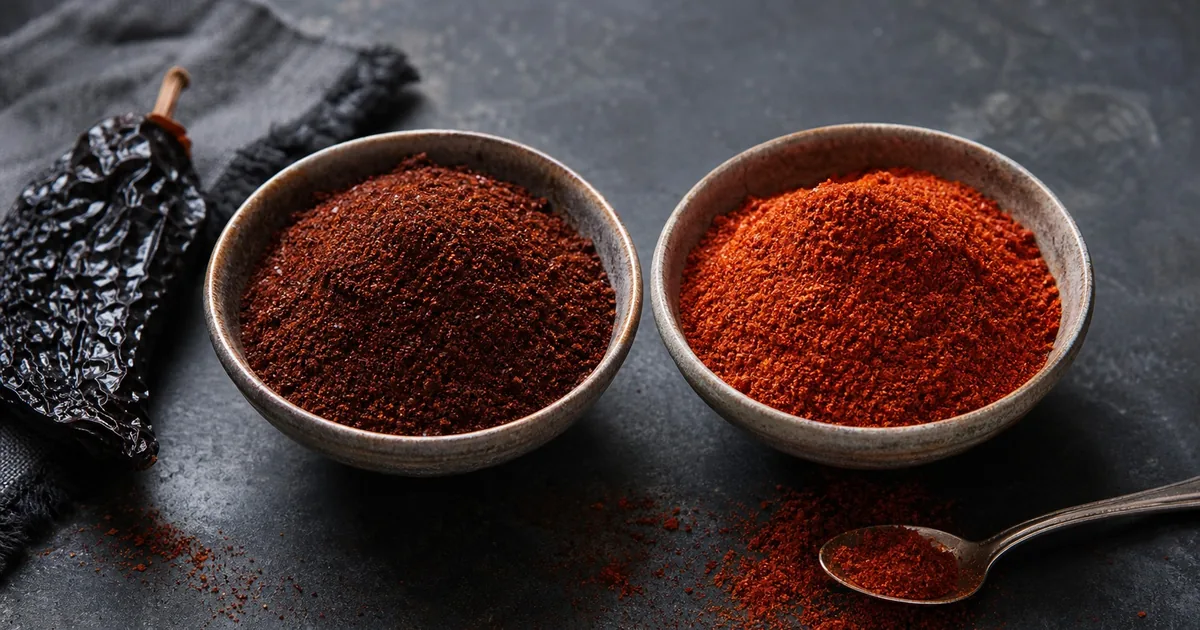
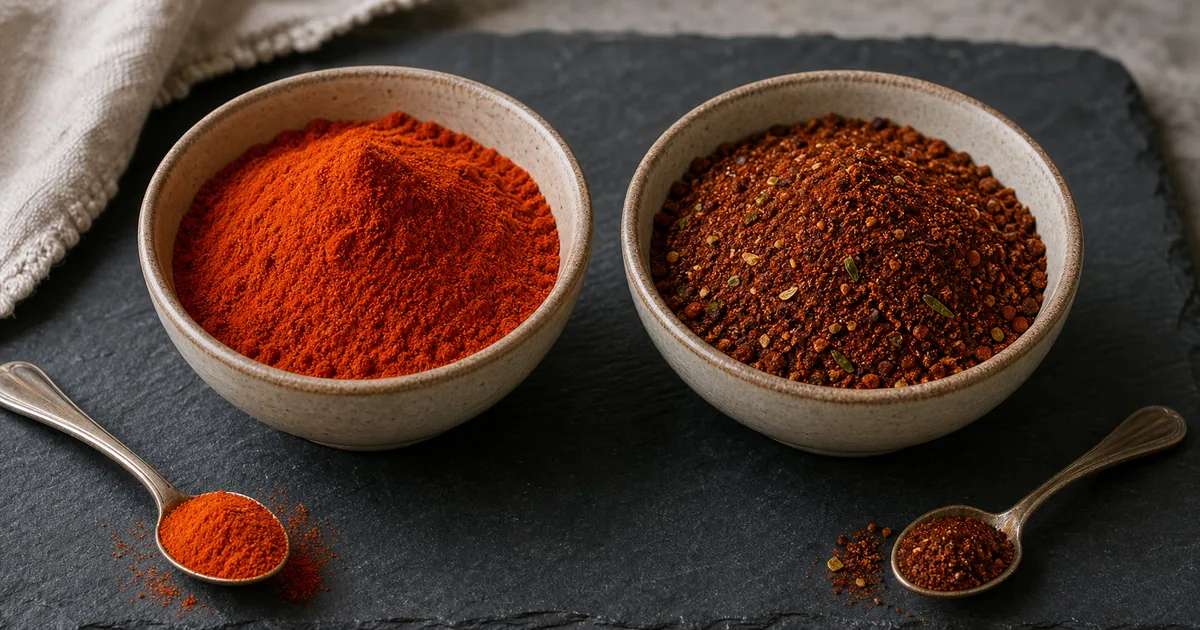
Chili Flakes and Chili Powder side by side
Dried chile you can see, best sprinkled on at the end.
A fine seasoning that dissolves into the dish and carries background spices.
Two Forms Not Two Heats
The real split here is form, not heat. Chili flakes are coarse pieces of dried chile you can see. Chili powder is a fine seasoning that dissolves into the food.
Reach for flakes when the pepper should stay visible, bloom in oil, or give one bite a clear spark. Reach for chili powder when the seasoning needs to spread evenly through meat, beans, tomatoes, or a dry rub.
So a jar swap changes two things at once. It changes the texture you feel, and it often changes which background spices land in the pot. That is why a straight one-for-one swap can leave a dish tasting thin or, going the other way, suddenly full of cumin.
Read The Label
Before you swap, read the ingredient line. McCormick lists crushed red pepper flakes as just crushed red pepper, while its chili powder lists chili pepper, spices, salt, silicon dioxide, and garlic.
If the powder names one chile, you are comparing two forms of the same thing. If it names several spices, you are replacing a whole blend, so flakes alone can leave cumin, garlic, oregano, and salt missing.
Heat is unpredictable on both sides for the same reason. A jar of flakes can be built from mild or hot chiles, and a chili powder blend can be salty, cumin-heavy, or sharp depending on the brand, so taste a small amount before you commit a full spoon to the dish.
Chile powder vs chili powder
Spelling is a weak clue but a useful one. Chile powder (with an e) usually means one ground chile such as ancho or chipotle. Chili powder (with an i) usually means the American blend built for chili and tacos. When the label is ambiguous, the ingredient line settles it.

Texture Changes The Bite
Grain size decides both the bite and the cooking moment. A quick look at the spice tells you how it will behave.
- Still see red pieces? Expect bite-level bursts of heat.
- Color spreads evenly? Expect steady seasoning across the whole dish.
- Dry on top? Powder needs oil, butter, or sauce before it finishes a plate.
Flakes like gentle oil. Warm them with garlic oil or pasta oil until they perfume the fat, then stop before the edges darken. Chili powder needs moisture and movement, so add it after the onions or meat are in the pan and stir it into fat and liquid before the cumin turns bitter.
That is why flakes can feel hotter on pizza than chili powder feels in a pot of chili. The flake lands in one mouthful. The powder spreads the same heat across many bites.
The bloom rule
Warm either one in a little fat before it hits the plate, but watch the clock. Flakes perfume oil in about 30 to 60 seconds over low heat; chili powder needs fat plus moisture and can turn bitter if it toasts dry. Add powder after the onions or meat release liquid, not to a bare hot pan.
Where Each Wins
Use flakes
Finishing and texture
Pizza, fried eggs, ramen, sauteed greens, finished pasta, garlic oil, and roasted vegetables. The visible pieces signal heat before the bite lands.
Use chili powder
Cooked-in base
Chili, taco meat, beans, tomato sauce, and dry rubs. One spoon seasons the whole pot and carries cumin and garlic with it.
Swapping Without A Flat Dish
A swap works if you rebuild what the other jar was quietly doing. Start with 1/4 to 1/2 teaspoon flakes for each teaspoon of chili powder, then add cumin, garlic, oregano, and a salt check if the recipe leaned on the blend.
Going the other way, use about 1/2 teaspoon chili powder for each teaspoon of flakes in cooked food, and bloom it in warm oil first if you wanted the finishing spark.
If you need a closer pantry build, chili powder substitute ratios beat forcing flakes to do every job. When the recipe really means one ground chile, ancho powder against chili powder is a better match, and chipotle powder against chili powder covers the smoked version. For raw heat with no seasoning attached, cayenne against chili powder is the cleaner split.

Make Your Own
You can make either jar at home, and building them explains why they behave so differently in the pan.
Flakes are the simpler project. Dry whole ripe chiles until they snap, then pulse or crush them to coarse pieces. You control the seed ratio, and the seeds and pale ribs carry most of the heat, so a heavier seed mix makes a hotter jar.
Chili powder is a recipe, not a single grind. Grind one dried chile for a clean single-chile powder, or build the American blend by adding cumin, garlic, oregano, and salt to a mild ground chile such as ancho comparison. That is the whole reason two chili powders can taste nothing alike.
- Flakes: dry whole chiles, then crush to coarse flakes; keep or drop the seeds to set the heat.
- Single-chile powder: grind one dried chile such as ancho, guajillo, or cayenne to a fine dust.
- Chili powder blend: stir that ground chile with cumin, garlic, oregano, and salt to taste.
How to make red pepper flakes covers drying and grind size, and a homemade chili powder blend gives ratios you can adjust batch to batch.
Why Neither Is Predictable
Neither jar is automatically hotter. Heat depends on the chile source and how the particles reach your tongue. The Scoville scale chart helps when the label names a chile such as cayenne or ancho, and helps less when the jar only says chili powder.
Delivery matters as much as the chile. A coarse flake drops a concentrated hit on one bite, so a mild chile can still feel sharp. A fine powder spreads the same chile through fat and liquid, so even a hotter blend can read as steady background warmth. When a label does name a single chile, the SHU calculator helps you scale the dose.
The better pick is not the hotter jar. It is the one that solves the recipe problem without adding a second one.
Shelf Life And Storage
Ground spice ages faster than coarse spice because grinding exposes more surface to air. That is the practical reason to treat these two jars differently once they are open.
| Freshness | Chili flakes | Chili powder |
|---|---|---|
| Best within | About 1 year | About 6 months |
| Fades by | Slowly losing aroma while staying bright | Turning muddy as the blend's spices fade unevenly |
| Store | Airtight, cool, dark | Airtight, cool, dark |
Store both away from heat, light, and steam, and keep the lid on tight between uses. The smell test beats the calendar: if the jar smells flat when you open it, the dish will taste flat too. For the blend side, chili powder freshness signs covers exactly when to toss it, and how long dried peppers last frames the coarse-form rule.
Chili Flakes vs Chili Powder
Reach for Chili Flakes when you want Finishing and oil-blooming. Reach for Chili Powder when you want Cooked into the base early.