Chipotle Powder vs Chili Powder: Smoke or Spice Blend?
Chipotle powder is usually ground smoke-dried jalapeno, so it adds smoke, ripe chile flavor, and medium heat. Chili powder is a wider pantry blend with ground chile plus spices such as cumin, garlic, oregano, and salt. Choose chipotle powder for smoke. Choose chili powder for an all-in-one chili base.

Chipotle Powder
One smoked chileChili Powder
Chili blend- Smoke: Strong, the whole point vs Usually none unless it uses smoked chiles
- Heat feel: Reads darker and sharper vs Milder, wrapped in cumin and garlic
- Best job: Adding smoke and chile depth vs Building a full chili or taco base
Chipotle Powder vs Chili Powder at a glance
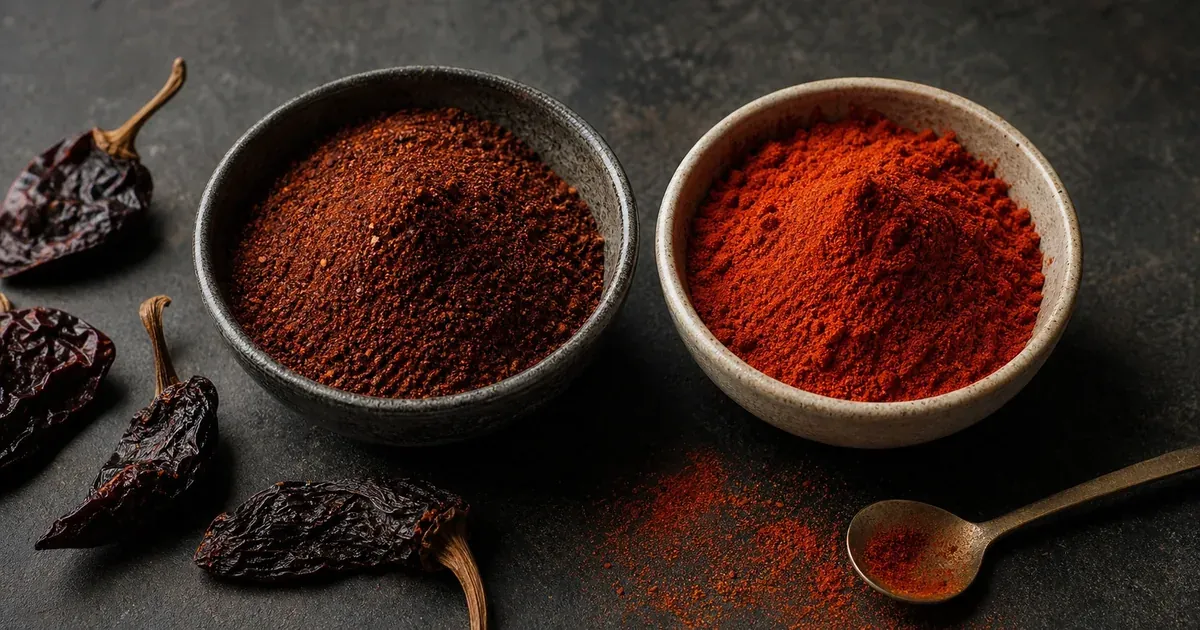
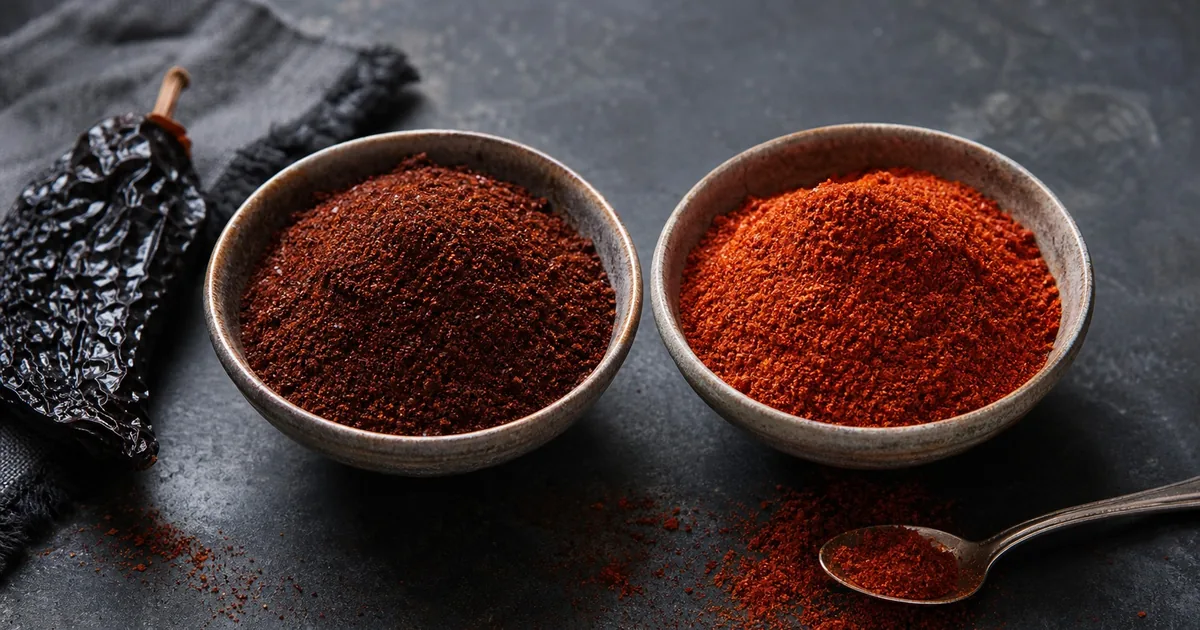
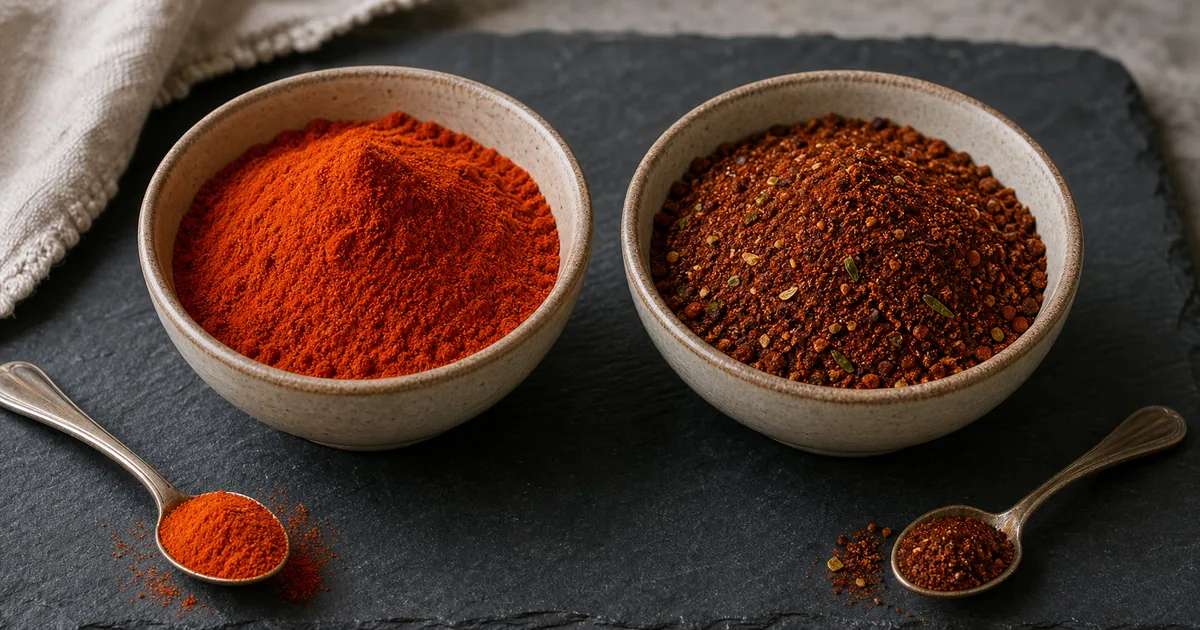
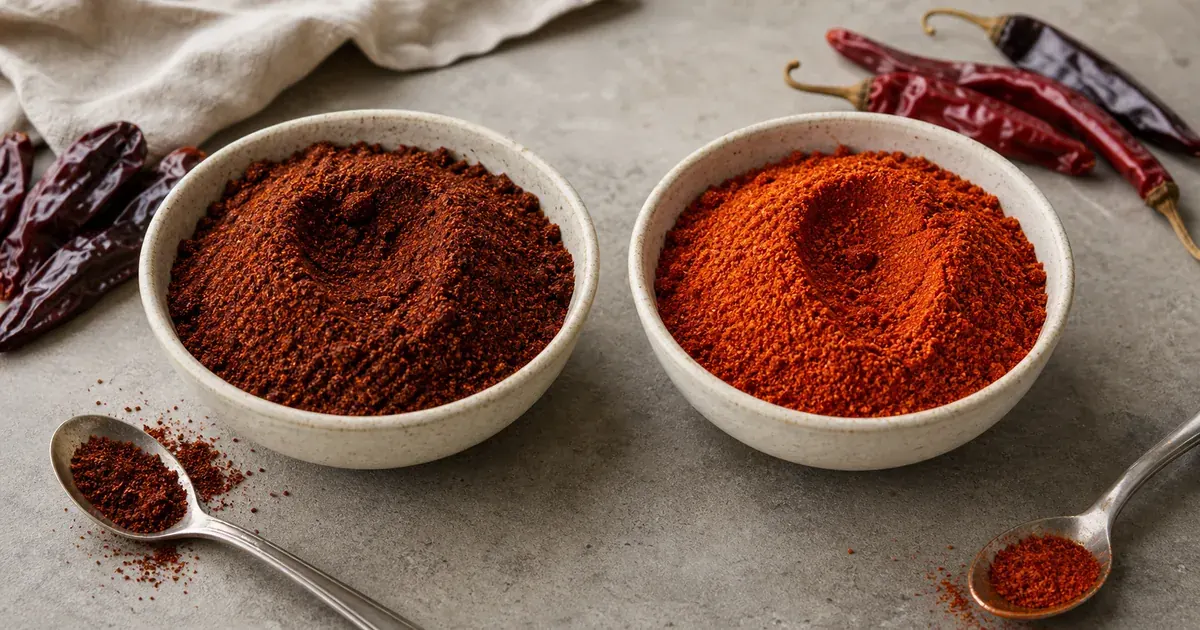
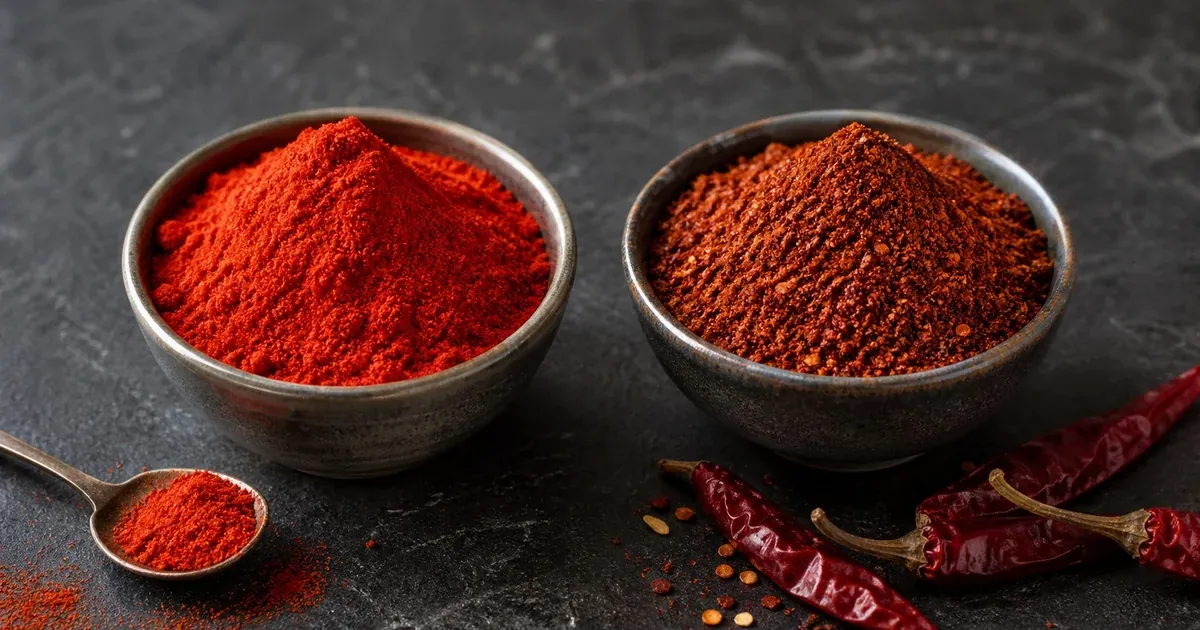
Chipotle Powder and Chili Powder side by side
A single smoked chile for depth on top of a base you already built.
A ready seasoning base for chili, tacos, and beans.
Smoke Or A Full Base
Choose chipotle powder for smoke. Choose chili powder for the whole spice base. Both jars can look red-brown, but they solve different recipe problems.
Chipotle powder is usually one smoke-dried jalapeno, ground. McCormick lists it as chili pepper plus silicon dioxide, sourced from smoke-dried jalapenos. Chili powder from the same brand lists chili pepper, spices, salt, silicon dioxide, and garlic.
So use chipotle powder when smoke is the point, and chili powder when the recipe needs a broader base for chili, tacos, beans, or enchilada filling.
What Chipotle Powder Really Is
Chipotle is not a species of pepper. It is a ripe red jalapeno that has been smoke-dried, then ground, so the smoke is baked into the flavor rather than added later.
Two styles turn up on labels. Morita chipotles are smoked for less time and stay softer, fruitier, and a touch brighter; meco chipotles are smoked longer and taste drier, dustier, and more intense. Most grocery chipotle powder is morita-based, but the label rarely says, so smell for the character you want.
Knowing this explains the whole comparison. Chipotle powder is one smoked chile with a single strong voice, while chili powder is a committee of spices. You reach for chipotle to add that smoked-jalapeno note on top of a dish, not to build the dish's base.

What Smoke Does To A Dish
Smoke is the reason to reach for chipotle. A small spoonful turns beans, mayonnaise, butter, salsa, barbecue sauce, and burgers darker and deeper. Chili powder can taste warm and savory, but it rarely gives that smoked-jalapeno signal unless the blend includes smoked chiles.
That smoke has a cost. Chipotle powder can take over a light dish faster than chili powder does, so a creamy dip, vinaigrette, or corn butter may need only a pinch. It also spreads through fat and liquid, which means a teaspoon flavors more food than the dry spoon suggests.
The matching detail is what each spice adds beyond flavor. Chili powder is doing several background jobs in one spoon, while chipotle adds a single strong note on top of a base you already built. In a pot that already has cumin, garlic, oregano, and salt, adding more chili powder can double those flavors, while chipotle drops in smoke and chile depth without disturbing the rest of the plan.
The smoke also changes how far a little goes. Because it reads as a strong, savory note, a quarter teaspoon of chipotle can define a pot of beans, while the same amount of chili powder would barely register. That makes chipotle easy to overshoot in mild dishes and easy to underuse in hearty ones.
Dish By Dish
Chipotle powder wins
Build around smoke
Black beans, adobo-style sauces, barbecue rubs, burger mixes, grilled corn butter, spicy mayo, and roasted tomato salsa.
Chili powder wins
Build around the base
Ground beef tacos, turkey or bean chili, enchilada filling, skillet dinners, and tomato sauces that want one spoon to cover several spices.
The Swap Math
The swap is smoke loss versus spice overload. Going from chili powder to chipotle, start with 1/4 to 1/2 teaspoon per teaspoon of chili powder, then rebuild cumin, garlic, oregano, paprika, and salt separately.
Going the other way, match the amount only in hearty foods, then add smoked paprika profile or a little adobo sauce if the smoke is missing. In delicate dishes, avoid a full one-to-one swap because either the smoke or the cumin can take over.
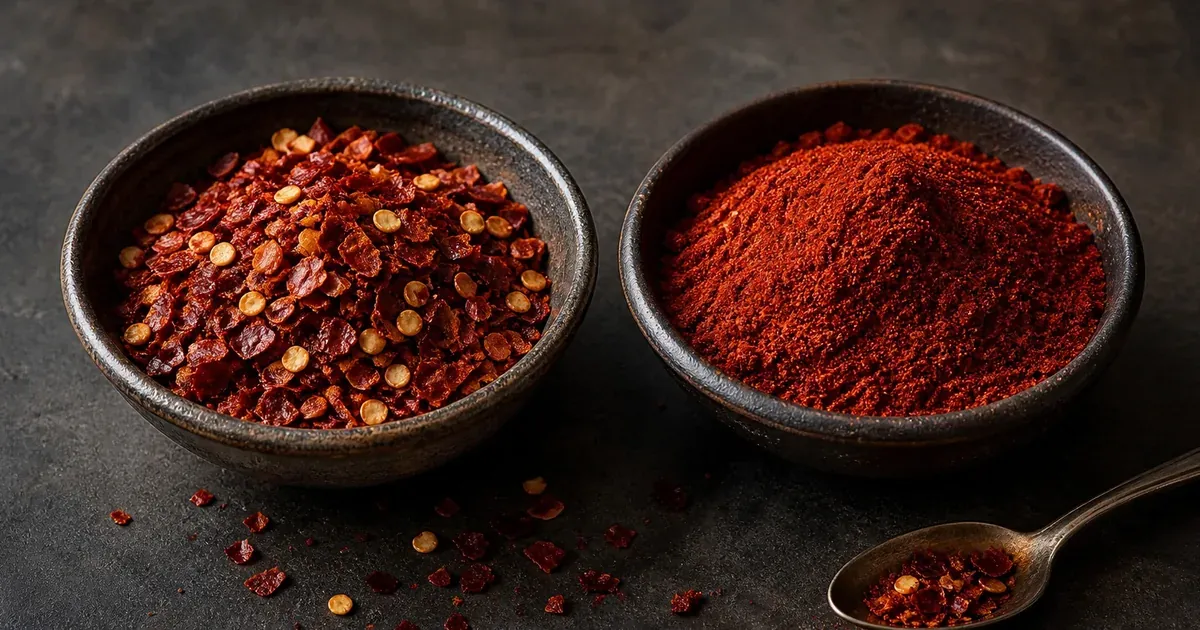
For a related single-chile powder comparison, ancho powder against chili powder helps. For coarse texture instead of smoke, chili flakes against chili powder is the better comparison.
| You have | Recipe wants | Start with | Then add |
|---|---|---|---|
| Chipotle powder | 1 tsp chili powder | 1/4 to 1/2 tsp chipotle | cumin, garlic, oregano, paprika, salt |
| Chili powder | 1 tsp chipotle | About 1 tsp in hearty food | smoked paprika or a little adobo for smoke |
| Either, delicate dish | A pinch | 1/8 tsp, taste, adjust | nothing until you have tasted |
The honest catch is that neither swap is exact. Chipotle brings smoke that chili powder cannot fake, and chili powder brings a built base that chipotle alone leaves missing. The ratios get you close, but taste and adjust rather than expecting a clean one-for-one trade.

How The Heat Reads
Chipotle powder often feels stronger than chili powder because smoke makes heat read darker and sharper. Chili powder feels milder because ground chile is diluted by other spices.
The actual burn still depends on the jalapenos used and the grind. A chili powder can be hot too, but the heat usually sits wrapped inside cumin and garlic. The Scoville scale chart is more precise when a label names one chile than when it only says chili powder.
Dishes Built Around Smoke
Some dishes are essentially a delivery system for that smoke. Adobo sauce, barbacoa, smoky black beans, chipotle mayo, and a spoonful stirred into chocolate or barbecue sauce all lean on chipotle as the lead flavor.
Chili powder dishes work the other way: the blend is the background, and no single spice is meant to stand out. Chili, taco meat, and enchilada filling want that even, familiar seasoning rather than one sharp smoked note.
When a recipe wants both, use them in layers. Build the base with chili powder, then add a small hit of chipotle for smoke and depth. That is why plenty of barbecue rubs list both, each doing a job the other cannot.
Building A Rub
A dry rub is where these two work together instead of competing. Chili powder is the base layer that carries cumin, garlic, and oregano across the whole surface. Chipotle is the smoke-and-heat layer that lands on top.
Start with the blend for body, then add chipotle a quarter teaspoon at a time so the smoke does not bury the meat. Mix both with salt and a little brown sugar before they touch the surface, which spreads the heat and slows scorching on a grill.
If you only keep one for rubs, chili powder is the safer single jar because it seasons broadly. Chipotle alone can taste one-note and aggressive on a large cut unless you build the rest of the rub around it.
Storage And Making Your Own
Chipotle powder goes stale when the smoke fades. The jar can still look red-brown while the flavor turns flat and dusty. Chili powder loses its top notes first, so old cumin and garlic can make the whole jar taste tired even when the chile still has color.
For blend timing, chili powder freshness signs helps. If you want to control the smoke yourself, how to make chipotle powder covers the smoke-dried jalapeno path, and a chipotle powder substitute fills the gap when the jar is empty.
Chipotle Powder vs Chili Powder
Reach for Chipotle Powder when you want Adding smoke and chile depth. Reach for Chili Powder when you want Building a full chili or taco base.