
How Long Pepper Seeds Last and When to Replace Them
Pepper seeds often remain usable for several years if they stay cool, dry, and dark. Test older seed before planting, and replace seed that germinates weakly or unevenly.
Pepper Seeds Can Last Years, But Vigor Drops First
Pepper seeds can stay viable for several years when stored cool, dry, and dark. The practical question is not only whether they sprout, but whether they sprout fast and evenly enough for your planting window.
Old seed can still produce strong plants, but germination usually becomes slower and less predictable before it becomes impossible. That matters more for peppers than for quick crops because peppers already need a warm start.
| Seed age | What to expect | Best move |
|---|---|---|
| 1 to 2 years | Usually strong if stored dry | Plant normally |
| 3 to 5 years | Test before relying on it | Sow extra or replace weak lots |
| Older than 5 years | Uncertain vigor | Test early and keep backup seed |
The calendar is only a rough guide. Storage conditions decide whether a packet ages slowly or fails early.
Storage Conditions Matter More Than the Printed Date
Heat, moisture, and light shorten seed life. A packet kept in a hot garage or damp shed can fail sooner than older seed stored dry indoors.
Use airtight containers only after the seed is fully dry. Add a label with pepper name, year, and source so you know what you are testing later. If you save your own seed, the discipline from saving pepper seeds matters as much as the variety itself.
- Keep seed cool and dark: temperature swings age it faster.
- Protect it from humidity: kitchen steam and greenhouse air are bad storage partners.
- Label every lot: old unlabeled seed becomes guesswork fast.
A well-stored old packet often beats a newer packet that sat warm and damp.
Viability and Vigor Are Not the Same Thing
A seed lot can still be technically viable and still be annoying to grow. That happens when only part of the batch sprouts, or when emergence stretches across too many days for an orderly start.
Vigor matters because pepper growers often need transplants to hit a narrow calendar. A weak seed lot can leave you with mixed-size seedlings, patchy trays, and late plants. The problem is larger on slow crops such as how to grow ghost peppers than on fast re-sow vegetables.
| Seed behavior | What it tells you | Practical response |
|---|---|---|
| Fast even sprouting | Good vigor | Use normally |
| Slow but acceptable sprouting | Aging seed lot | Sow extra and allow more time |
| Patchy weak emergence | Low vigor or poor storage | Replace if the crop matters |
The older the seed, the more you should care about uniformity, not just raw percentage.
Run a Germination Test Before the Season Starts
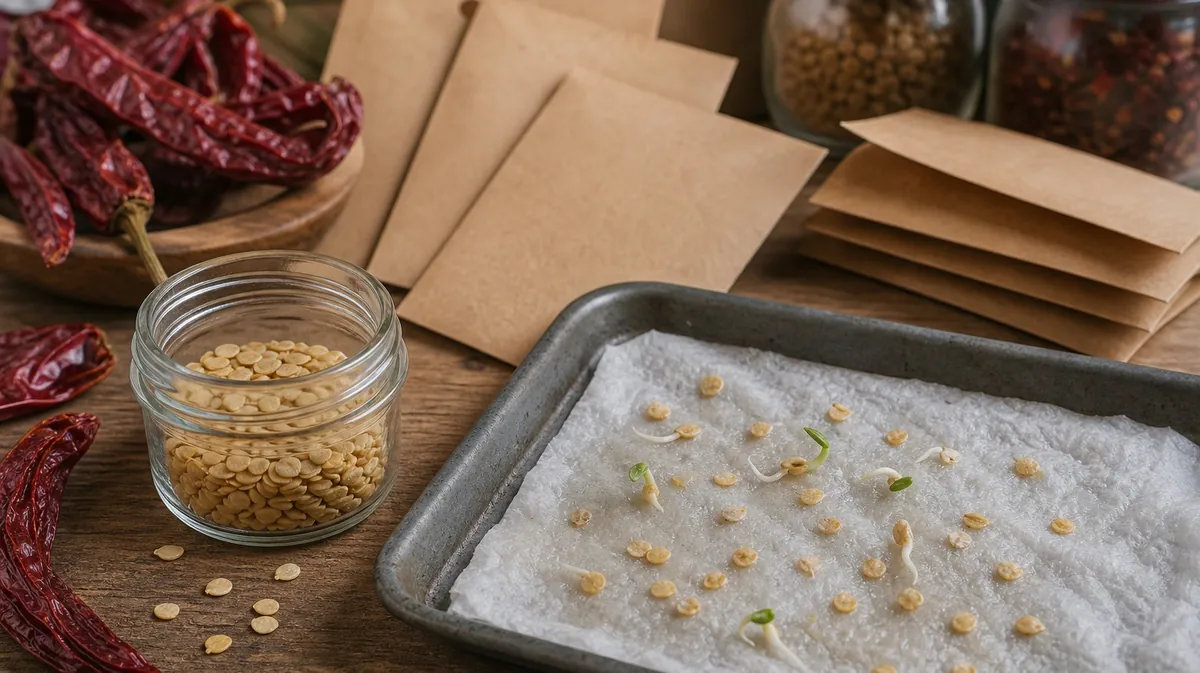
A quick germination test saves tray space and frustration. Test older seed before you commit the season to it, especially if the packet has been opened for years.
Use a small sample so the result is meaningful. If only half the seeds germinate and they emerge slowly, you can still use them, but you should sow more densely or secure fresher backup seed. This is especially useful before labor-heavy crops like growing bell peppers at home or our poblano growing guide.
- Test early: leave yourself time to reorder or resow.
- Use warm conditions: cold testing can make decent seed look worse than it is.
- Record the result: percentage alone is less useful than percentage plus speed.
The test does not need to be fancy. It just needs to answer whether this lot is worth your tray space.
Saved Seed Ages According to How It Was Dried and Cleaned
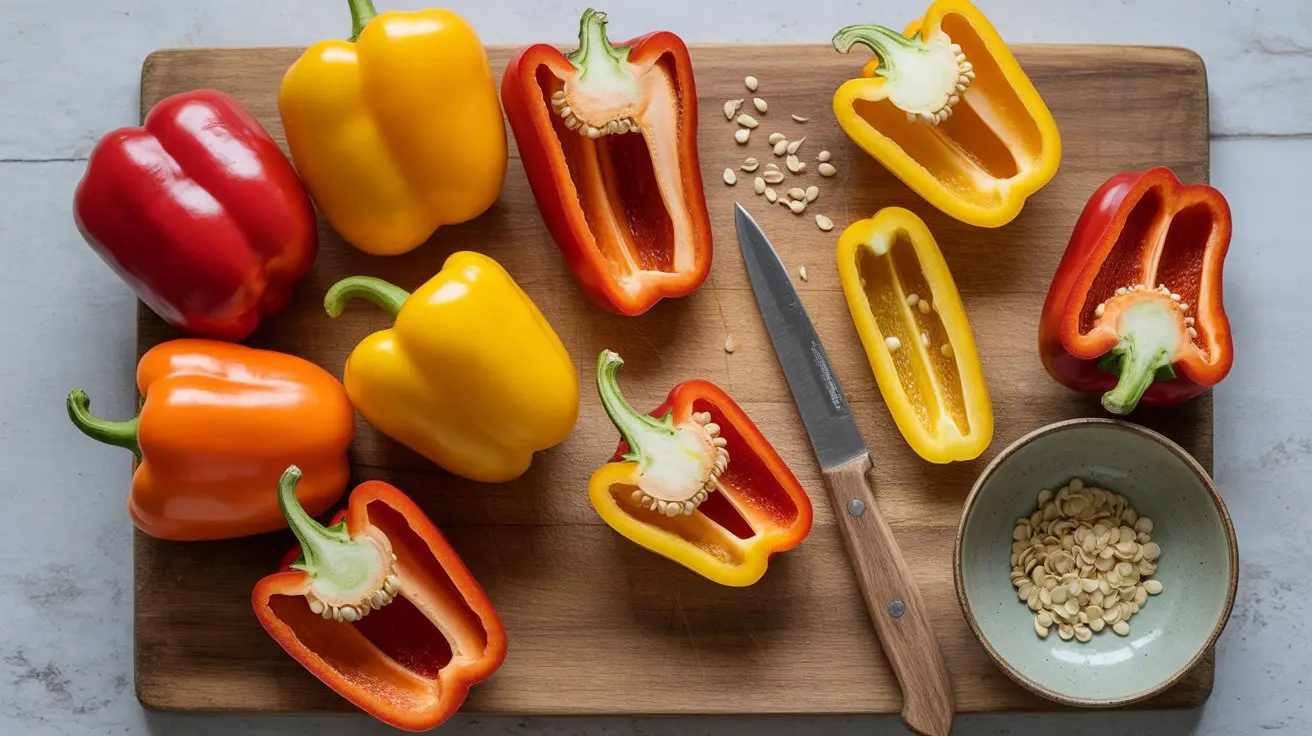
Home-saved pepper seed can last well, but only if it was dried properly before storage. Seed that went into a packet slightly damp often loses quality faster than people expect.
Cleaning also matters. Seed stored with bits of placenta or soft tissue is more likely to age poorly than clean, fully dried seed. If you saved seed from fully red pods while following good drying practice, it may hold better than an anonymous packet of unknown age.
- Fully mature pods: best starting point for save-worthy seed.
- Thorough drying: the key defense against hidden moisture problems.
- Clean storage: fewer residues, better long-term odds.
Saving seed is not just a harvest step. It is a storage discipline that decides whether the seed will still be worth planting later.
Know When Old Seed Is Not Worth the Calendar Risk
Not every old packet deserves another season. If the variety matters, the variety is slow, or your transplant window is short, weak seed can cost more than replacing it.
This is especially true for crops that already demand lead time, like the cayenne growing guide and superhots. A weak lot might still germinate eventually, but the late start can erase the savings. If you do keep it, sow extra and compare it against fresher backup seed.
| Situation | Keep using the seed? | Why |
|---|---|---|
| Beloved rare variety, acceptable test result | Yes, with backups | Worth the extra effort |
| Common variety, weak uneven test | Usually no | Fresh seed saves time |
| Short season and slow pepper type | Only if the test is solid | Late starts hurt the crop |
Pepper seeds often last longer than people think. What changes first is confidence. Cool, dry, dark storage and an honest germination test tell you whether a packet is still seed or just nostalgia.
Keep Backup Seed for Important Pepper Types
Older pepper seed is easiest to justify when the variety is rare, sentimental, or hard to replace. For common varieties, a backup packet is often the cheapest insurance in the whole seed-starting process.
We like a two-track approach for aging seed lots: test the old lot early, then keep fresh backup ready for slow or high-value crops. That matters more for peppers with a long runway such as how to grow ghost peppers or for garden staples you do not want to miss, such as growing bell peppers at home. A backup packet is not wasteful if it protects the calendar.
- Rare variety: test and sow extra, but still keep a fallback plan.
- Common variety: replace weak lots without much debate.
- Slow pepper types: avoid gambling the whole season on uncertain vigor.
Good seed storage extends options. It does not remove the need for judgment. The best seed strategy is the one that protects your season before the trays are already full.
Match the Seed Decision to the Crop Value
Not every pepper seed decision carries the same stakes. If the packet is for a casual backup jalapeno, weak germination is annoying. If the packet is for a long-season favorite you only start once, weak germination can wreck the calendar.
That is why old-seed decisions should reflect crop value as well as age. Compare the crop importance with easy container peppers, red-ripening cayenne crops, and the pepper seed-saving guide before deciding whether a weak lot is still worth the tray space.
- Low-stakes crop: you can experiment more freely.
- High-stakes crop: fresh backup seed is usually smart insurance.
- Rare line: test early and protect every viable seed.
Old pepper seed is not automatically bad seed. It just needs to earn its place in the season by proving that it can still start on time.
Make the Seed Decision Before Tray Space Gets Expensive
The best time to decide whether old pepper seed is worth using is before your trays, lights, and calendar are already committed. Once seed-starting season is underway, weak lots become much more expensive. They take up warm space, create uneven flats, and delay the varieties that actually needed an early start.
That is why older pepper seed should be judged like any other input: by cost, timing, and replacement difficulty. A rare line with sentimental or breeding value deserves more patience and a gentler germination gamble. A common supermarket-type jalapeno or bell pepper usually does not. In that case, the price of fresh seed is often lower than the price of losing a week or two in the start schedule. When growers say old pepper seed "still works," that can be true biologically while still being a bad planning decision.
- Rare seed: test it, protect it, and give it backup attention.
- Common seed: replace weak lots without much emotion.
- Slow pepper types: assume the calendar cost is higher from the start.
Good storage keeps old seed in the game longer. It does not remove the need to make a clear seasonal decision. The tray space should go to seed lots that either proved themselves in testing or are valuable enough to justify the extra risk.
Use Records So Old Seed Does Not Become Mystery Seed
Old pepper seed becomes much harder to judge when the record keeping collapses. A packet with no year, no source, and no note about whether it was home-saved or purchased is not just older seed. It is unknown seed, which is a different risk entirely.
Simple records solve much of that problem. Write the pepper name, year, source, and any germination test result on the packet or storage container. If a lot performed weakly once but is still being saved for a rare line, note that too. The goal is to make the next season's decision fast and evidence-based instead of emotional or vague.
- Name plus year: the minimum useful record.
- Source note: helps separate purchased seed from home-saved seed.
- Test result: makes future sowing decisions much easier.
Good seed storage extends life, but good records preserve judgment. When the packet tells you what it is and how it performed, old seed becomes manageable instead of mysterious.
Storage Conditions Matter More Than the Calendar
Pepper seeds do not expire on one exact date. What matters is how much heat, moisture, and oxygen they see while stored. Two seed lots harvested in the same season can germinate very differently three years later if one sat warm in a garage and the other stayed dry and cool indoors.
That is why we judge seed age together with storage history. Old seed is not automatically dead. Poorly stored seed is the bigger problem.
| Storage setup | Expected result | Risk level |
|---|---|---|
| Cool, dark, dry jar with desiccant | Best long-term viability | Low |
| Indoor drawer in paper packet | Usually fine for short to medium term | Moderate |
| Warm shed or humid room | Fast drop in germination rate | High |
| Fridge without moisture protection | Can work, but condensation is the danger | Moderate to high |
- Label the year and variety: memory fails faster than seed lots do.
- Run a small germination test: ten seeds tell you more than guessing.
- Keep weak old lots separate: they need different sowing density.
When stored well, pepper seeds are more durable than many gardeners assume. The useful skill is learning when to test them, not throwing them out on schedule alone.
Use Germination Tests to Decide Sowing Density, Not Only Viability
The real value of a germination test is not just proving whether old pepper seed is alive. It tells you how aggressively to sow. A lot that comes up at ninety percent can be planted normally. A lot that comes up at forty percent may still be useful, but only if you change how thickly you sow and how many backup cells you start.
That is why old seed should be measured, then managed. Viability is not a yes-or-no question in the garden. It changes the planting plan.
- 80% or better: sow normally and keep the lot in rotation.
- 50% to 79%: sow a little heavier and expect some uneven emergence.
- Below 50%: start extras or reserve the lot only for rare varieties worth the gamble.
- Very slow emergence: treat the lot as weak even if the final count looks acceptable.
Old pepper seed can still earn its space on the heat mat. The trick is letting the germination test tell you how to plant, not simply whether to throw the packet away.
Save Rare Seed Lots Even When They Test Weak
Common varieties can be replaced easily. Rare heirlooms or favorite crosses deserve a different standard. A weak germination lot can still be worth starting if the genetics matter enough.
- Start extras in warm stable conditions: weak seed needs fewer additional stresses.
- Mark the tray clearly: slow rare lots are easy to discard by accident.
- Refresh the line with fresh seed after harvest: the goal is rescue now, replacement later.
Old seed is not only a viability problem. Sometimes it is a preservation decision.