
Growing Ghost Peppers Without Stalling the Plant
Ghost peppers need a longer, warmer season than jalapenos or cayenne. Start them early, protect roots from cold, keep water steady, and handle ripe pods with gloves.
Give Ghost Peppers a Long Warm Runway
Growing ghost peppers is a long-season project. A ghost plant can look healthy for weeks before it sets useful fruit, so the main job is preventing early stalls.
Ghost peppers are superhot Capsicum chinense plants, hotter and slower than green jalapeno peppers or the cayenne pepper profile. The garden plan needs early seed starting, warm roots, patient transplanting, and safe harvest handling.
| Stage | Ghost pepper target | Why it matters |
|---|---|---|
| Seedling | Warm and stocky | Cold starts lose precious season time |
| Transplant | No root chill | Chinense plants stall easily |
| Flowering | Steady moisture and heat | Stress means dropped blooms |
| Harvest | Fully colored pods | Flavor and seed maturity improve |
If your season is short, the real question is not whether ghost peppers can grow. It is whether they can ripen before nights turn cold.
Start Early, Then Harden Off Slowly
Ghost pepper seedlings need more lead time than most common garden peppers. Start them early enough that they are sturdy before outdoor weather is ready, but do not rush them into cold soil.
Harden off slowly over several days. Bright sun, wind, and cold nights at the same time can stop a plant that looked perfect under lights. For short seasons, a greenhouse bench, warm patio, or wall-side container can make the difference.
- Do not chase the first warm day: one cold night can cost more than waiting a week.
- Keep seedlings compact: stretched plants handle transplant stress poorly.
- Protect from wind: chinense plants often react harder than annuum types.
Ghost peppers reward patience early because they do not have much patience later.
Warm Soil Matters More Than Big Tops
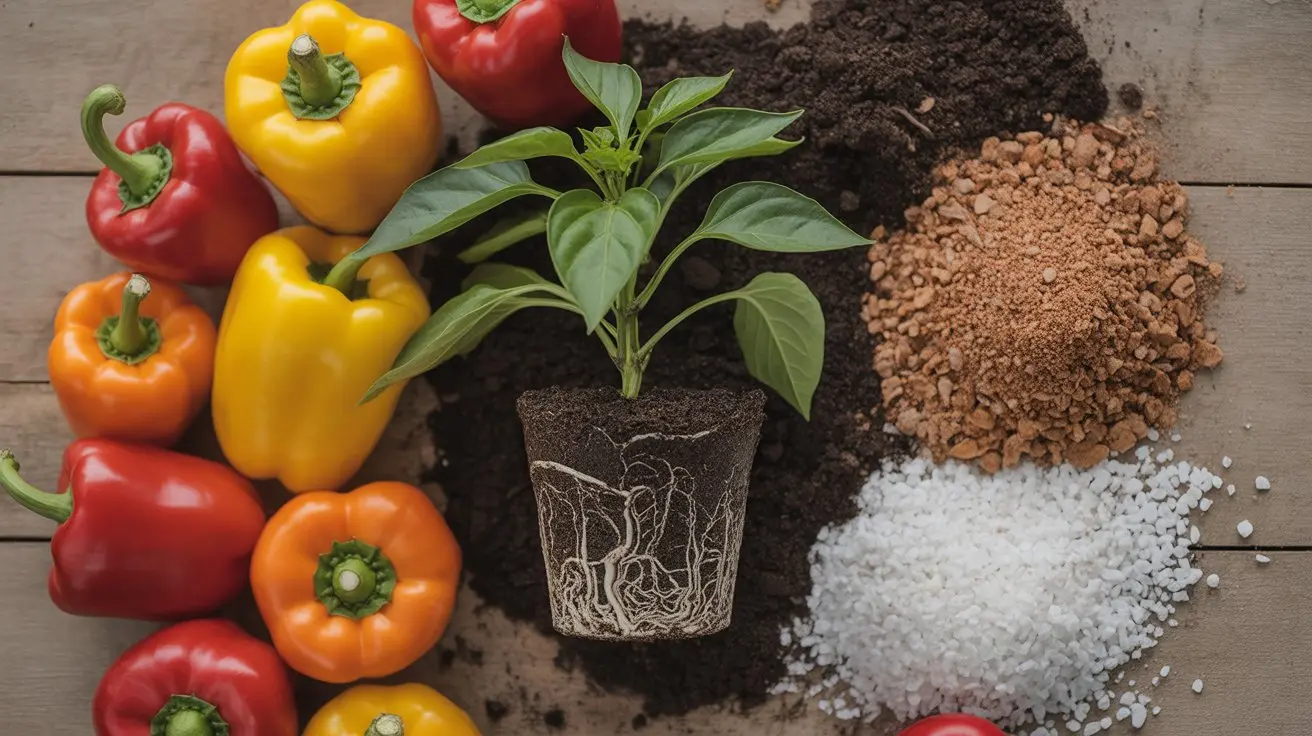
Many ghost pepper problems start below the leaves. If roots stay cool, the plant can hold color and still refuse to grow, flower, or size fruit.
Use dark mulch, a protected bed, or a larger heat-holding container if your site runs cool. The same principle shows up in the potted jalapeno growing guide, but the penalty is higher on superhots because they already run on a slower clock.
| Root-zone condition | Typical plant response | Better move |
|---|---|---|
| Cold and wet | Stall, pale growth, weak flowering | Wait to transplant or warm the site |
| Warm and draining | Steadier vegetative growth | Mulch and water deeply |
| Hot but bone dry | Flower drop and stress | Increase moisture consistency |
The goal is not extreme heat for one afternoon. It is a root zone that stays comfortably warm across the week.
Feed Lightly and Keep Moisture Even
Superhots do not need aggressive feeding to prove they are serious peppers. Overfeeding usually creates soft growth that the plant cannot support under heat stress.
We prefer moderate fertility and very steady watering. If the plant swings between wilt and recovery, pod set drops fast. The irrigation rule from watering pepper plants matters even more here because ghost peppers can take so long to ripen each successful pod.
- Heavy leaf growth, few pods: back off nitrogen.
- Flowers dropping in heat: check moisture and microclimate before feeding.
- Small pods aborting: root stress is more likely than simple hunger.
You are trying to keep the plant moving steadily, not force it into a dramatic flush.
Support Pollination and Protect the Midseason Flower Set
Ghost peppers often bloom well before they look productive. The gap between healthy flowers and stable pod set is where many gardeners lose patience.
Hot days, hot nights, still air, or water stress can all interrupt pollination. In a greenhouse or still patio corner, lightly tapping the plant can help. Outdoors, the bigger gain usually comes from keeping the root zone even and reducing heat stress around the flowers.
- Morning sun is useful: flowers handle early light better than brutal late-day stress.
- Do not spray broad insecticides during bloom: pollinator loss does not help fruit set.
- Use shade cloth only when heat is truly extreme: too much shade slows the crop again.
When a ghost plant is full of blossoms but empty of pods, the message is usually stress, not a lack of fertilizer.
Harvest Fully Colored Pods and Handle Them Like Superhots
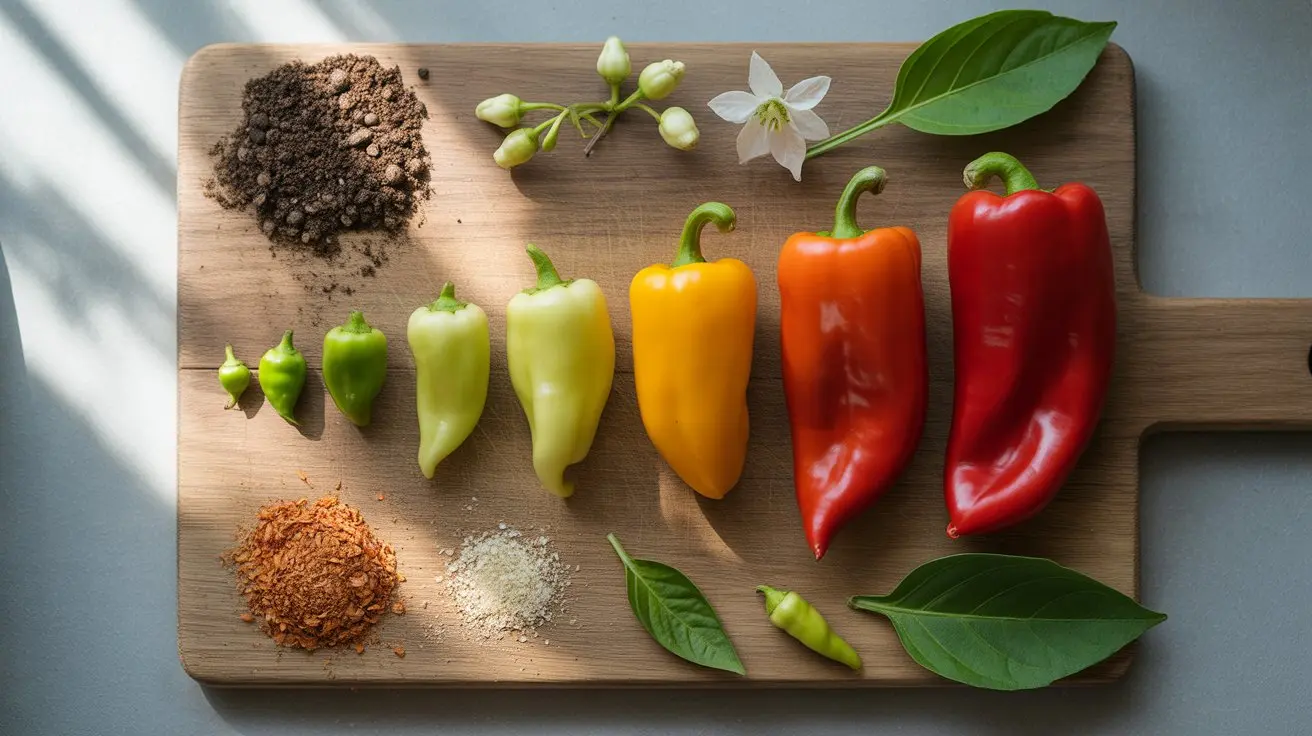
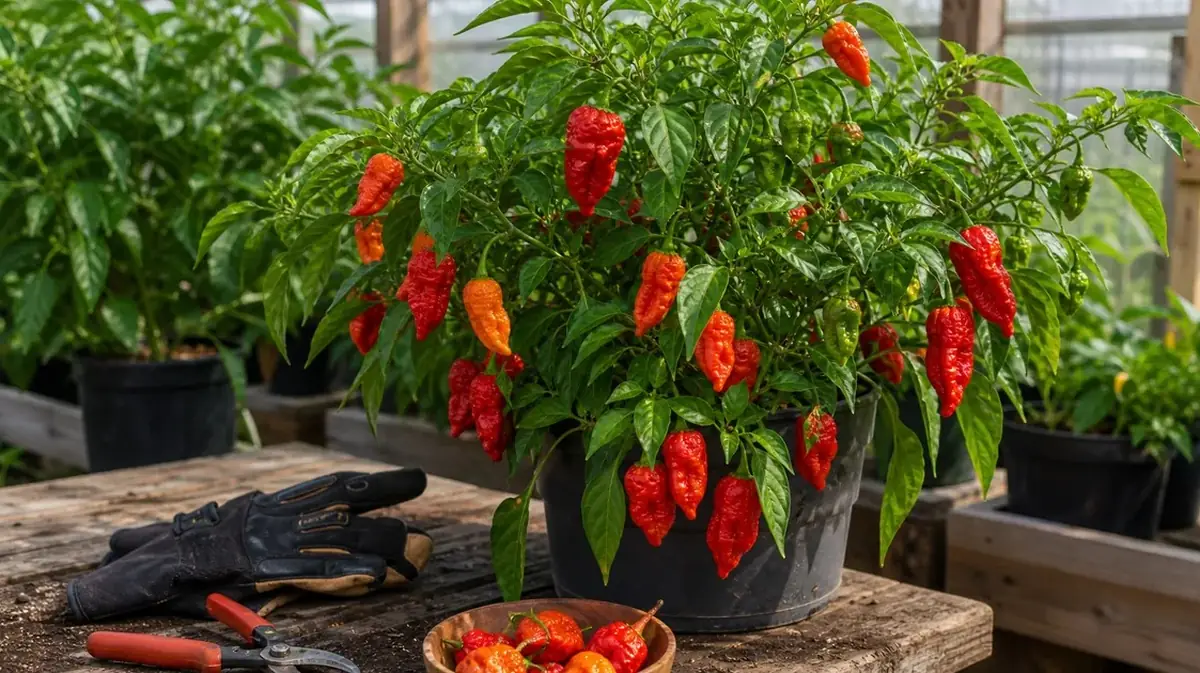
Ghost peppers are worth waiting for when they reach full mature color. The pods gain fuller flavor and more reliable seed maturity than half-ripe fruit harvested only because the forecast turned cold.
Use clippers and gloves. Keep ripe pods away from your eyes, and do not treat them like everyday salsa peppers. The handling logic overlaps with the habanero flakes guide and stopping pepper burn, but ghost peppers deserve even more ventilation and skin care attention.
| Harvest cue | What it means | Action |
|---|---|---|
| Full mature color | Best flavor and heat maturity | Clip and process promptly |
| Soft or weather-damaged pod | Storage risk | Use quickly or discard |
| Half-colored pod before frost | Compromise harvest | Pick only if weather forces it |
One careless harvest can turn a good crop into a skin or eye problem. Gloves are part of the standard tool kit here.
Use the Site You Have, Not the Climate You Wish You Had
Short-season ghost pepper growing is mostly a question of realism. If your nights cool early, the best strategy may be containers, reflective warmth, and fewer plants you can actually finish.
Compare the plant's progress every week. If growth is stalled, solve temperature first. If the canopy is strong but the fruit are not maturing, remove some load and keep harvests current. If leaves are damaged, inspect pests and compare symptoms with leaf damage guides before assuming the crop is simply doomed.
Ghost peppers are not impossible. They are just unforgiving of lost time. Warm starts, warm roots, steady water, and patient harvest timing do more than any late-season miracle trick.
Manage the Last Third of the Season Like a Finish Line
The last third of ghost pepper season is when realism matters most. If cool nights are coming, stop treating every new flower as a win. The pods already on the plant are usually worth more than a late flush that never matures.
We prefer to protect the existing crop: keep watering steady, reduce avoidable stress, and harvest damaged or weak pods so the strongest fruit can finish. If your site is borderline, compare your choices with the pepper-yield guide and with storage or processing plans like fermented hot sauce so finished pods do not sit too long after harvest.
- Short season gardens: prioritize mature pods over late flowers.
- Container growers: move plants to the warmest workable site.
- Heavy fruit load: protect stems and reduce random stress.
Ghost peppers are won late by preserving momentum, not by forcing more growth. Warm roots, patient picking, and a clear end-of-season plan usually matter more than any rescue feed.
Decide Early Whether You Are Growing for Survival or Full Ripening
Ghost peppers can survive in more places than they can truly finish. That distinction matters. A plant can stay green, flower, and even hold a few pods while still missing the long, warm runway needed for a satisfying ripe harvest. If you are honest about that early, you make better decisions on spacing, container use, site warmth, and how many plants to keep.
For many growers, the winning move is not adding more ghost plants. It is reducing the number of plants and giving each one a better microclimate. A warm patio, greenhouse edge, black pot, or reflective wall can do more for ripe harvest than an extra row in cooler ground. The crop responds to cumulative warmth, not to occasional heat spikes. That is why late rescues almost never feel magical. The season had to be built around ripening from the start.
- Survival mode: plants live, flower, and maybe hold green pods, but maturity stays uncertain.
- Ripening mode: warm roots, long season, protected site, and harvest patience are all in place.
- Best compromise: fewer plants in better positions, with a clear plan for processed use once pods finish.
Ghost peppers are still worth growing in challenging climates, but only if the setup matches the ambition. The variety punishes wishful thinking and rewards early realism. Once that is clear, every other decision gets easier.
Plan the Processing Page Before the Pods Finish
Ghost peppers are too valuable and too punishing to harvest without a plan. By the time the pods are fully colored, you should already know whether they are heading to sauce, mash, freezing, dehydrating, or seed saving. Waiting until a pile of ripe superhots is on the counter is how good harvests turn into rushed handling mistakes.
This matters for yield too. When the processing plan is clear, you harvest on time instead of delaying because you are unsure what to do with the pods. That keeps the plant moving and reduces the chance that weather or overripe fruit will waste part of the crop.
- Sauce plan: harvest when flavor maturity is right, not after a delay.
- Drying plan: sort clean pods quickly and keep damaged ones out.
- Seed plan: keep the best ripe pods separate from processing fruit.
Ghost peppers demand more respect after harvest than many peppers do. The cleaner the plan is before picking, the easier it is to turn mature pods into usable output instead of just surviving the harvest.
Manage Ghost Peppers Like a Long-Season Project
Ghost peppers fail more often from timing than from fertilizer. They need a long runway, warm nights, and enough steady growth to reach full heat before the season closes. That is why we track them by calendar checkpoints instead of waiting for the plant to tell us everything is fine.
Slow early growth is expensive on this variety. A ghost plant that loses two or three weeks to cool soil often never catches up to its genetic potential for pod count or heat.
| Checkpoint | Healthy sign | If you do not see it |
|---|---|---|
| 2 weeks after transplant | New leaves and no stall | Protect nights and hold fertilizer steady |
| First flower flush | Flowers hold through warm weather | Check root warmth and water swings |
| First pod set | Pods size without yellow drop | Reduce stress and stabilize irrigation |
| Ripening window | Pods color evenly | Cut late nitrogen and keep full sun |
- Use dark mulch or warm beds where spring soil stays cool.
- Do not crowd the canopy because slow-drying leaves invite extra stress.
- Harvest fully colored pods when heat and flavor are the priority.
Ghost peppers reward consistency more than tricks. Once the plant gets a clean, uninterrupted season, the yield usually looks much better than the nervous midseason garden checks suggest.
Finish the Season With Ripe Pods, Not Unfinished Heat
Late ghost pepper management is mostly about deciding what can still finish well. Growers lose time trying to carry every pod to full color even when weather, day length, or plant energy are already turning against them.
We would rather finish a smaller number of good ripe pods than drag a plant into cool weather with a load of fruit that never develops proper color or flavor. That is especially true where nights start falling out of the ghost pepper comfort range before the calendar looks obviously late.
- Prioritize the largest well-positioned pods: those have the best chance of ripening cleanly.
- Stop chasing soft late growth: new leaves late in the season rarely help more than mature fruit does.
- Protect full-sun exposure on ripening pods: ghosts need the finish, not extra shade, once weather cools.
- Harvest partly colored pods only when the season is clearly closing: otherwise let the plant complete the work.
The best late decision is usually a realistic one. Full ghost pepper quality comes from finishing strong, not from keeping every late pod attached out of optimism.
Harvest Plans Matter More Than Last-Minute Rescue
Once ghost peppers start finishing, the biggest risk is waiting too long on every pod. A few planned harvests usually produce better usable heat than one late panic pick before weather turns.
- Pick the cleanest ripe pods first: they hold the highest kitchen value.
- Leave truly immature pods behind: many never improve enough to justify the wait.
- Process harvests quickly: super-hots lose quality when they sit warm after picking.
Ghost harvests reward discipline more than sentiment. Finishing a strong batch beats carrying weak late fruit.