
Pepper Plants Turning Yellow: Read the Leaves Before You Feed
Pepper plants turning yellow usually point to one of two opposite problems: roots sitting too wet or leaves running short on nitrogen. Read which leaves yellow first, then check soil moisture before you add fertilizer.
Pepper plants turning yellow are not all asking for the same fix. Older yellow leaves with dry soil often point toward nitrogen shortage, while yellow leaves on a wet, heavy pot point toward overwatering or damaged roots.
The first move is not feeding. The first move is reading the pattern, because fertilizer and water can both make the wrong problem worse.
Which yellow leaves matter first?
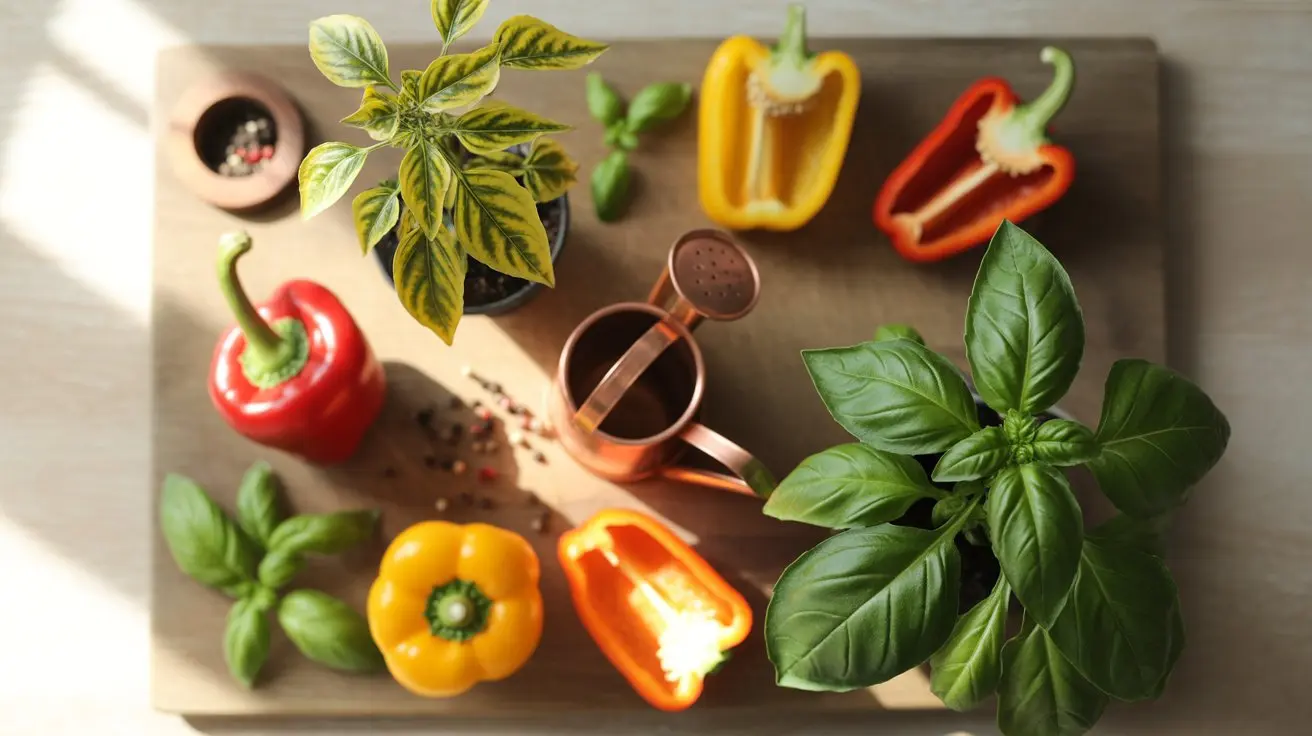
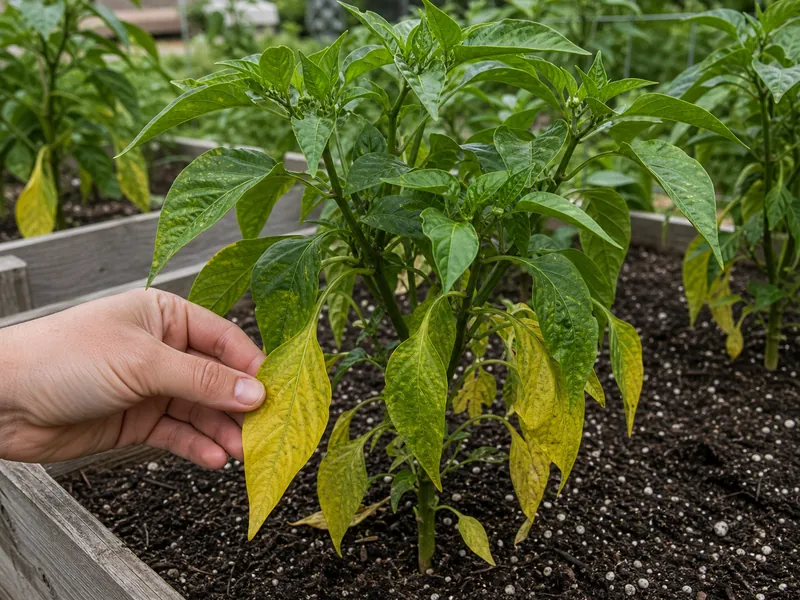
Start with leaf age. If the oldest lower leaves fade first while new growth stays green, the plant may be moving nitrogen into younger tissue.
If new leaves come out pale, small, or twisted, widen the diagnosis. That points more toward root trouble, cold soil, pest pressure, or a micronutrient issue than a simple hunger problem.
| Yellow pattern | Most likely direction | What to check next |
|---|---|---|
| Lower leaves yellow first | Nitrogen shortage or wet roots | Soil moisture and recent feeding |
| Whole plant turns pale | Cold roots, weak light, or low fertility | Night temperature and growth speed |
| Yellow plus wilt in damp soil | Too much water or root damage | Drainage, pot weight, sour smell |
| Yellow speckles or sticky leaves | Pests feeding under leaves | Leaf undersides and new tips |
That table is the reason we do not diagnose from color alone. Yellow is a signal, not a cause.
Use the plant's newest growth as the tie-breaker. A pepper with green new tips is usually still moving forward, while a pepper with pale new tips and no new nodes needs a deeper root and environment check.
Wet soil can make a hungry-looking plant
Wet roots can turn leaves yellow even when the soil has nutrients. The problem is oxygen and root function, not a missing bag of fertilizer.
University of Maryland Extension warns that container vegetables can suffer when drainage fails and water sits around roots. In peppers, that often looks like yellow lower leaves, soft droop, and a pot that feels heavy long after watering.
Check two inches down before you water again. If the mix is cool, damp, and sticky, treat the plant like an overwatered pepper guide, not a hungry one.
Do not add a strong liquid feed to wet roots. The plant cannot use it well, and salts can build up while the root zone is already stressed.
- Empty saucers after rain or irrigation.
- Let the top few inches dry before the next watering.
- Open blocked drain holes in containers.
- Move small pots where morning sun can dry the mix.
- Delay fertilizer until new growth starts again.
Raised beds usually recover faster than heavy ground. Clay soil holds water longer, so the same watering rhythm can be fine in one bed and too much in another.
Nitrogen shortage has a different rhythm
Nitrogen shortage usually starts low on the plant because older leaves donate nutrients to new growth. The lower leaves turn pale green, then yellow, while the top may still look fairly normal.
University of Maryland's nutrient-deficiency guidance notes that nitrogen deficiency often shows first on older leaves. That matches the way nitrogen moves inside the plant.
Before feeding, ask what changed. A fast-growing container pepper can outgrow a light potting mix, while an in-ground plant may run short after heavy rain washes nitrate below the root zone.
Feed gently if the soil is not wet. A balanced vegetable fertilizer or a light nitrogen side-dress is safer than a heavy dose that pushes soft leaves at the expense of flowers.
This is where the page differs from fertilizing pepper plants in general. Here, feeding is only the answer after the leaf pattern and soil check agree.
Cold roots and weak light slow the whole plant
A pepper can yellow when roots are too cold to work well. The plant may not look sick at first, but growth stalls and older leaves fade because uptake is slow.
University of Minnesota Extension treats peppers as warm-season crops that should move outside after cold risk passes. That timing matters because chilly soil can keep a transplant alive but stuck.
Light matters too. A pepper in weak indoor light or under a shaded porch may stay pale because it cannot build enough energy to support new growth.
Use growth speed as the clue. A yellowing plant that also stopped growing belongs closer to the stalled pepper checklist than a fertilizer schedule.
If the plant is in a container, move it to stronger morning light and warmer roots before changing the feed. If it is in a cold bed, wait for warmer nights and avoid soaking the soil.
Spots, pests, and disease change the diagnosis
Yellow leaves with spots, sticky residue, or curled new tips are not a simple nutrition problem. Look under the leaves and around tender growth before you feed.
Aphids and mites can drain leaf tissue and leave yellow stippling. Leaf spot diseases can also create yellow halos around brown or black lesions.
The difference is texture. Pest damage often starts as speckles or curled tips, while disease spots have clearer edges and may spread after wet weather.
If you find insects, treat the pest first and keep the plant out of extra stress. The broader pepper pest and disease check fits that path better than adding nutrients.
If the yellow area has crisp brown patches after a sudden sun move, think sunscald or hardening-off stress. That is a location problem, not a soil problem.
How to fix yellow pepper leaves without guessing
Make one change at a time, then wait several days. Peppers do not re-green damaged leaves quickly, so judge the fix by new growth, firmer stems, and a normal watering rhythm.
Remove a yellow leaf only when it is mostly spent or touching wet soil. A partly green leaf still feeds the plant.
| Confirmed clue | First fix | What improvement looks like |
|---|---|---|
| Wet, heavy soil | Pause water and improve drainage | New leaves firm up within a week |
| Dry soil plus older yellow leaves | Water evenly and feed lightly | New growth deepens in color |
| Cold nights after transplanting | Cover or wait for warmth | New nodes begin forming |
| Insects under leaves | Wash or treat the pest | No new speckling appears |
Do not expect old yellow leaves to turn perfect again. The useful question is whether the next set of leaves looks greener and more even.
How to prevent yellow leaves next time
The prevention plan is a rhythm: warm roots, draining soil, steady water, and moderate feeding. Skipping one of those makes the next problem look like a mystery.
Use the same moisture check every time instead of watering by calendar. The pepper watering routine works because it starts at the soil, not the leaf.
Containers need the most attention because they swing faster. A five-gallon pot can dry hard in heat, then stay wet after a storm if the drain holes clog.
In beds, keep enough space for airflow and root room. The broader pepper growing path only works when the plant is not fighting cold soil and soggy roots from the start.
For a new plant, track three things for one week: morning leaf position, soil moisture two inches down, and whether new growth is darker than the old yellow leaves. That tells you more than one dramatic leaf photo.
Container plants and bed plants yellow for different reasons
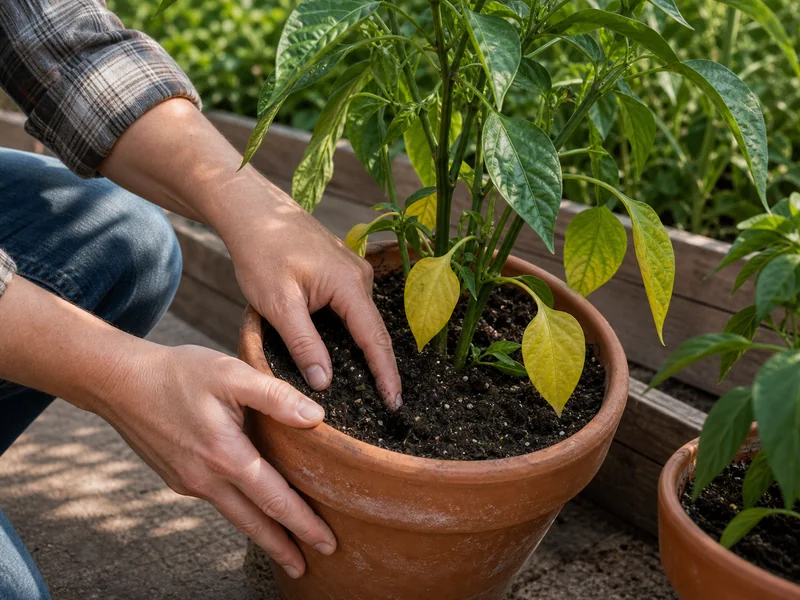
Container peppers yellow faster because the root zone is smaller and every watering mistake is stronger. A five-gallon pot can dry in a hot wind, then stay too wet after a thunderstorm if the drain holes sit flat on a patio.
Lift the pot before and after watering for a few days. That teaches your hand what fully watered, half dry, and too wet feel like, which is often more accurate than staring at leaves.
In beds, yellowing usually moves slower. Heavy clay, low spots, fresh mulch on cold soil, and recent fertilizer history matter more than pot weight.
If one plant yellows in a row and the rest look normal, check that individual root zone. A buried rock, a drip emitter pointed at one stem, or a pocket of soggy compost can explain a single weak plant.
What not to do when the plant turns yellow
The worst response is stacking fixes. Watering, feeding, pruning, spraying, and moving the plant all in one afternoon gives you no way to know what helped or harmed it.
Pick the one clue you can prove. Wet soil gets drainage. Dry soil gets water. Lower-leaf yellowing in normal soil gets a light feed. Sticky leaves get a pest check.
Also avoid stripping every yellow leaf at once. Removing a few spent leaves is fine, but taking too much foliage from a stressed plant reduces the energy it needs to recover.
Give each change at least several days unless the plant is collapsing. The recovery sign is not the old leaf turning green. It is the next leaf opening with better color and normal size.
One final check helps: compare a yellow plant with the healthiest pepper in the same bed. Same soil and weather but different leaf color usually points to that plant's roots, water pattern, or pest pressure, not the whole garden plan.