
Aji Charapita Hot Sauce
Aji charapita hot sauce works best as a tiny, bright bottle that protects the pepper's citrus-tropical aroma. Use a gentle cook, carrot for body, late-added pods, measured vinegar, and small-bottle storage so the sauce tastes like aji charapita instead of sharp yellow vinegar.
Aji charapita hot sauce should taste small, bright, and expensive in a good way. The pepper has a tiny pod, a tropical citrus smell, and enough heat to carry a bottle without a heavy vinegar punch.
The goal is not a big pantry sauce. Make a small batch, soften the supporting vegetables first, and add the aji charapita peppers late so their aroma does not boil away.
Rare Pods
Aji charapita changes the recipe math because the pods are small and hard to replace. A cup of common red chiles can handle a rough simmer, but a handful of charapita pods should set the flavor direction for the whole bottle.
Use fresh pods when you can. Frozen pods still work if they smell fruity after thawing. Dried pods make a darker, thinner sauce, so treat them as a backup and use the aji charapita substitute guide only when the pepper itself is not available.
Carrot gives the sauce body without pushing it toward jam. Onion adds a soft base. Garlic should stay light because strong garlic can cover the floral part that separates charapita from a simple yellow chile sauce.
This is also where the related pages split. Scotch bonnet salsa leans into fresh fruit and raw edges, while this bottle needs a smoother pour and a cleaner acid line.
Do not stretch the batch just because the pods cost more. A larger bottle with weak pepper flavor wastes the ingredient. A smaller bottle that tastes clearly like charapita is the better result.
If your pods vary in color, sort out any dull or wrinkled pieces first. Those pods can add heat, but they rarely add the bright smell you want in the front of the sauce.
Gentle Base
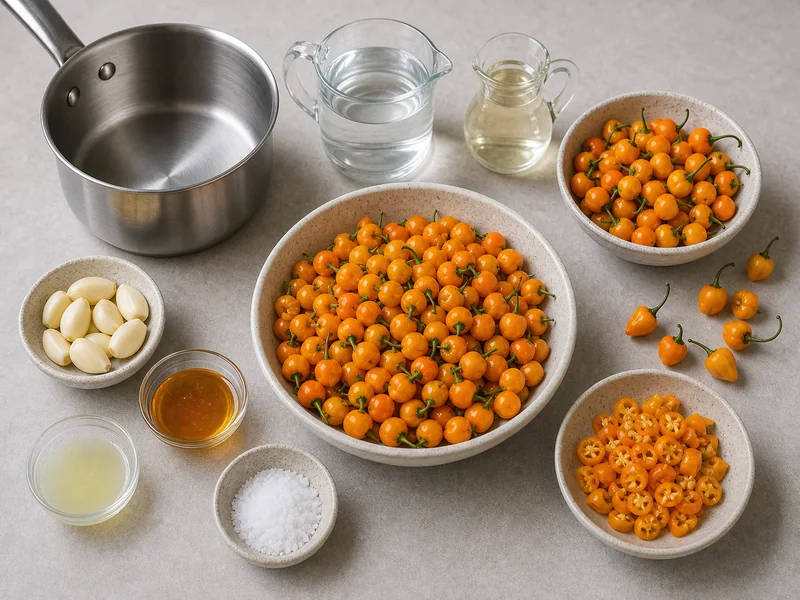
Simmer carrot, onion, garlic, water, and salt until the carrot bends under a spoon. That short cook removes raw vegetable bite before the expensive pepper touches the pan.
Add the charapita pods near the end. Two or three minutes is enough to soften their skins and wake up the heat. A long boil makes the sauce smell flat, then you try to fix it with more vinegar and lose the pepper anyway.
Use a lid while the base softens, then uncover the pan after the peppers go in. That keeps enough moisture for blending without trapping every sharp steam note in the sauce.
If the garlic starts to brown, stop and restart the base. Brown garlic can taste good in a roasted salsa, but it pulls this sauce toward bitterness.
If you want a fermented sauce, build that as a separate project. A live brine gives a different sourness than this quick bottle, and the fermented hot sauce process needs its own salt level and air control.
Acid Line
Vinegar keeps the flavor sharp and helps the sauce taste like hot sauce, but it should not be the first thing you smell. Add part of the vinegar before blending, taste, then add the rest in small splashes.
Lime can brighten the finish, but it fades faster in storage than vinegar. Use lime for a bottle you plan to eat this week. Use more vinegar when you want the sauce to hold its edge in the fridge.
Salt matters more than sugar here. Sugar rounds the carrot and makes the bottle feel thicker, but too much turns a rare pepper sauce into a sweet condiment. Start low, blend, then taste on a chip or spoonful of rice instead of tasting from the blender jar.
The decision rule is simple: if the sauce makes you notice acid before pepper, stop adding vinegar. If it tastes hot but hollow, add salt first, not more chile.
Use the first bottle as your calibration batch. Write down how many pods, how much vinegar, and how much carrot you used. The next batch will be easier because charapita pods can vary by size and age.
Do not chase a lab-style pH number with guesswork. A home meter must be calibrated, and a recipe on a screen cannot know your vinegar strength, vegetable weight, or final yield.
Bottle Texture
Blend longer than you think. Tiny charapita skins can leave a gritty edge, and a small bottle feels better when it pours in a narrow ribbon.
Strain only if the skins stay rough after blending. Straining gives a polished texture, but it also removes pepper solids. If you strain, press the pulp hard with a spoon and taste the pulp before throwing it out.
Thin sauce means the carrot did not give enough body or the blender got too much water. Return the sauce to a low pan for a few minutes, or blend in a spoonful of cooked carrot. Do not thicken it with starch.
Bitter sauce usually comes from scorched garlic or overcooked pods. A little honey can round the edge, but it cannot bring back the floral smell. Next time, cook the base first and add the peppers later.
If the sauce tastes good but too sharp, use it like a finishing sauce beside richer recipes such as habanero BBQ sauce, where sweet smoke can take a brighter chile hit.
Save the pressed pulp if it tastes clean. Stir a little into mayonnaise, yogurt, or a pan sauce. Throw it away only when it tastes bitter or woody.
For a gift bottle, strain more tightly and keep the color clear. For your own fridge, a little pulp is fine because it carries pepper flavor and makes the sauce feel less thin.
Best Uses
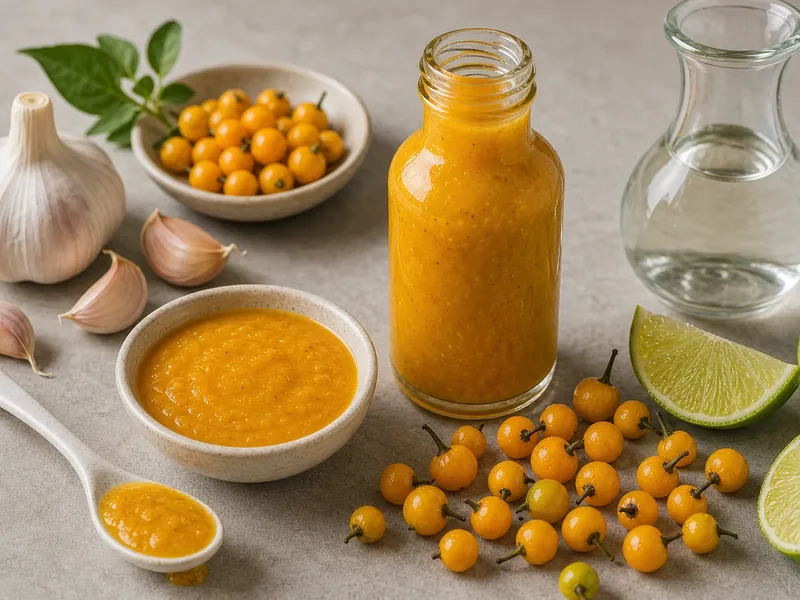
This sauce earns its cost on eggs, grilled shrimp, fried plantains, roast chicken, and simple rice bowls. It works when a few drops can change the top note of the dish.
It is not the best bottle for chili, long braises, or marinades. Those dishes hide the tiny pepper. A larger fresh red sauce like Fresno hot sauce makes more sense when you need volume.
Use the aji charapita and lemon drop comparison if you are chasing citrus heat but can choose between peppers. Lemon drop gives a sharper lemon note; charapita tastes rounder and more tropical.
Fridge Rules
Use clean glass, leave headroom, and refrigerate the sauce after it cools. Small bottles make sense because they reduce how often you open the same batch.
Do not guess shelf safety from taste. If you want a shelf-stable product, use tested canning guidance. For a home fridge bottle, follow spoilage cues from hot sauce storage rules: mold, gas, off smells, or a swollen lid mean the sauce is done.
The best version tastes vivid on day one and smoother on day two. After a week, the pepper still should be clear. If vinegar is all you taste, the next batch needs fewer minutes on the stove and a lighter acid hand.
Do one last taste on plain food before you call the batch done. Bread, rice, or an egg will show whether the bottle has enough salt and whether the aroma survives outside the blender.
When the sauce starts tasting dull, use it in cooked food instead of throwing more vinegar into the bottle. A tired charapita sauce can still brighten a pan of onions, but it will not regain the fresh pod aroma.
Chef's Tip
Add the aji charapita near the end of cooking so the tiny pods soften without losing their citrusy aroma.
Ingredients
-
1/2 cup fresh or frozen aji charapita peppersstems removed
-
1 small carrotthinly sliced
-
1/4 yellow bell pepperchopped
-
2 tablespoons chopped white onion
-
1 small garlic clovesmashed
-
1/3 cup white vinegar
-
2 tablespoons fresh lime juice
-
3/4 teaspoon kosher salt
-
2 to 4 tablespoons wateras needed
Full Recipe Instructions
Simmer carrot, bell…
Simmer carrot, bell pepper, onion, garlic, vinegar, and 2 tablespoons water for 6 to 7 minutes, until the carrot softens.
Add the aji…
Add the aji charapita peppers and simmer 2 to 3 minutes more, just until softened.
Transfer to a…
Transfer to a blender with lime juice and salt, then blend until very smooth.
Thin with water…
Thin with water one tablespoon at a time until the sauce lightly coats a spoon.
Taste for salt…
Taste for salt and lime, then bottle cleanly and refrigerate.